Kitchen faucet loose at the base
A kitchen faucet that wobbles or twists at the base has a loose mounting nut or bracket under the sink. Tightening it fixes the wobble, and it keeps the supply lines and the base seal from wearing out. The hard part is reaching it, so a basin wrench or the mounting tool that came with the faucet makes this a 20 minute job. A loose faucet is a 20 minute fix once you can reach the nut.

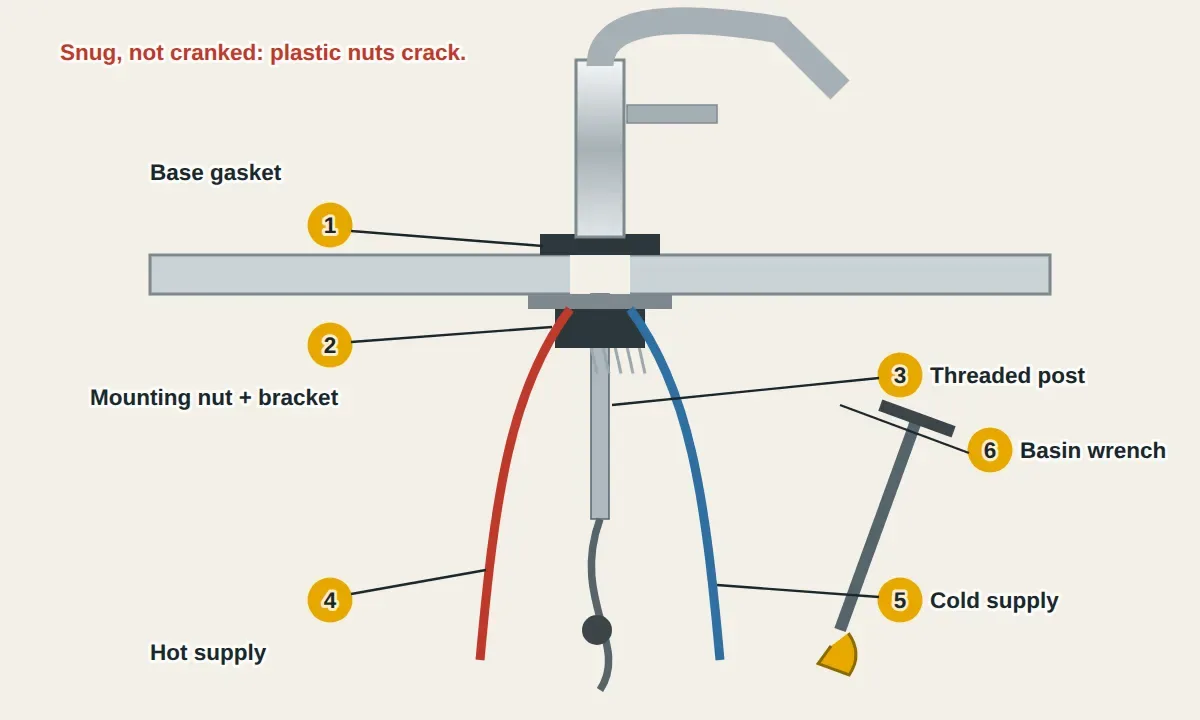
How a kitchen faucet is held down
A kitchen faucet sits on top of the sink or counter and is clamped down from underneath. Older faucets use large nuts threaded onto the faucet's shanks. Most newer single-handle faucets use one threaded post with a mounting bracket and a big nut, or a bracket with two screws you tighten from below with a long screwdriver or socket.
Every time the handle is pushed or the sprayer is pulled out, the faucet twists a little, and over years the nut works loose. A plastic nut can also crack, and a nut that was only hand-tight when the faucet went in loosens sooner. Once the faucet rocks, the gasket under its base stops sealing and water can drip into the cabinet.
Why faucets come loose
Years of twisting work it loose.
It spins without clamping.
The faucet rocks side to side.
Water seeps under the base.
| You notice | Likely cause | Start at |
|---|---|---|
| Faucet twists when you push the handle | Loose mounting nut | Step 4 |
| Nut spins but won't tighten | Cracked nut or stripped threads | Call a pro |
| Water in the cabinet | Supply connection drip | Step 5 |
| Water under the base plate | Worn base gasket | Step 6 |
Let's fix it
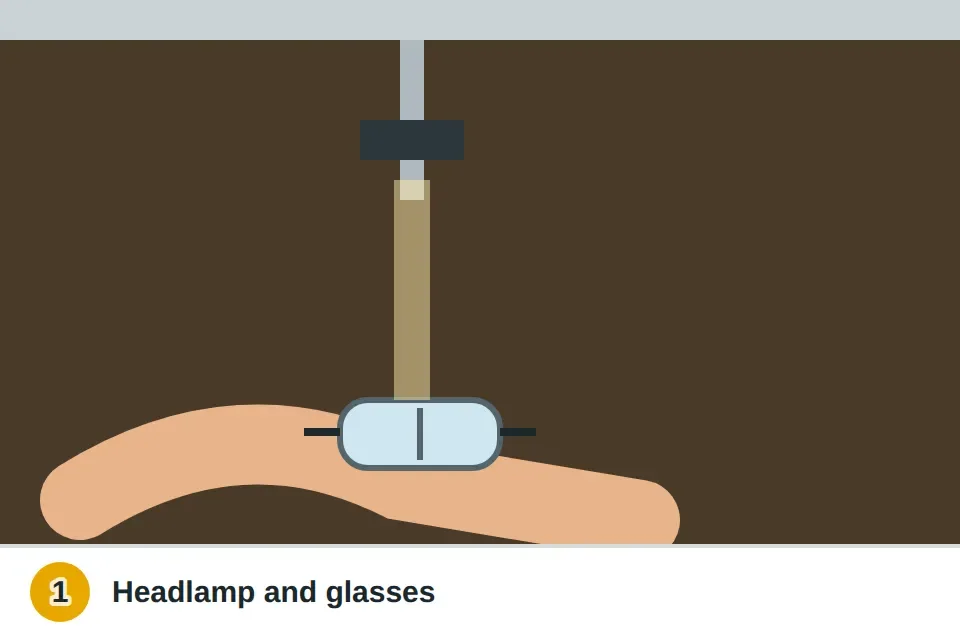
- Clear the cabinet and look underneathEmpty the sink cabinet, put a towel down and lie on your back with a flashlight. Wear safety glasses; rust and grit fall when you work overhead. Find the faucet's base from below. You're looking for a large nut on a threaded post, a nut on each shank, or a metal bracket with two screws.
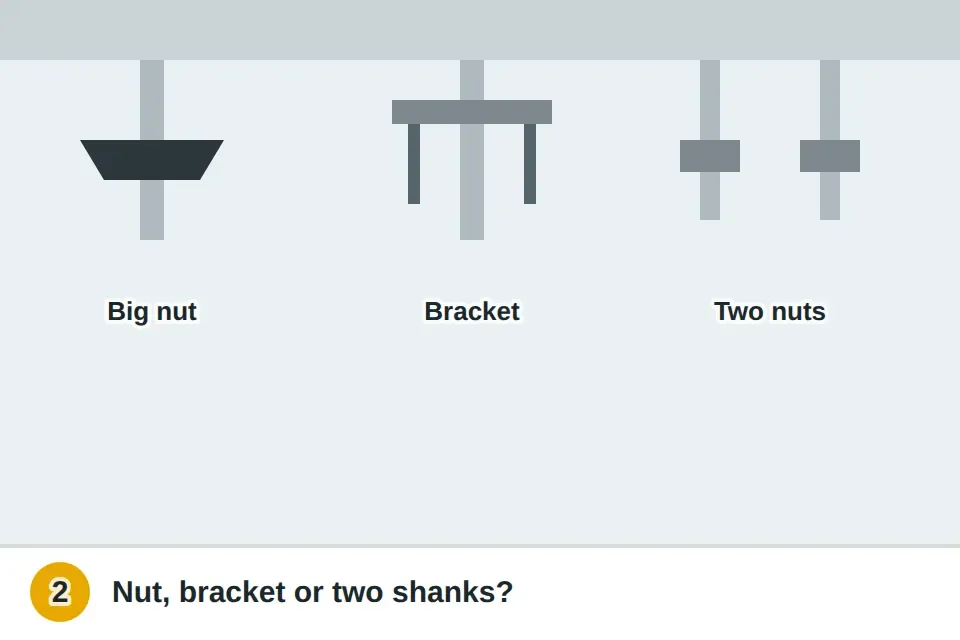
- Find the mounting hardwareFollow the faucet body up from the supply lines and the sprayer hose. A single big nut, often plastic with wings, threads onto the center post. A bracket with screws pointing up clamps against the bottom of the sink. Older two-handle faucets have a nut on each shank near the hot and cold lines.
- Line up the faucetHave a helper hold the faucet straight from above, with the spout centered over the sink and the base plate square to the backsplash. If you're alone, line it up first and keep a hand on it while you snug the first turn.

- Tighten itTurn the nut counterclockwise as you look up at it from below (clockwise as seen from above), using a basin wrench or the faucet's mounting tool to reach it. For a bracket style, tighten the two screws evenly with a long screwdriver or socket. Snug it until the faucet doesn't move, then stop. Overtightening can crack a plastic nut or the faucet base.

- Check for dripsRun the water hot and cold for a minute, swing the spout and pull out the sprayer. Feel the supply line connections, the sprayer hose and the bottom of the base for any wetness with a dry paper towel. Tighten a dripping supply nut a quarter turn at a time.

- If the base still leaks on topIf water seeps out under the base plate on the counter, the gasket or putty under it has failed. Turn off the water under the sink, loosen the mounting nut and, if the supply lines are too short to let it lift, disconnect them. Lift the faucet slightly, clean the old putty, set a new base gasket or the sealant your faucet's instructions call for, and tighten it down again.

Watch it done
- The faucet doesn't move when you push the handle
- The cabinet stays dry
- The spout is centered over the sink
Loose again in weeks? The nut may be cracked; get a mounting kit for your model.
If it drips from the spout
If the faucet drips from the spout instead, see the guide for fixing a dripping faucet.
If water is pooling in the cabinet from somewhere else, see the guide for a leak under the sink.
What a pro typically charges (a rough estimate; prices vary by area): A plumber typically charges $100–$250 to tighten or reset a loose faucet, and more if the faucet needs replacing.
Find a plumber near youSomething else going on?
Loose kitchen faucet questions
How do I tighten a loose kitchen faucet?
From under the sink, tighten the mounting nut or bracket screws with a basin wrench, the faucet's mounting tool or a long screwdriver, while someone holds the faucet straight.
What tool do I need to tighten a kitchen faucet?
A basin wrench reaches most nuts. Many newer faucets come with their own mounting tool, or use a bracket with screws.
Why does my kitchen faucet keep coming loose?
Pushing the handle and pulling the sprayer twist it a little every day. A nut that was only hand-tight or a cracked plastic nut loosens faster.
Do I need to turn off the water to tighten a faucet?
Not to tighten the mounting nut. Turn it off only if you need to disconnect a supply line.
Can a loose faucet cause a leak?
Yes. The base gasket stops sealing and the supply connections get strained, so water can drip into the cabinet.