Unclog a toilet (without the overflow)
You flush, and the water starts rising instead of going down. First, don't flush again. A clogged toilet is stressful, but with the right plunger and a little technique, you'll clear almost every one, usually without any overflow at all.
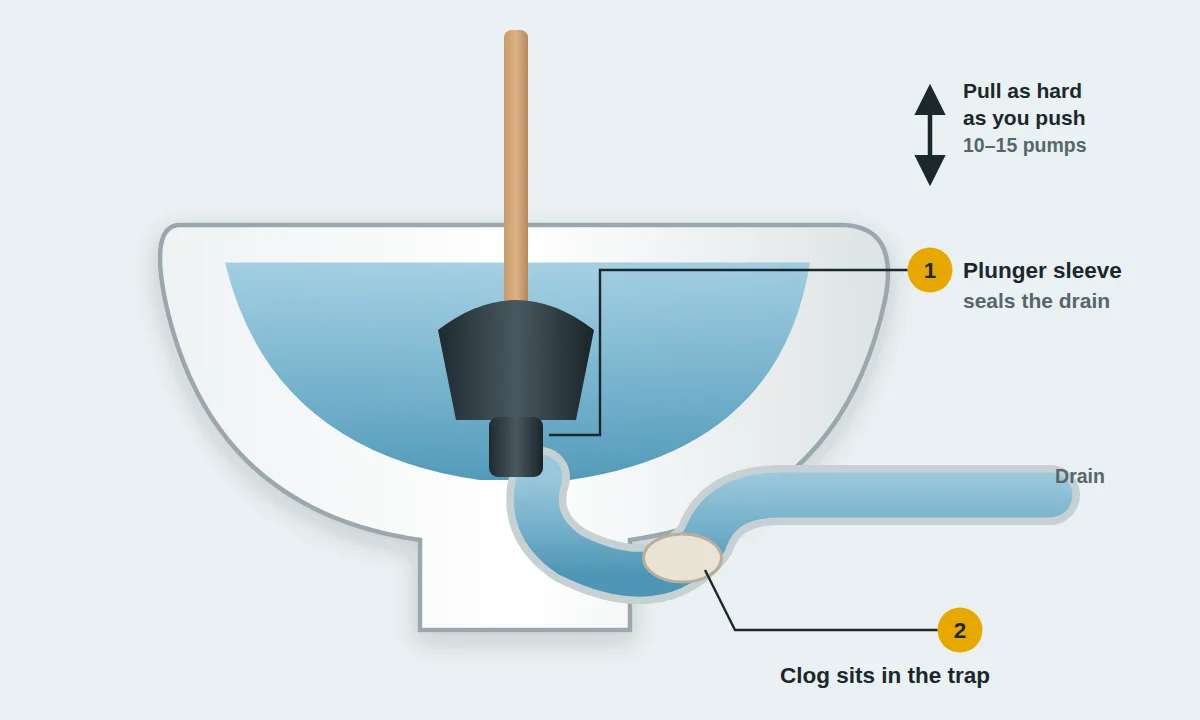
What's actually going on
Most toilet clogs are too much paper, or something that shouldn't have gone down at all, like wipes, even the "flushable" ones. The clog sits in the curved trap built into the toilet itself, just past the bowl. That's why plunging works: you're pushing and pulling water against a clog that's only a foot or so away.
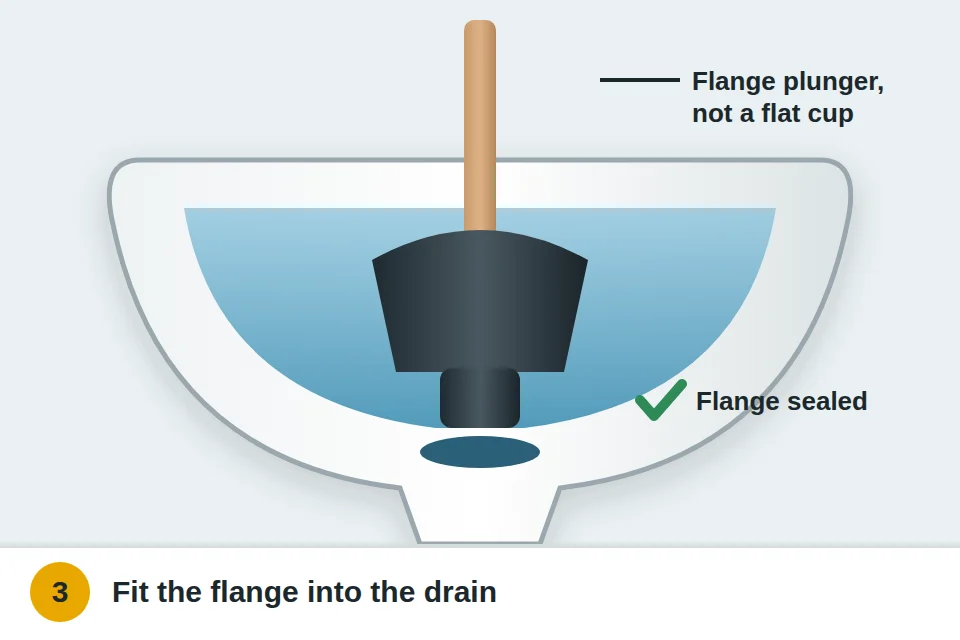
The plunger matters. A flat cup plunger is made for sinks and can't seal in a toilet's curved opening. A flange plunger has a soft sleeve that folds out and fits the drain, and it makes the job much easier.
Why it happens
The most common cause, especially with low-flow toilets.
Even "flushable" wipes don't break down like toilet paper.
Kids' toys are a surprisingly common clog in family homes.
If the toilet keeps clogging, something may be stuck deeper in the drain.
| What you see | What it means | What to do |
|---|---|---|
| Water rising after a flush | A clog, and the tank is still refilling | Don't flush again. Push the flapper closed and turn off the valve. |
| Drains, but very slowly | A partial clog, usually paper | Plunge it. |
| You saw a toy or object go down | Something solid in the trap | Don't plunge. Pull it out with a gloved hand if you can see it, or use an auger. |
| Clogs every week or two | Weak flush or something stuck deeper | Check the tank water level. Use an auger to clear the trap. |
| Tub or shower gurgles or backs up when you flush | A main line clog | Stop using water and call a plumber. |
Let's fix it
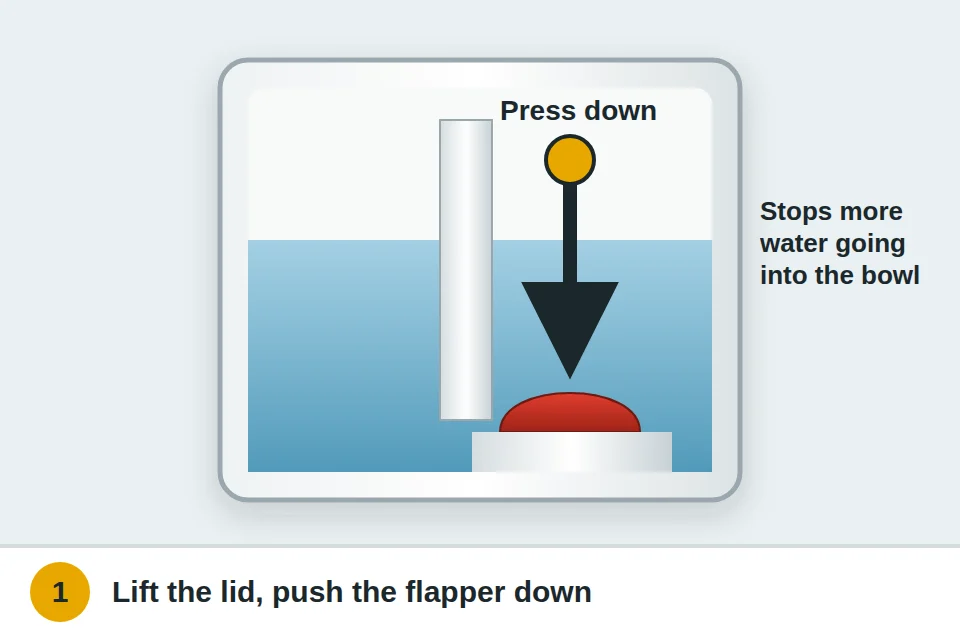
- Stop the waterIf the bowl is close to overflowing, lift the tank lid and push the flapper closed. Then turn off the valve behind the toilet.
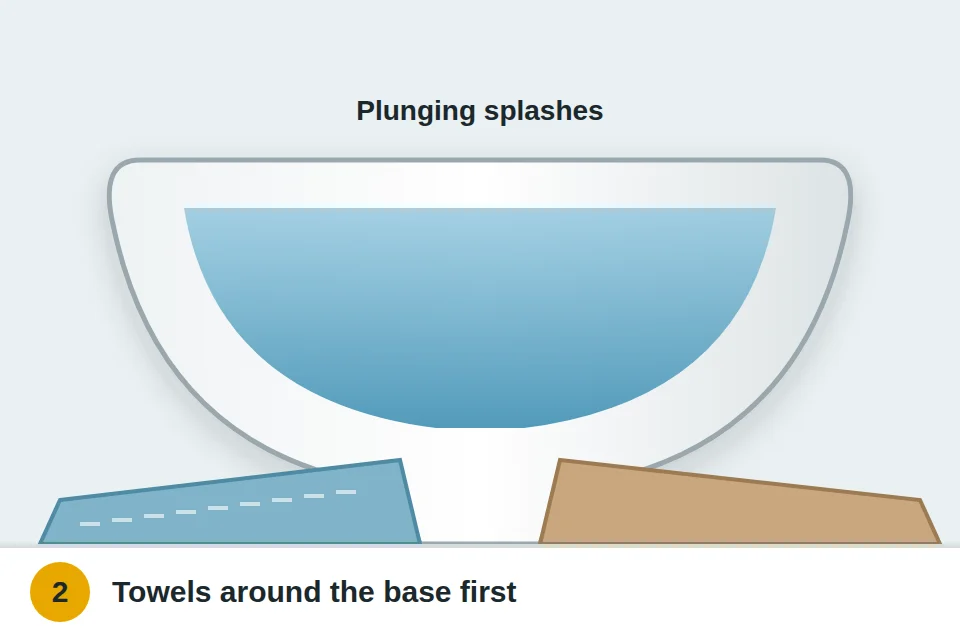
- Lay down towelsPlunging splashes. Towels around the base now save you mopping later.
- Seal, then push gentlyFold out the flange and fit it into the drain. Make the first push slow, to push out the air without splashing.
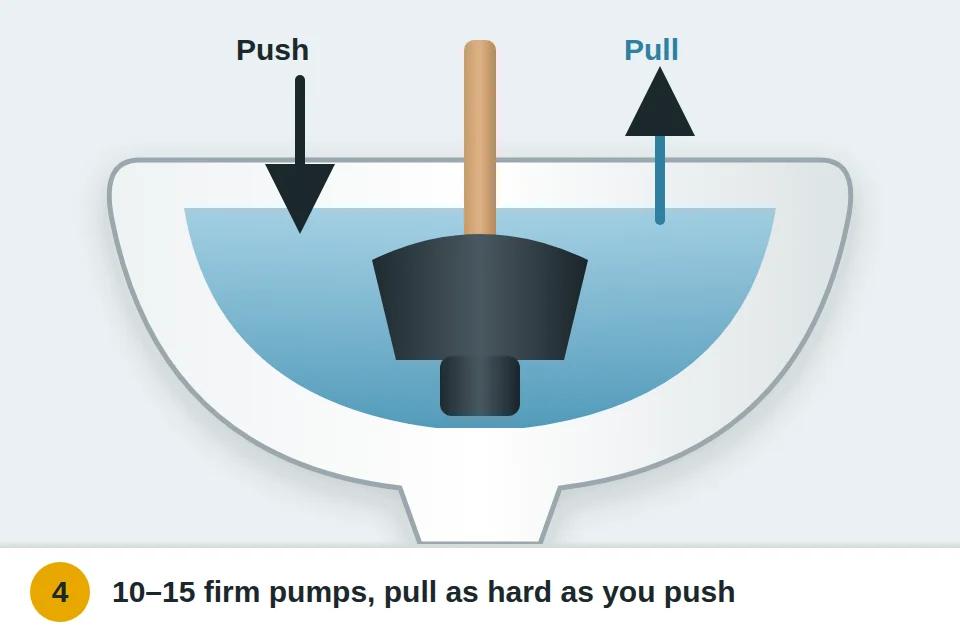
- Pump firmly 10 to 15 timesKeep the seal and pump in and out with force, pulling back as hard as you push. The pull often does more than the push. Check if the water drains.
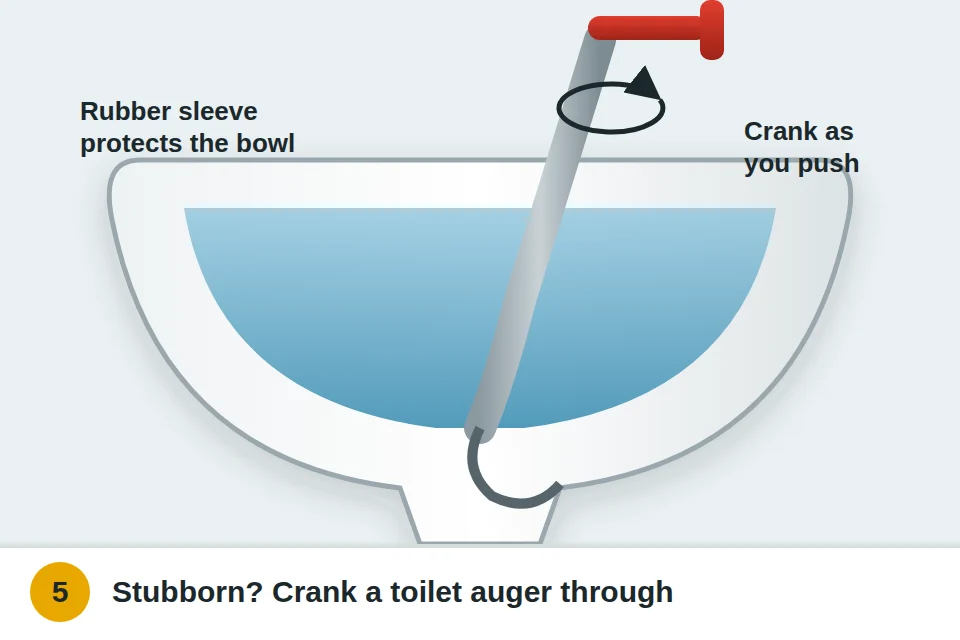
- Use an auger if it won't budgeFeed the auger's end into the drain, crank the handle to push through the clog, and pull it back. It won't scratch the bowl.
Still not fixed?
If plunging doesn't work after several tries, use a toilet auger. It reaches through the built-in trap without scratching the bowl.
Toilet clogged and no plunger? Squirt in some dish soap, add a bucket of hot tap water from waist height, and give it 10 minutes.
If the toilet clogs often and nothing's stuck, check the water level in the tank. It should be about an inch below the top of the overflow tube. Too low, and every flush is weak.
What a pro charges: A plumber typically charges $150–$300 to clear a toilet clog.
Common questions
Are flushable wipes really flushable?
They make it through the toilet, but they don't break down like paper, and they're a leading cause of clogs. Put them in the trash.
What if I don't have a plunger?
A squirt of dish soap and a bucket of hot (not boiling) water poured from waist height can sometimes clear a soft clog. Wait 10 minutes before trying to flush.
Why does my toilet keep clogging?
Usually too much paper per flush, wipes, or a low-flow toilet with a weak flush. If it happens often, a clog may be sitting further down the line.
Something fell in the toilet. Should I plunge it?
No. Plunging can push a solid object deeper, where it's much harder to get out. Pull it out with a gloved hand if you can reach it, or use a toilet auger to hook it.
Can I use a regular sink plunger on a toilet?
It usually won't seal in the toilet's curved opening. A flange plunger, the kind with a soft sleeve on the bottom, works far better and costs about $10.