Unclog a sink without chemicals
The water pools around the drain and takes forever to go down. A slow draining sink rarely fixes itself. It gets slower week by week until one morning it won't drain at all. The good news is that the clog is almost always within a foot of the drain, so you can reach it without chemicals.
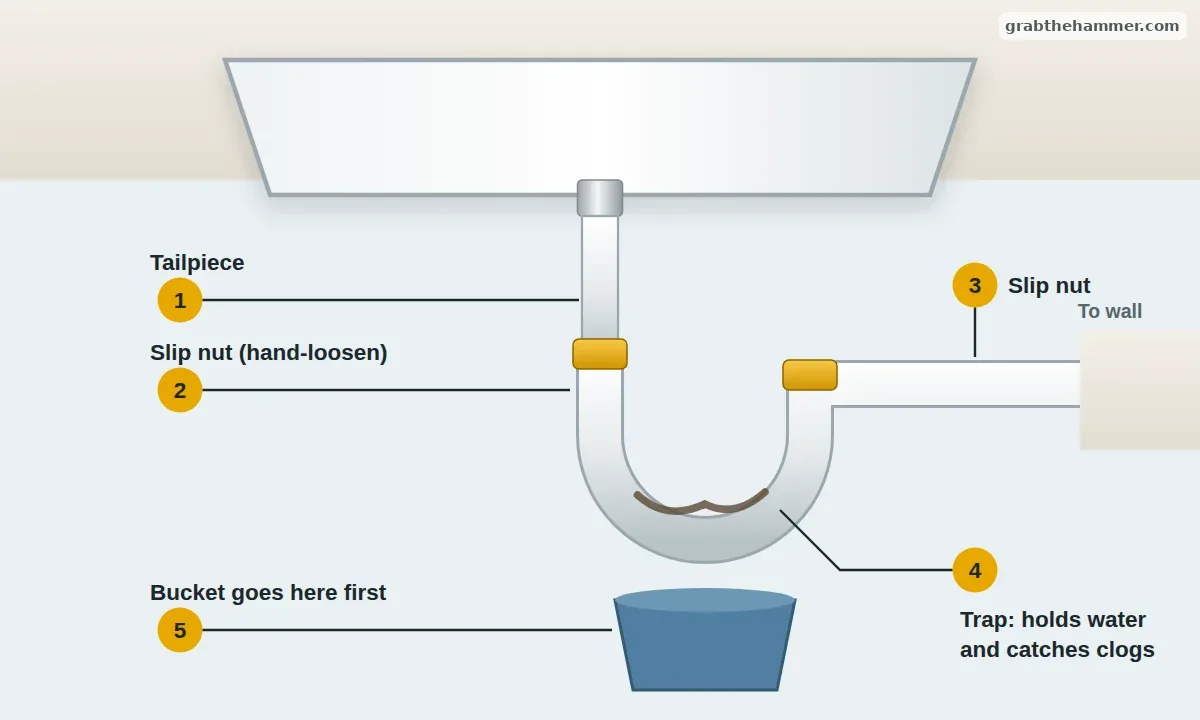
What's actually going on
Bathroom sink clogs are almost always hair tangled with soap scum, a few inches below the stopper. Kitchen clogs are usually grease and food that hardened in the curved pipe under the sink. Either way, the clog is close, and you can reach it.
Why it happens
In bathroom sinks, hair wraps around the stopper and binds with soap into a rubbery plug a few inches down.
Kitchen sinks clog when grease cools and hardens inside the pipe, catching bits of food as they pass.
The curved pipe under the sink is designed to catch things. Eventually it catches enough to slow everything down.
If the sink gurgles and drains slowly even when the pipes are clear, the plumbing vent on the roof may be blocked.
Let's fix it
- Pull the stopperMost bathroom stoppers lift out, twist out, or come loose when you undo a nut on the rod behind the drain. Brace yourself: sometimes the hair wrapped around it is the entire clog.

- Use the plastic snakePush it down the drain, wiggle it, and pull straight up slowly. What comes up will be gross, and that's the point. Repeat until it comes up clean, then run hot water for a minute.

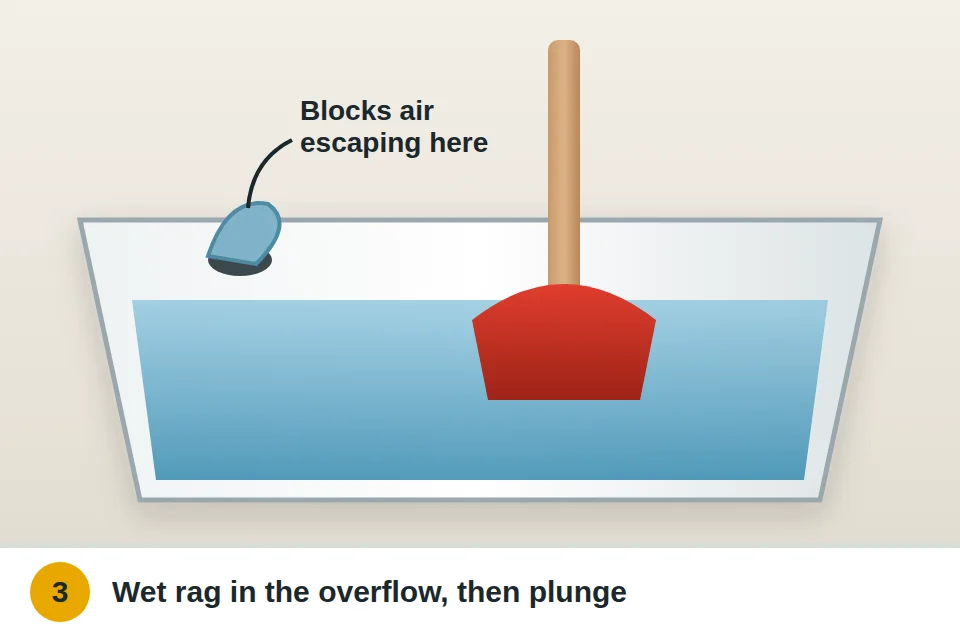
- PlungePut a few inches of water in the sink and stuff a wet rag in the overflow hole so the plunger can build pressure. Give it 10 to 15 firm pumps.
- Clean out the trapPut the bucket underneath, loosen both slip nuts by hand, and drop the trap into the bucket. Rinse it out, then put it back hand-tight plus a quarter turn.

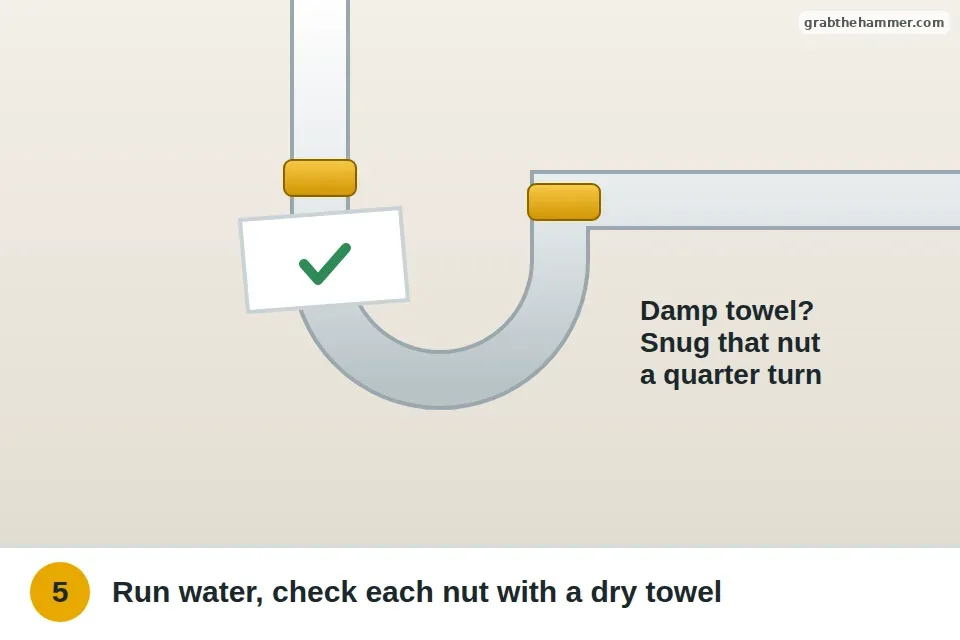
- Check for leaksRun water for a full minute and run a dry paper towel under each nut. Damp towel means snug it a little more.
Still not fixed?
Sink still clogged after plunging? Make sure you blocked the overflow hole with a wet rag. Without that seal, the plunger just pushes air out the top.
If the kitchen sink backs up into the other side of a double sink, or into the dishwasher, the clog is past the trap, in the pipe inside the wall. A small hand auger fed through the trap arm can reach it.
What a pro charges: Clearing a sink clog typically runs $125–$275 from a plumber. Main line clogs cost more, often $200–$500.
Common questions
Is baking soda and vinegar good for clogs?
It can freshen a slow drain but rarely clears a real clog. A plastic snake is faster and more reliable.
Are chemical drain cleaners safe for pipes?
Occasional use is usually fine for modern PVC, but they can harm older metal pipes and are dangerous if you later need to open the trap.
Why is my sink still clogged after plunging?
The clog is probably packed hair or grease in the P-trap. Pull the stopper and use a drain snake, or remove and clean the trap.