Thaw a frozen pipe safely
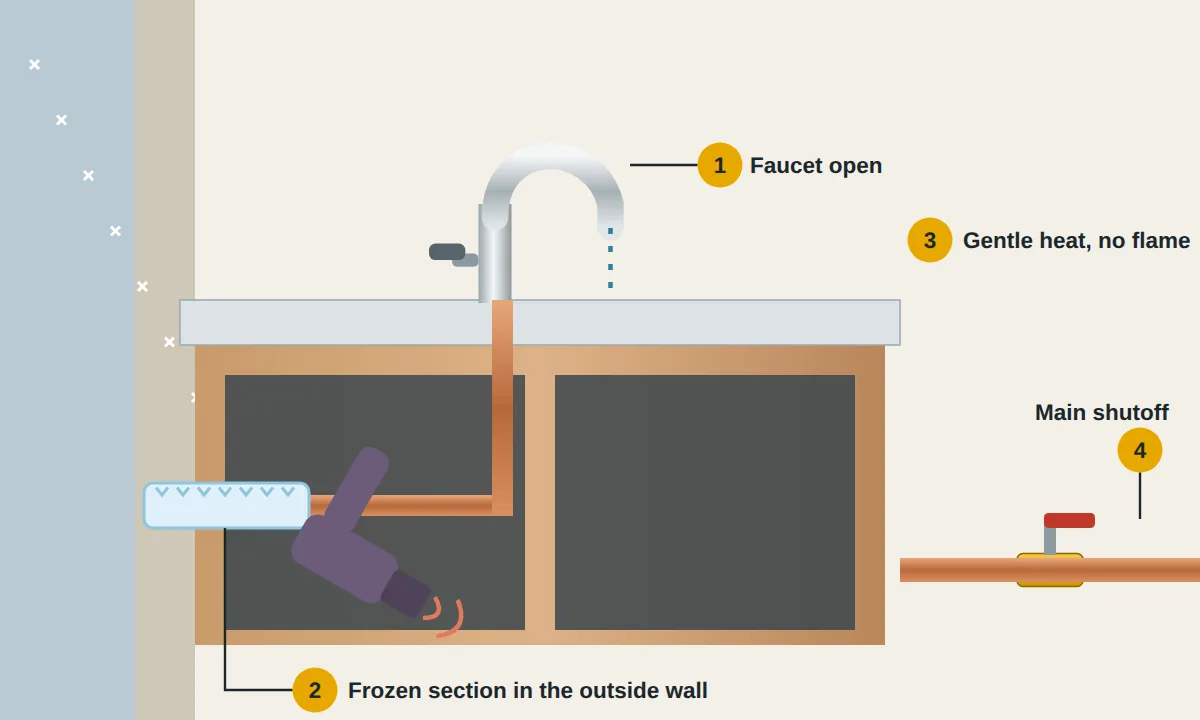
If a faucet only trickles, or nothing comes out on a cold morning, a pipe has probably frozen somewhere along its run. Leave the faucet open, find the cold spot, and warm it gently with a hair dryer, a heating pad or warm towels. Never use an open flame, and know where your main shutoff is before you start, because a frozen pipe may already be cracked.
Why pipes freeze and split
Pipes freeze where they run through cold spaces: outside walls, crawl spaces, attics, garages, and under sinks on exterior walls. Water expands as it freezes, which can split a pipe, but the leak often doesn't show until the ice melts. That's why thawing is also the time to watch closely for water.
Opening the faucet gives melting water somewhere to go and relieves pressure. Warm the pipe starting from the faucet end and work back toward the frozen section, so the water that melts can flow out.
Where pipes freeze
Especially behind kitchen and bathroom sinks.
Crawl spaces, attics, garages and unheated basements.
Cold air leaking onto a pipe through a small opening.
| What you notice | Likely cause | What to do |
|---|---|---|
| One faucet trickles on a cold morning | A frozen pipe to that fixture | Open it and warm the pipe. |
| Frost or a bulge on a pipe | A frozen section, possibly cracked | Warm it gently; watch for leaks. |
| No water anywhere in the house | Frozen main line, or a utility problem | Call a plumber or the water utility. |
| Water spraying or dripping as it thaws | A split pipe | Shut off the main water now. |
Let's fix it
- Open the faucetOpen the faucet the frozen pipe feeds, both hot and cold on a mixing faucet. Melting water needs somewhere to go, and a steady trickle tells you when it's clearing.

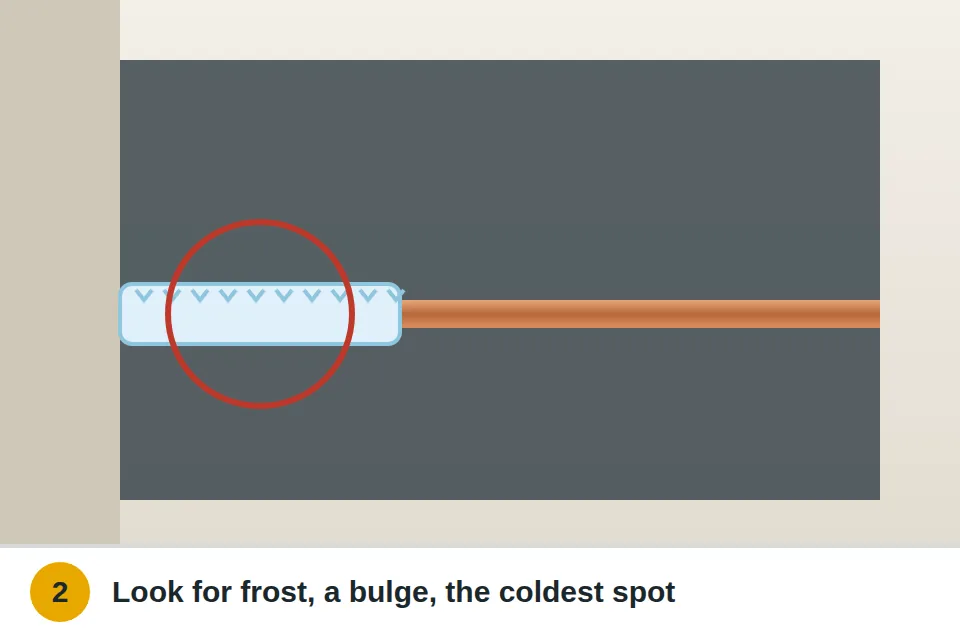
- Find the frozen sectionFollow the pipe back from the faucet and look for frost, a bulge, or the coldest spot, often in an outside wall, a crawl space or the cabinet under a sink. Open cabinet doors to let warm room air in. If you can see a split or a bulge, turn off the main water before you warm it; the leak starts as soon as the ice melts.
- Warm it gentlyAim a hair dryer at the pipe, starting nearest the faucet and moving back toward the frozen spot, or wrap it with an electric heating pad or hot, wrung-out towels. Keep the heat gentle and moving.

- Watch for leaks as it thawsKeep a flashlight on the pipe and a bucket nearby. If water sprays or drips from the pipe itself, turn off the main water shutoff right away.

- Keep it flowingOnce full pressure returns, let the water run for a few minutes, then check every faucet in the house. More than one pipe may have frozen.

If you can't reach the frozen spot
If the frozen section is inside a wall, turn up the heat, open the nearby cabinets, and set a space heater a safe distance from the wall. If that doesn't do it, call a plumber; the wall may need to be opened.
If no faucet in the house has water, the freeze may be where the main line comes in. Call a plumber, or your water utility if you're not sure the problem is on your side of the meter.
What a pro typically charges (a rough estimate; prices vary by area): A plumber typically charges $150–$400 to thaw frozen pipes, and more to repair a burst pipe and any water damage.
Something else going on?
Frozen pipe questions
Should I leave the faucet on while thawing a pipe?
Yes. An open faucet lets melting water flow out and shows you when the pipe is clear.
Can I pour boiling water on a frozen pipe?
It's better not to. A sudden temperature change can crack some pipes, and it's hard to control. Warm towels or a hair dryer are safer.
How long does it take to thaw a pipe?
Often 30 minutes to a couple of hours, depending on the cold and how much of the pipe is frozen.
Will a frozen pipe always burst?
No, but the ice can build pressure that splits it. Watch it closely as it thaws, with the main shutoff within reach.
Should I drip faucets on cold nights?
Letting a faucet on an outside wall drip can help prevent a freeze, and opening cabinet doors lets warm air reach the pipes.
Still stuck? Ask us
Tell us what you're seeing and what you've tried. We read every question, and the ones that will help other people get answered on this page.