Plumbing

Find and fix a leak under the sink

Start by drying everything under the sink. Water runs along the pipes before it drips, so the wet spot on the cabinet floor is rarely right under the leak. Once it's all dry, a few paper towels will show you where the water is coming from. Don't forget to check the dishwasher hose and the soap dispenser. Both run through that cabinet and both can drip.
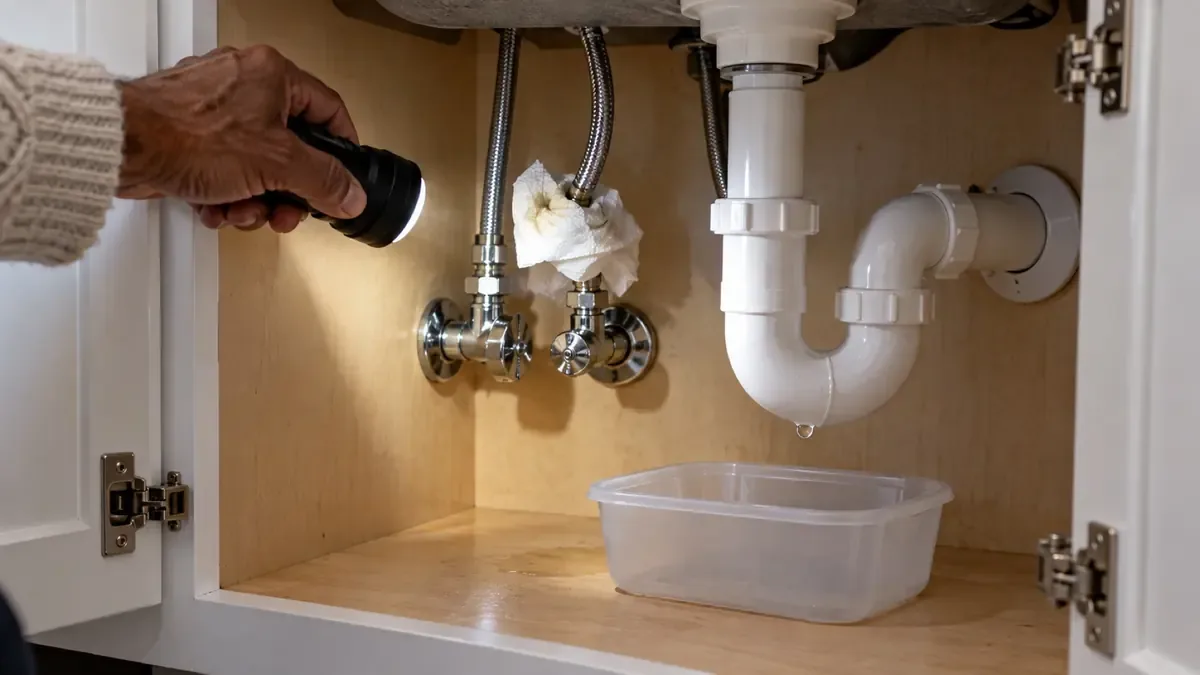
A flashlight lighting the shutoff valves and P-trap under a kitchen sink, with a paper towel wrapped around a supply line connection
A dry paper towel around each connection shows exactly where the drip starts.
Quick answerDry everything, then wrap each connection in a paper towel. If it drips with the sink unused, it's the supply side; if only while water drains, it's the drain side.
Worth checking firstDry everything under the sink first, then run one thing at a time: the cold side, the hot side, the drain with the stopper up, the dishwasher. Wrap a paper towel around each joint. The first towel that gets wet points to the leak.

Good to knowHidden leak testWater emergency? Start here

Moderate20–60 min$0–25
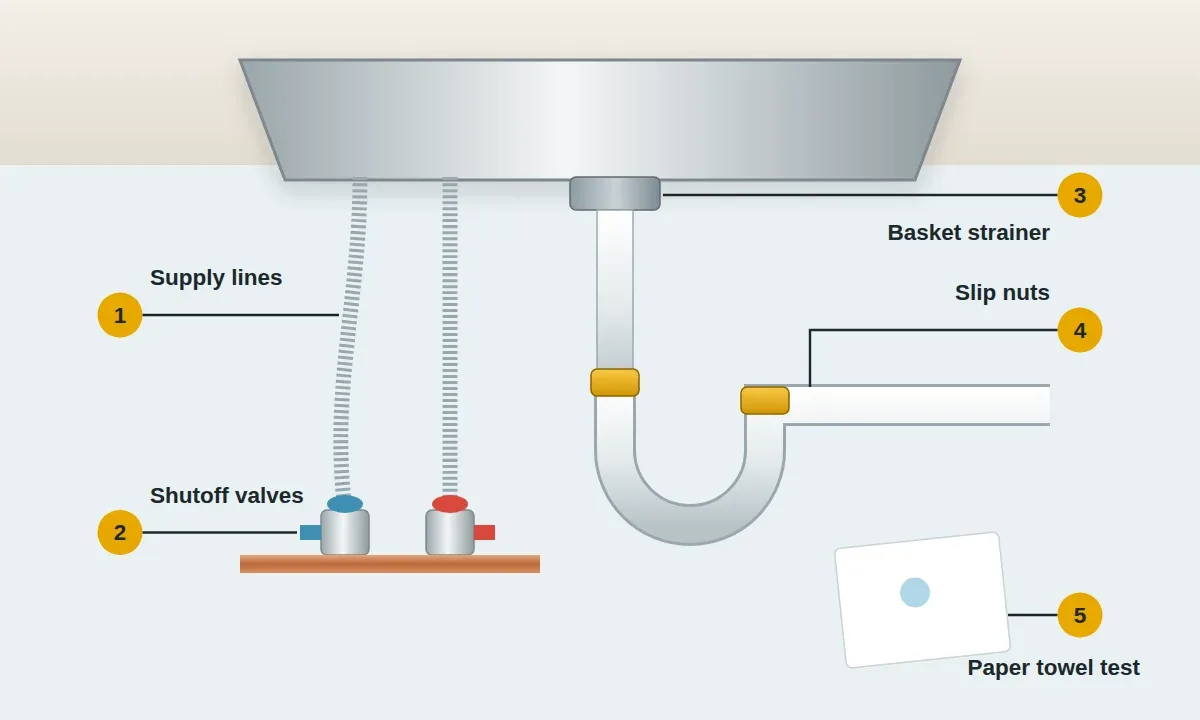
Under-sink diagram showing supply lines, shutoff valves, basket strainer, drain slip nuts and a paper towel test
Where to check for a leak under the sink: supply lines (1), shutoff valves (2), the basket strainer (3) and the drain slip nuts (4). A dry paper towel (5) shows which one is wet first.

Two kinds of leaks

Everything under a sink falls into two groups. The supply side, the and hoses bringing water to the faucet, is under pressure all the time, so a leak there can drip even when nobody is using the sink. The drain side, the strainer, trap and , only carries water while the sink drains, so those leaks show up when water is going down.

That difference is your best clue. If a paper towel on the cabinet floor gets wet overnight with the sink unused, look at the supply side. If it only gets wet when you run water, look at the drain side or the faucet.

Where it's usually coming from

Supply lines

The flexible hoses to the faucet can loosen, corrode or split.

Shutoff valves

Older valves often weep at the stem, especially after being turned.

The drain and

Slip nuts loosen over time, and worn washers leak while water drains.

The faucet or disposal

Water from the faucet base, the sprayer hose or a garbage disposal often ends up under the sink.

When does it drip?
When you see waterLook atUsual fix
All the time, even when the sink isn't usedSupply lines and shutoff valvesTighten the nut a quarter turn, or replace the supply line.
Only while the sink drainsSlip nuts, trap, strainerSnug the slip nuts by hand. Re-putty the strainer.
Only while the faucet runsFaucet base, sprayer hose, faucet connectionsCheck the sprayer hose and the connections up under the faucet.
When you turn a shutoff valveThe valve stem packingSnug the small nut behind the handle about 1/8 turn.
Water on the back wall or coming from inside itA pipe in the wallTurn off the water and call a plumber.
Near the disposalThe disposal or its connectionsSee garbage disposal leaking.
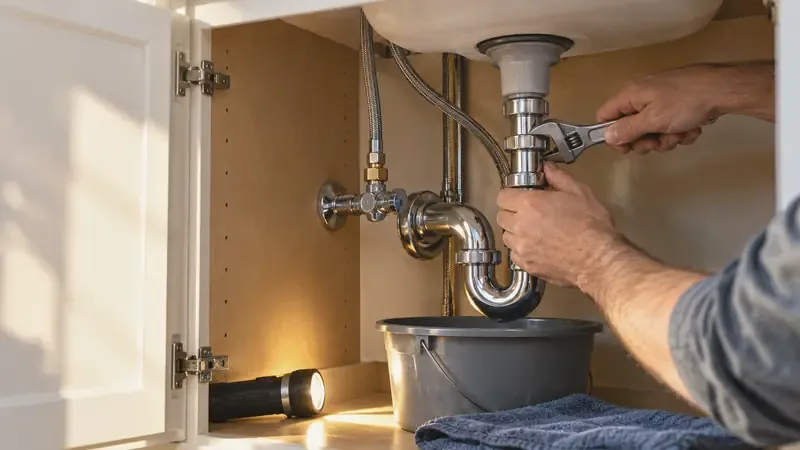
Before you loosen anythingTurn off the shutoff valves before loosening anything on the supply side, and keep a bucket underneath.
Hands tightening a sink drain trap nut with an adjustable wrench, with a bucket, towel and flashlight set up underneath
Set up before you start: a bucket under the trap, a towel on the cabinet floor and a flashlight aimed at the pipes.

Trace it, then fix it

0 of 5 done
  1. Empty the cabinet and dry everythingClear it out, wipe every pipe and fitting completely dry, and lay a dry paper towel flat on the cabinet floor.
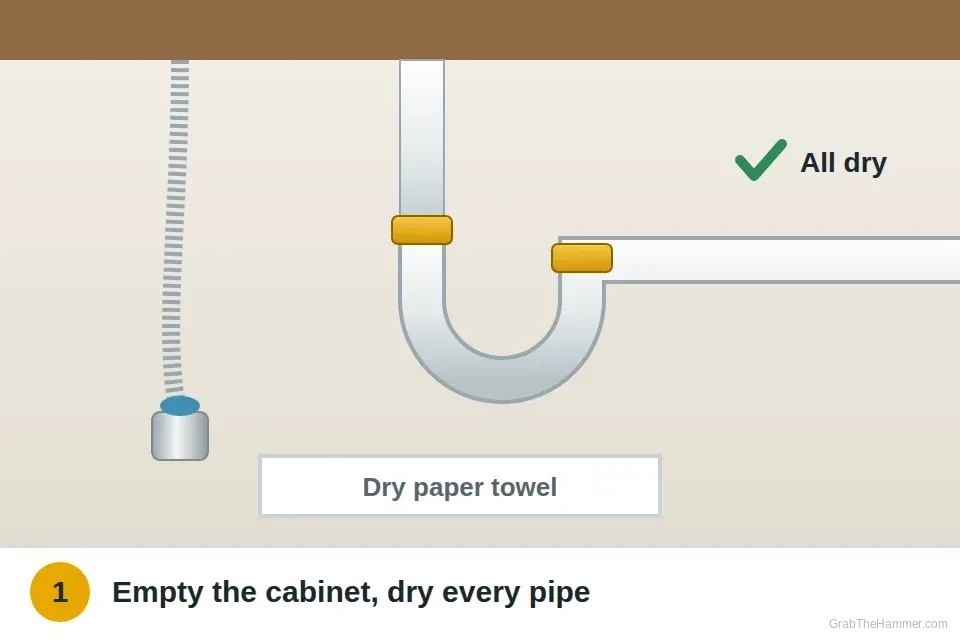
    Emptied sink cabinet with every pipe wiped dry and a flat paper towel on the cabinet floor
  2. Run the water and watchFill the sink partway, then pull the plug and watch with a flashlight while it drains. Drips that only show up while it drains point to the drain side.
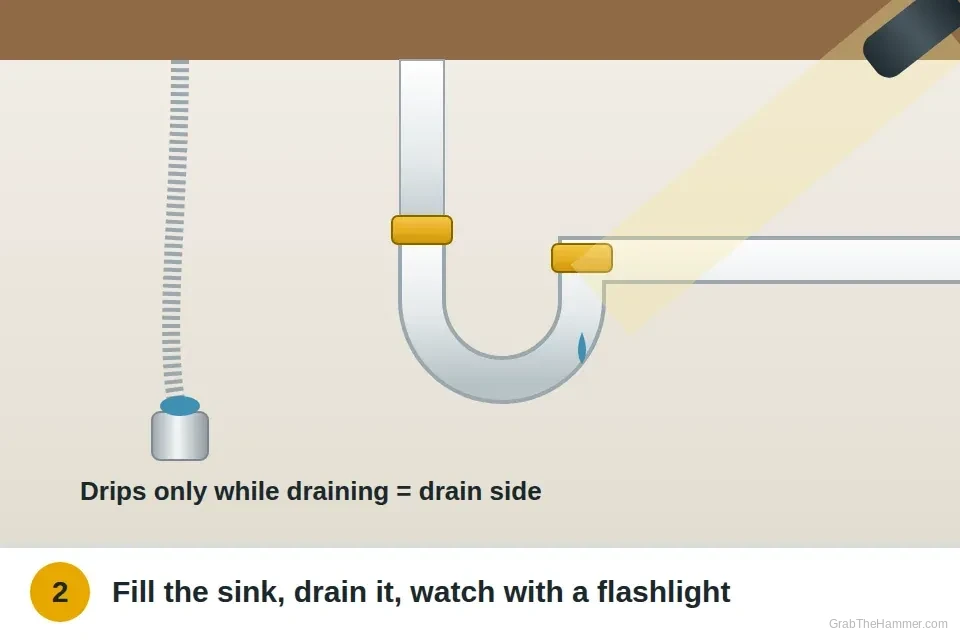
    Flashlight beam on the sink drain pipes while water drains, looking for where drips form
  3. Wrap the fittings one at a timeWrap a paper towel around each connection: supply lines, valves, the strainer and each slip nut. The first one that gets wet is your leak.
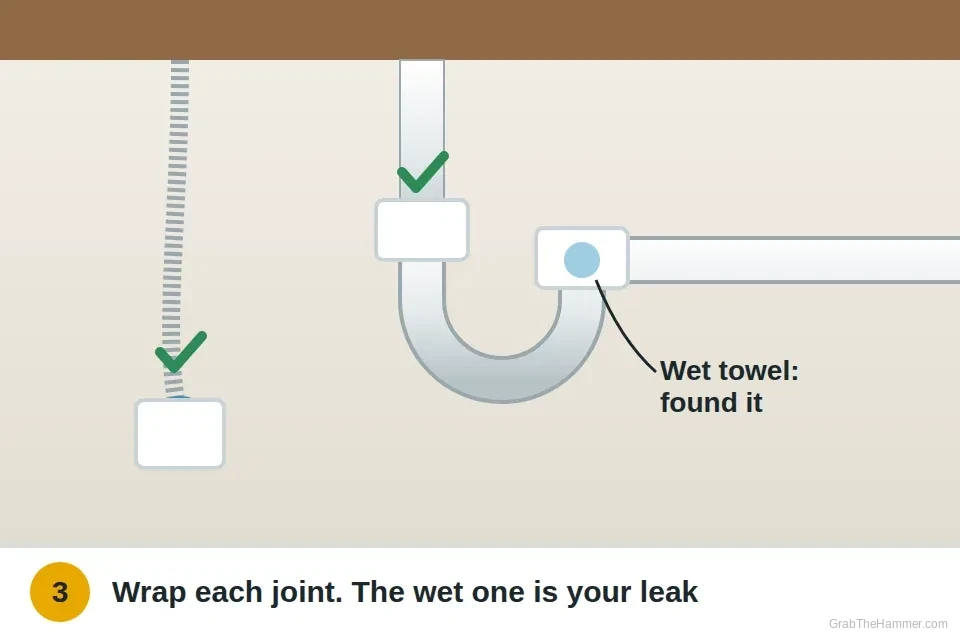
    Paper towels wrapped around a slip nut and a supply valve, with one towel showing a wet spot
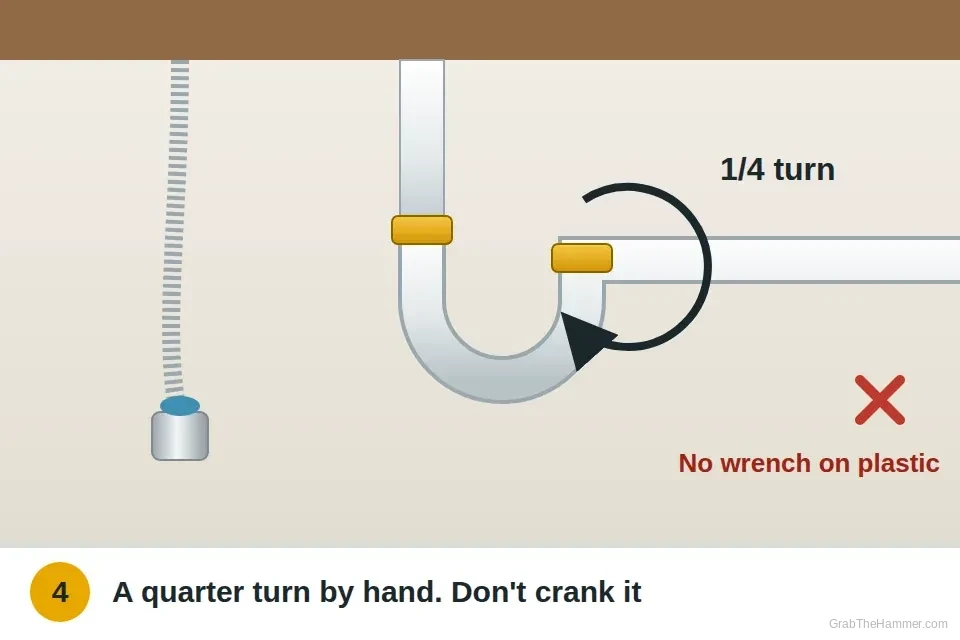
  4. Fix what you findSnug a leaking slip nut a quarter turn by hand. For a supply line dripping at a nut, tighten it a quarter turn with a wrench. Don't crank on it; overtightening can crack plastic or crush the seal.
    Something went wrong?
    • The supply line nut won't stop dripping Turn the water off, unscrew it, and look at the end. A cracked or flattened seal means the line needs replacing.
    • The slip nut is cross-threaded Back it off completely and start it again by hand, square to the pipe. If the threads are damaged, replace the nut.
    Hand-tightening a sink drain slip nut a quarter turn to stop a drip
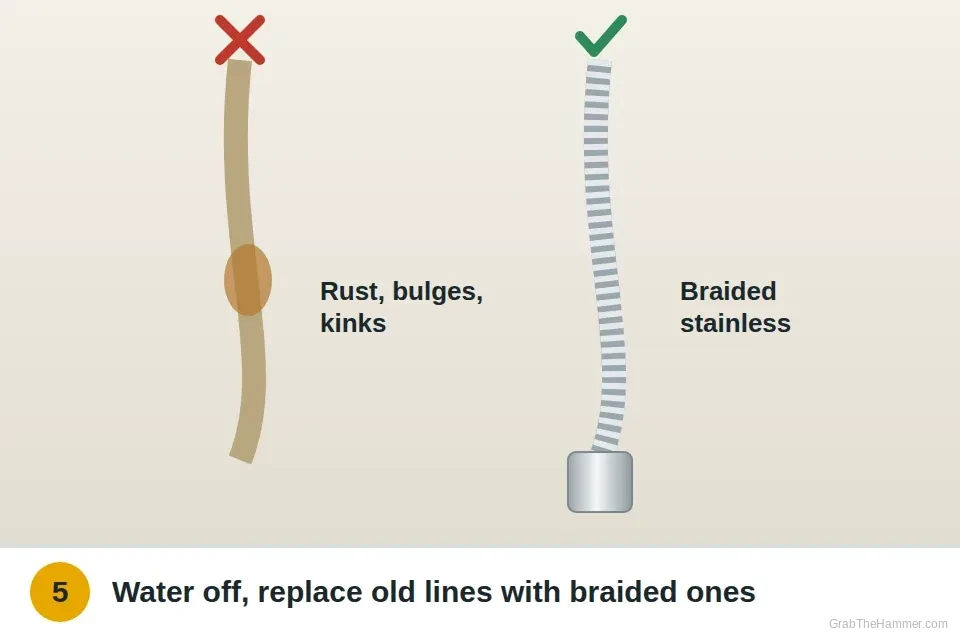
  5. Replace worn partsSupply lines with rust, bulges or kinks should be replaced, which takes about 10 minutes with the water off. A leaking basket strainer needs new plumber's putty underneath.
    Something went wrong?
    • The shutoff valve leaks at its stem Tighten the small packing nut behind the handle about 1/8 turn. If it keeps leaking, the valve needs replacing.
    • You can't find a supply line that fits Measure the length, and take the old line to the store. The connections come in a few standard sizes.
    Old corroded supply hose next to a new braided stainless supply line with the shutoff valve closed

Watch it done

Leaky Sink: Basket Strainer - How to Fix The Most Common LeakBy Repairs101 on YouTube. Their method may vary a little from ours.
Watch on YouTube
How you'll know it's fixed
  • Every paper towel around the fittings stays dry
  • The paper towel on the cabinet floor stays dry
  • No drips with a flashlight while the sink drains

Can't find it? Dry everything and check every 15 minutes.

If you can't find the drip

If you can't find it, dry everything and check every 15 minutes with a flashlight. A drip that only shows up after the dishwasher runs points to the dishwasher's drain hose.

A damp cabinet floor with no drips anywhere can be condensation on cold pipes in humid weather. Foam pipe insulation takes care of it.

While you're under thereIf your supply lines are the older solid or plain plastic kind, swap them for braided stainless lines even if they aren't leaking. A burst supply line can do a lot of damage in a short time.
Renting?If you rent, tell your landlord or property manager about leaks right away, even small ones. Water damage is usually theirs to fix, and many leases require prompt notice. Shutting off the water to stop a leak is always fine.
Call a plumber ifWater coming from inside the wall, a shutoff valve that still leaks after you snug the packing nut, or a cabinet floor that's soft or swollen. That last one means it's been leaking for a while.Fix it yourself or call? Compare the cost →

What a pro typically charges (a rough estimate; prices vary by area): A plumber usually charges $150–$350 to fix a leak under a sink.

Find a plumber near you

Once you know where it's coming from

Under-sink leak questions

Why is there water under my sink but no visible leak?

Water often runs along a pipe before it drips, so the puddle is rarely under the leak. Dry everything and wrap each connection in a paper towel to find the source.

How tight should a slip nut be?

Hand-tight, plus about a quarter turn. Overtightening plastic nuts can crack them or crush the washer.

Is my garbage disposal leaking under the sink?

Look at three spots: where it meets the sink, the side connections, and the bottom of the unit. Bottom leaks usually mean it's time to replace it.

Why is my shutoff valve leaking when I turn it?

The packing around the valve stem has dried out. Tightening the small packing nut behind the handle about 1/8 turn usually stops it. If it doesn't, the valve needs replacing.

How often should I replace sink supply lines?

Check them every year and replace them every 5 to 8 years, or right away if they're bulging, rusty or kinked. Braided stainless lines are worth the few extra dollars.

Can I keep using the sink until it's fixed?

If it's a drain-side drip, yes, with a bowl under it. If it's the supply side, turn off the shutoff valves under the sink between uses, since that side leaks even when nobody's running water.

Why is my sink cabinet wet?

Something under the sink is leaking, but water runs along pipes before it drips, so the wet spot is rarely the source. Wrap each connection in a dry paper towel to trace it.

Reader reports

Did this fix work for you?

Tell the next person how it went. Your numbers are added to the totals anonymously; tips are read by our team before they appear.

How did it go?
Reader Q&A

Questions from readers

No questions on this guide yet. If you're stuck, ask below. Useful questions and answers get added here for the next person.

Ask a question

We read every question before anything is published, and we never show names or emails. Please leave out personal details. PrivacyAccessibility

About the authors

GrabTheHammer Team

  • No sponsored picks
  • Safety first
  • Tells you when to call a pro

We're a small team of writers and editors who check every guide against manufacturer instructions and common code requirements. Our goal is to help you understand the problem, tackle what you safely can and know when to call a pro.

Checked against: Manufacturer instructions for the parts and products involved, EPA WaterSense.

How we write and review →
A helpful next stepUnclog a sink without chemicalsClear hair and buildup with a plastic snake or plunger, then check the trap if needed.