Hidden water leak test
- Two meter readings
- Gallons or cubic feet
- 9-step leak hunt
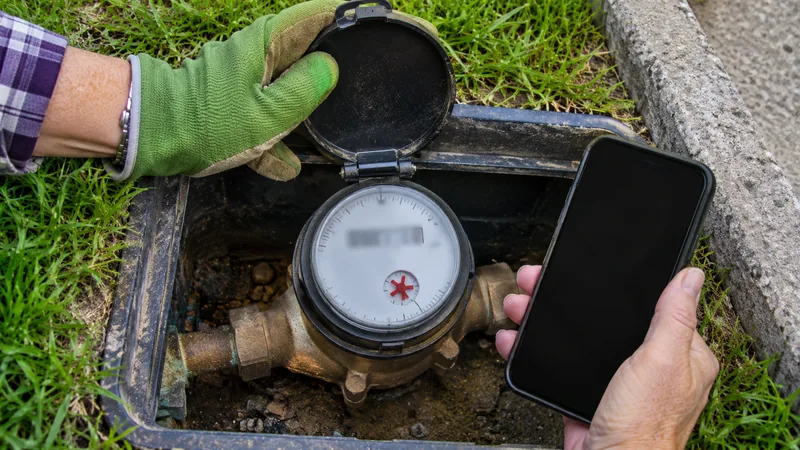
Use every digit on the meter, including the sweep hand or the small numbers after the decimal; a small leak only moves the last digit. A dripping outdoor faucet or a running toilet during the test will count, which is the point.
Track it down, most likely first
- Find the main shutoff and meter
- Fix a running toilet
- Stop a dripping faucet
- Find a leak under the sink
- Water heater leaking
- Refrigerator leaking
- Washing machine leaking
- Outdoor faucet guide
- Find your main shutoff
How it works
With nothing using water, any movement on the meter is a leak. The math is simple and shown so you can check it:
Gallons per hour = (second reading − first reading) ÷ hours between them. Cubic-foot meters are converted at 7.48 gallons per cubic foot.
Per day and per year multiply by 24 and 365. Cost is gallons ÷ 1,000 × your water and sewer rate. The bill helper adds your water and sewer charges and converts CCF (100 cubic feet, 748 gallons) to a per-1,000-gallon rate.
The labels are ours: under half a gallon an hour we call a slow leak, up to 3 a real leak, and above that significant. The checklist is ordered by how common each leak is and how easy it is to check, toilets first.
About this tool
Who it's for
For anyone with a water bill that jumped, or a hunch that something is running when it shouldn't be.
Example
You enterMeter reads 48213.4, then 48214.9 two hours later with nothing running
You get0.75 gallons an hour: about 6,600 gallons and $66 a year at $10 per 1,000 gallons.
What's different
- Turns two meter readings into a real rate, in gallons or cubic feet.
- Walks the likely culprits in order, each linked to its fix.
- Ends with the one test that tells you whether the leak is inside or outside the house.
Gotchas and tips
- Nobody can use water during the test, including ice makers, irrigation and softeners.
- Use every digit on the meter, including the small sweep hand.
- A very slow leak may only show on the meter's leak indicator.
Privacy: Runs entirely in your browser. Nothing you type is sent to us, and anything it remembers is saved on this device only.
Built and maintained by the GrabTheHammer team, using the same time, cost and safety notes as our guides. Updated November 2026. Spot a problem? Tell us.
Hidden water leak test questions
How do I know if I have a hidden water leak?
Turn off everything that uses water, then watch the meter's leak indicator or take two readings an hour or two apart. If the numbers move with nothing running, water is going somewhere.
What is the most common hidden leak?
A toilet with a worn flapper. It can leak into the bowl silently for months. A few drops of food coloring in the tank will show it within 15 minutes.
What if the meter still moves with the main shutoff off?
Then the leak is between the meter and the house, usually the underground service line. That's the homeowner's side in most areas, so call a plumber, or your water utility if you're not sure.