Winterize an outdoor faucet
Before the first hard freeze, disconnect the garden hose, shut off the water to the outdoor faucet if it has its own valve inside, and drain the line. Water left in an outdoor faucet can freeze and split the pipe, and you often don't find out until spring, when you turn it on and water runs inside the wall.
Why outdoor faucets burst
An outdoor faucet, also called a hose bib or spigot, sits where the pipe passes through an outside wall. A hose left attached traps water in the faucet, and that's the part that freezes first. Many homes also have an indoor shutoff valve on the pipe that feeds it, in a basement, crawl space or utility room.
Frost-free faucets have a long stem that closes the valve back inside the heated part of the wall, so they drain themselves, but only when the hose is off. Knowing which kind you have tells you how much of this you need to do.
What causes freeze damage
It traps water in the faucet, where it freezes.
The pipe to the faucet stays full all winter.
Pipes near outside walls freeze first.
It can't drain, and it can split inside the wall where you won't see it until spring.
| Type | How to tell | Before winter |
|---|---|---|
| Standard hose bib | Short body right at the wall; often has an indoor shutoff | Hose off, shut off inside, drain, leave open. |
| Frost-free faucet | Longer body; the pipe usually slopes down toward the outside | Hose off. It drains itself. |
| No indoor shutoff | No valve on the line inside | Hose off and cover it. Ask a plumber about adding a shutoff or a frost-free faucet. |
Let's fix it
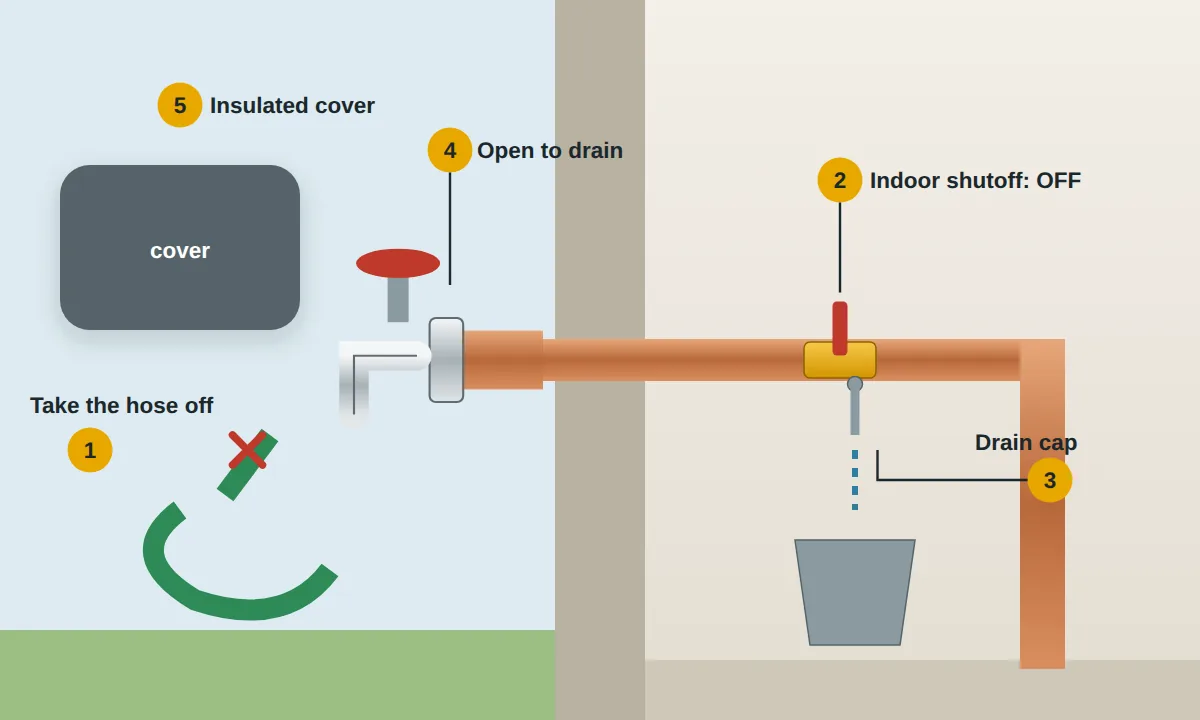
- Disconnect the hoseUnscrew every hose, drain it and store it. A hose left on keeps water trapped in the faucet, even a frost-free one.
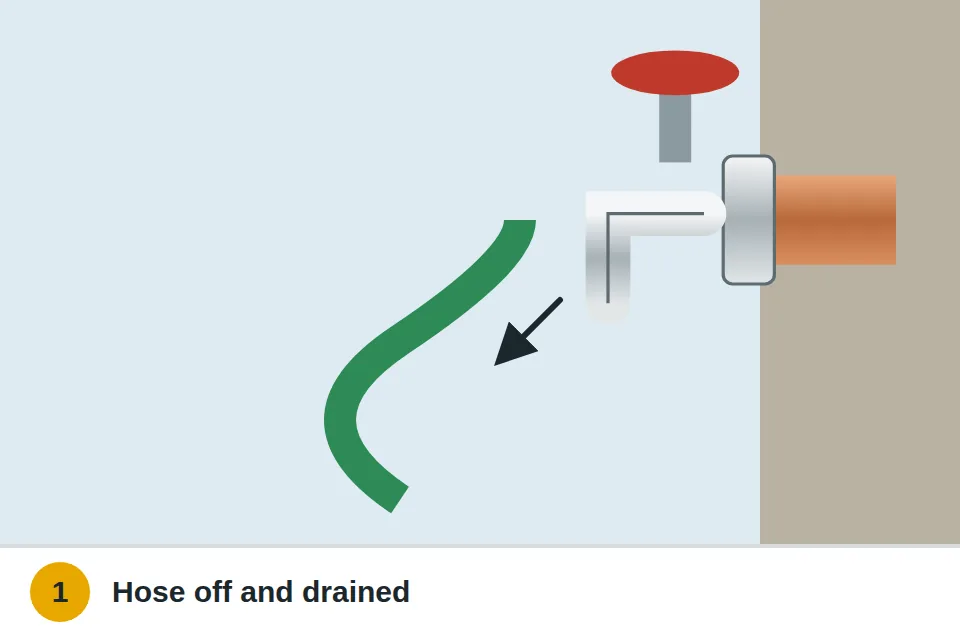
- Find the indoor shutoffInside, follow the pipe from where the faucet goes through the wall, in the basement, crawl space or a utility room. Look for a small valve on that line. Not every house has one.
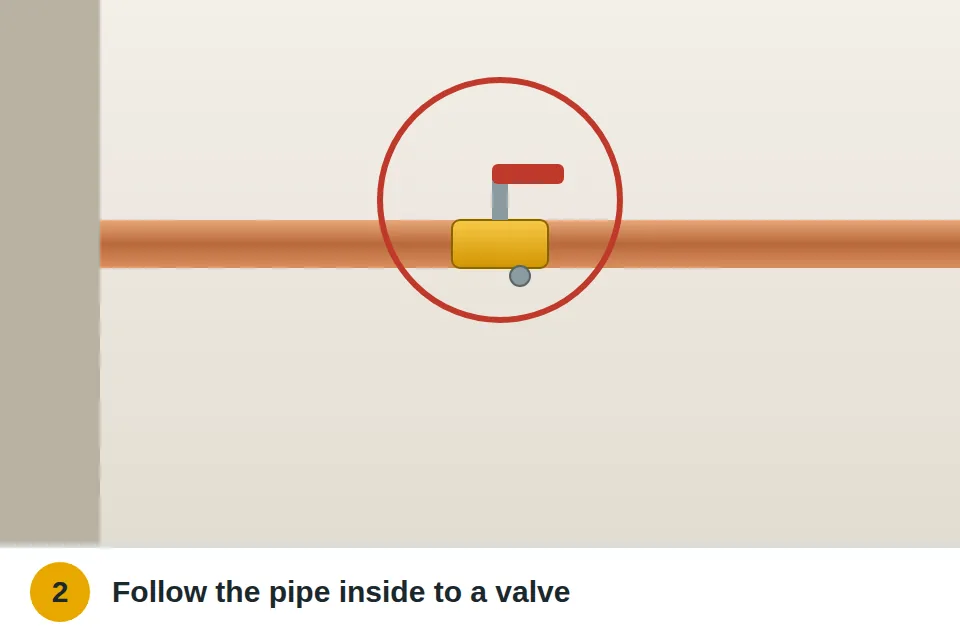
- Shut it offTurn a round handle clockwise until it stops, or turn a lever across the pipe. If the valve has a small drain cap on its side, put a bucket underneath and open the cap. The line drains fully once you open the outdoor faucet in the next step.
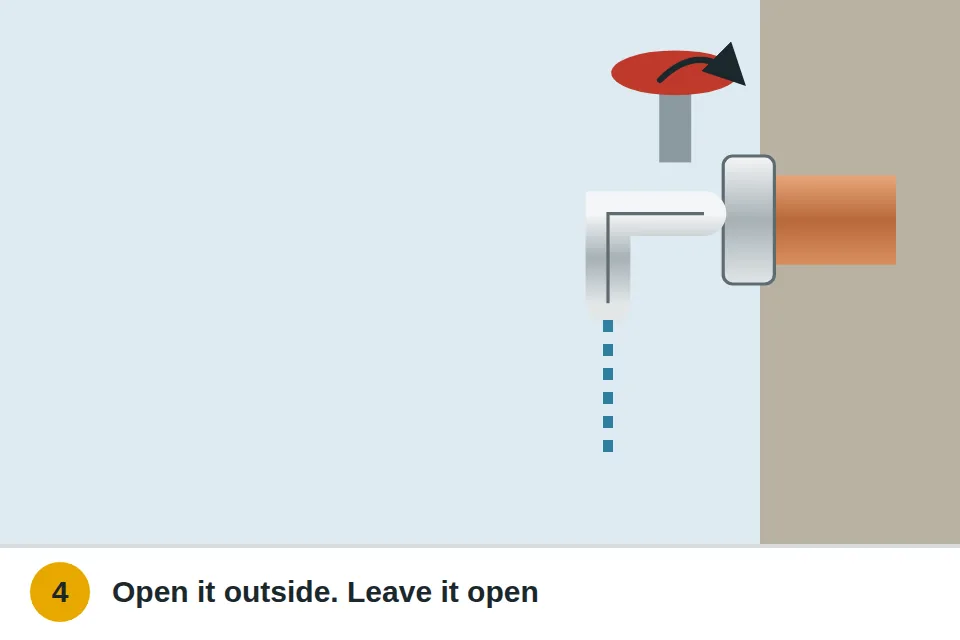
- Drain the outside faucetOpen the outdoor faucet fully and let the water run out. If you shut it off inside, leave the outdoor faucet open for the winter so any leftover water can drain.
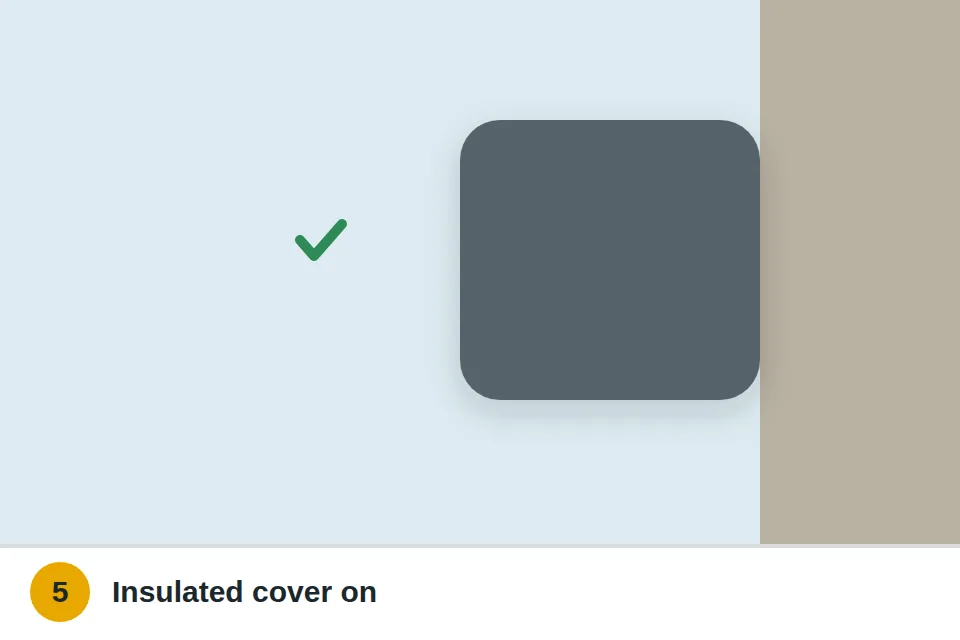
- Cover itFit an insulated cover over the faucet. It's inexpensive and adds a little protection, especially for standard faucets on exposed walls.
If you find a leak in spring
If water comes out of the wall instead of the spout, or you find a wet spot inside when the faucet runs, the pipe or faucet body has likely split. Shut the indoor valve and call a plumber.
If a frost-free faucet drips from the spout after you turn it off, the washer inside may be worn. It can often be replaced without replacing the whole faucet.
What a pro typically charges (a rough estimate; prices vary by area): A plumber typically charges $150–$350 to replace an outdoor faucet, more if a frozen pipe inside the wall needs repair.
Something else going on?
Outdoor faucet questions
When should I winterize outdoor faucets?
Before the first hard freeze in your area.
Do I need to winterize a frost-free faucet?
Yes, but it's easy: take the hose off. With the hose attached, water can't drain, and even a frost-free faucet can split.
Should I leave the outdoor faucet open all winter?
If you've shut it off inside, yes. Leaving it open lets any remaining water drain out.
How do I know if my outdoor faucet froze?
Often not until spring. Watch for weak flow, water spraying from behind the handle, or a wet spot inside the wall when you run it.
Still stuck? Ask us
Tell us what you're seeing and what you've tried. We read every question, and the ones that will help other people get answered on this page.