Kitchen & laundry

Washing machine leaking

A washer leak is usually from a loose or worn fill hose at the back, the drain hose or standpipe, too many suds, or on front-loaders, the door seal. Find where the water shows up first; the fix depends on it. Most of these are quick and cheap to fix yourself. Braided stainless steel hoses are worth the few extra dollars. Rubber hoses can split without warning, especially as they age.

Hand tightening a braided supply hose on the back of a washer, with a small puddle on the floor below
Loose or worn supply hoses are a common source of washer leaks.
Quick answerWatch where the water comes from. Tighten or replace the fill hoses, secure the drain hose, use the right amount of HE detergent, and check the door seal and level.
Worth checking firstPut a dry towel under the washer and run a short cycle. Water at the back during filling usually means the fill hoses. Water during draining points to the drain hose or standpipe. Water at the front of a front-loader points to the door seal.

Good to knowRepair or replace?Water emergency? Start here

Easy20–45 min$0–40
A washing machine from the side and back: hot and cold fill hoses running from the wall valves to the washer, the drain hose hooked into a standpipe, the front door seal on a front-loader, too many suds, and the leveling feet.
Check the fill hoses at the back (1) and the drain hose in the standpipe (2). Front-loaders can leak at the door seal (3). Too many suds (4) push water out, and a washer that isn't level on its feet (5) can splash.

Where washers leak

Washers take in water through two fill hoses at the back and pump it out through a drain hose into a or sink. Each connection can drip, and rubber hoses wear out over time.

Front-loaders seal the door with a rubber gasket that can tear or hold things like socks and coins that let water out. Too much detergent, or the wrong kind, can make suds that spill over.

Common causes of a washer leak

A loose or worn fill hose

Drips at the back while filling.

A drain hose or clogged standpipe

Water during draining.

Too many suds

Water from the door or drawer.

A torn door seal

Front-loaders, at the door.

When does it leak?
When or whereLikely causeFix
While filling, at the backFill hoseTighten or replace.
While drainingDrain hose or standpipeSecure the hose; clear the standpipe.
At the door, front-loaderDoor seal or sudsClean or replace the seal; less soap.
Underneath, hoses dryPump or tubCall a technician.
Water off, then lookUnplug the washer and turn off both water valves before you disconnect hoses. If water is spreading near outlets or cords, turn off the circuit breaker first if you can reach it without standing in water.

Find the leak, then stop it

0 of 6 done
  1. Find the leakDry the floor and the washer, then run a short cycle and watch. Note whether water shows up at the front, the back, or underneath, and whether it's during filling, washing or draining.
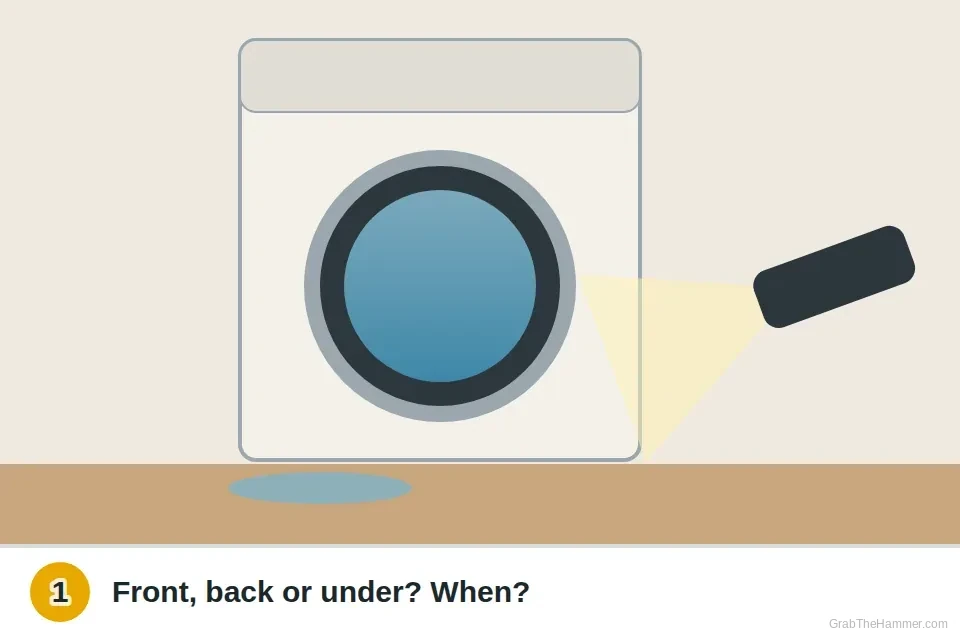
    Flashlight shining under a washing machine at a small puddle while it runs
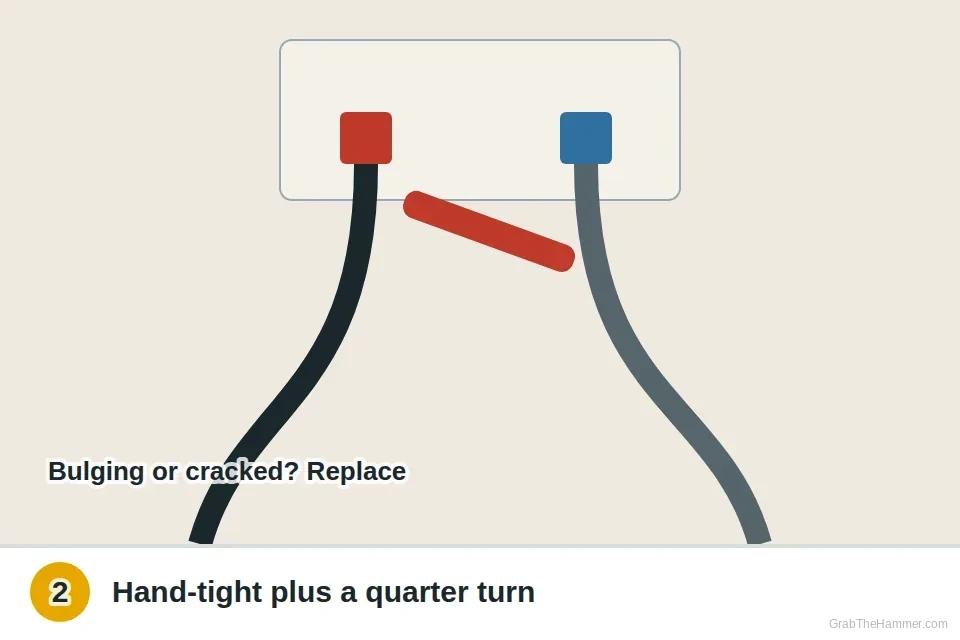
  2. Check the fill hosesPull the washer out and look at the hot and cold hoses. Tighten the connections by hand plus a quarter turn with pliers. Replace a hose that's cracked, bulging or old; braided stainless hoses last longer.
    Something went wrong?
    • The hose still drips after tightening Look inside the coupling for the rubber washer. If it's flat, cracked or missing, replace it or the whole hose.
    Pliers giving a hot water fill hose coupling a quarter turn at the back of the washer
  3. Check the drain hoseMake sure the drain hose is secured in the standpipe or sink and isn't cracked. If water comes up out of the standpipe while it drains, the standpipe is clogged.
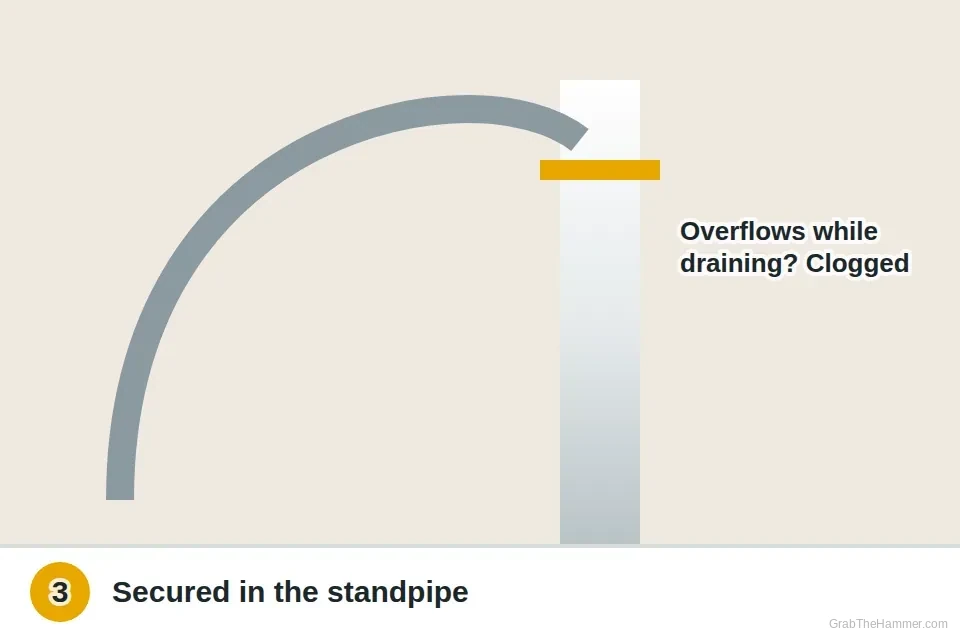
    Washer drain hose hooked securely into a standpipe with a strap
  4. Check the soapUse HE detergent in an HE washer, and only as much as the manual calls for. Extra suds can push water out of the door or the detergent drawer.
    HE detergent bottle with a check mark next to a mound of overflowing suds crossed out
  5. Check the door sealOn a front-loader, pull back the rubber gasket and look for tears and anything stuck in the fold. Wipe it clean. A torn gasket needs replacing.
    Something went wrong?
    • There's a tear in the door seal Small tears can't be patched well. A replacement gasket fits most front-loaders and is a manageable DIY job with the manual.
    Front-loader door gasket folded back to show a trapped sock and a small tear
  6. Level itSet a level on top and adjust the feet so it sits level and doesn't rock. A tilted washer can splash water out during spin.
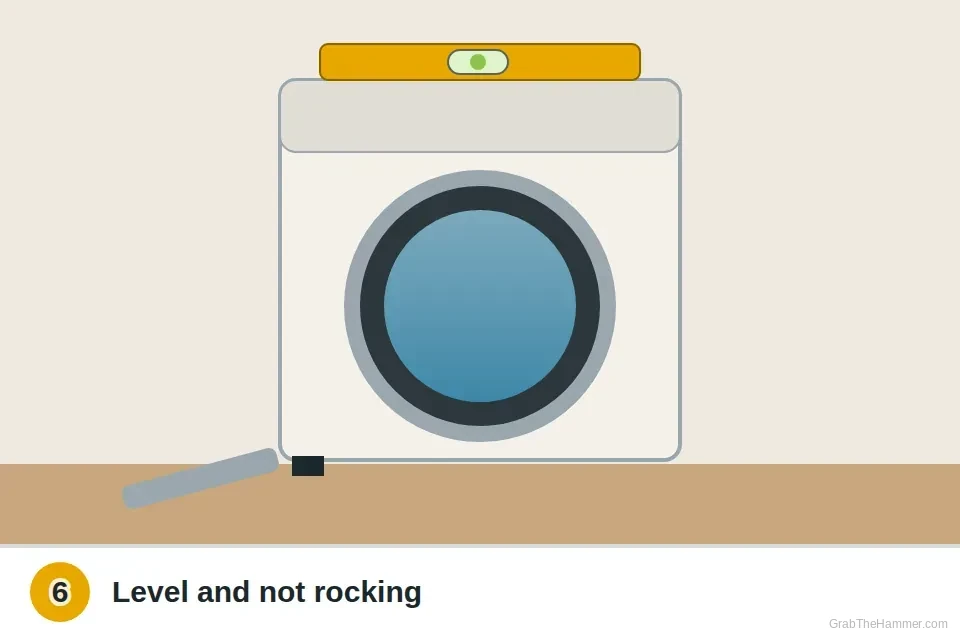
    Level on top of the washer and a wrench adjusting a front foot

Watch it done

Washing Machine Leaking: Top 6 Reasons and FixesBy AppliancePartsPros on YouTube. Their method may vary a little from ours.
Watch on YouTube
How you'll know it's fixed
  • The floor stays dry through a full cycle
  • Hose connections stay dry during filling
  • The washer sits level and doesn't rock during spin
  • No water comes up out of the standpipe while draining

Dripping under the front? Check the pump and its filter cap.

If it still leaks

If it only leaks during draining and the standpipe overflows, the drain line is clogged. A small drain snake down the standpipe often clears it.

If water drips from under the front, the pump or its filter cap may be leaking. Check that the filter cap is screwed in tight.

Swap the hoses every few yearsReplace rubber fill hoses about every five years, even if they look fine. A burst hose can flood a room fast. If the washer fills slowly after you reconnect the hoses, clean the inlet screens.
Renting?If you rent, report leaks to your landlord right away to protect the floors.
Call a technician ifWater comes from under the washer with the hoses dry, the pump or tub is leaking, the leak is from inside the cabinet, or water has soaked into the floor.Fix it yourself or call? Compare the cost →

What a pro typically charges (a rough estimate; prices vary by area): A washer repair call typically runs $150–$350. A pair of new braided fill hoses costs about $20–$40.

Find appliance repair near you

Something else going on?

Washer leak questions

Why is my washing machine leaking from the bottom?

Often a fill or drain hose connection, too many suds, or on a front-loader, the door seal or pump filter cap.

How often should I replace washer hoses?

About every five years is a common rule. Braided stainless hoses last longer than rubber.

Can too much detergent make a washer leak?

Yes. Extra suds can spill out of the door or drawer. Use HE detergent in HE washers.

Why does my washer leak only when draining?

The drain hose may be loose, or the standpipe is clogged and overflowing.

Why is there water under my washing machine?

Usually a loose or worn fill hose, the drain hose or standpipe, too many suds, or on front-loaders the door seal.

Reader reports

Did this fix work for you?

Tell the next person how it went. Your numbers are added to the totals anonymously; tips are read by our team before they appear.

How did it go?
Reader Q&A

Questions from readers

No questions on this guide yet. If you're stuck, ask below. Useful questions and answers get added here for the next person.

Ask a question

We read every question before anything is published, and we never show names or emails. Please leave out personal details. PrivacyAccessibility

About the authors

GrabTheHammer Team

  • No sponsored picks
  • Safety first
  • Tells you when to call a pro

We're a small team of writers and editors who check every guide against manufacturer instructions and common code requirements. Our goal is to help you understand the problem, tackle what you safely can and know when to call a pro.

Checked against: Manufacturer instructions for the parts and products involved.

How we write and review →
A helpful next stepGet rid of a smelly washing machineClean the door seal, the detergent drawer and the drain filter.