Bleed a radiator
The radiator's on, the bottom is warm, and the top is stone cold. That's air trapped inside, taking up space the hot water should fill. Letting it out takes a two-dollar key, an old towel and about ten minutes a radiator.
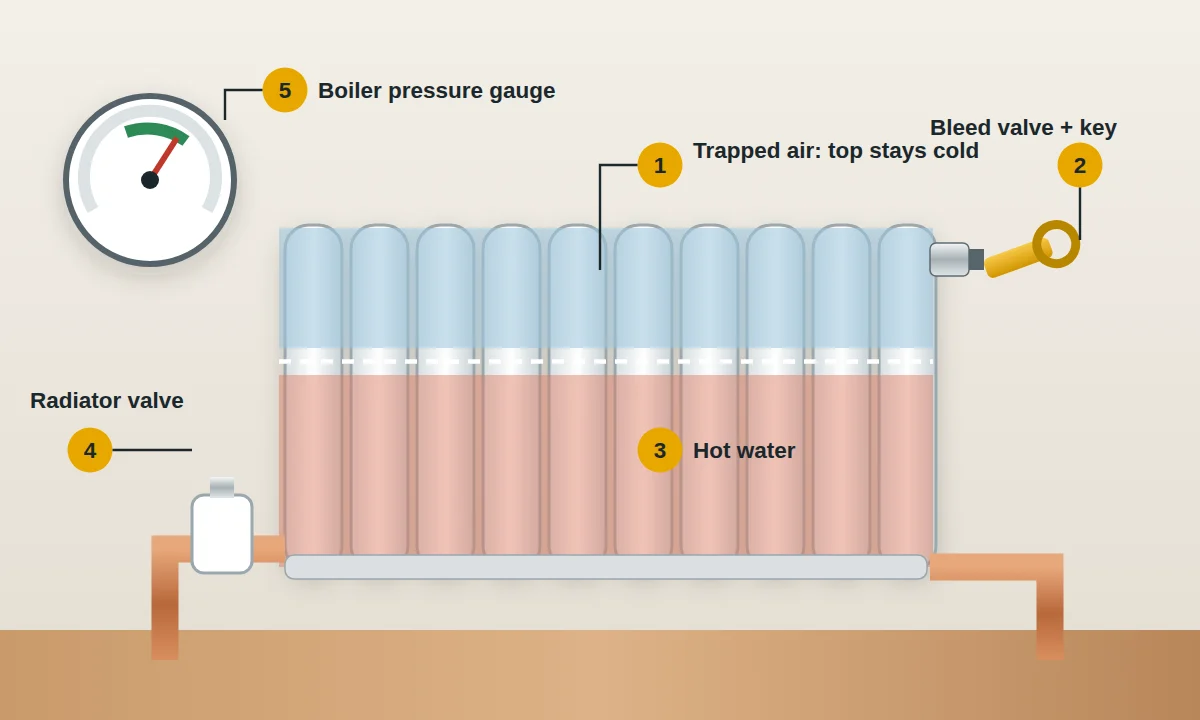
What's actually going on
Hot-water heating systems pump water from the boiler through each radiator. Air sneaks in over time and rises to the top, where it sits in a pocket the hot water can't reach. A small bleed valve at the top corner lets that air out. Once it's gone, water fills the whole radiator and it heats evenly again.
This guide is for hot-water radiators, the kind with a small square or slotted valve at one top corner. Steam radiators have a bullet-shaped vent on the side and bleed themselves, so leave those alone.
Why it happens
The classic sign: cold at the top, warm at the bottom. Bleeding fixes it.
Cold at the bottom but warm at the top means rust and sludge have settled inside. That needs a flush, not a bleed.
If the boiler pressure is too low, water can't push up to every radiator, especially upstairs.
Thermostatic valves have a small pin under the head that can stick. If one radiator stays cold top to bottom, that's a likely suspect.
| What you notice | Likely cause | Fix |
|---|---|---|
| Cold at the top, warm at the bottom | Trapped air | Bleed it. |
| Cold at the bottom, warm at the top | Sludge inside | Needs a system flush. |
| Completely cold, others are warm | Stuck valve or closed valve | Check both valves, tap the valve pin. |
| Upstairs radiators cold, downstairs fine | Low system pressure | Check and top up the boiler pressure. |
| Gurgling or banging | Air in the system | Bleed the radiators, starting downstairs. |
Let the air out
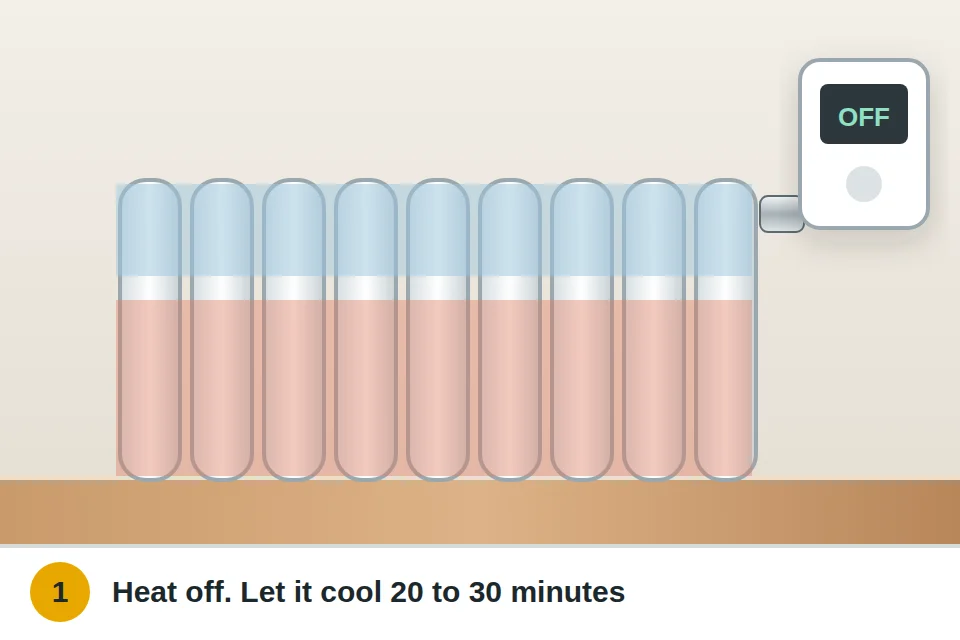
- Turn the heat offSwitch the heating off and give the radiators 20 to 30 minutes to cool. The water inside can be scalding, and air collects better when the pump isn't running.
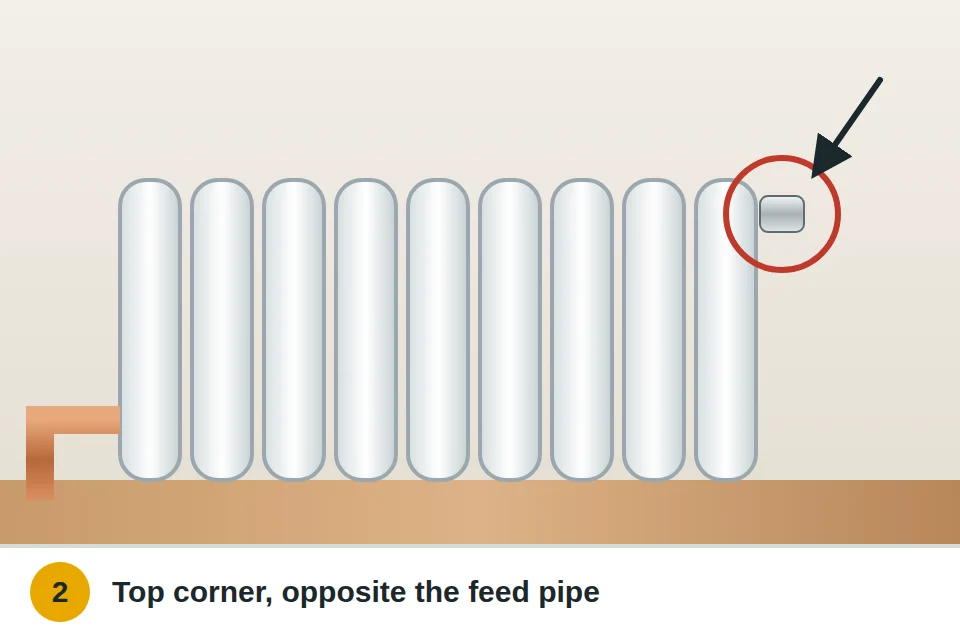
- Find the bleed valveLook at the top corner, usually on the opposite end from the pipe that feeds it. It's a small round valve with a square pin or a screwdriver slot in the middle.
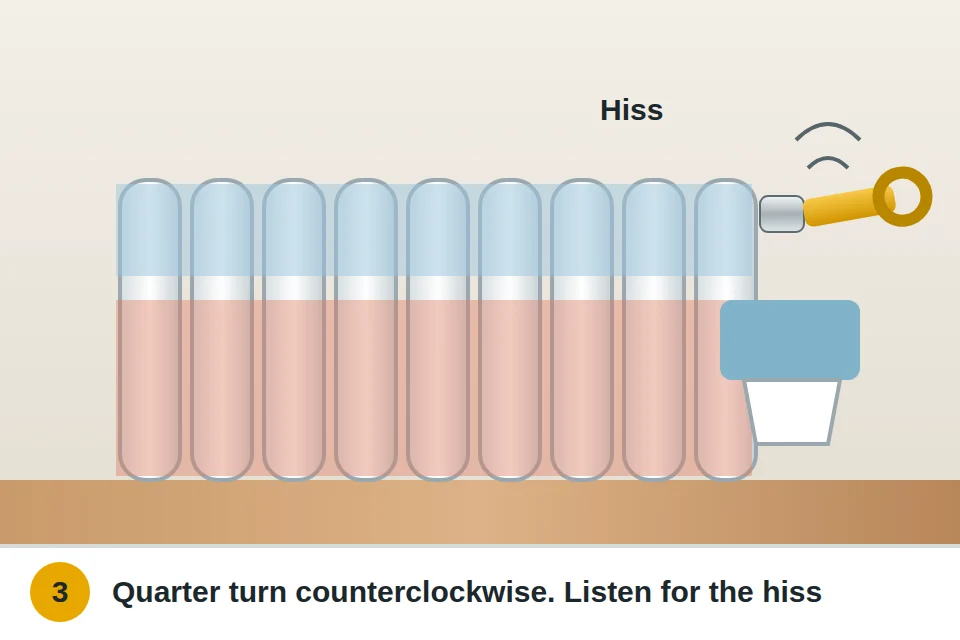
- Open it slowlyHold the towel and cup under the valve. Fit the key and turn it counterclockwise about a quarter turn. You'll hear air hiss out. That's what you want.
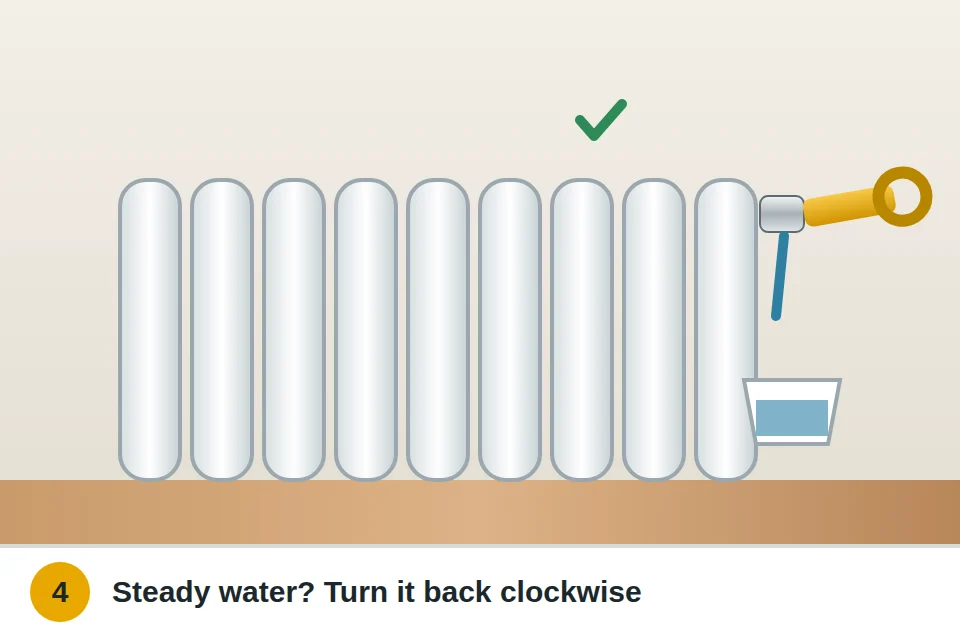
- Close it when water comesWhen the hiss stops and a steady trickle of water appears, turn the key clockwise to close it. Snug, not forced.
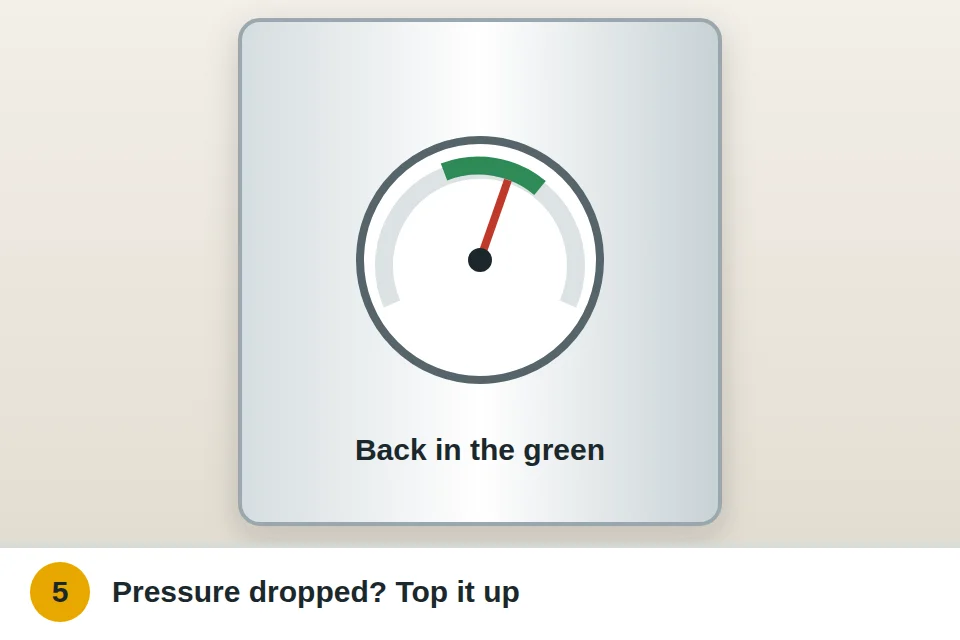
- Check the pressureTurn the heat back on. Look at the pressure gauge on the boiler. If it dropped below its usual level, top it up following the boiler's instructions, then check each radiator warms top to bottom.
Still not fixed?
If one radiator stays completely cold, take the head off its thermostatic valve and gently tap the pin underneath. It should spring up and down.
If you have to bleed the same radiator every week or two, air is getting in somewhere. Have the system checked for a small leak or a faulty part.
What a pro charges: A heating technician typically charges $100–$250 for a visit. A full system flush for sludge costs more, often $300–$700.
Common questions
How do I know if my radiator needs bleeding?
It's cold at the top and warm at the bottom, or you hear gurgling when the heat comes on.
How often should I bleed my radiators?
Once a year, before the heating season, is enough for most homes. If one needs it constantly, have the system checked.
Should the heating be on or off when bleeding radiators?
Off, and cooled down. The water can be very hot, and the air settles at the top when the pump is off.
What pressure should my boiler be?
Most sealed home systems sit around 1 to 1.5 bar, or roughly 12 to 15 psi, when cold. Your boiler's manual or the gauge markings show the right range.
What if water sprays out when I bleed?
Close the valve right away; you've got the air out. A quarter turn is all you need, which keeps the flow manageable.