Thermostat not working or blank
A blank or unresponsive thermostat has usually lost power, and the fix is often free: fresh batteries, a tripped breaker, or the furnace power switch. If the screen is on but nothing starts, check the settings and the furnace door before deciding the thermostat has failed.

Where its power comes from
Thermostats get their power from batteries, from the heating system through a low-voltage wire, or both. Weak batteries can blank the screen or stop it from signaling the system, and a system that's lost power can take the thermostat down with it.
A thermostat is really just a switch that tells the furnace or air conditioner when to run. If it has power and the right settings but nothing happens, the problem is often at the equipment: a switch, a breaker, a door panel or a safety shutoff.
Why thermostats go blank
The most common reason for a blank screen.
A tripped breaker, a switched-off furnace, or a blown control fuse.
A full condensate pan or an open furnace door keeps the system off.
OFF, the wrong mode, or a hold setting.
| What you see | Likely cause | What to check |
|---|---|---|
| A blank screen | Dead batteries or no power | Batteries, breaker, furnace switch. |
| A low battery warning | Batteries running down | Replace them. |
| Screen on, nothing runs | Settings, a safety shutoff, or the equipment | Mode, drain pan, furnace door, status light. |
| Goes blank when the system runs | Power supply or wiring | Call an HVAC tech. |
Let's fix it
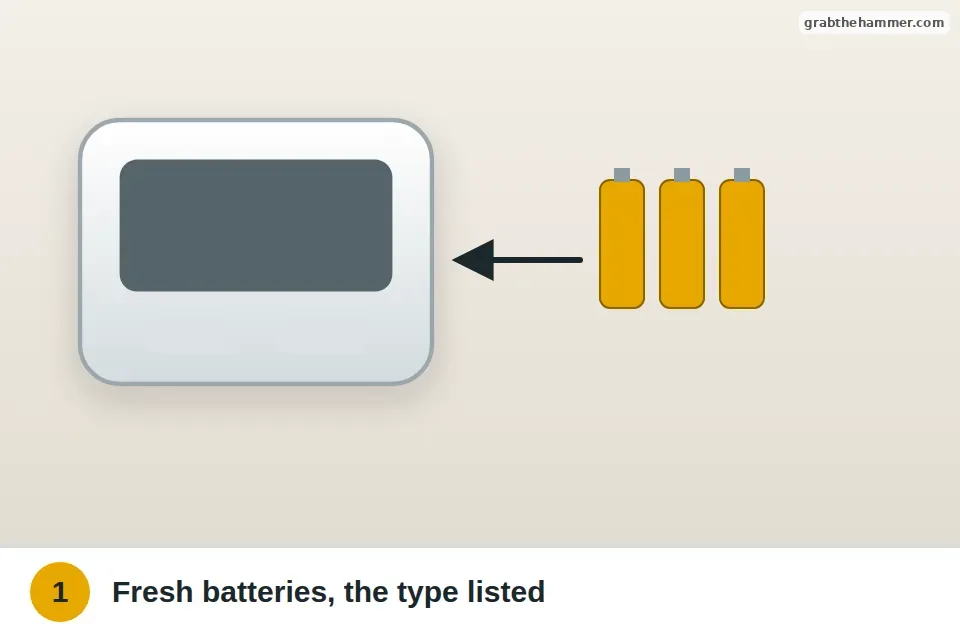
- Replace the batteriesPull the thermostat face off its base, or open the battery door, and put in fresh batteries of the type listed. Many thermostats go blank or stop signaling the system when the batteries run low.
- Check the settingsMake sure it's set to HEAT or COOL, not OFF, with the temperature a few degrees past the room's and the fan on AUTO. Look for a hold or schedule that's overriding what you set.

- Check the breaker and furnace switchLook for a tripped breaker for the furnace or air handler, and make sure the power switch near the furnace, the one that looks like a light switch, is on.

- Check the furnace door and drainMany furnaces won't run if the front panel isn't fully seated. Many air handlers and high-efficiency furnaces also shut off when their condensate drain backs up, so look for a full drain pan. On some systems, a tripped drain switch cuts power to the thermostat too, so a blank screen and a full pan point to the drain.

- Wait, then listenMany systems wait a few minutes after a setting change before starting. Give it about five minutes and listen for the system to come on.
If it has power but nothing runs
If the screen works but nothing runs, check the condensate drain and the furnace door again, and look for a blinking status light on the furnace. The label inside the furnace door explains the codes.
Some thermostats are powered only by the system through a common wire, often called the C wire. If the screen goes blank whenever the system runs, or after a new thermostat went in, the wiring may need an HVAC technician.
What a pro typically charges (a rough estimate; prices vary by area): An HVAC service call typically runs $100–$250. A new thermostat installed by a pro usually costs $150–$400, more for a smart thermostat that needs a new wire.
Other heating and cooling problems
Thermostat questions
Why is my thermostat blank?
Most often dead batteries. If new batteries don't help, check the furnace breaker and power switch.
Do all thermostats have batteries?
No. Some run only on power from the system. Check the manual or look for a battery door or slot.
How long should I wait after changing the setting?
Many systems delay a few minutes to protect the equipment. Give it about five minutes.
Can I replace a thermostat myself?
Many people do, with the power off and the old wiring photographed. Smart thermostats may need a common wire; if you're unsure, get help.
Still stuck? Ask us
Tell us what you're seeing and what you've tried. We read every question, and the ones that will help other people get answered on this page.