Clean and seal a wood deck
To clean and seal a wood deck, scrub it with a deck cleaner, let it dry for a couple of days, then apply a thin, even coat of sealer or stain a few boards at a time. A deck needs it when water soaks in instead of beading up. It's an easy job but it takes a weekend, mostly waiting for wood and sealer to dry. Clean and dry wood is what makes sealer last.


Why decks need sealing
Bare wood soaks up rain and dries in the sun over and over, which makes it crack, split, cup and turn gray. A deck sealer or penetrating stain soaks into the surface and slows down how fast water gets in. Clear sealers protect against water; stains with pigment also block sunlight, which is what turns wood gray.
Sealer only soaks in well on wood that's clean and dry. Dirt, mildew and the gray layer of sun-damaged fibers block it, so cleaning is half the job. New pressure-treated wood also needs time to dry out before it will take a sealer; the product label says how long.
Signs a deck needs it
The old sealer has worn off.
Sun has broken down the surface.
They block new sealer.
Wood has dried and swelled for years.
| You see | What it means | Start at |
|---|---|---|
| Water beads up | Sealer is still working | Wait |
| Water soaks in fast | Time to seal | Step 2 |
| Gray, dirty or mildewed | Clean first | Step 4 |
| Soft or rotted boards | Repair first | Call a pro |
Let's fix it
- Do the water testSprinkle a cup of water on a few boards in sun and in shade. If it beads up, the deck doesn't need sealing yet. If it soaks in within a few minutes and the wood darkens, it's time.

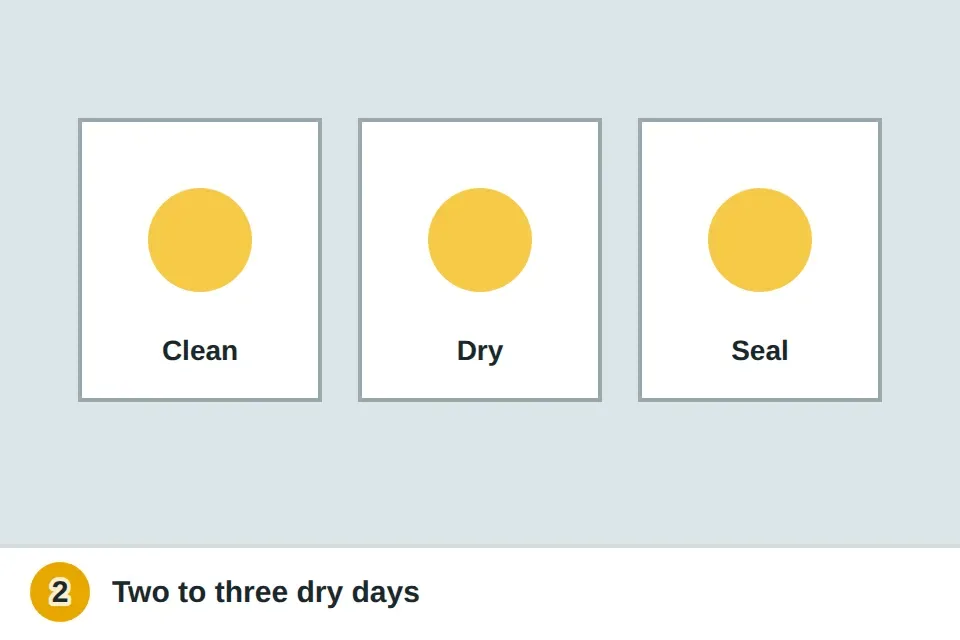
- Pick the weatherYou need two to three dry days in a row: one to clean, one or more for the wood to dry, and a dry day to seal with no rain for at least a day after. Check the temperature range on the sealer label, and avoid sealing in hot midday sun, which dries it before it soaks in.
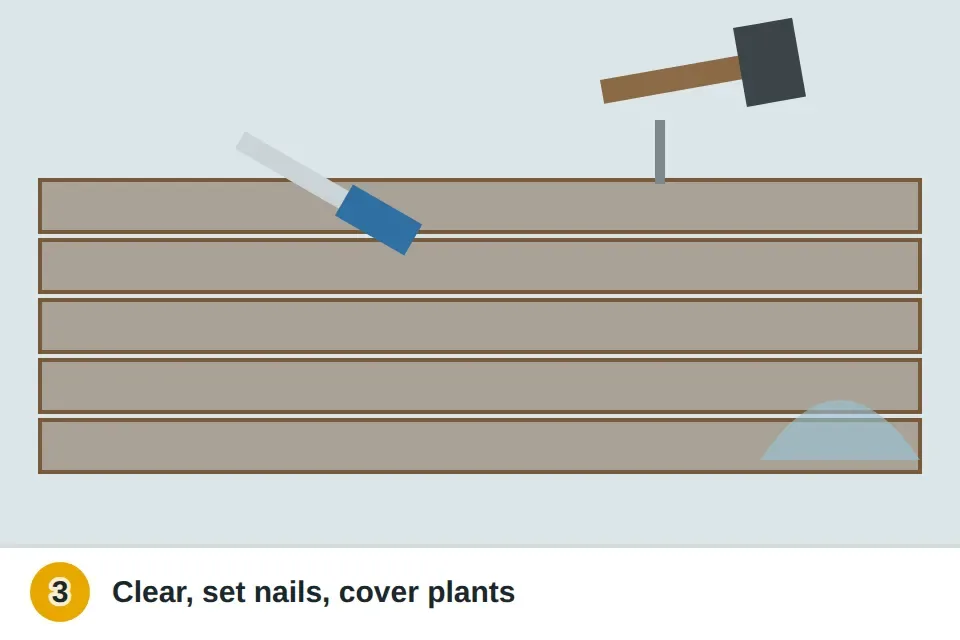
- Prep the deckMove furniture, grills and planters off. Sweep it and clear the gaps between boards with a putty knife. Set popped nails and tighten loose screws. Cover nearby plants and siding with plastic, and wet the plants before and after cleaning.
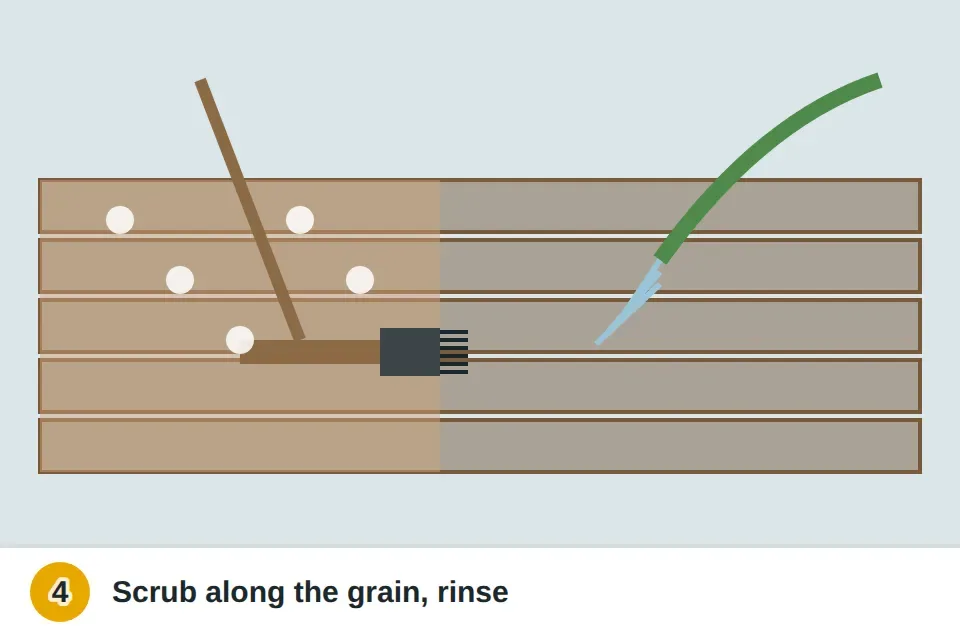
- Clean itMix the deck cleaner as the label says, wet the deck, and spread the cleaner on a section at a time. Let it sit as directed without drying, then scrub along the grain with a stiff brush. Rinse well. If the cleaner label calls for a wood brightener afterward, apply it now. A pressure washer on low pressure with a wide fan tip held a foot or more away can help rinse, but up close it gouges and fuzzes the wood.
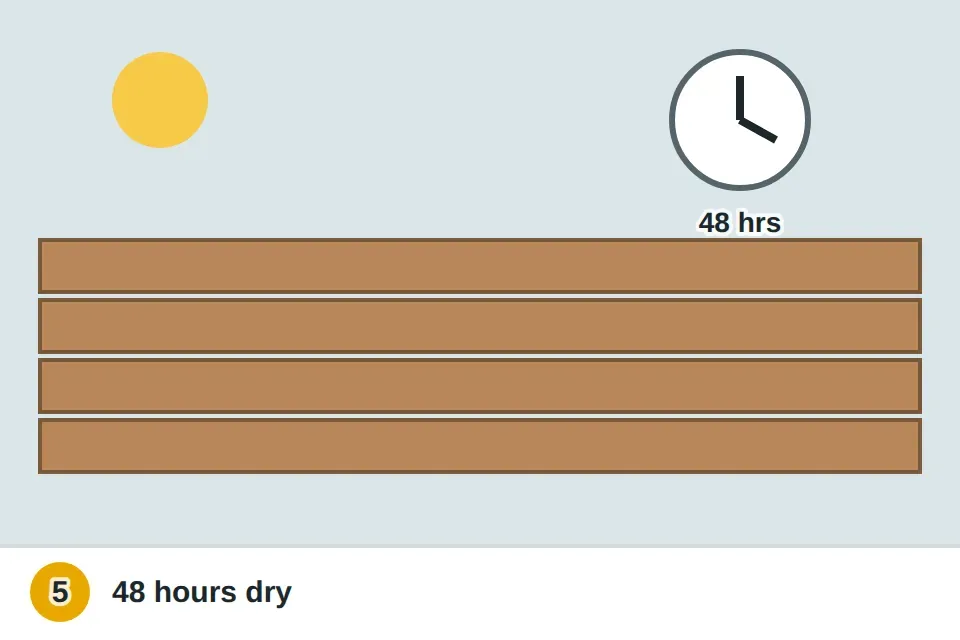
- Let it dryGive the deck at least 48 hours of dry weather, or the time the sealer label requires. Sealer on damp wood stays on top, peels and blotches. If the wood still darkens when you sprinkle water on it the next day, it's still too wet.
- Apply the sealerStir it well; don't shake it. Start with the railings, then do the deck two or three boards at a time along their full length so you don't leave lap marks. Put on a thin, even coat with a pad, roller or brush, then brush back over it to work it in and spread any puddles. Most penetrating products need only one coat; follow the label if it calls for two.

- Let it cureKeep people and pets off for the time on the label, usually a day or two before furniture goes back. Spread oily rags flat outside to dry, or put them in a metal can filled with water and sealed, then dispose of them as your local rules allow.

Watch it done
- Water beads up on the boards
- The color is even with no puddles
- The surface isn't sticky after the cure time
Sticky or blotchy? Wipe off the excess and let it cure longer.
If boards are damaged
If a board is cracked or soft, see the guide for replacing a deck board.
If the railing wobbles, see the guide for a wobbly deck railing.
What a pro typically charges (a rough estimate; prices vary by area): Deck cleaning and sealing typically runs about $1.50–$4 per square foot from a contractor, depending on size, condition and product.
Find a handyman near youSomething else going on?
Deck sealing questions
How often should I seal my deck?
When water soaks in instead of beading up. For many decks that's every one to three years, depending on sun, weather and the product.
How long after cleaning a deck can I seal it?
Usually at least 48 hours of dry weather, or the time on the sealer label.
Can I use bleach to clean my deck?
Use an oxygen-bleach deck cleaner instead. Chlorine bleach damages wood fibers and harms plants.
Should I pressure wash my deck before sealing?
You can, on low pressure with a wide fan tip held well back. Up close, it gouges the wood.
How many coats of deck sealer do I need?
Most penetrating sealers need one thin coat. Follow the label; extra coats that can't soak in stay sticky and peel.