Replace a cracked or loose deck board
One board on the deck is cracked, soft, or popping up at the end. Replacing a single deck board is a manageable weekend job that makes the deck safer and better looking, as long as the joists underneath are still solid.
What's actually going on
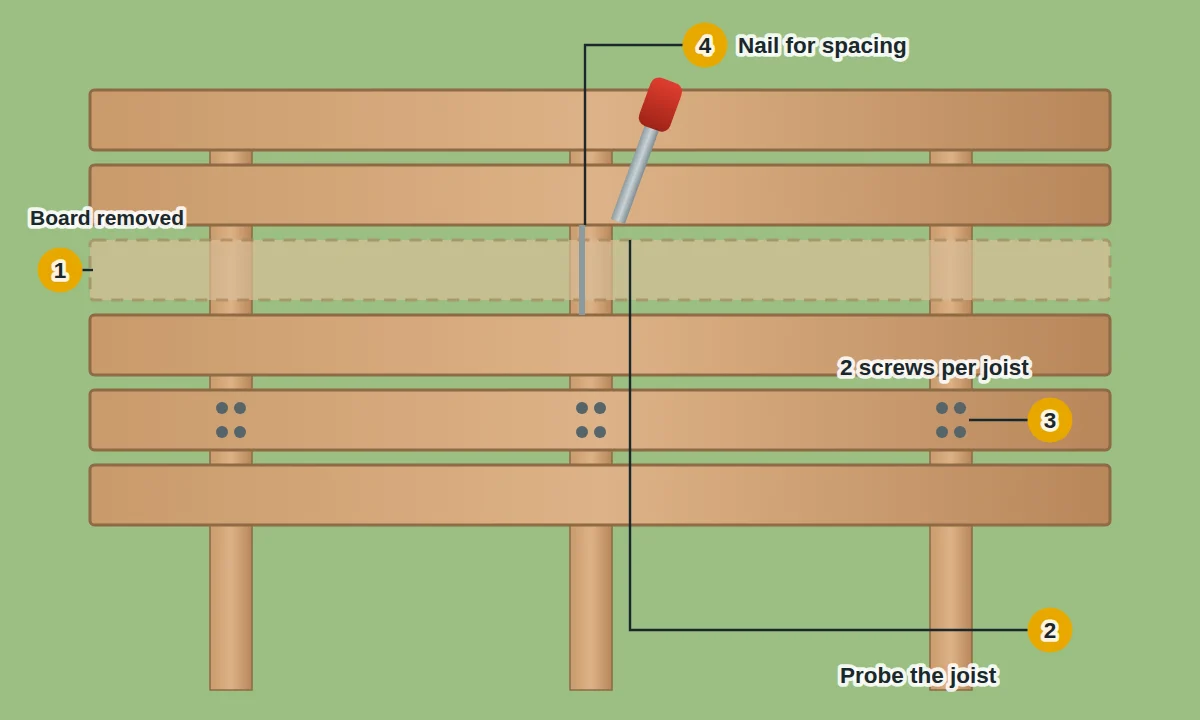
Deck boards are screwed or nailed to joists, the beams underneath. Boards crack from sun and weather, and fasteners loosen over time. Replacing a board is mostly about removing it cleanly, checking the joists, and fastening the new board with the same spacing.
Why it happens
Boards crack and split over time.
Nails work loose as wood expands and contracts.
Standing water rots boards from underneath.
High-traffic spots wear out first.
Let's fix it
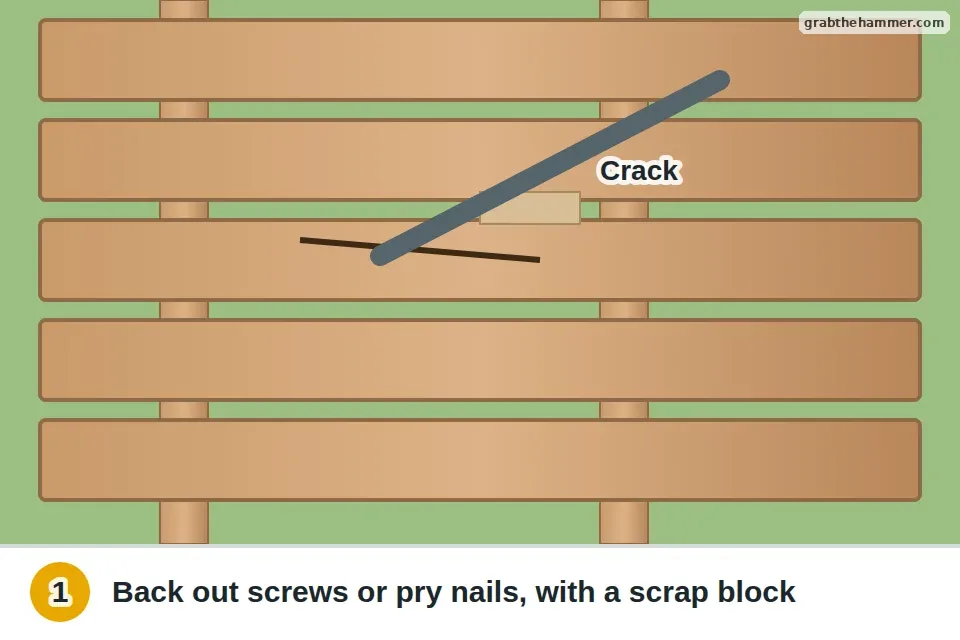
- Remove the fastenersBack out screws or pry up nails. A pry bar and a scrap block protect the neighboring boards.
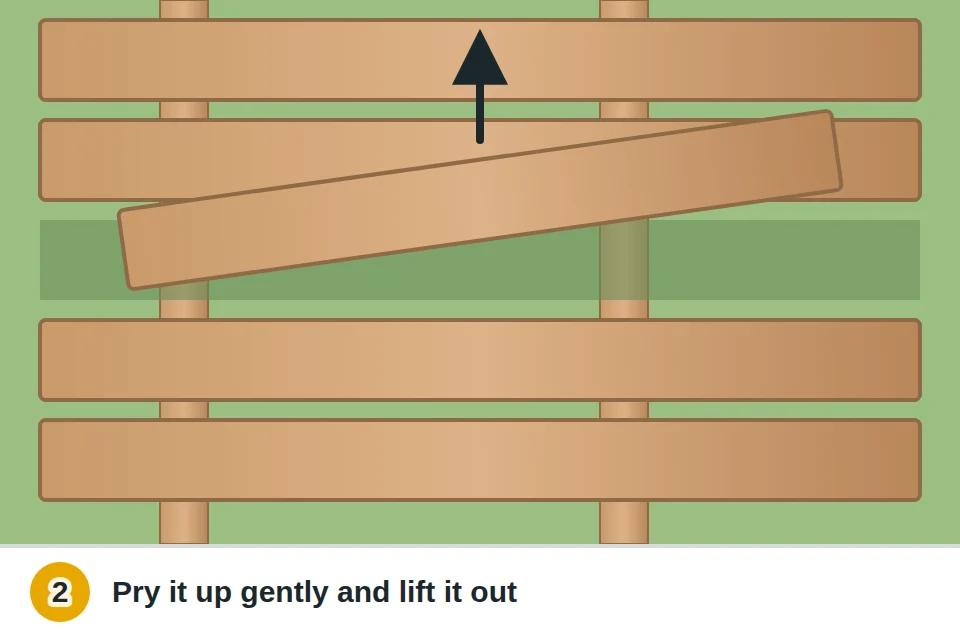
- Lift out the boardPry the board up gently and remove it.
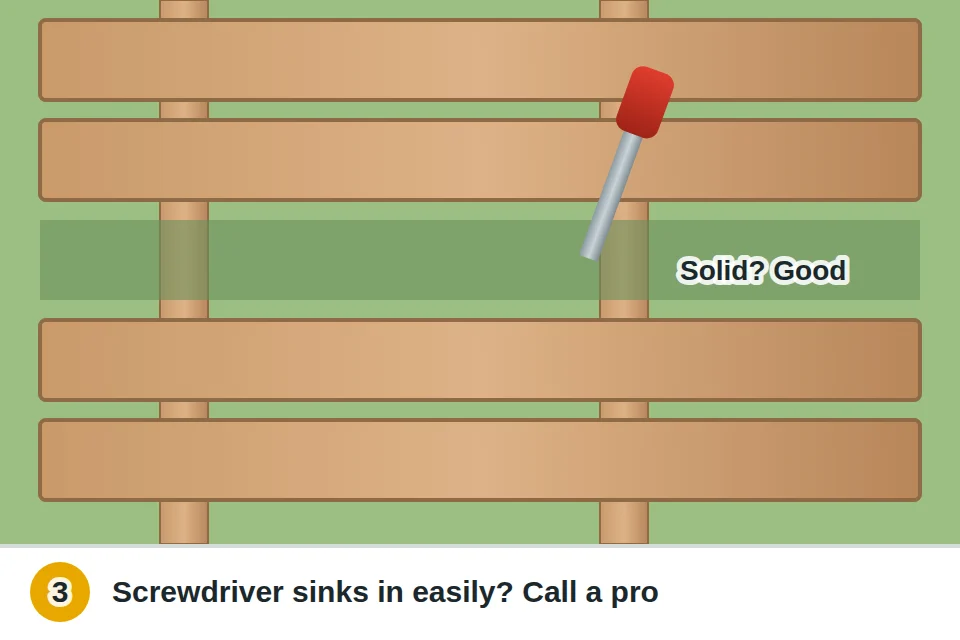
- Check the joistsPress a screwdriver into the joists underneath. If it sinks in easily, the wood is rotting and needs a pro.
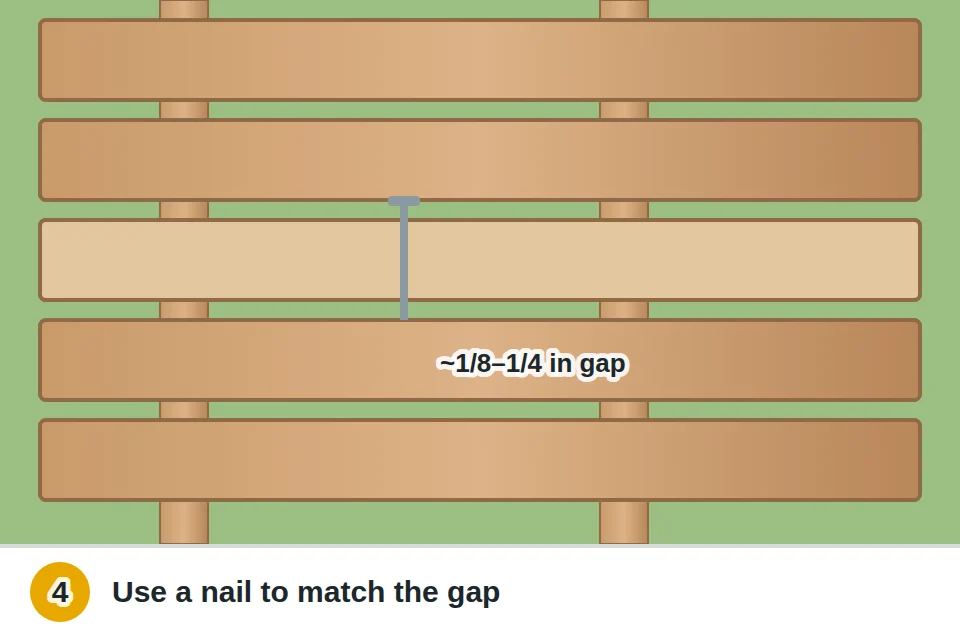
- Cut and place the new boardCut the new board to length, match the gap to the other boards using a nail as a spacer, and set it in place.
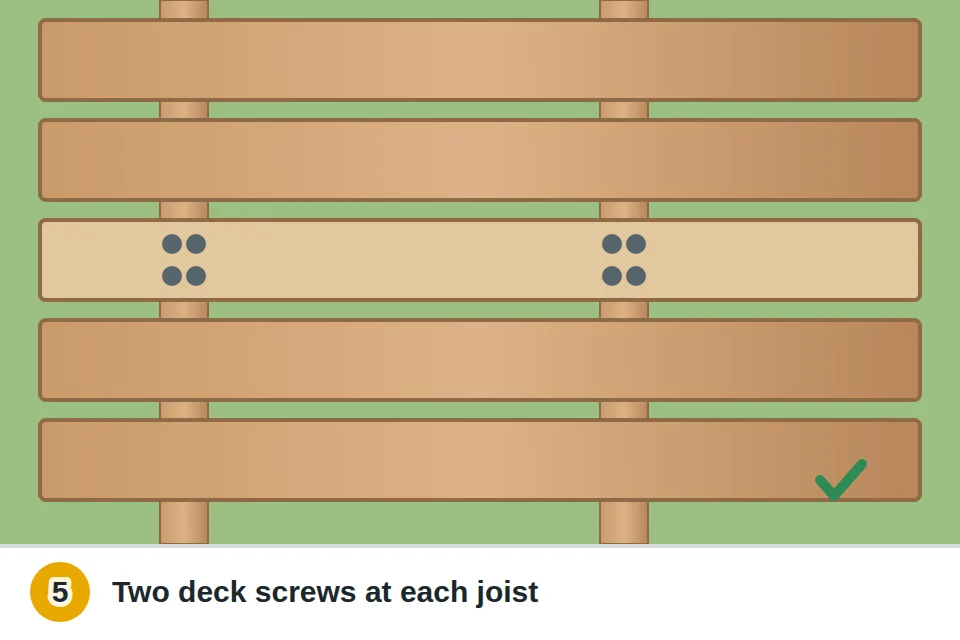
- Screw it downDrive two exterior deck screws at each joist, about 3/4 inch from each edge.
Still not fixed?
If the new board looks too different, a deck stain can help it blend in after it dries for a few weeks.
If a board keeps lifting at the end, add a screw closer to the end, or replace nails with screws.
What a pro charges: A deck repair pro typically charges $150–$400 to replace a few boards.
Common questions
Should I use nails or screws on a deck?
Exterior deck screws hold better and are easier to remove later.
How much gap should deck boards have?
About 1/8 to 1/4 inch, roughly the thickness of a 16d nail, so water can drain.