Exterior

Fill cracks in an asphalt driveway

Filling cracks in an asphalt driveway keeps water from getting under the pavement, where it freezes, pushes the cracks wider and breaks the base underneath. Narrow cracks are an easy weekend job with a pourable or caulk-tube asphalt crack filler. The work is mostly cleaning: the filler only bonds to clean, dry asphalt. Wide areas of interconnected cracks, called alligator cracking, mean the base has failed and need a paving contractor. Fill cracks while they're small, and the driveway lasts a lot longer.
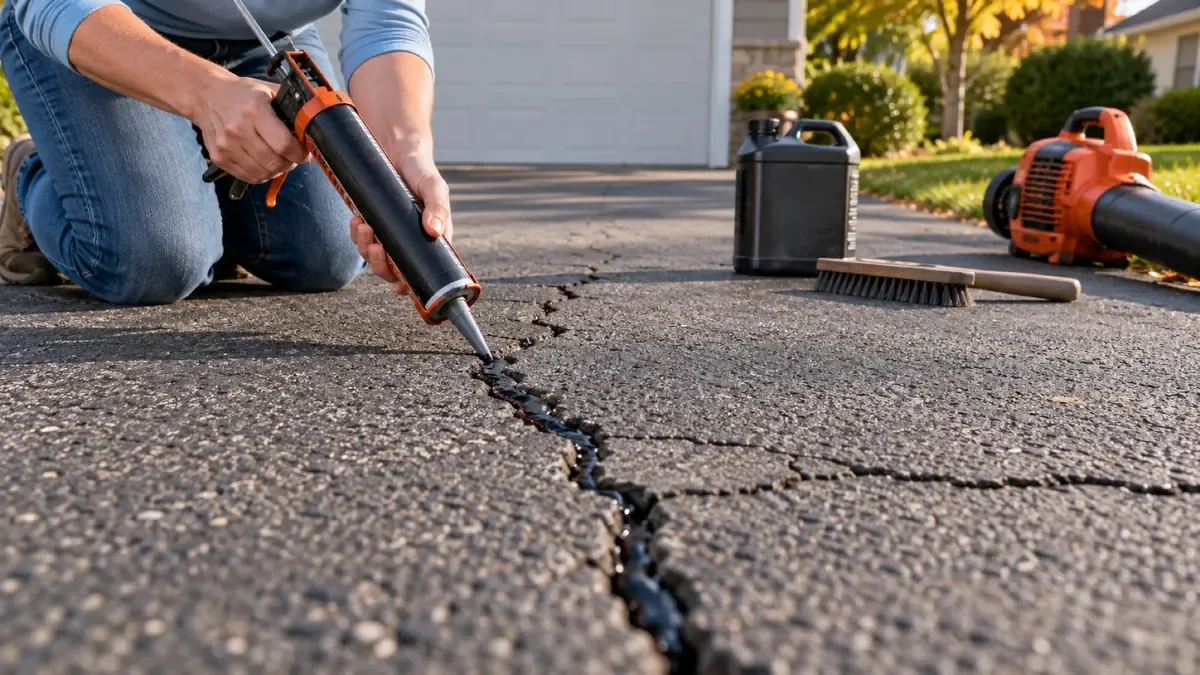
Running black crack filler into a long crack in an asphalt driveway with a caulk gun
Clean, dry cracks take filler best on a warm day.
Quick answerOn a dry, mild day, clean out the cracks, pack deep ones with backer rod or sand, fill with asphalt crack filler, smooth it level, and keep cars off until it cures. Alligator cracking needs a paving contractor.
Worth checking firstLook for a web of small cracks. If you see one, the base has failed and filling won't hold there.

Good to knowWeekend project

Easy1–3 hours, plus cure time$20–80
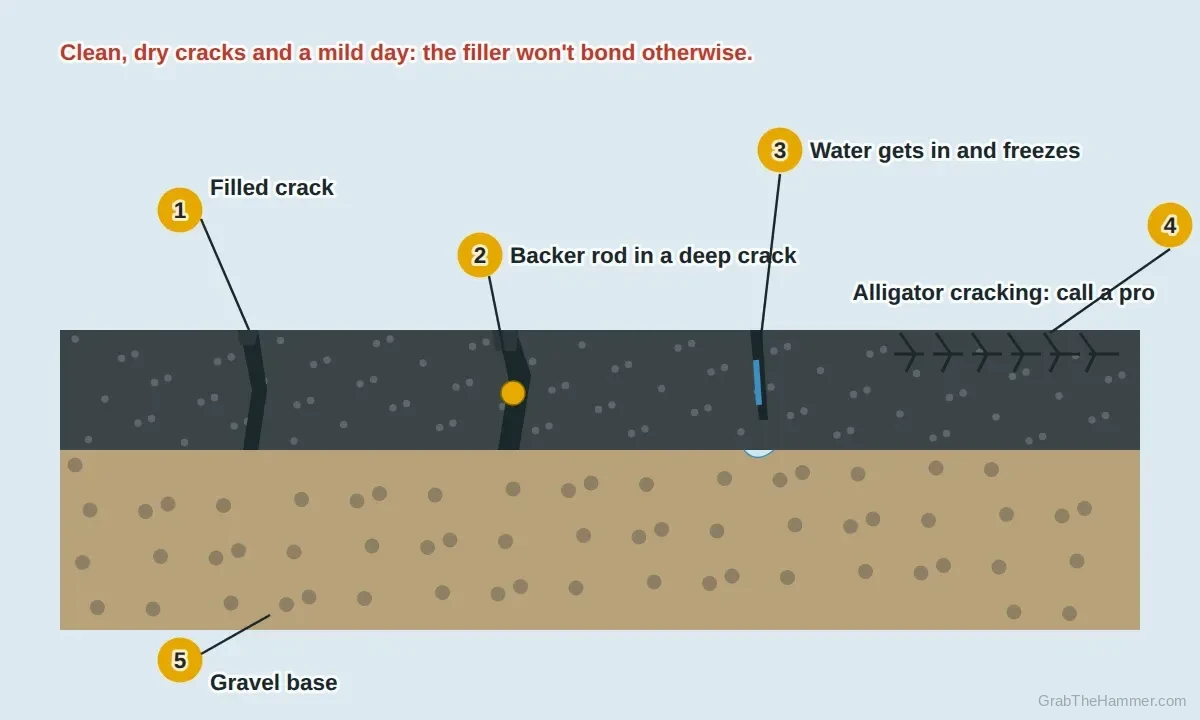
Cross-section of an asphalt driveway over its gravel base: a single crack cleaned out and filled with crack filler level with the surface, a deep crack packed with foam backer rod before filling, water getting into an unfilled crack and freezing, and an area of alligator cracking where the base has failed, marked for a paving contractor.
Clean, filled cracks (1) keep water out. Pack deep cracks with backer rod (2) first. Water that gets in (3) freezes and washes out the gravel base (5). Alligator cracking (4) means the base has failed.

Why asphalt cracks

Asphalt is stone held together by a tar-like binder. Sun and weather dry the binder out over the years, and the surface shrinks and cracks. Water soaks into those cracks, washes out the gravel base below, and freezes and expands in winter. Each season the cracks get wider.

Sealing the cracks while they're narrow slows that cycle. Filler products are made for different widths: thin liquid filler for hairline to about 1/2 inch, and thicker or rope-style fillers for wider ones. Cracks that are deep need to be packed partway first so the filler isn't a deep, soft plug.

What makes cracks worse

Aging binder

Sun dries the asphalt out.

Water in the base

It washes out gravel below.

Freeze and thaw

Ice wedges cracks wider.

Heavy loads

Trucks crack thin edges.

Which cracks can you fill?
You seeWhat it meansWhat to do
Single crack under 1/2 inchSurface crackSteps 3 to 7
Deep crackNeeds packing firstStep 4
Web of small cracksBase has failedCall a pro
Sunken or crumbling spotBase damage or potholeCall a pro
Stains, heat and trafficWear gloves and old clothes; asphalt filler stains skin and fabric. Keep pets and children off wet filler. Hot-pour fillers and torch-applied products have burn and fire risks, so follow the label exactly or leave them to a pro.

Let's fix it

0 of 7 done
  1. Check the cracksWalk the driveway and look at each crack. Single cracks up to about 1/2 inch wide are good DIY candidates. A web of small connected cracks in one area, like alligator skin, or spots that sink or crumble, mean the base under the asphalt has failed; filling won't hold there, and a paving contractor should look at it.
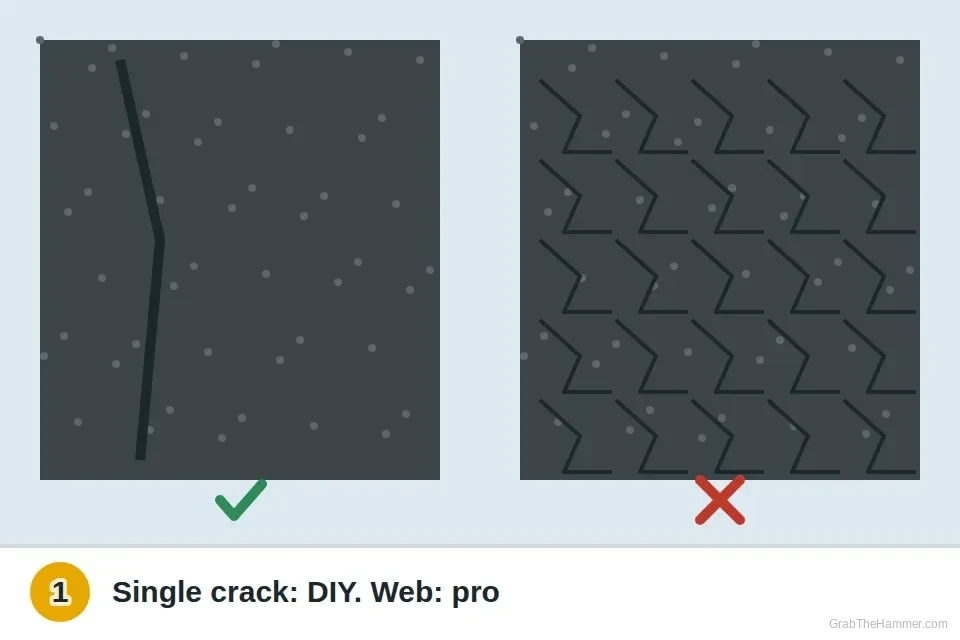
    Asphalt driveway with a single narrow crack marked as fixable and a web of small connected alligator cracks marked for a paving contractor
  2. Pick a dry dayCrack filler needs dry pavement and temperatures within the range on its label, usually a mild, dry day with no rain in the forecast for at least 24 hours after you fill. Working in the cool of the morning or evening keeps hot pavement from making the filler too runny.
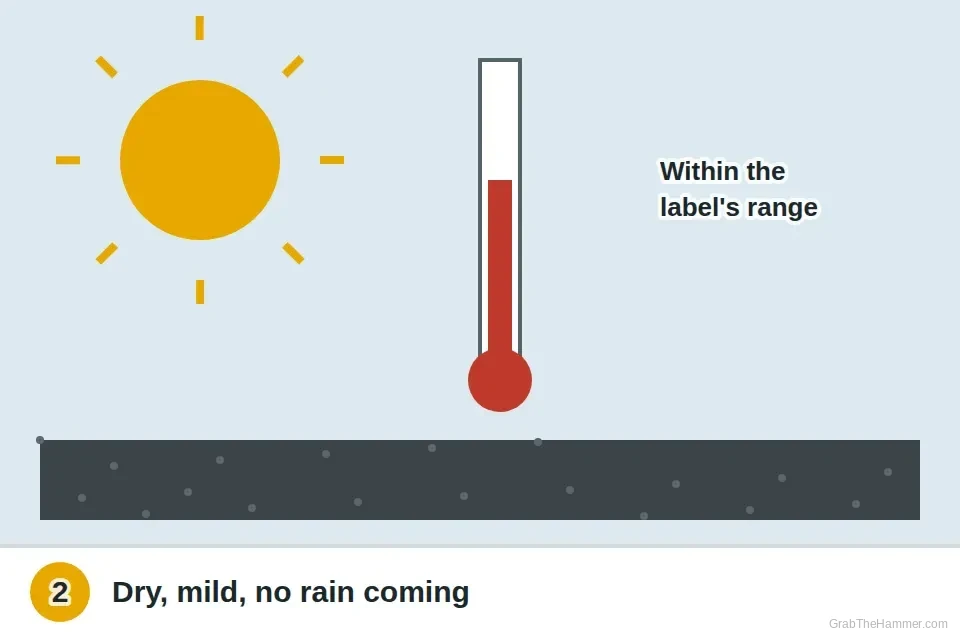
    Sun and a thermometer within a mild range, a dry driveway, and no rain in the forecast for at least a day
  3. Clean out the cracksPull weeds and grass out of the cracks, and scrape out dirt and loose bits with a screwdriver and wire brush. Blow or vacuum the dust out. If you rinse with a hose, let the cracks dry completely before filling.
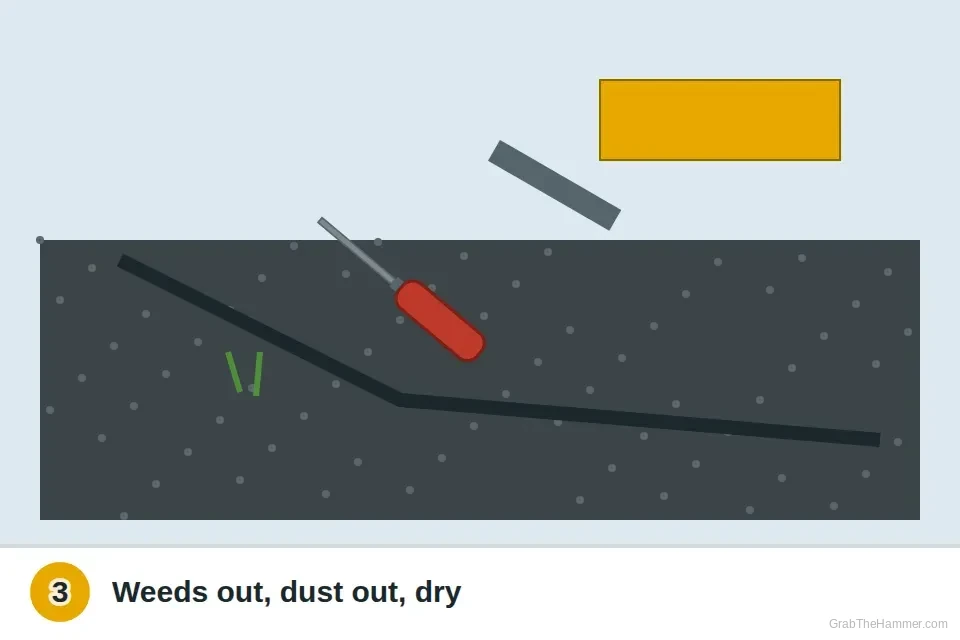
    Screwdriver and wire brush scraping dirt and weeds out of a driveway crack, then a leaf blower clearing the dust
  4. Pack deep cracksFor cracks deeper than about 1/2 inch, press foam backer rod into the crack or pour in clean sand until it's about 1/4 to 1/2 inch below the surface. That way the filler forms a solid layer on top instead of sinking into a deep channel.
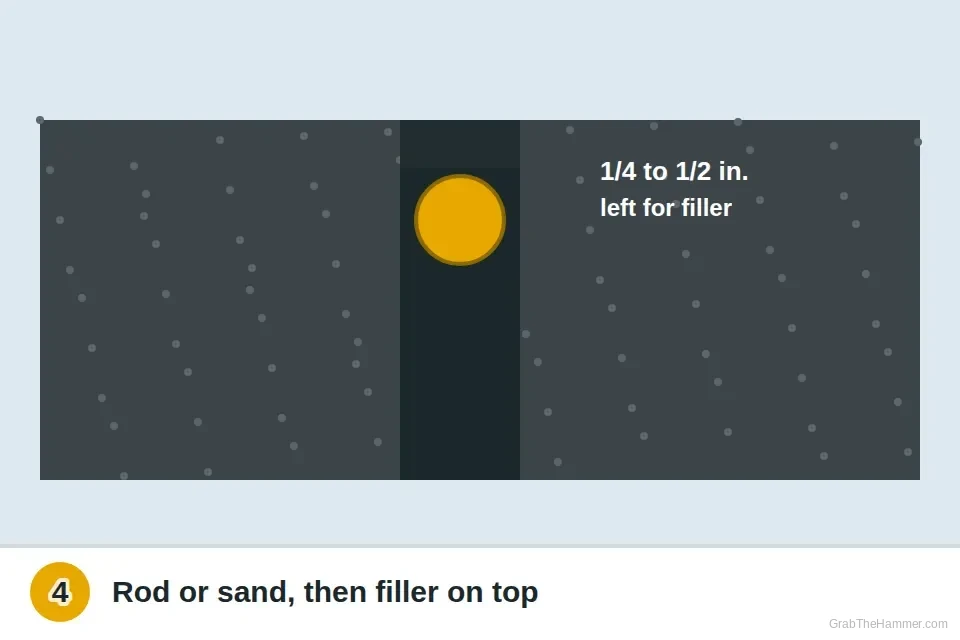
    Foam backer rod pressed into a deep crack until it sits about 1/4 to 1/2 inch below the surface
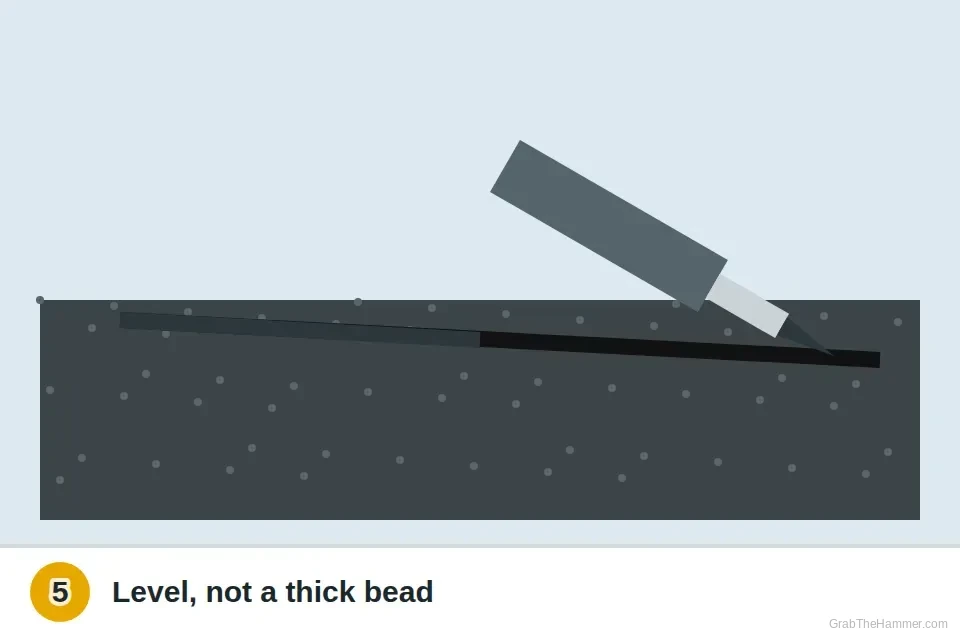
  5. Fill the cracksPour or squeeze the filler into the crack, filling it to just below or level with the surface, following the product's directions. Don't overfill into a thick bead on top; it gets tracked around and peels. For a wide crack, fill in two passes if the label says to.
    Something went wrong?
    • The filler is too runny The pavement is too hot; wait for a cooler time of day.
    Caulk gun squeezing asphalt crack filler into a cleaned crack, filling it level with or just below the surface
  6. Smooth it outRun a putty knife or squeegee over each filled crack to press the filler in and level it with the pavement. Wipe tools before the filler sets.
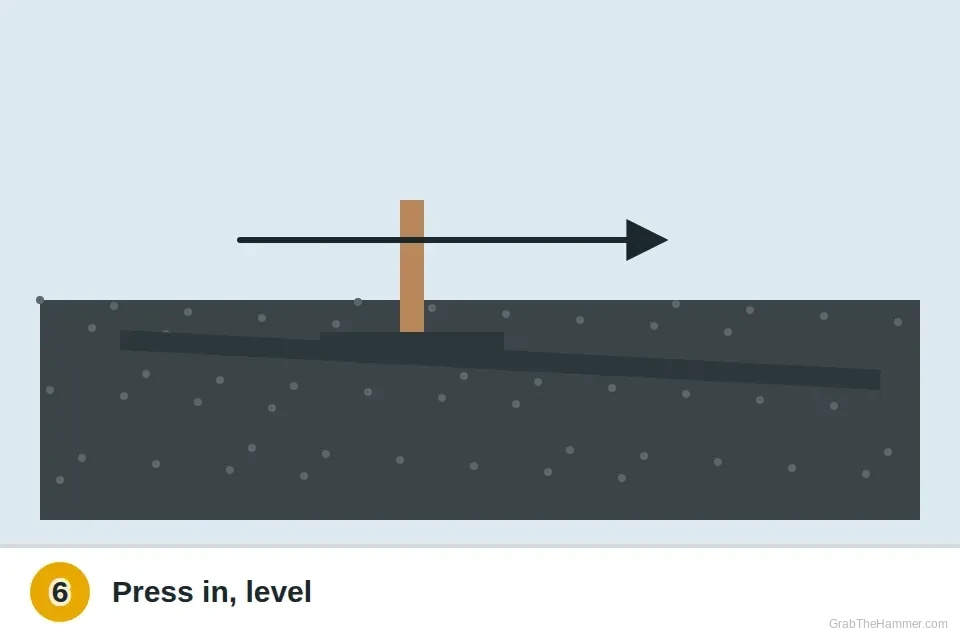
    Squeegee drawn along the filled crack to press the filler in and level it with the pavement
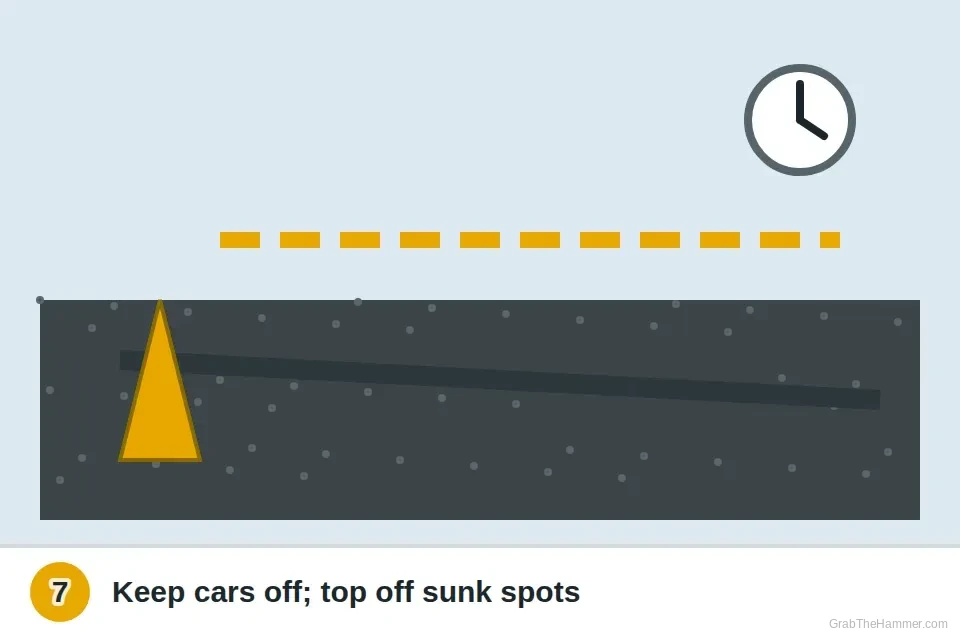
  7. Let it cureKeep cars and foot traffic off the filled cracks for the time on the label. Many fillers shrink a little as they cure; top off any that sink with a second thin pass. Once the cracks are filled and cured, you can sealcoat the driveway if it needs it.
    Something went wrong?
    • The filler sank Add a thin second pass once the first has cured.
    Filled cracks with a cone and caution tape keeping cars off while the filler cures, and a later second thin pass on one that sank

Watch it done

How To Fill Asphalt Gaps and CracksBy Ace Hardware on YouTube. Their method may vary a little from ours.
Watch on YouTube
How you'll know it's fixed
  • Cracks are filled level with the surface
  • No weeds growing through
  • Filler has cured and isn't sticky

New cracks spreading? A paving contractor can check the base.

If it's concrete

If the driveway or walk is concrete, we have a guide for patching a crack in concrete.

If water pools along the house, see the guide for water pooling at the foundation.

Pick the right seasonFill cracks in late spring or early fall, when the weather is mild and dry. Cracks are at a middle width then, so the filler isn't squeezed out in summer or pulled apart in winter.
Renting?If you rent, driveway repairs are usually the landlord's.
Call a paving contractor ifThere's alligator cracking, potholes, sinking or crumbling areas, cracks wider than about an inch, or the whole driveway needs resurfacing.Fix it yourself or call? Compare the cost →

What a pro typically charges (a rough estimate; prices vary by area): A paving contractor typically charges $150–$500 to fill driveway cracks, and much more to sealcoat or repair alligator cracking.

Find a handyman near you

Something else going on?

Asphalt crack questions

What is the best way to fill driveway cracks?

Clean them, pack deep ones, fill with asphalt crack filler, smooth it and let it cure.

How wide a crack can I fill myself?

Single cracks up to about 1/2 inch are good DIY jobs. Wider ones may need a rope-style filler or a pro.

When should I fill asphalt cracks?

On a dry, mild day within the filler's temperature range, often late spring or early fall.

What is alligator cracking?

A web of small connected cracks that usually means the base has failed. It needs a paving contractor.

How do I fill driveway cracks?

On a dry, mild day, clean out the cracks, pack deep ones with backer rod or sand, then fill and smooth them level. Keep cars off until it cures.

Reader reports

Did this fix work for you?

Tell the next person how it went. Your numbers are added to the totals anonymously; tips are read by our team before they appear.

How did it go?
Reader Q&A

Questions from readers

No questions on this guide yet. If you're stuck, ask below. Useful questions and answers get added here for the next person.

Ask a question

We read every question before anything is published, and we never show names or emails. Please leave out personal details. PrivacyAccessibility

About the authors

GrabTheHammer Team

  • No sponsored picks
  • Safety first
  • Tells you when to call a pro

We're a small team of writers and editors who check every guide against manufacturer instructions and common code requirements. Our goal is to help you understand the problem, tackle what you safely can and know when to call a pro.

Checked against: Manufacturer instructions for the parts and products involved.

How we write and review →
A helpful next stepPatch a crack in a concrete step or walkwayClean it out, undercut the edges with a chisel, and fill it.