GFCI keeps tripping
A GFCI that trips again and again is usually doing its job. It cuts power when it senses current leaking where it shouldn't, such as through water or a damaged cord. The cause is often something plugged in, moisture in an outdoor or bathroom outlet, or a problem on another outlet that the GFCI protects. Start by unplugging everything and pressing RESET. If it holds, the problem is likely one of your devices, not the outlet.


How a GFCI decides to trip
A working GFCI (ground fault circuit interrupter) compares the current going out on the hot wire with the current coming back on the neutral. Normally they match. If even a small amount goes missing, it may be flowing through water, a damaged cord or a person, so the GFCI cuts power in a fraction of a second. That's why you find them in kitchens, bathrooms, garages, basements and outdoors, where water and electricity can meet. A trip is the device protecting you, not a failure in itself.
One GFCI often protects more than its own outlet. Wires on its LINE terminals bring power in from the panel, and wires on its LOAD terminals carry protected power on to other outlets, sometimes in another room or outside. A fault anywhere on that run trips the one GFCI, which is why a wet outdoor outlet can kill a bathroom outlet. GFCIs also wear out over time. Leviton says to test them monthly and replace one that doesn't trip and reset properly. An overloaded circuit is different: too much load trips the breaker in the panel, not usually the GFCI.
Why a GFCI keeps tripping
Hair dryers, space heaters, fridges, pumps and outdoor lights can leak current.
Rain, sprinklers, shower steam or condensation, often outdoors.
Water or damage on an outlet fed from the GFCI's LOAD side.
Older units can trip easily or stop holding a reset.
Loose, damaged or shared neutral wires; an electrician job.
Too much load trips the breaker in the panel instead.
| You notice | Likely cause | Start at |
|---|---|---|
| Not sure what's causing it | Unplug everything and reset | Step 1 |
| Holds empty, trips with a device | Find the faulty device | Step 2 |
| Trips after rain, sprinklers or showers | Dry the outlet and cover it | Step 3 |
| Trips with nothing plugged in | Check downstream outlets | Step 4 |
| Old GFCI, won't hold, or test fails | Test it and decide on replacing | Step 5 |
| Ready to replace it yourself | Swap the GFCI safely | Step 6 |
Let's fix it
- Unplug everything and resetUnplug every cord from the GFCI. Then find any other outlets that went dead when it tripped, often nearby or on the other side of a wall, and unplug those too. With dry hands, press RESET firmly until it clicks and stays in. Some models show a green light when power is on. If it holds, the outlet itself is likely fine, and a device is the probable cause; go to Step 2. If it trips again right away with nothing plugged in, go to Step 3 to check for moisture. If it won't reset at all, check the breaker first, then see the guide for a GFCI that won't reset.

- Find the faulty devicePlug one device back in and use it the way you normally would for a few minutes. If the GFCI holds, unplug it and try the next one. When the GFCI trips, you've likely found the culprit. Heaters, hair dryers, refrigerators, freezers, pool pumps, power tools and outdoor lights are common suspects, because heating parts, motors and outdoor cords can leak current as they age or get wet. Try the suspect on another GFCI outlet; if it trips there too, the device or its cord is the problem. Look for cracked, cut or crushed cords and damaged plugs. Stop using a device that keeps tripping GFCIs and repair or replace it.

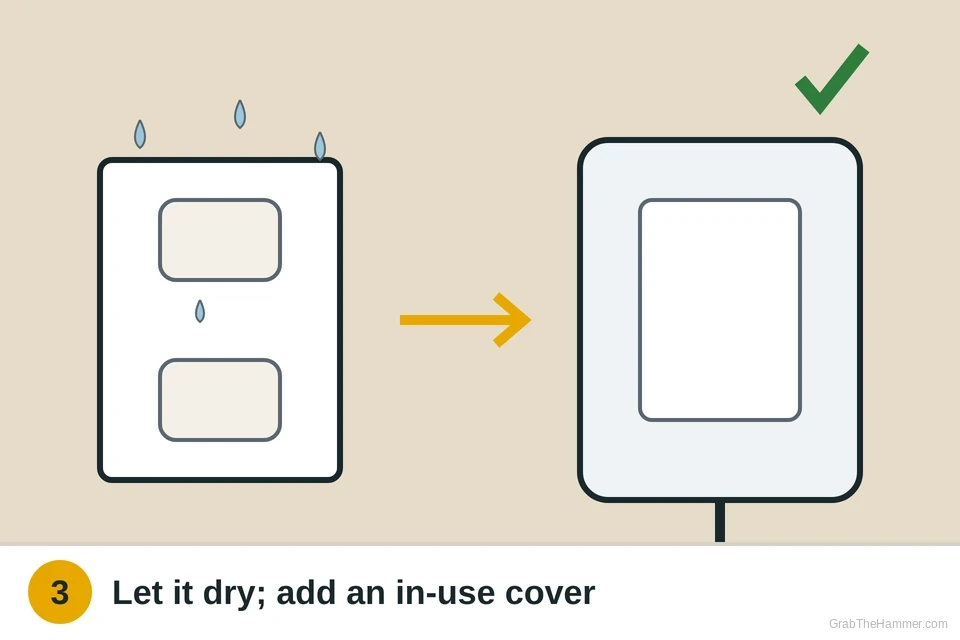
- Dry out a wet outlet and cover itIf it trips after rain, sprinklers, washing the car or long showers, moisture is a likely cause. Leave the GFCI tripped and don't use that outlet or anything on it until it's dry. For an outdoor outlet, open the cover and look for water, dirt, spider webs or insects. A fan or simply a few dry days often helps; inside a box, drying can take a day or longer. Then reset it. Outdoors, an in-use cover, often called a bubble cover, keeps rain off even with a cord plugged in. Make sure its gasket seals. If water keeps getting into the box, stop and call an electrician, because the box or its seal may need fixing.
- Check outlets downstreamA GFCI often protects other outlets wired from its LOAD side. Press TEST on the GFCI, then use a lamp or plug-in tester to find which other outlets went dead. Those are downstream. Check each one: unplug it, look for water, a cracked cover or an outlet on an outside wall, porch, garage or bathroom. A wet or damaged downstream outlet can trip the GFCI just like its own outlets. Dry it as in Step 3. If the GFCI trips only when something is plugged into a downstream outlet, test that device as in Step 2. If a downstream outlet is cracked, scorched or loose, turn off its breaker and leave it off until it's repaired.

- Test the GFCI and decide on replacing itWith everything unplugged and the outlet dry, press TEST. A working GFCI clicks and cuts power, so a lamp plugged into it goes out. Press RESET and the lamp should come back on. If it won't trip on TEST, won't stay reset, or trips with nothing connected after you've ruled out moisture and downstream outlets, the GFCI is likely worn out. Many electricians suggest replacing GFCIs at around 10 years, though lifespans vary. Replace it right away if you see discoloration, burn marks, a loose plug grip or warmth. A new GFCI typically costs about $15 to $30. Renters, report it rather than replacing it.

- Replace the GFCI safely, or call an electricianTurn off the breaker for the outlet. Check every wire with a non-contact voltage tester before touching anything, because one box can hold more than one circuit. Remove the cover and pull the GFCI out, noting which wires go to LINE and which go to LOAD. Take a photo. The LINE pair brings power from the panel; the LOAD pair feeds downstream outlets. Connect the new GFCI the same way, using the markings on its back and its instructions. Many new GFCIs won't reset if LINE and LOAD are reversed. Restore power, press RESET, then TEST. If wires are scorched, colors don't match, or you're unsure which pair is LINE, stop and call an electrician.

Watch it done
- RESET stays in and the outlet has power
- Your devices run without tripping it
- TEST cuts power and RESET restores it
- Downstream outlets work again
Still tripping with nothing plugged in and everything dry? Call an electrician.
If it comes back
If the GFCI won't reset at all, even with nothing plugged in, check the breaker and work through the guide for a GFCI that won't reset.
If the breaker in the panel is what keeps tripping, the circuit may be overloaded or have a short. That's a different problem; see the guide for a breaker that keeps tripping.
If several outlets are dead and you can't find which GFCI controls them, see the guide for outlets not working. For outside outlets, see the guide for an outdoor outlet that's not working.
What a pro typically charges (a rough estimate; prices vary by area): An electrician typically charges about $100–$250 to diagnose nuisance tripping or replace a GFCI, more if wiring or a box needs repair.
Find an electrician near you