Fix a wobbly ceiling fan
Most ceiling fan wobble comes from something loose or out of balance: a loose blade screw, a bent blade bracket, or blades that don't weigh the same. Tighten everything first, check that the blades line up, then use a balancing kit for what's left. A little sway is normal; a fan that shakes hard or clunks needs its mount checked.
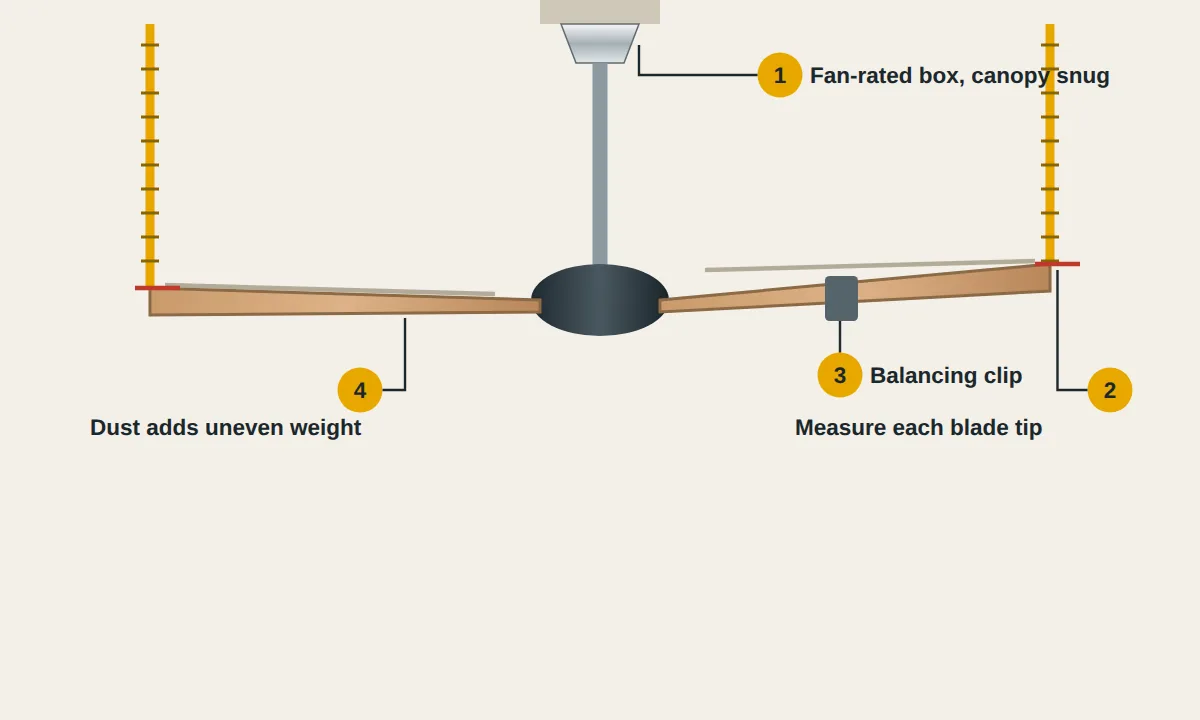
Why fans wobble
A spinning fan magnifies small differences. One blade that's a bit heavier, dustier, or bent a few degrees out of line is enough to start a wobble, and loose screws let it grow.
The mount matters most. A ceiling fan has to hang from a box rated for fan support. If the canopy at the ceiling moves when you push on it gently, or the box isn't marked for fans, deal with that before anything else.
What makes a fan wobble
Blade, bracket or mounting screws work loose over time.
One blade sits higher or lower than the rest.
Dust, warping, or a mismatched replacement blade.
The bracket or box at the ceiling moves.
| What you notice | Likely cause | Fix |
|---|---|---|
| A gentle sway on high | Normal | Nothing needed. |
| Wobble on every speed | Loose screws or uneven blades | Tighten, then balance. |
| One blade looks higher | A bent bracket | Replace the bracket. |
| Clunking, or the canopy moves | A loose mount | Breaker off; check the bracket and box. |
Let's fix it
- Turn it off and clean the bladesSwitch the fan off and let it stop completely. Wipe each blade with a damp cloth; built-up dust adds uneven weight.

- Tighten every screwTighten the screws holding each blade to its bracket, each bracket to the motor, the set screw and pin holding the downrod at the top of the motor, and the canopy at the ceiling. Snug them; don't strip them.
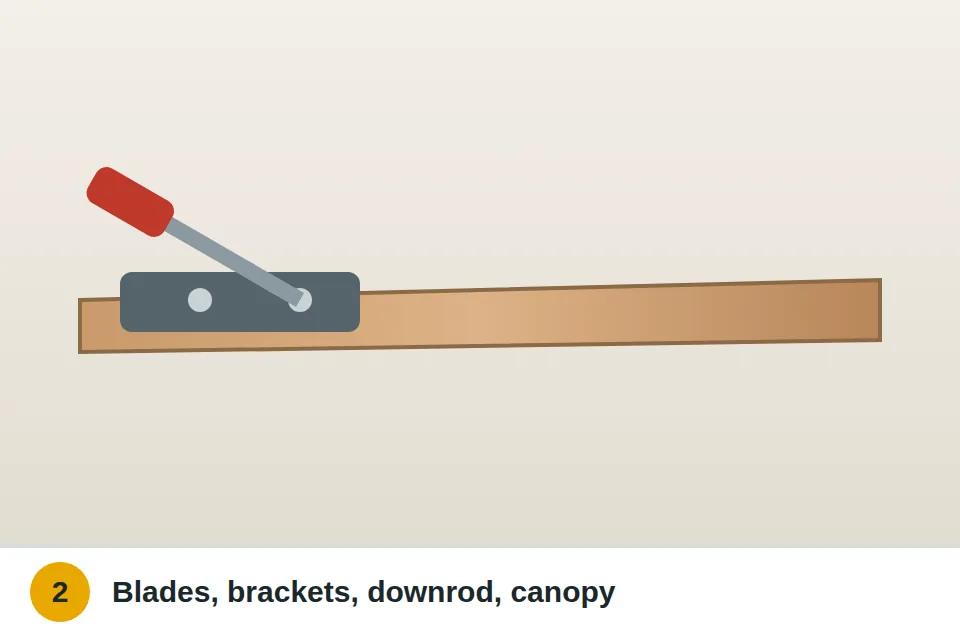
- Check that the blades line upHold a tape measure from the ceiling to the tip of one blade, then turn the fan by hand and measure each blade at the same spot. A blade that sits noticeably higher or lower has a bent bracket. Replace it; many fan makers say not to bend brackets back, since cast ones can crack.

- Balance itClip the balancing clip from the kit halfway along one blade, run the fan, and move it from blade to blade until the wobble is least. Slide it in and out along that blade to fine-tune, then stick a weight on top of the blade at that spot.

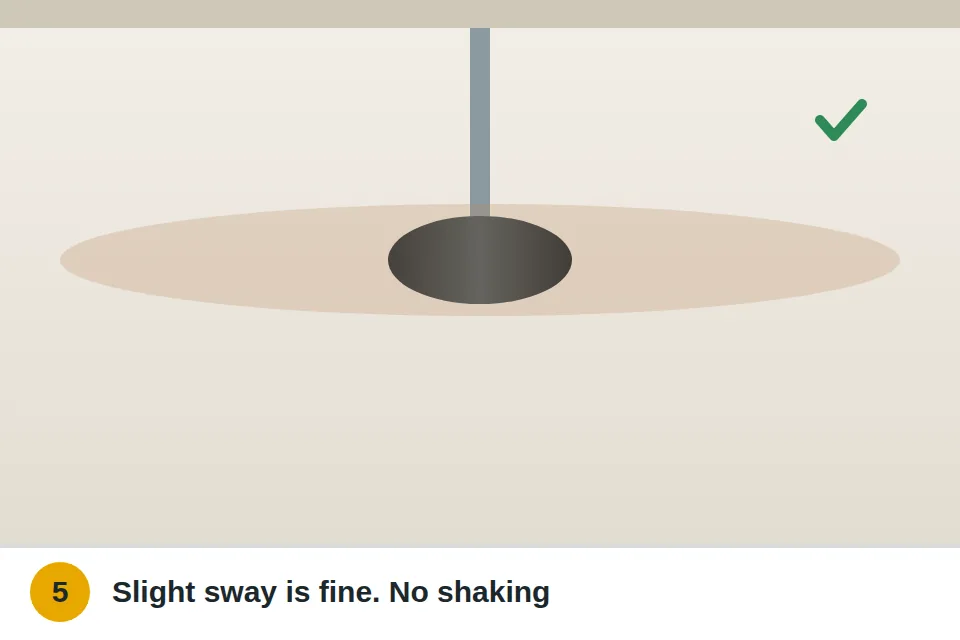
- Test every speedRun the fan on each speed. A slight sway is normal; it shouldn't shake, click or knock.
If it still wobbles after balancing
If it still wobbles, turn off the breaker, lower the canopy, and check that the mounting bracket screws are tight and the ball at the top of the downrod is seated in its bracket.
If the ceiling box moves, or it's a light fixture box not marked for fan support, stop using the fan until it's on a fan-rated box.
What a pro typically charges (a rough estimate; prices vary by area): An electrician typically charges $100–$250 to secure or rebalance a ceiling fan, more to replace the ceiling box.
If it's a different electrical problem
Ceiling fan questions
How much wobble is normal for a ceiling fan?
A slight sway, especially on high or with a long downrod, is normal. Visible shaking, clicking or knocking isn't.
Can a wobbly ceiling fan fall?
It's unlikely when the fan is properly mounted on a fan-rated box, but a loose mount can get worse. Deal with clunking or a moving canopy right away.
What if I don't have a balancing kit?
Hardware stores sell them for a few dollars. A coin taped to the top of a blade can help find the spot, but a proper weight lasts.
Do I need to turn off the power to balance a fan?
Turn it off at the wall and let it stop before touching it. Turn off the breaker too if you'll be opening the canopy.
Still stuck? Ask us
Tell us what you're seeing and what you've tried. We read every question, and the ones that will help other people get answered on this page.