Carbon monoxide alarm beeping? What it means
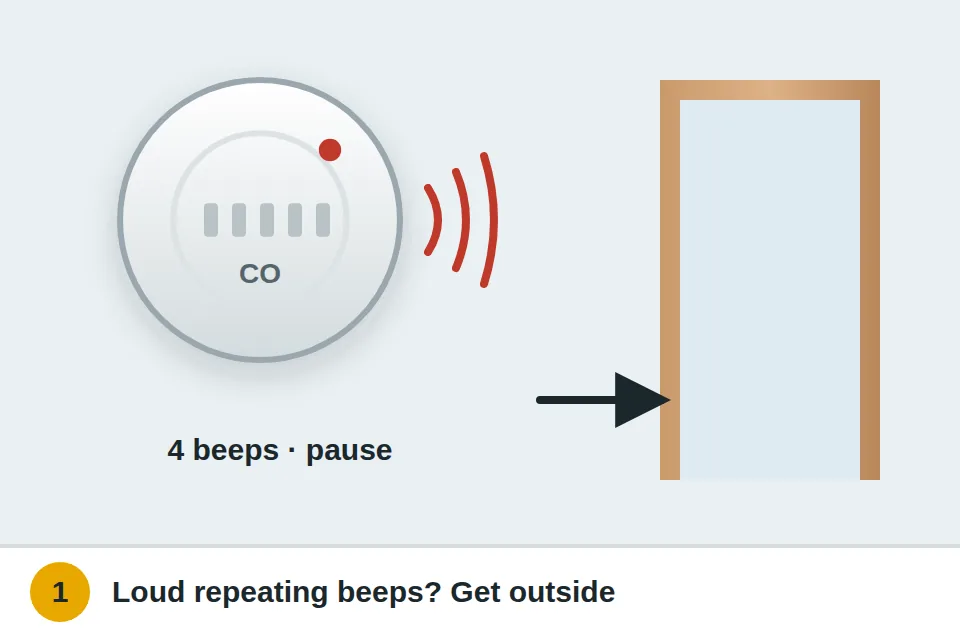
First, tell the two sounds apart. A loud pattern of beeps, often four quick beeps and a pause, means the alarm has detected carbon monoxide: get everyone outside and call 911 or the fire department from there. A single chirp every minute or so is a low battery or an alarm reaching the end of its life.

Alarm or chirp?
Carbon monoxide has no smell or color. It can build up from a furnace, water heater, fireplace, gas stove, generator, or a car running in an attached garage. The alarm is the only warning you'll get, which is why an alarm sound always means getting out first, even if everyone feels fine.
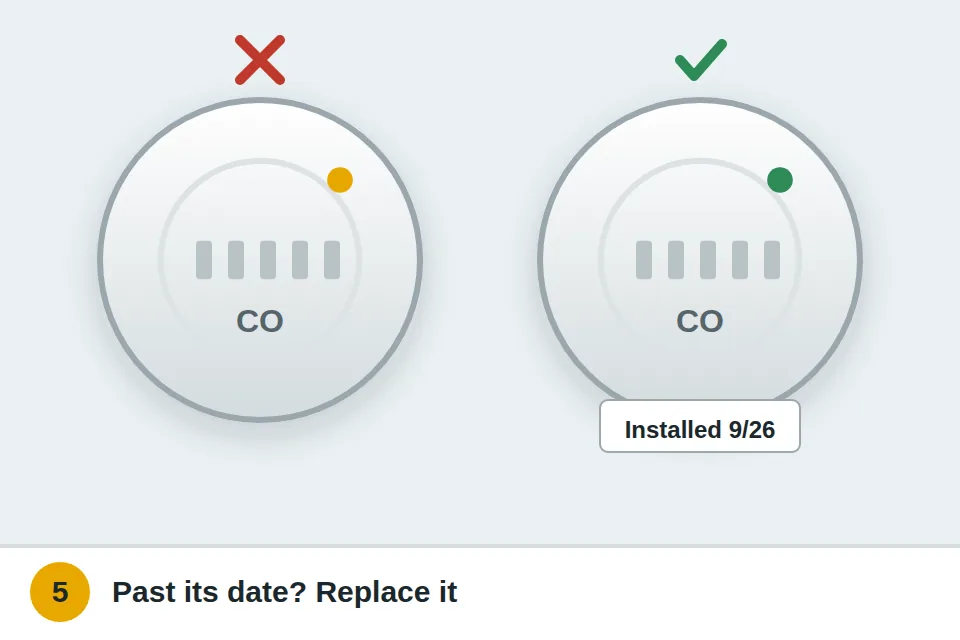
CO alarms also wear out. Many are designed to last 5 to 10 years, and they chirp or show a message when the sensor expires. The replace-by date is usually printed on the label.
Why it's beeping
Loud, repeating beeps. Treat it as real every time.
A single chirp about once a minute.
A chirp pattern or screen message that a new battery doesn't stop. The label shows your model's end-of-life signal.
Some models chirp in a different pattern for an internal error. The label or manual says which.
| What you hear | What it usually means | What to do |
|---|---|---|
| Loud beeps in a repeating pattern (often 4 beeps, then a pause) | Carbon monoxide detected | Get outside. Call 911. |
| One short chirp every 30–60 seconds | Low battery | Replace the battery. |
| Chirps with a new battery, or END on the screen | End of life | Replace the alarm. |
| A different chirp pattern | Fault or error | Check the label or manual. |
Let's fix it
- Listen to the patternLoud, repeating beeps mean CO. Get everyone out, pets too, and call 911 from outside. Don't go back in until responders say it's safe. A single chirp every 30 to 60 seconds is a maintenance signal.
- Check the label or displayTake the alarm down and look at the back. Many list what each sound means and the replace-by date. Some show an error or END message on a small screen.

- Replace the batteryPut in fresh batteries of the type listed. Plug-in and hardwired alarms often have a backup battery too. Some sealed alarms have no battery to change; the whole unit gets replaced.

- Reset and testPut the alarm back, then hold the test button until it sounds. Some models need the button held to clear the chirp after a battery change.

- Replace it if it's expiredIf it's past its date, or still chirps with a fresh battery, replace it. Install the new one following its instructions, and write the install date on it.
If it keeps chirping
If it still chirps after a new battery, hold the test button to reset it and check the replace-by date. An expired alarm won't stop chirping.
If it's a combination smoke and CO alarm, the manual explains which chirp means what. Our smoke alarm guide covers the smoke side.
What a pro typically charges (a rough estimate; prices vary by area): CO alarms cost about $20–$60. An electrician typically charges $100–$250 to install hardwired alarms, and a heating technician's safety check of a furnace or water heater often runs $100–$250.
Something else going on?
CO alarm questions
What should I do if my CO alarm goes off?
Get everyone outside to fresh air right away and call 911 or the fire department from there. Don't go back in until responders say it's safe, even if the alarm stops.
Can a CO alarm go off for no reason?
False alarms happen, but you can't tell from inside the house. Treat every alarm as real and let responders check.
How long do carbon monoxide alarms last?
Many last 5 to 10 years. The replace-by date is on the label, and many models chirp at end of life.
Where should CO alarms go?
Outside each sleeping area and on every level of the home, following the manufacturer's instructions, which also list places to avoid.
Does my smoke alarm detect carbon monoxide?
Only if it's a combination alarm. The label will say smoke and CO if it detects both.
Can I stay inside if everyone feels fine?
No. Carbon monoxide can affect you before you notice symptoms. Get outside first and let responders decide when it's safe.
Still stuck? Ask us
Tell us what you're seeing and what you've tried. We read every question, and the ones that will help other people get answered on this page.