Remove a hard water ring from a toilet bowl
The stubborn ring at the waterline of a toilet bowl is usually minerals from hard water, mostly calcium and magnesium, that build up where the water sits and evaporates. Iron or manganese in the water can stain it orange, brown or black, and bacteria can add pink or gray. Ordinary bowl cleaner often can't touch it once it hardens. A mild acid like vinegar, or a cleaner made for lime and rust, dissolves it, and a wet pumice stone takes off what's left without scratching the porcelain.


What causes a ring in the toilet bowl
Hard water carries dissolved calcium and magnesium. In a toilet, water sits at the same level for hours, and a little evaporates at the waterline, leaving minerals behind. Each flush adds a thin layer, and over months the deposit becomes a rough, hard crust called limescale. Its rough surface then traps dirt and stains, so the ring darkens. If your water has iron or manganese, the ring can be orange, brown or black. A pink or gray film that wipes off easily is usually bacteria, not minerals, and regular cleaning handles it. To tell the two apart, scratch the ring lightly with a fingernail: a film smears away, while limescale feels hard and gritty and doesn't budge.
Limescale is mostly calcium carbonate, which dissolves in acid. White vinegar is a weak acid and works if it has time, which is why soaking for an hour or overnight matters more than scrubbing hard. Cleaners made for lime and rust work faster. For the last bits, a pumice stone is softer than porcelain glaze but harder than limescale, so when it's kept wet it grinds the deposit away without scratching the bowl. Dry pumice, steel wool and metal tools can scratch or leave gray marks, which make the bowl stain faster. If a ring seems to come back within a week or two, it's usually a sign of hard water, and a quick weekly scrub keeps it from building up again.
Why the ring forms
Calcium and magnesium deposit at the waterline.
Turn the ring orange, brown or black.
Water sits longer and more evaporates.
Weak rinse lets streaks and deposits build up.
Older bowls grab stains more easily.
| You notice | Likely cause | Start at |
|---|---|---|
| Ring sits under the water | Needs the water lowered | Step 1 |
| White, gray or brown crust | Limescale | Step 2 |
| Ring softened but still there | Needs a stronger soak | Step 3 |
| Thin hard ring left after soaking | Finish with pumice | Step 4 |
| Streaks from under the rim | Clogged rim jets | Step 5 |
| Ring returns within weeks | Hard water, needs upkeep | Step 6 |
Let's fix it
- Lower the water in the bowlTurn off the water supply valve behind the toilet by turning it clockwise until it stops. Flush and hold the handle down so the tank empties; the bowl will drop to a low level, usually below the ring. To lower it further, plunge a few times with a flange plunger to push more water through, or scoop it out with a disposable cup into a bucket. Do this before adding any cleaner, so nothing splashes. The goal is to get the ring out of the water so the cleaner touches it at full strength instead of being diluted.

- Soak the ring with vinegar or a lime removerPour about 2 to 4 cups of plain white vinegar around the bowl so it runs over the ring, or spray it directly onto the ring. For a ring above the remaining water, press paper towels onto the ring and soak them with vinegar so they cling. Let it sit at least an hour, or overnight for a heavy ring. A commercial toilet lime and rust remover works faster: apply it as the label says, usually for a few minutes, and don't leave it longer than directed. Keep the bathroom ventilated, and keep kids and pets out while it soaks.

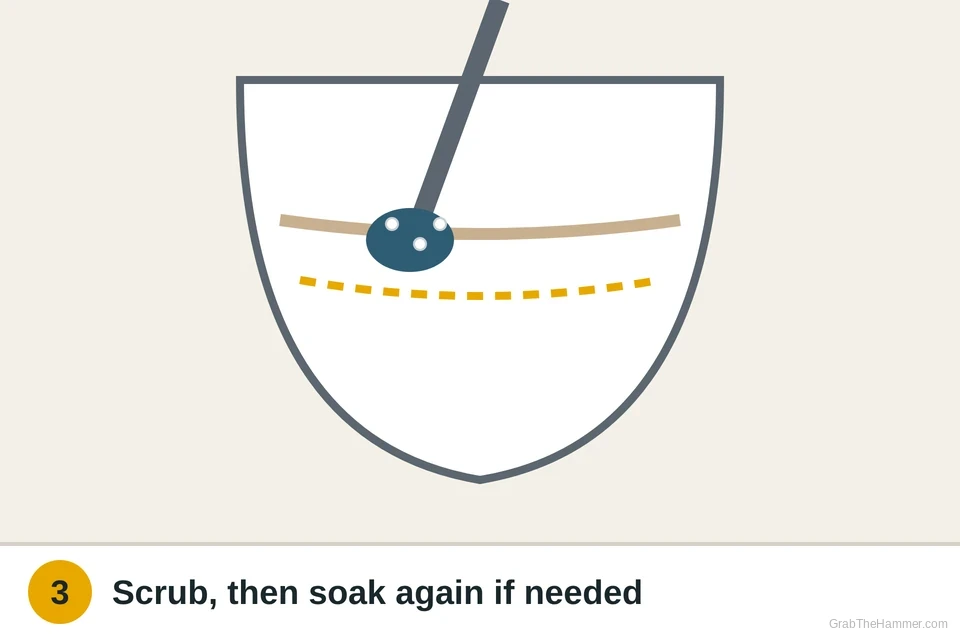
- Scrub, and soak again if neededScrub the ring with a stiff nylon toilet brush, working around the bowl. Much of a light ring will come away now. If it's softened but still there, add a few tablespoons of baking soda to the brush and scrub; the mild abrasive helps. Then soak again with fresh vinegar or another round of lime remover, since thick rings often need two or three soaks. Be patient here: the soak does the work, and scrubbing hard on a hard ring mostly wears out the brush.
- Finish with a wet pumice stoneFor a thin, hard ring that's left, use a pumice stone made for toilets (often sold on a handle, about $5 to $10). Soak the stone in water for a minute and keep both the stone and the ring wet the whole time; wet pumice won't scratch porcelain, but a dry stone can. Rub gently over the ring, using light pressure and short strokes, and rinse the stone often. You'll see the deposit turn to a gray paste and wipe away. Stop as soon as the ring is gone. Don't use pumice on colored, matte or specialty-coated bowls; check the toilet maker's care guide first.

- Clear the rim jetsLook under the rim with a small mirror and flashlight. You'll see a row of small holes that rinse the bowl when you flush. If they're crusted with minerals, the bowl rinses poorly and stains streak down from the rim. With the water still off, dab vinegar or lime remover into the holes with a cloth or a squeeze bottle, or stuff vinegar-soaked paper towels up under the rim, and let it sit. Then poke each hole gently with a bent piece of coat hanger or a small Allen key to break up the deposit. A stronger rinse also helps the bowl stay cleaner.

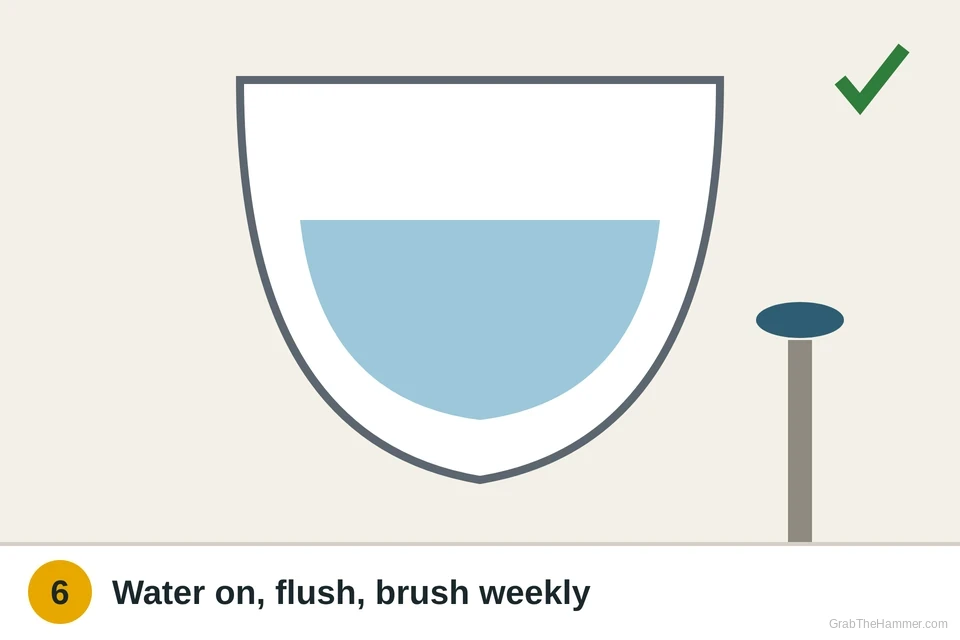
- Turn the water on and keep it cleanTurn the supply valve counterclockwise to open it, let the tank fill and flush a few times to rinse away the cleaner. Check that the bowl refills to its normal level. If a faint shadow of the ring is still there, a second overnight soak usually does more than extra scrubbing. To keep the ring from coming back, brush the bowl once a week, pour a cup of vinegar in and let it sit overnight once a month, and flush unused toilets every few days. If you have very hard water throughout the house, a water softener reduces scale on fixtures, faucets and appliances too. Avoid drop-in tank tablets with bleach, which many toilet makers say can damage tank parts.
Watch it done
- The waterline is smooth and clean to the touch
- No streaks running down from under the rim
- The bowl refills to its normal level after a flush
Dark line that won't come off? It may be a crack or worn glaze.
If it comes back
If the ring returns within a few weeks, your water is likely very hard. Weekly brushing and a monthly overnight vinegar soak keep it from hardening. A water softener or a whole-house filter addresses the cause.
If the bowl water sits lower than it used to, a ring can form below the normal line. See the guide for a low toilet bowl water level. If the toilet runs between flushes, see how to fix a running toilet.
For scale and stains on tile and grout, see how to clean grout without harsh chemicals.
What a pro typically charges (a rough estimate; prices vary by area): A professional deep clean typically costs about $50–$150. A plumber replacing a toilet usually charges a few hundred dollars plus the toilet.
Find a plumber near you