Fix a toilet that won't flush all the way
A weak flush, where the bowl swirls but doesn't clear, usually means not enough water is getting into the bowl fast enough. Check the tank water level and the chain first, then look for clogged holes under the rim of the bowl. Those three account for most weak flushes, and fixing them costs little or nothing.
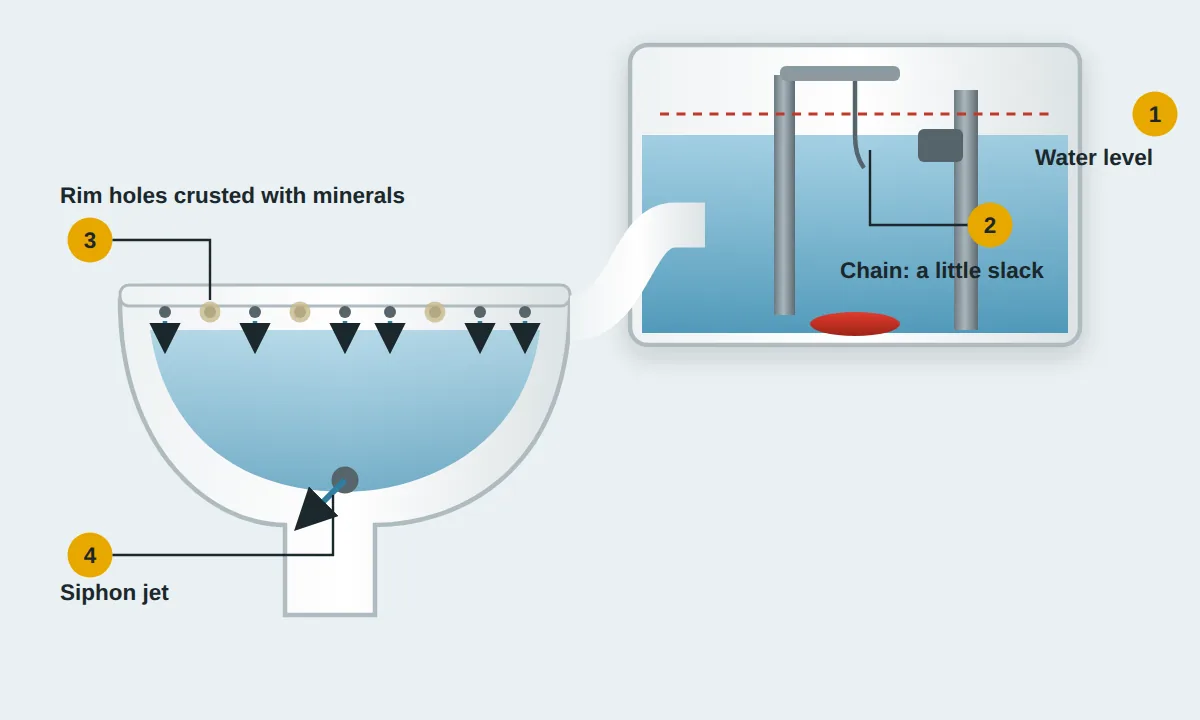
How a flush works
A flush works by dumping the tank's water into the bowl quickly enough to start a siphon that pulls everything down the drain. If the tank is low, the flapper closes too soon, or the small holes under the rim and the jet at the bottom of the bowl are crusted with minerals, there isn't enough of a rush to start that siphon.
A partial clog further down gives a similar weak flush. So does a blocked plumbing vent, which usually comes with gurgling.
What weakens a flush
Less water means a weaker rush into the bowl.
The flapper closes before the tank empties.
Mineral buildup slows the water entering the bowl.
The bowl drains slowly, or gurgles.
They can wear out the flapper and gaskets, and a leaking flapper keeps the tank low.
| What you notice | Likely cause | What to check |
|---|---|---|
| Tank water sits low | Float set too low | Raise the float. |
| The tank doesn't fully empty | Too much chain slack | Shorten the chain a link or two. |
| Water trickles in from the rim | Clogged rim holes | Clear them with vinegar and wire. |
| The bowl fills high, drains slowly | A partial clog | Plunge, then auger. |
| Gurgling nearby | A blocked vent | Call a plumber. |
Let's fix it
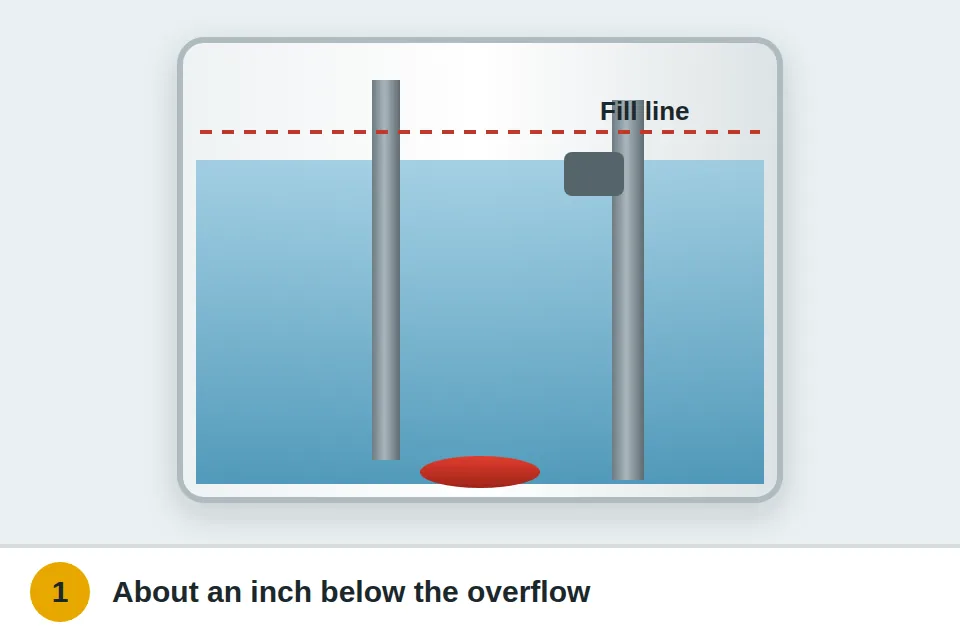
- Check the water levelLift the tank lid. The water should sit at the fill line marked inside the tank, or about an inch below the top of the overflow tube. If it's low, raise the float using the adjustment screw or clip on the fill valve.
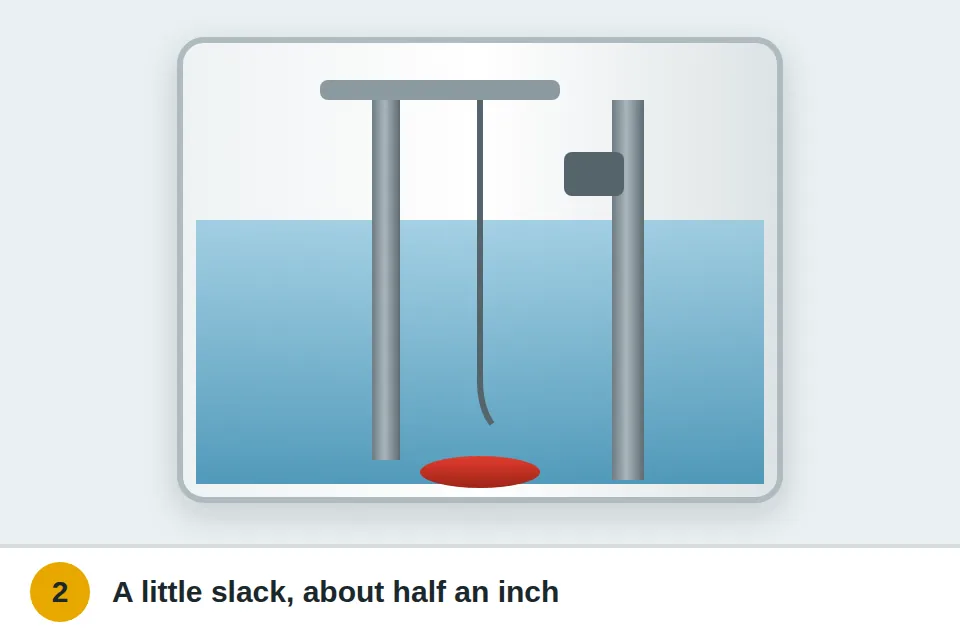
- Check the chainWith the flapper closed, the chain should have a little slack, about half an inch. With too much slack, the flapper doesn't open fully and drops shut before the tank empties.
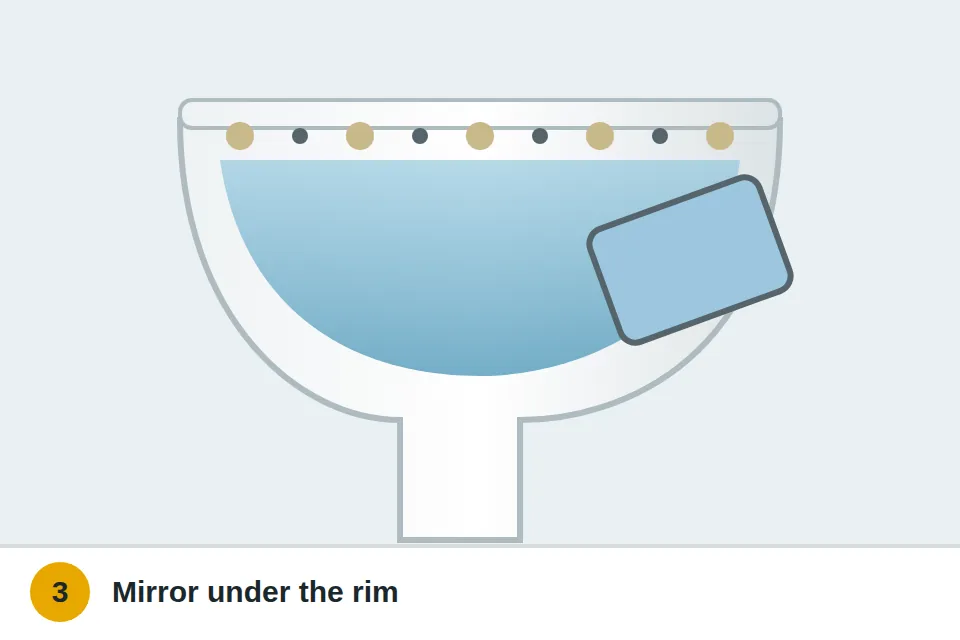
- Look under the rimHold a small mirror under the rim of the bowl. Mineral crust around the small rim holes, or around the larger jet hole at the bottom of the bowl, slows the water coming in.
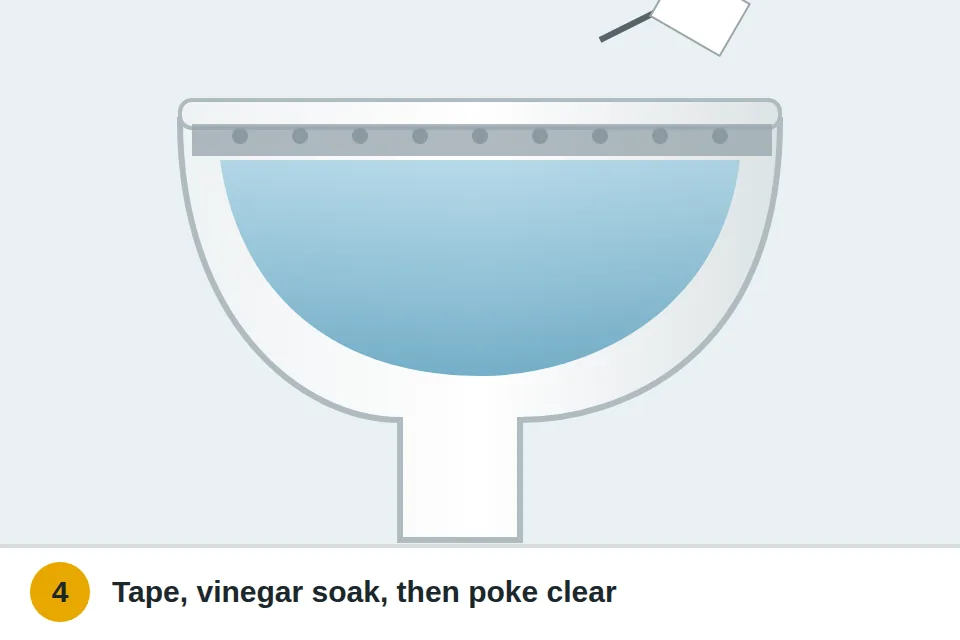
- Clear the rim holesTurn off the water and flush to empty the tank. Dry the underside of the rim with a towel, then cover the rim holes with strips of duct tape, pour a cup or two of white vinegar down the overflow tube, and let it sit a few hours. Then pull the tape and poke each hole clear with bent wire, gently; wire can leave gray marks on porcelain, which scrub off with a pumice stone.
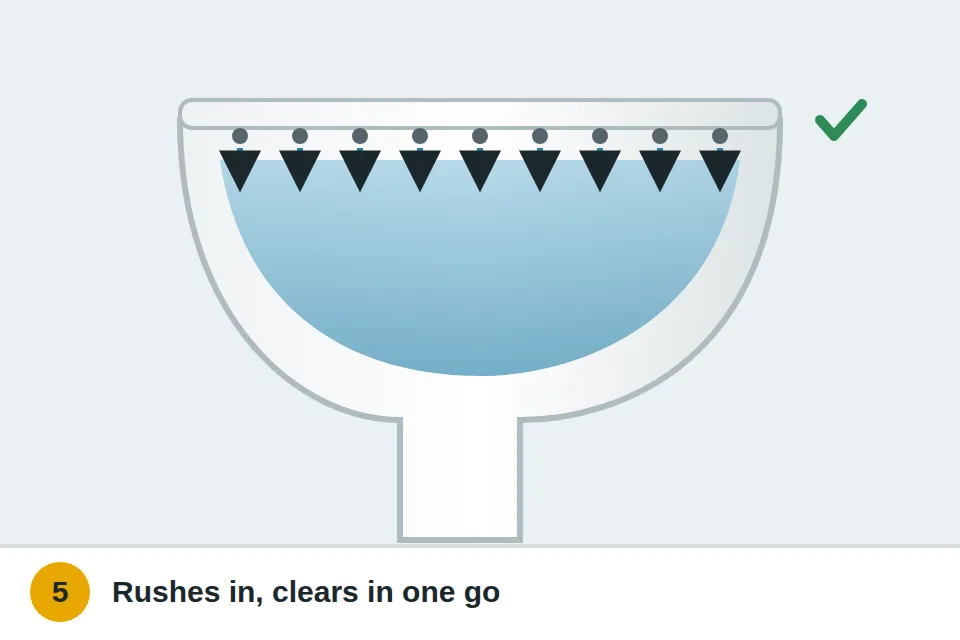
- Test itTurn the water back on, let the tank refill, and flush. Water should rush in from under the rim, and the bowl should clear in one go.
If the bowl still won't clear
If the bowl fills high and drains slowly, there's likely a partial clog. Try a flange plunger, then a toilet auger; our clogged toilet guide walks through both.
If the toilet or nearby drains gurgle, the plumbing vent on the roof may be blocked. That's a job for a plumber.
What a pro typically charges (a rough estimate; prices vary by area): A plumber typically charges $150–$300 to diagnose and fix a weak flush, more if a drain line or vent needs clearing.
If it's a different toilet problem
Weak flush questions
Why does my toilet flush weakly?
Most often it's a low tank water level, a slack chain, or mineral-clogged rim holes. A partial clog or a blocked vent can do it too.
Why do I have to hold the handle down to flush?
The chain is probably too long, so the flapper drops before the tank empties. Shorten it a link or two.
Can a low-flow toilet flush better?
Often, once the water level is right and the rim and jet holes are clean. Some models have an adjustable flush setting.
Is vinegar safe to use in a toilet?
Occasional vinegar is generally fine for cleaning mineral buildup. Don't leave strong cleaners in the tank for long, and never mix anything with bleach.
Still stuck? Ask us
Tell us what you're seeing and what you've tried. We read every question, and the ones that will help other people get answered on this page.