Plumbing

Toilet tank not filling

A toilet tank not filling, or filling painfully slowly, usually has its cause right behind or inside the toilet. A half-closed shutoff valve, a kinked supply line, or grit clogging the fill valve accounts for most cases. A leaky flapper can also drain water as fast as it comes in. All of these are easy fixes, and a new fill valve is an inexpensive part if the old one is worn out. A slow-filling tank is usually a valve that isn't fully open or grit in the fill valve.
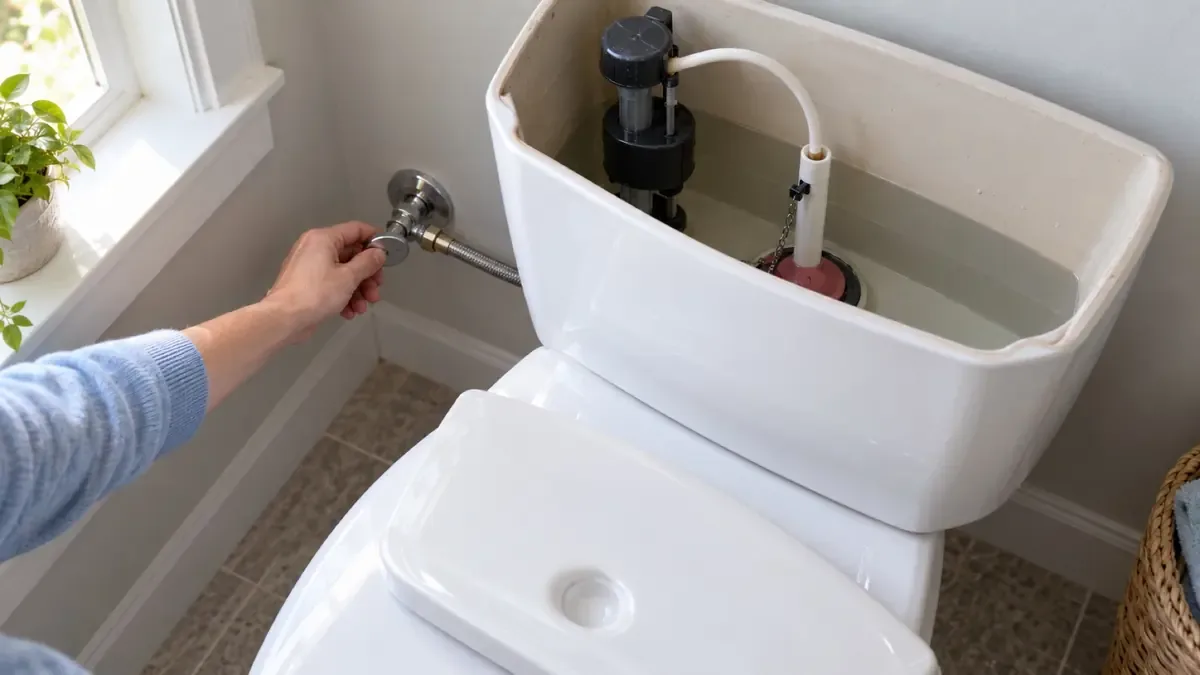
Turning the shutoff valve behind a toilet with the tank lid off and the water low
A shutoff valve that isn't fully open is the first thing to check.
Quick answerOpen the shutoff valve fully, check the supply line for kinks, and make sure the flapper seals. Raise the float if the water stops low, flush debris out of the fill valve, or replace the fill valve.
Worth checking firstCheck the shutoff valve behind the toilet. It's often left partly closed after other work, and opening it fully may be the whole fix.
Easy15–60 min$0–30
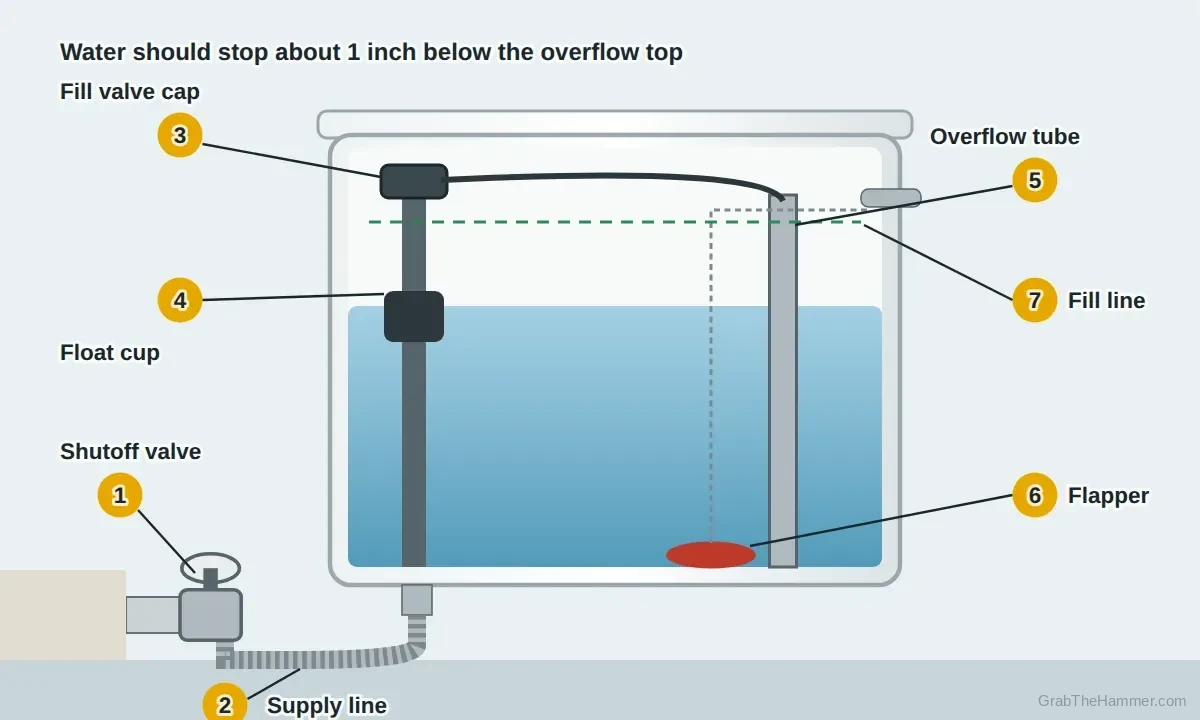
Cutaway of a toilet tank: the shutoff valve on the wall and the supply line feeding the fill valve from below, the fill valve with its removable top cap and float cup that sets the water height, the refill tube clipped to the overflow tube, the rubber flapper at the bottom, and the fill line about an inch below the top of the overflow.
Water comes in through the shutoff valve (1) and supply line (2) to the fill valve, which stops when the float (4) rises to the fill line (7).

How a toilet tank fills

Water comes from the shutoff valve on the wall, through a flexible supply line, into the , the tall part usually on the left side of the tank. When you flush, the float drops and opens the fill valve. As the tank refills, the float rises and shuts the water off at the set level.

If water can't get to the fill valve, or the valve's small openings are blocked with sediment, the tank fills slowly or not at all. If the at the bottom leaks, water runs into the bowl and the tank never reaches its full level.

Why a tank fills slowly or not at all

A partly closed shutoff

Water is restricted before it reaches the toilet.

A clogged fill valve

Grit blocks the valve's small openings.

A leaky flapper

Water drains to the bowl as the tank fills.

Low water pressure

The whole house gets weak flow.

What's happening?
You noticeLikely causeStart at
Barely any water comes inShutoff or supply lineSteps 1 and 2
Water keeps running to the bowlLeaky flapperStep 3
Stops filling too lowFloat set too lowStep 4
Slow fill, hissing valveClogged fill valveStep 5
Sinks are weak tooLow house water pressureStep 6
Still slow after cleaningWorn fill valveStep 7
Water off firstTurn off the water at the shutoff before opening the fill valve. Don't overtighten plastic nuts on the tank or supply line; they crack, and a cracked fitting can let go and flood the room later.

Let's fix it

0 of 7 done
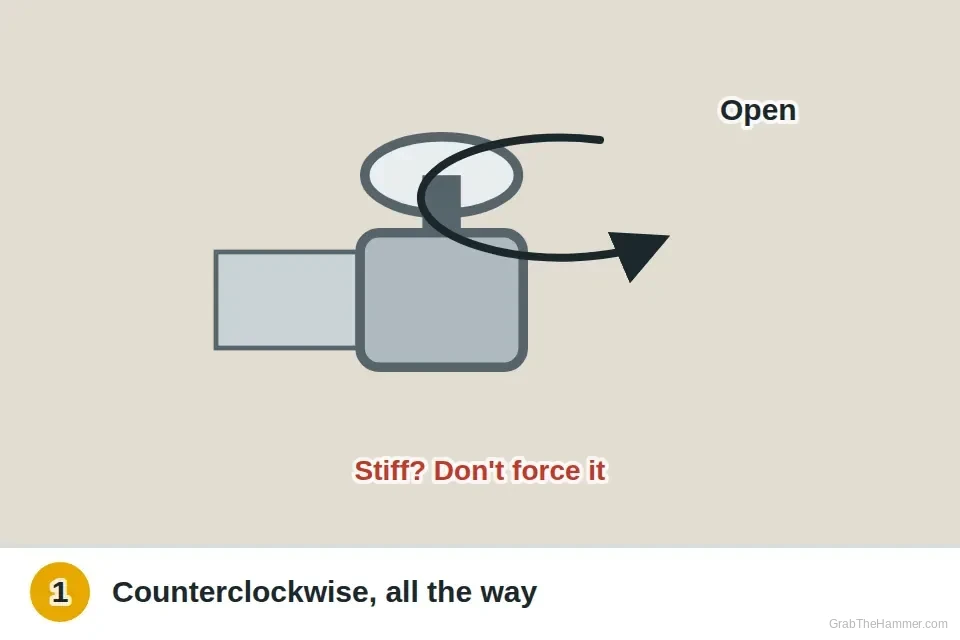
  1. Open the shutoff valve fullyFind the valve on the wall behind the toilet and turn it counterclockwise as far as it goes. It's often only partly open after other work. If it's stiff, don't force it; an old valve that won't open can be replaced by a plumber.
    Something went wrong?
    • The valve handle spins but nothing changes The valve stem may be broken. Turn off the and have the valve replaced.
    Hand turning the shutoff valve behind the toilet counterclockwise until it's fully open
  2. Check the supply lineLook at the hose from the valve to the toilet. A kink, a sharp bend or a crushed line slows water down. Straighten it or replace it with a new braided line. If you just replaced a line or did work nearby, sediment may have broken loose and lodged at the fill valve inlet.
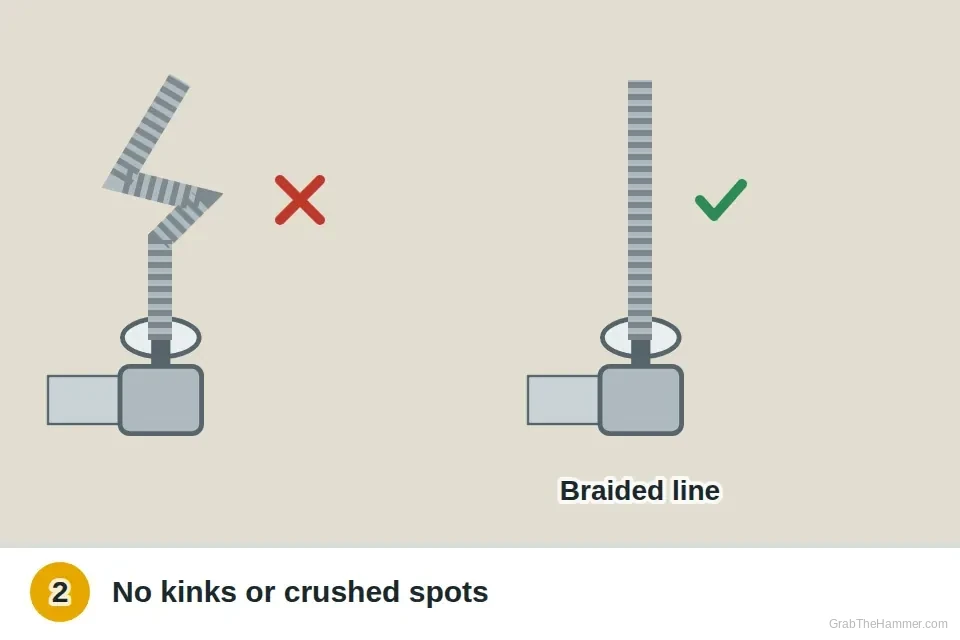
    Kinked supply line between the shutoff valve and the toilet crossed out, next to a straight braided line
  3. Watch the flapperTake the tank lid off and set it somewhere safe. Flush and watch the flapper at the bottom close. If water keeps flowing into the bowl after it drops, or the flapper sits crooked, the tank is draining while it fills. Clean the seat or replace the flapper; see the toilet keeps running guide for details.
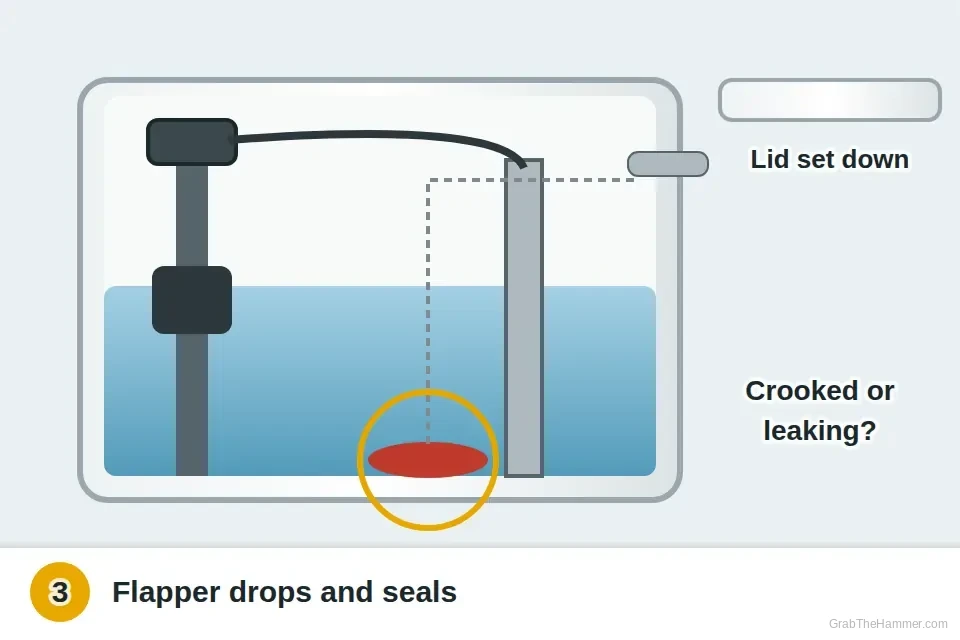
    Tank lid off and a flush watched as the rubber flapper drops and seals the drain, with water no longer flowing into the bowl
  4. Check the floatThe fill valve shuts off when its float reaches a set height. If the float is set too low, the tank stops filling early and the water sits well below the fill line marked inside the tank. Most modern fill valves have a clip or screw to raise the float. Adjust it so the water stops about an inch below the top of the .
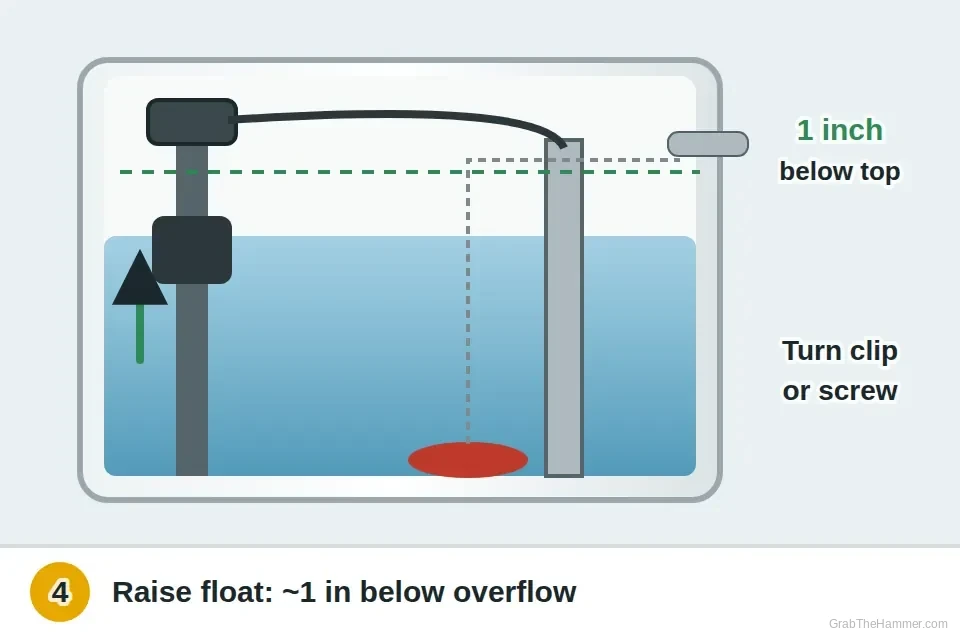
    Fill valve float raised with its adjustment clip so the water stops about an inch below the top of the overflow tube
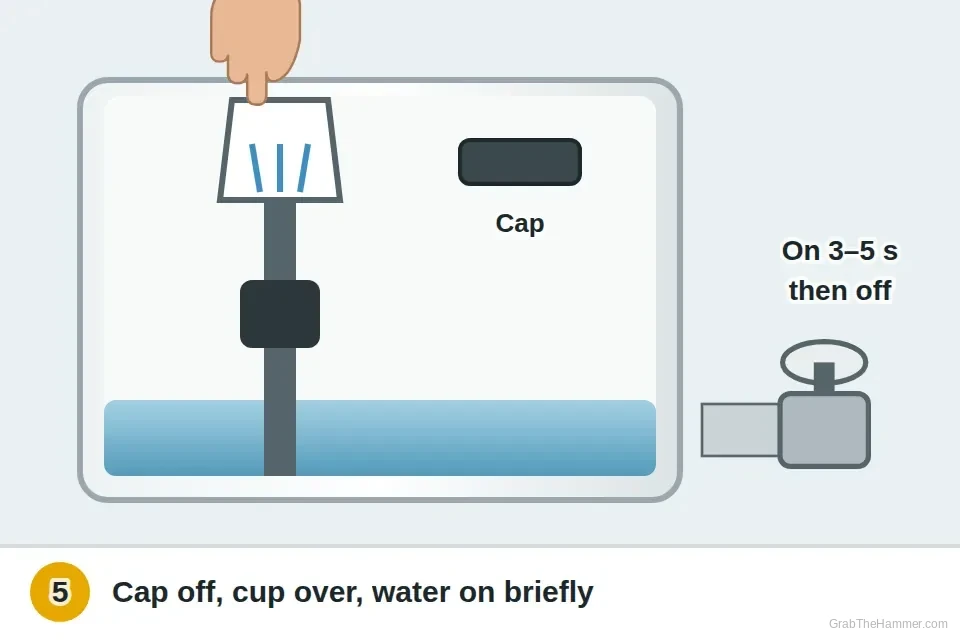
  5. Flush out the fill valveTurn off the water at the shutoff. On most fill valves, you remove the top cap by pressing down and twisting it counterclockwise, usually about an eighth of a turn; check the marks on the valve. Hold a cup upside down over the open valve, then turn the water on for a few seconds to blast out debris, and turn it off again. Rinse the cap and its seal, put them back, and turn the water on.
    Something went wrong?
    • The cap won't come off Check for a locking tab or arrow marks on the cap. Some fill valves need the float arm held out of the way first.
    Water off, fill valve cap removed, and a cup held upside down over the open valve while the water is turned on for a few seconds to blast out debris
  6. Check your water pressureTurn on the bathroom sink. If it's also weak, the problem isn't the toilet. Check whether other faucets are slow, whether the main shutoff is fully open, and whether your water company is doing work nearby. Low pressure throughout the house is a separate problem from the toilet.
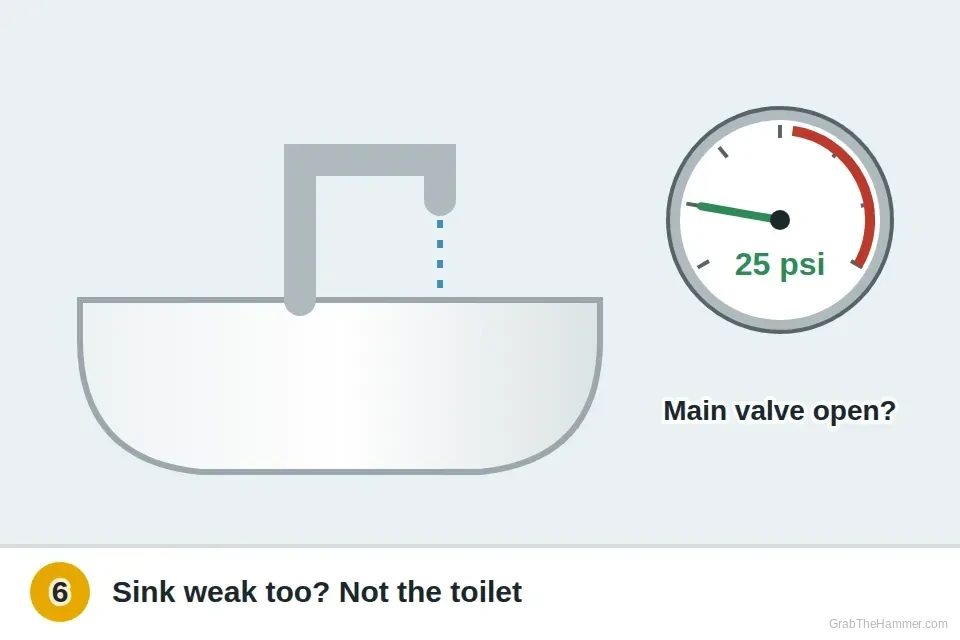
    Bathroom sink faucet running with a weak trickle, pointing to a house-wide pressure problem rather than the toilet
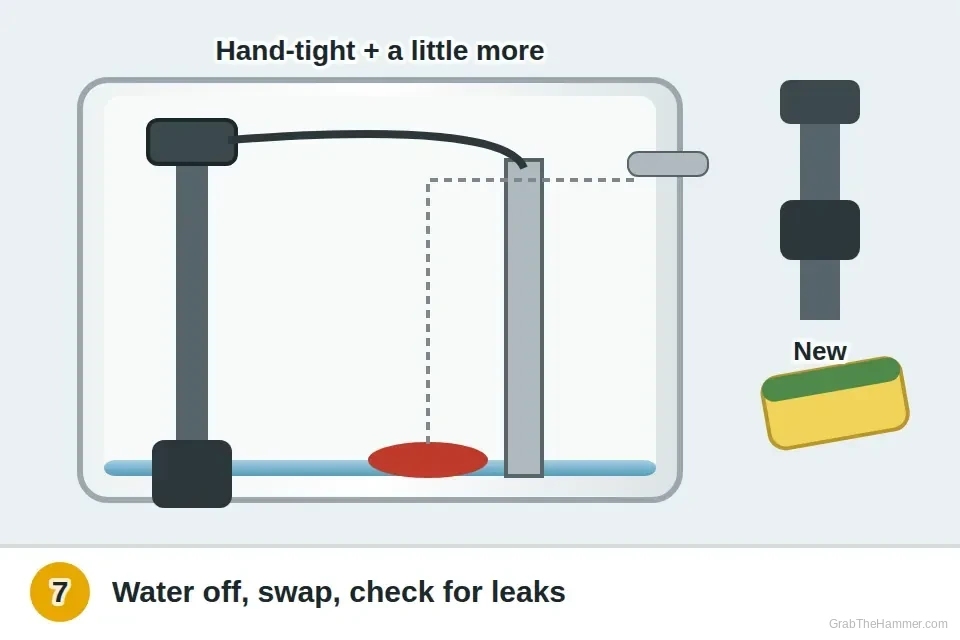
  7. Replace the fill valveIf it's still slow after cleaning, replace the fill valve. Shut off the water, flush and sponge out the tank, disconnect the supply line, and unscrew the nut under the tank. Install the new valve at the height the instructions show, connect the refill tube to the overflow, hand-tighten the nut plus a little more, and turn the water back on to check for leaks.
    Something went wrong?
    • It leaks at the nut under the tank Turn off the water and snug the nut a little more by hand. Don't overtighten plastic threads.
    Old fill valve removed through the tank hole after the water is shut off and the tank sponged dry, and a new adjustable fill valve installed with its refill tube clipped to the overflow

Watch it done

Fix A Slow Filling Toilet Tank-With No Tools!By Mike Klimek on YouTube. Their method may vary a little from ours.
Watch on YouTube
How you'll know it's fixed
  • The tank refills in about a minute
  • Water stops about an inch below the overflow
  • No hissing or refilling between flushes

Still slow with a new fill valve? Check the house water pressure.

If it still won't fill

If the handle itself is loose or floppy, we have a guide for a loose toilet handle.

If the tank fills fine but the bowl level stays low or the flush is weak, the issue is in the bowl side. See the weak toilet flush guide.

If the fill valve hisses or turns on by itself every so often, water is slowly leaking out of the tank. That's usually the flapper, and you can confirm it by adding food coloring to the tank and watching the bowl.

Flush lines after workAfter any work on your water lines, let the faucets run for a minute before using the toilet. It clears loose grit before it can reach the fill valve.
Renting?If you rent, opening the valve and adjusting the float are fine. Report a fill valve that needs replacing.
Call a plumber ifThe shutoff valve won't open or leaks, low pressure affects the whole house, the tank or fittings are cracked, or the toilet still won't fill after a new fill valve.Fix it yourself or call? Compare the cost →

What a pro typically charges (a rough estimate; prices vary by area): A plumber's service call usually runs $150–$300. Replacing a fill valve typically costs $125–$250, and replacing a shutoff valve runs about $150–$350.

Find a plumber near you

Something else going on?

Toilet fill questions

Why is my toilet tank not filling up?

Most often a partly closed shutoff valve, a clogged fill valve or a leaky flapper.

Why does my toilet tank fill so slowly?

Debris in the fill valve or a kinked supply line is the usual cause.

How do I clean a toilet fill valve?

Shut off the water, remove the cap, hold a cup over the valve and turn the water on briefly to flush it out.

How long should a toilet take to refill?

Usually under a minute. Much longer means something is restricting the flow.

Why won't my toilet refill?

Usually a half-closed shutoff valve, a kinked supply line, grit in the fill valve, or a leaky flapper draining water as fast as it comes in.

Reader reports

Did this fix work for you?

Tell the next person how it went. Your numbers are added to the totals anonymously; tips are read by our team before they appear.

How did it go?
Reader Q&A

Questions from readers

No questions on this guide yet. If you're stuck, ask below. Useful questions and answers get added here for the next person.

Ask a question

We read every question before anything is published, and we never show names or emails. Please leave out personal details. PrivacyAccessibility

About the authors

GrabTheHammer Team

  • No sponsored picks
  • Safety first
  • Tells you when to call a pro

We're a small team of writers and editors who check every guide against manufacturer instructions and common code requirements. Our goal is to help you understand the problem, tackle what you safely can and know when to call a pro.

Checked against: Manufacturer instructions for the parts and products involved, EPA WaterSense.

How we write and review →
A helpful next stepFix a toilet that won't flush all the wayCheck the tank level, the chain and the holes under the rim.