Loose toilet handle
A loose toilet handle that wobbles or needs jiggling to flush is one of the easiest bathroom fixes. Most of the time, the nut holding the handle to the tank has worked loose, or the chain to the flapper has the wrong amount of slack. You can fix both in a few minutes with no tools or just a wrench. If the handle or its arm is cracked or worn, a new one costs only a few dollars. Most loose handles just need the nut tightened, and it usually turns the opposite way from what you'd expect.

How a toilet handle works
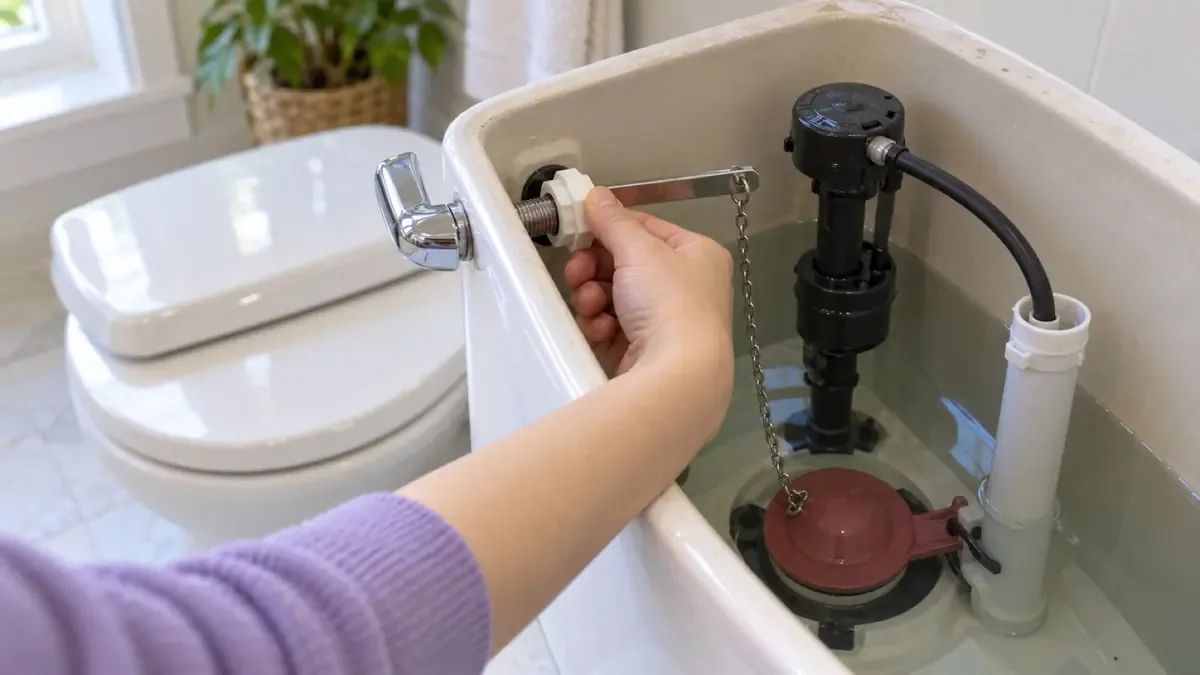
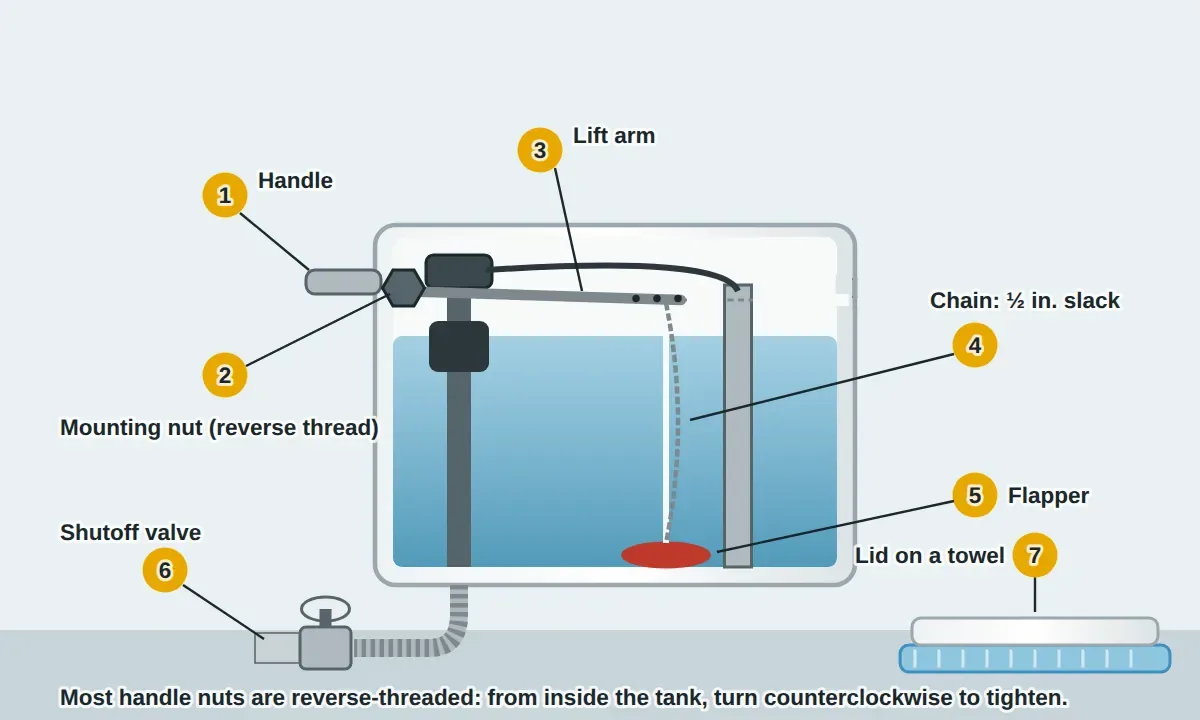
The handle on the outside of the tank connects to a lift arm on the inside. A nut on the inside of the tank wall holds the handle in place. When you press the handle, the arm lifts a chain, the chain lifts the , and the tank empties into the bowl.
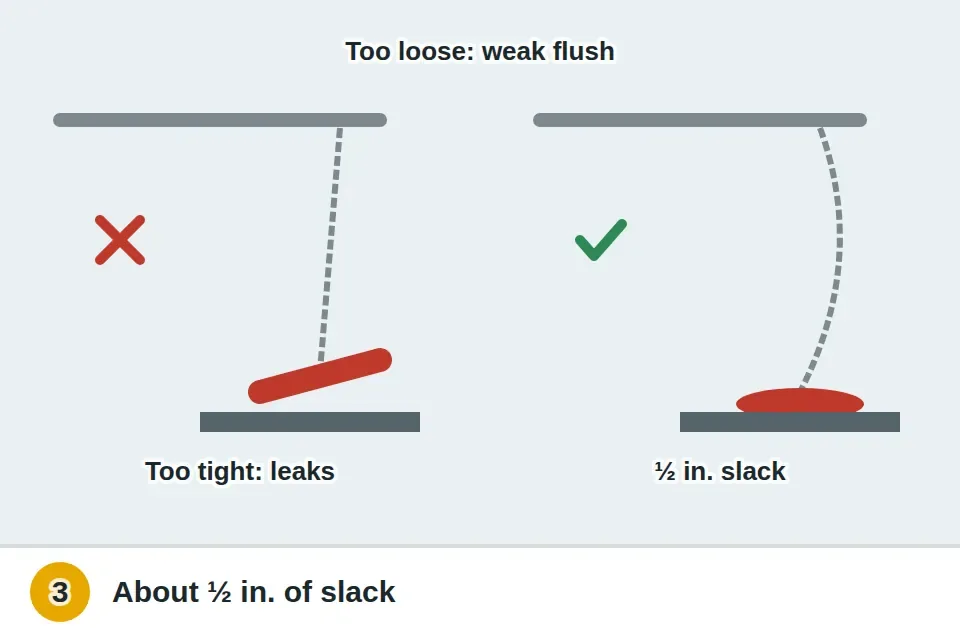
If the nut loosens, the handle wobbles and the arm doesn't lift as far. If the chain is too slack, the flapper doesn't open fully and you get a weak or partial flush. If it's too tight, the flapper can't seal and the toilet runs.
Why the handle gets loose
The handle wobbles and the arm doesn't lift fully.
The flapper doesn't open far enough for a full flush.
The chain pulls at an angle or the arm slips.
The shaft or threads are stripped or broken.
| You notice | Likely cause | Start at |
|---|---|---|
| Not sure what's wrong | Needs a look inside the tank | Step 1 |
| Handle wobbles in the hole | Loose mounting nut | Step 2 |
| Have to hold or jiggle to flush | Chain too slack | Step 3 |
| Toilet runs after flushing | Chain too tight | Step 3 |
| Chain pulls at an angle | Lift arm out of line | Step 4 |
| Handle spins freely or is cracked | Worn handle | Step 5 |
Let's fix it
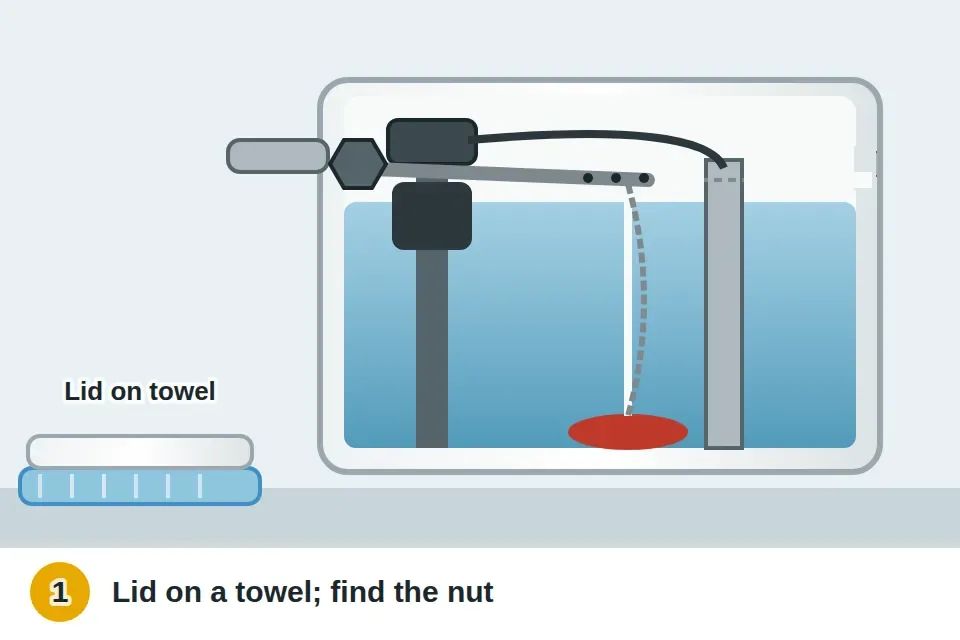
- Look inside the tankLift the tank lid and set it on a towel where it won't get knocked over. Find the nut on the inside of the tank wall behind the handle, and look at the lift arm and the chain running down to the flapper. Press the handle a few times and watch what moves.
- Tighten the mounting nutMost toilet handle nuts are reverse-threaded, so as you face the nut from inside the tank you tighten it by turning it counterclockwise. Some are standard thread, so if it doesn't snug up, try the other way. Turn it by hand or with a wrench until the handle stops wobbling. Stop once it's snug; plastic nuts and handles crack if you overtighten them.

- Adjust the chainWith the flapper closed, the chain should have a little slack, about a half inch. Unhook the clip and move it to a different link to shorten or lengthen it. Too much slack gives a weak flush that needs a long hold or a jiggle; too little keeps the flapper from sealing. Flush a few times to check.
- Check the lift armMake sure the arm is lined up over the flapper so the chain pulls straight up. Many arms have several holes; moving the chain clip to a different hole can improve the pull. If the arm is cracked, bent or slips on the handle, the handle needs to be replaced.

- Replace a worn handleShut off the water at the valve behind the toilet and flush to empty the tank. Unhook the chain, remove the nut and slide the old handle and arm out. Buy a replacement that matches your toilet's handle position: front mount, side mount or angle mount. Many universal handles have an adjustable arm. Install it, tighten the nut snug, reattach the chain, turn the water back on and test.

Watch it done
- The handle doesn't wobble
- One push gives a full flush
- The tank stops filling after each flush
Still weak after adjusting the chain? See the weak flush guide.
If it still won't flush right
If the handle is tight and the chain is set right but the toilet still flushes weakly, the problem is likely elsewhere. See the guide for a weak toilet flush.
If the toilet keeps running after you adjust the chain, the flapper may be worn. Check our guide for a toilet that keeps running.
What a pro typically charges (a rough estimate; prices vary by area): Most plumbers charge a minimum service fee of about $100–$250, so a handle replacement on its own often costs about that much. It's usually worth doing yourself.
Find a plumber near youSomething else going on?
Toilet handle questions
Which way do you tighten a toilet handle nut?
Most are reverse-threaded, so you turn counterclockwise as you face the nut inside the tank. Check yours.
Why do I have to jiggle my toilet handle?
Usually the chain has too much slack, or the handle nut is loose.
Are toilet handles universal?
Many are adjustable, but match the mount: front, side or angle.
How tight should a toilet handle nut be?
Just snug. Overtightening can crack a plastic nut or handle.
How do I tighten a toilet handle?
Lift the tank lid and tighten the mounting nut behind the handle. Most turn counterclockwise to tighten.