Water heater making noise
A water heater making noise is usually telling you about sediment. Popping and rumbling come from water trapped under minerals at the bottom of the tank, and flushing the tank is the fix. Ticking is usually pipes expanding as they heat, a sizzle on a gas heater is often water dripping on the burner, and a screech or whistle often means a valve is partly closed. Hissing or dripping at the relief valve is the one not to put off. A popping water heater is usually just full of sediment. A flush quiets most of them.
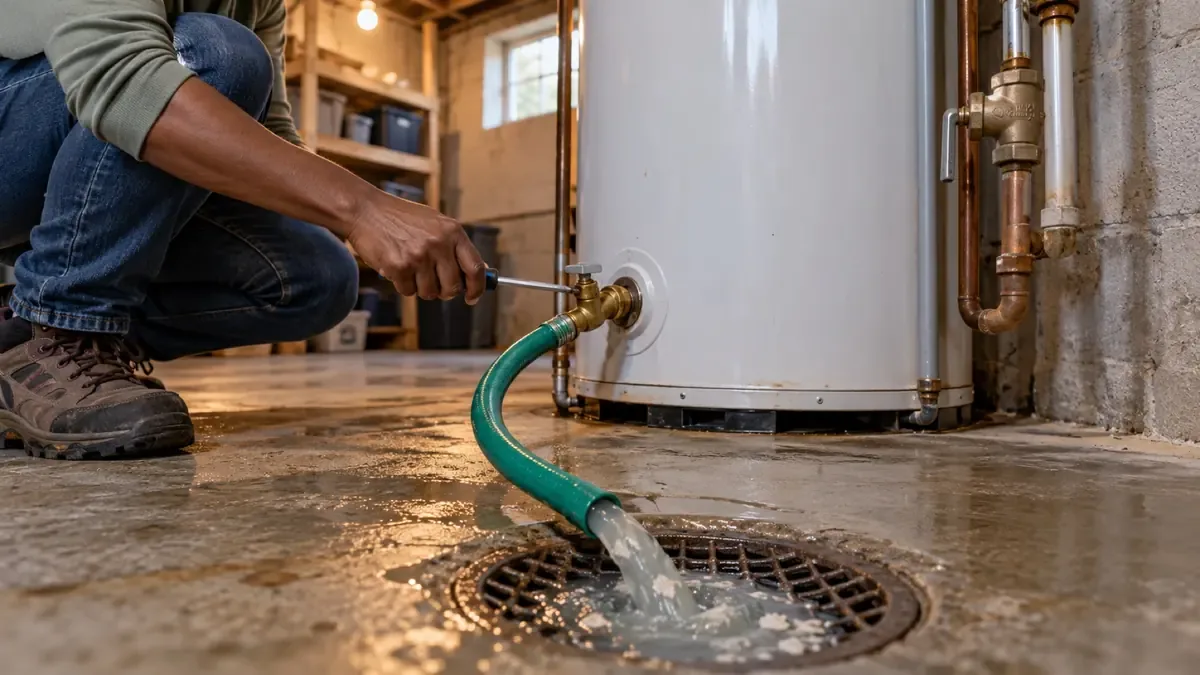

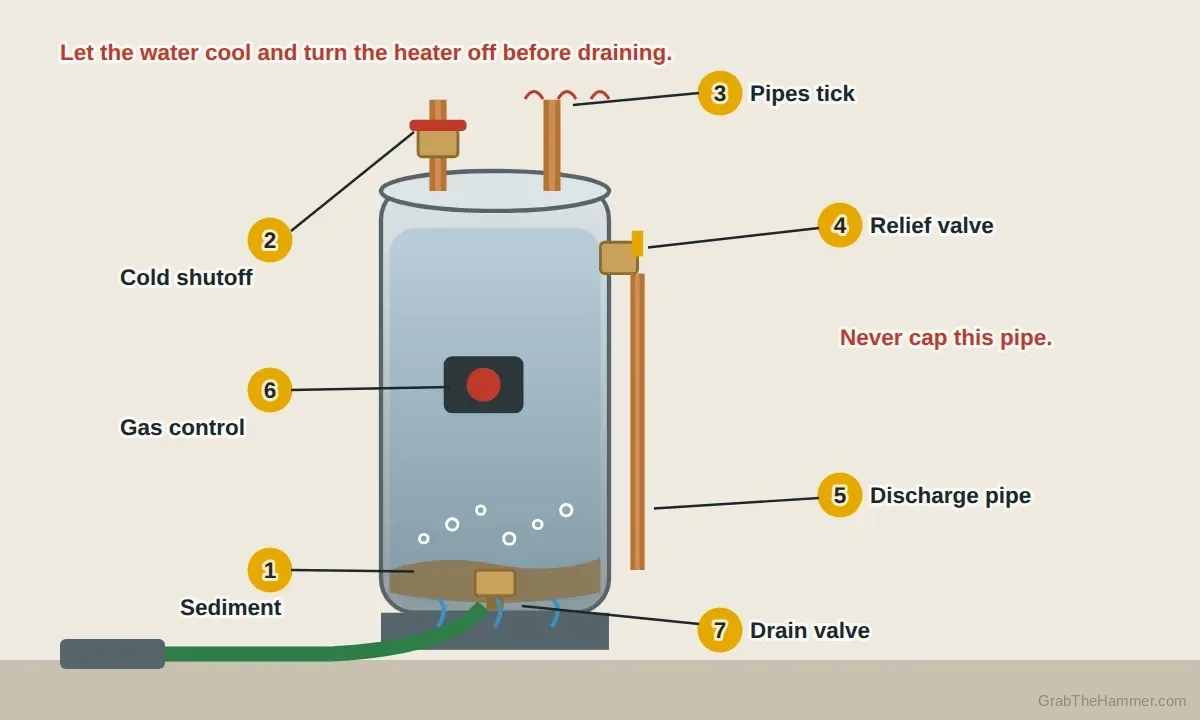
Why water heaters make noise
Hard water carries dissolved minerals. When a tank water heater heats it, some of those minerals come out of the water and settle on the bottom of the tank, or coat the lower heating element in an electric heater. On a gas heater, water caught under that layer gets hot enough to form steam bubbles, which pop and rumble as they push up through it. The layer also makes the heater work harder and can shorten the life of the tank.
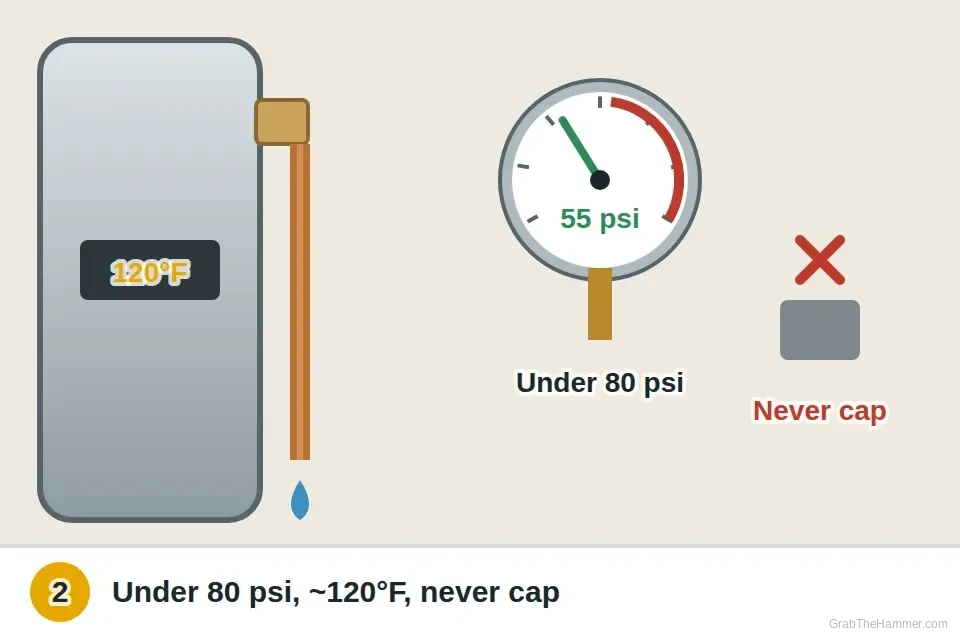
Every tank also has a temperature and pressure , usually on the top or upper side, with a pipe running down toward the floor. It opens if the water gets too hot or the pressure too high. A valve that drips, hisses or releases water now and then is either worn or doing its job because the pressure is high, which is common when a home has a check valve or pressure regulator and no expansion tank.
Common causes of water heater noise
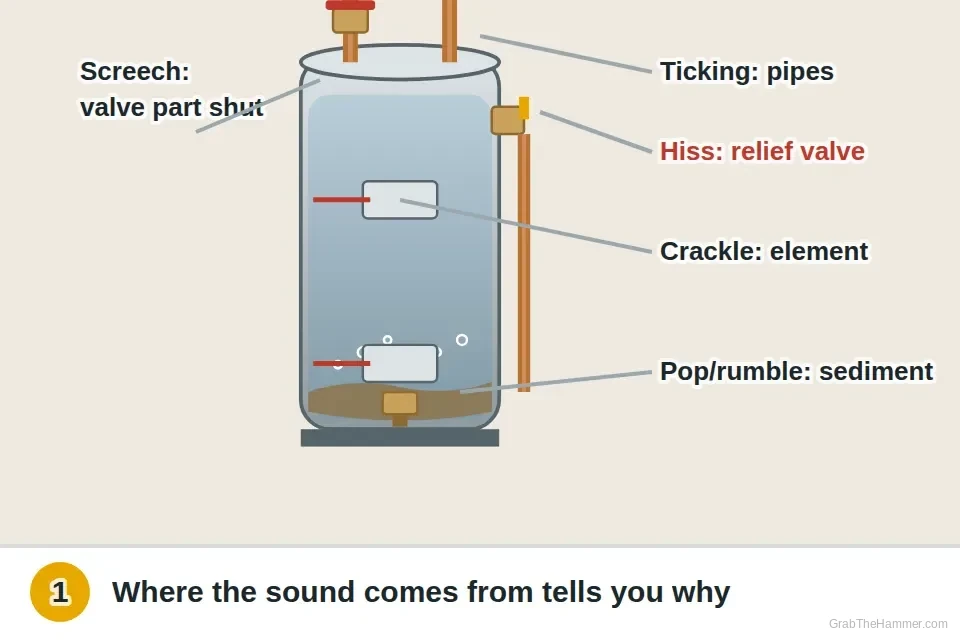
Trapped water pops and rumbles as it boils through.
The element crackles and hisses as it heats.
Water squeals through the narrow opening.
The relief valve hisses or drips.
| You hear | Likely cause | Start at |
|---|---|---|
| Popping or rumbling from the bottom | Sediment | Step 5 |
| Crackling inside an electric heater | Scaled element | Step 7 |
| Hissing or dripping at the relief valve | High pressure or temperature | Step 2 |
| Screeching or whistling | A partly closed valve | Step 3 |
| Ticking in the pipes on top | Normal expansion | Step 1 |
| Sizzling at a gas burner | Condensation or a drip | Step 1 |
Let's fix it
- Name the soundStand near the heater while it runs. Popping, rumbling or knocking from the bottom of the tank is sediment. Crackling or hissing inside an electric heater often means scale on the heating element. A brief sizzle on a gas heater usually comes from condensation or water dripping onto the burner. Ticking in the pipes on top is normal expansion as they heat. Screeching or whistling usually points to a valve that isn't fully open.
- Check the relief valve and look for leaksLook at the temperature and pressure relief valve and the pipe below it. If it's dripping, hissing or has released water, check that the thermostat isn't set high; around 120°F is the common recommendation. Thread a pressure gauge onto a nearby hose faucet; household pressure is typically meant to stay under 80 psi. High pressure, or a valve that keeps releasing, needs a plumber, who may add an expansion tank or a pressure regulator. Never cap or plug that pipe. Water pooled under the tank is a separate problem; check our guide for a water heater leaking.
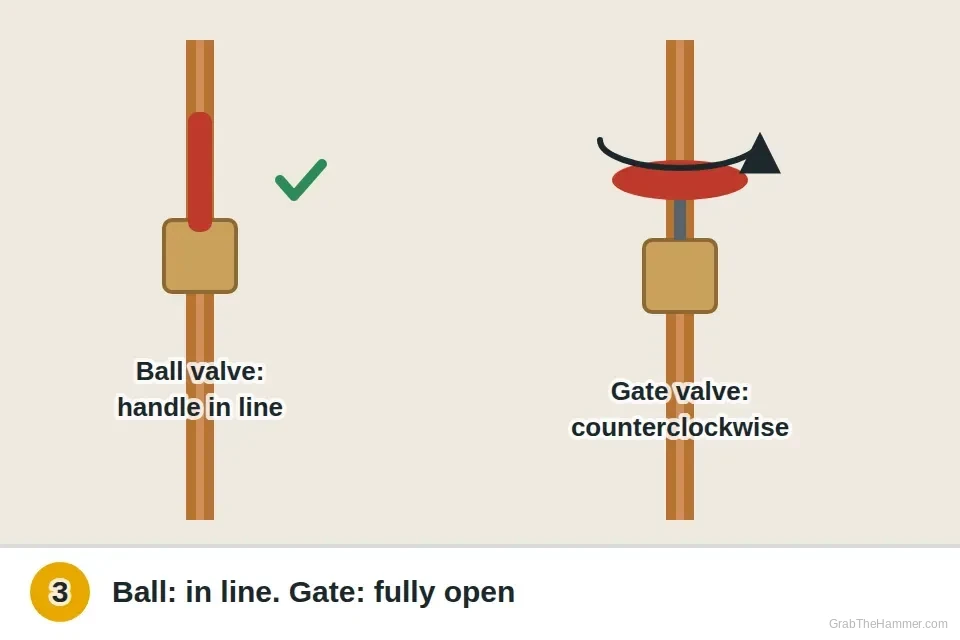
- Open any partly closed valveA screech or whistle often comes from water squeezing through a valve that's partly closed. Make sure the cold water shutoff on the pipe into the heater is fully open: a ball valve handle should line up with the pipe, and a round gate valve handle should be turned counterclockwise until it stops. Do this gently, since old valves can start to drip at the stem.
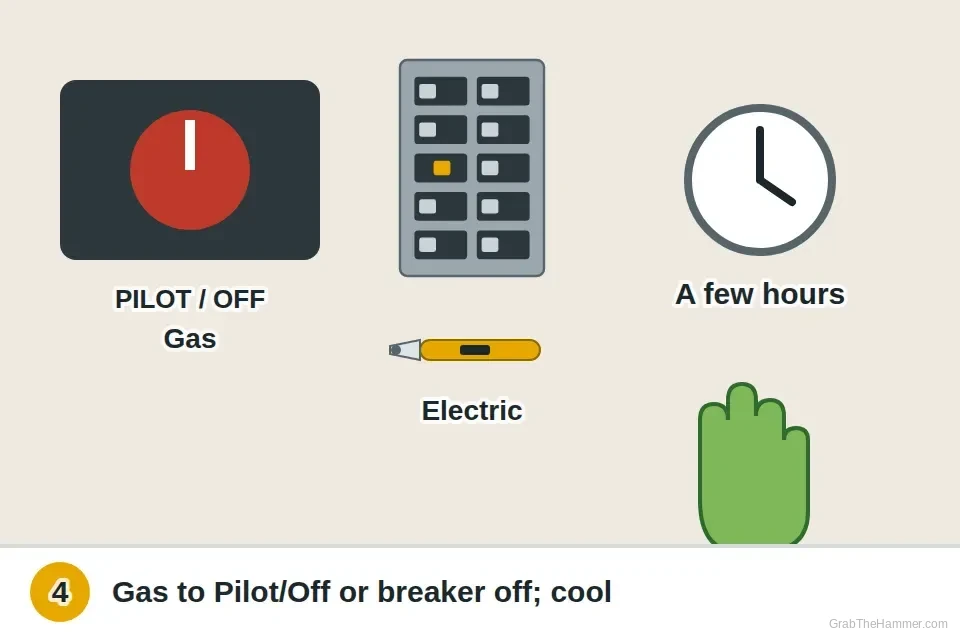
- Turn the heater off and let it coolBefore flushing, turn the heater off. On a gas heater, turn the gas control to Off or Pilot, following the label on the tank. On an electric heater, switch off its breaker and confirm the power is off at the wires with a voltage tester. Water in the tank can be hot enough to scald, so give it a few hours to cool if you can, and wear gloves.
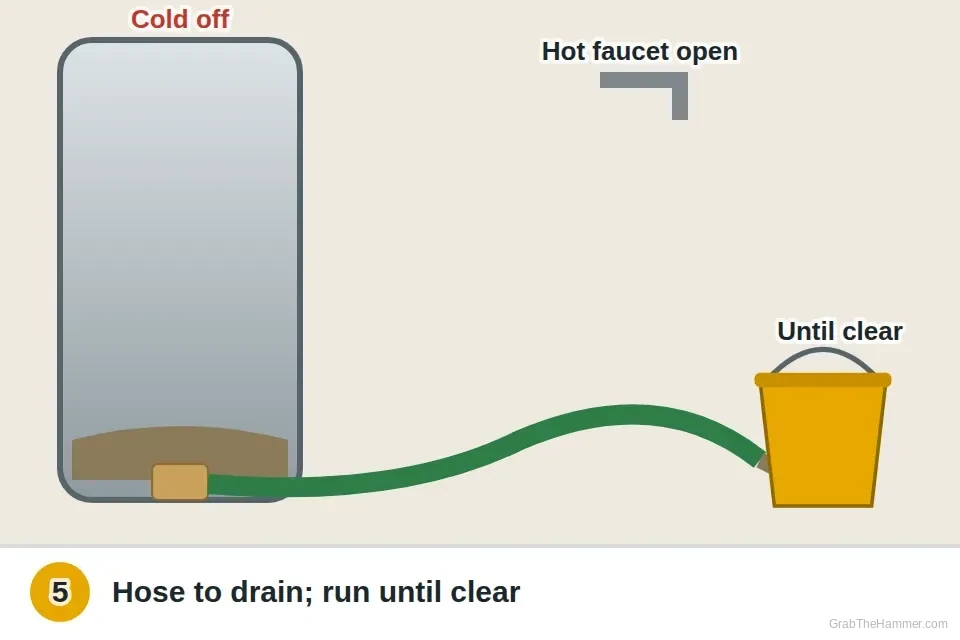
- Flush out the sedimentClose the cold water shutoff into the heater. Attach a garden hose to the drain valve at the bottom of the tank and run it to a floor drain, or outside to a spot lower than the valve. Open a hot water faucet in the house to let air in, then open the drain valve. Drain until the water runs clear, then open the cold shutoff for short bursts to stir up more sediment and keep draining until it's clear. Older plastic drain valves can clog or break, so don't force one; if it's clogged with debris, close it and call a plumber.
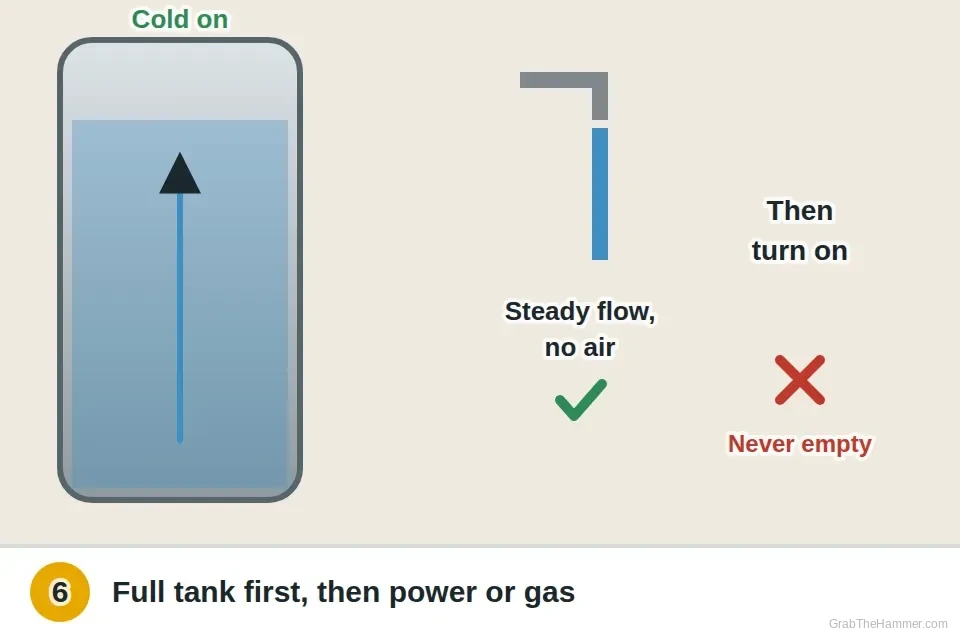
- Refill it before turning it onClose the drain valve and take off the hose. Open the cold water shutoff and leave the hot faucet in the house open until water flows steadily with no sputtering air, which means the tank is full. Only then turn the heater back on. An electric element can burn out in seconds if it's powered with no water around it. Relight or restore a gas heater following its label, and check that the drain valve isn't dripping. If the pilot won't relight after a couple of tries, stop and call a plumber or the gas company.
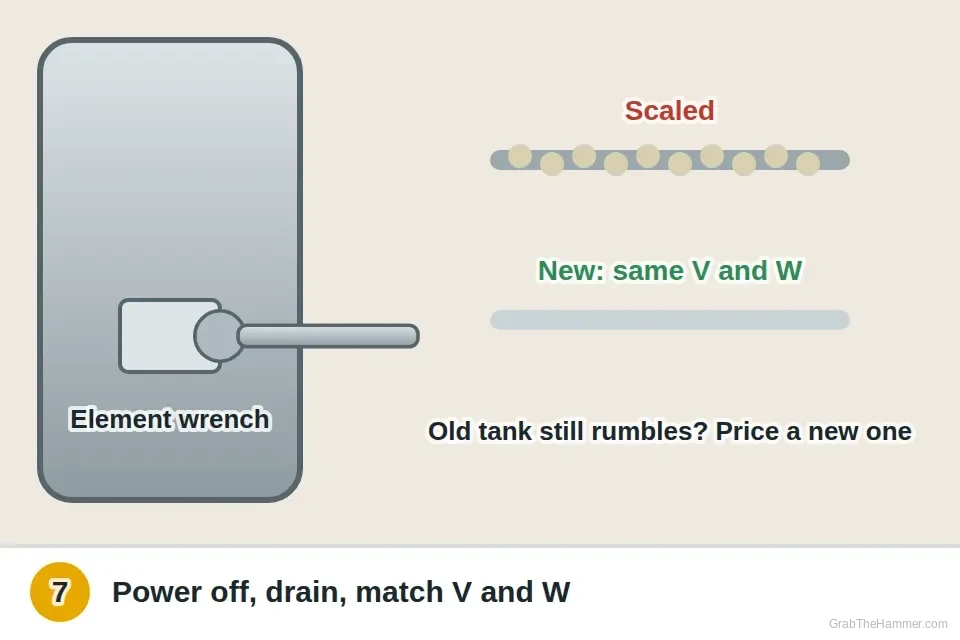
- Replace a scaled element or the heaterIf an electric heater still crackles after flushing, the lower element may be heavily scaled. With the power off and confirmed off, and the tank drained below the element, unscrew it with an element wrench and install a new one with the same voltage and wattage, then refill before restoring power. If the tank keeps rumbling after a good flush, the water looks rusty, or the tank is more than about 10 to 12 years old, start pricing a replacement; there's a separate guide for no hot water for checks on an older heater.
Watch it done
- The tank heats without popping or rumbling
- The relief valve and drain valve are dry
- Hot water comes out clear
Still rumbling after a good flush? The tank may be near the end of its life.
If it's more than noise
If water is pooling around the tank, we have a guide for a water heater leaking.
If your hot water also runs out quickly, see the guide for hot water running out fast.
What a pro typically charges (a rough estimate; prices vary by area): A plumber typically charges $100–$250 to flush a water heater, $150–$350 to replace an electric element, and $200–$450 to replace a relief valve or add an expansion tank. A new tank water heater usually runs $1,200–$3,000 or more installed.
Find a plumber near you