Casement window crank not working
When a casement window crank stops working, the handle is either spinning without turning the gears, or the window is too stiff for the crank to move. A slipping handle is usually a loose set screw or worn splines, and a stiff window usually needs its hinge tracks cleaned and lubricated. If the gears inside the crank are stripped, the whole operator unscrews and gets replaced as one part. A stiff window strips the crank, so clean the tracks before you buy parts.

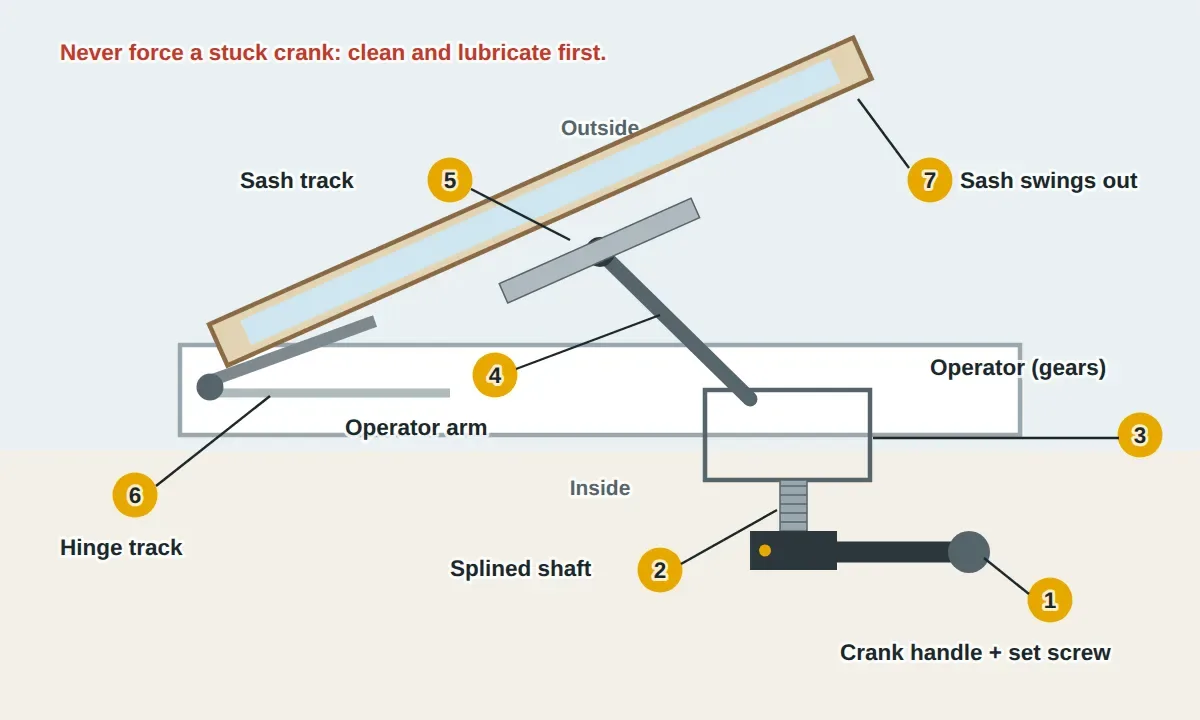
How a casement crank works
A casement window swings out like a door. The crank handle sits on a short splined shaft that turns the gears of a small gearbox called the operator. One or two arms run from the operator to a bracket or track on the bottom of the sash and push the window open as you crank. Metal hinges in tracks at the top and bottom of the sash let it swing out and slide along at the same time.
The parts wear in a predictable order. Dirt and old paint in the hinge tracks make the sash harder to push, so the crank has to work harder and the gears or the handle's splines wear out. In cold weather, ice can glue the sash to the frame, and forcing the crank then is a common way to strip a brand new operator.
Why the crank stops working
The handle spins on the shaft.
The handle slips off and on.
The sash is too stiff to push.
The shaft turns but the arm doesn't.
The arm moves but the window doesn't.
| You notice | Likely cause | Start at |
|---|---|---|
| Handle spins, nothing moves | Handle slipping on the shaft | Step 2 |
| Crank is very hard to turn | Dirty, dry hinge tracks | Step 3 |
| Shaft turns, arm doesn't | Worn operator gears | Step 6 |
| Arm moves, window doesn't | Arm off its track | Step 5 |
| Won't move in cold weather | Ice on the sash | Step 1 |
Let's fix it
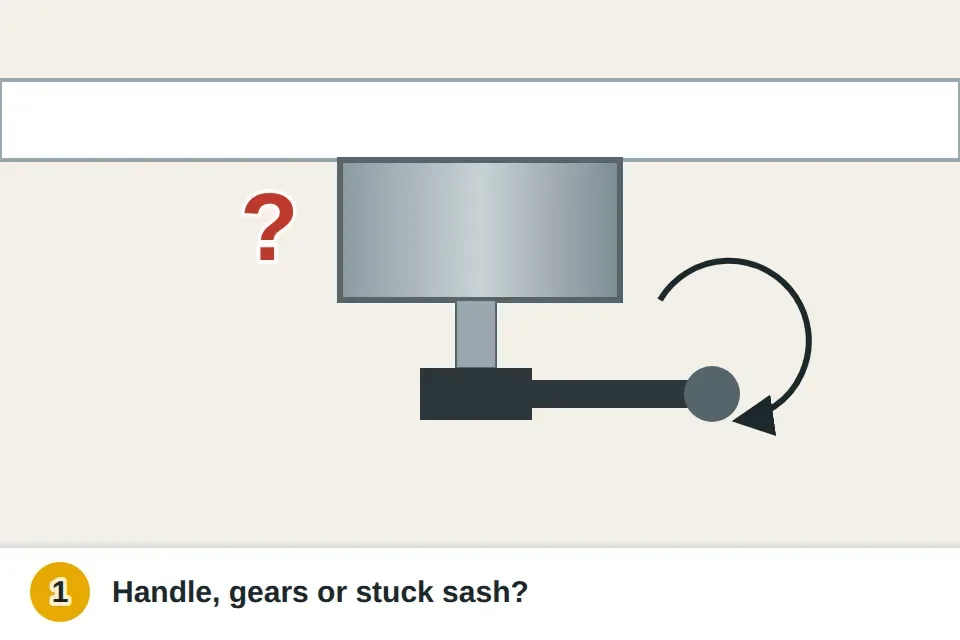
- Find out what's slippingTurn the crank slowly and watch the shaft under the handle and the operator arm. If the handle spins but the shaft under it doesn't turn, the handle is the problem. If the shaft turns but the arm doesn't move, the gears are worn. If the crank is very hard to turn or won't turn at all, the sash is stuck or the hinge tracks are dirty. In winter, check for ice along the bottom first and let it thaw; don't force it.
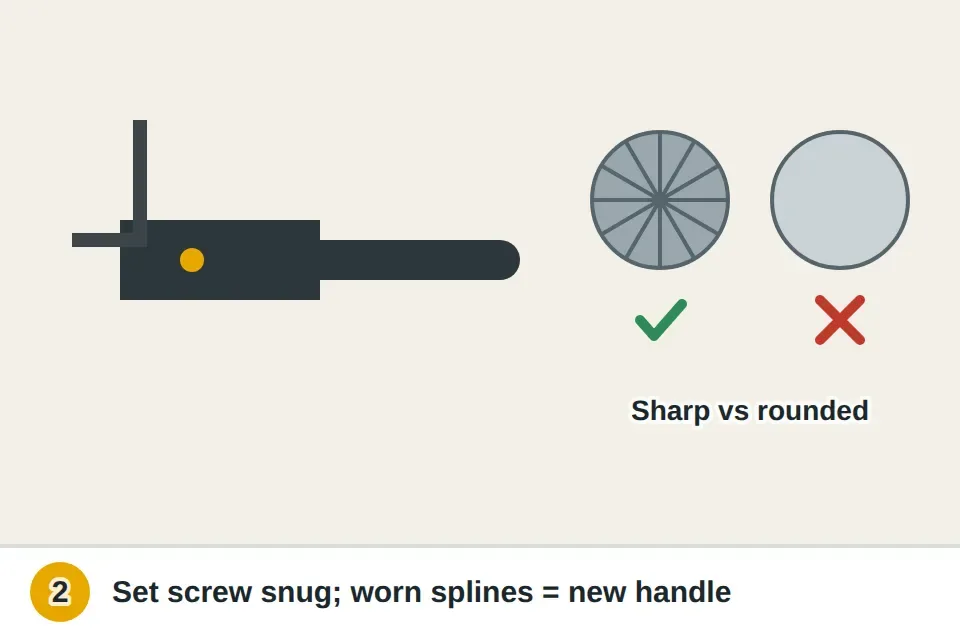
- Tighten or replace the handleLook for a small set screw on the side of the handle and tighten it onto the shaft. If the handle still slips, pull it off and look at the splines inside. Rounded splines mean a new handle; take the old one to the store or match it by the window brand, since spline counts differ.
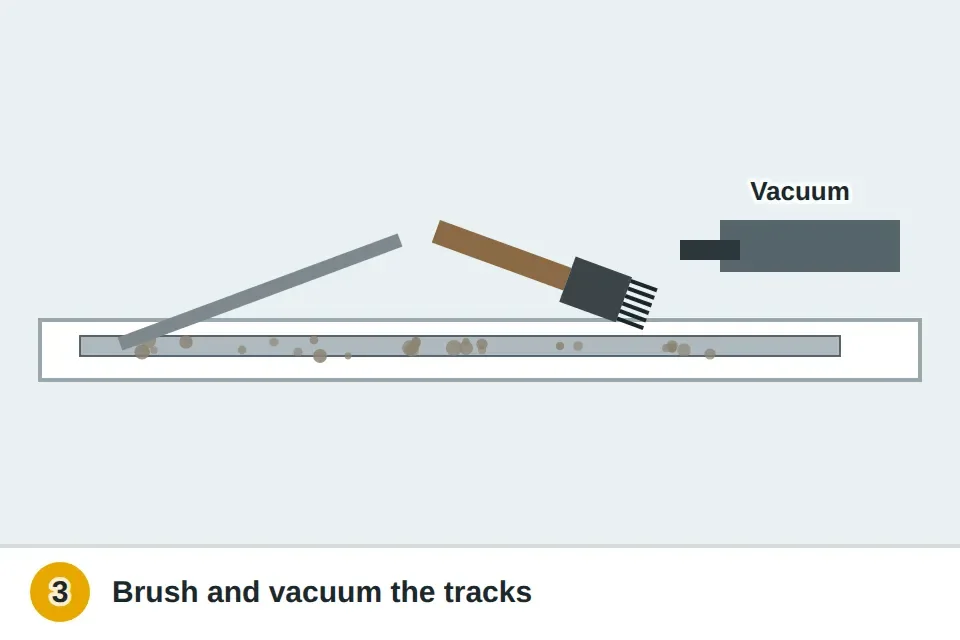
- Clean the hinge tracksOpen the window fully. Brush and vacuum out dirt, dead bugs and paint flakes from the hinge tracks at the top and bottom of the sash, then wipe them with a damp rag and mild cleaner. Check that the hinge screws are tight, and look for bent hinge arms.
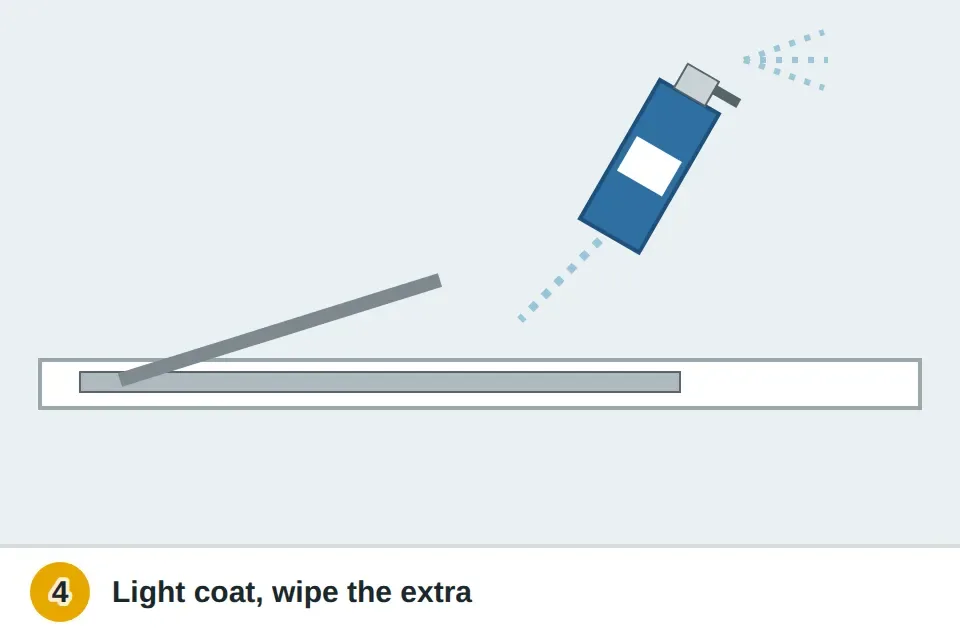
- Lubricate the moving partsPut a light coat of silicone or dry lubricant on the hinge tracks, the hinge pivots and the operator arm where it slides. Open and close the window several times by cranking to spread it. Wipe off any extra so it doesn't collect dirt. Check your window maker's care guide, since some recommend a specific product.
- Reconnect the operator armIf the crank turns and the arm moves but the window doesn't, the arm may have slipped out of its track or bracket on the sash. Open the window part way, line the arm's roller or stud up with the opening in the track, and slide or clip it back in. Some arms are held by a small clip or screw.

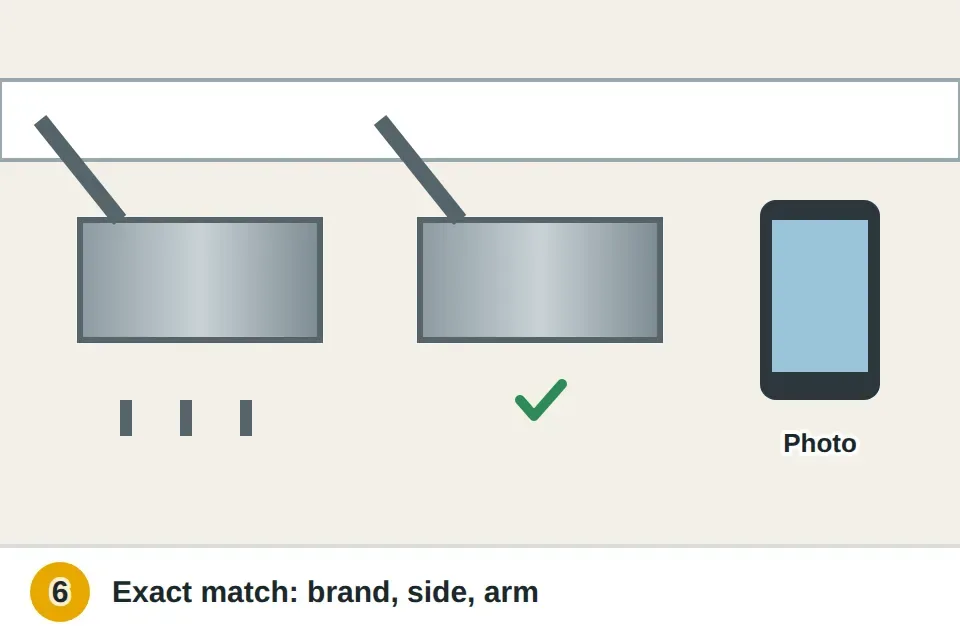
- Replace a worn operatorWith the window open part way, disconnect the arm from the sash. Take off the handle and any cover or trim over the operator, remove the screws holding it to the frame, and lift it out. Photograph it and note the brand, which side it's for and the arm length, then buy an exact match. Fit the new one, reconnect the arm, put the screws back and test it before reinstalling the cover.
Watch it done
- The crank turns smoothly both ways
- The window opens and closes fully
- It locks tight when closed
Still stiff after cleaning? The hinges may be bent; a window tech can replace them.
If it's stuck shut
If the window is painted or swollen shut, see the guide for a window that won't open.
If it closes but lets in drafts, see the guide for drafty windows.
What a pro typically charges (a rough estimate; prices vary by area): A window repair tech or handyman typically charges $100–$250 for a visit, and replacing an operator usually runs $125–$300 with the part.
Find a handyman near youSomething else going on?
Casement window crank questions
Why does my casement window crank spin but the window doesn't move?
Either the handle's splines or set screw are slipping on the shaft, or the operator's gears are stripped. Watch the shaft as you turn to tell which.
Can I replace just the casement window crank handle?
Yes, if only the handle is worn. Match the brand and spline count, and tighten its set screw.
How do I make a casement window crank easier?
Clean the dirt out of the hinge tracks and lubricate the tracks, hinges and operator arm with silicone or dry lubricant.
How do I replace a casement window operator?
Disconnect the arm from the sash, remove the cover and screws, and install an exact match for the brand, side and arm length.
Why won't my casement window open in winter?
Ice can freeze the sash to the frame. Let it thaw instead of forcing the crank, which strips the gears.