Repair a torn window screen
A small hole in a window screen can be patched in a few minutes with a self-adhesive patch. For a big tear, replacing the mesh in the frame is an easy job with a spline roller, a roll of screen and new spline, the rubber cord that holds the mesh in place. Fiberglass screen is the easiest to work with. It's forgiving, doesn't crease the way aluminum does, and is the kind most hardware stores stock.


How a screen is held in
Window screens are mesh held in a frame by spline pressed into a groove around the edge. That's why rescreening comes down to pulling the old spline out, laying new mesh over the frame, and rolling new spline in to hold it tight.
Check the spline size before you buy. It comes in several diameters, and the new one has to match the groove for the mesh to stay put.
How screens get damaged
Claws and hands push through the mesh.
Fiberglass mesh gets brittle over the years.
Screens get dropped or bent when they're taken in and out.
Spline shrinks and hardens, and the mesh sags.
| Damage | Fix | Time |
|---|---|---|
| A pinhole or tiny tear | A dab of clear nail polish or glue | A few minutes |
| A hole smaller than a coin | Adhesive screen patch | About 5–10 minutes |
| A big tear, or sagging mesh | New mesh and spline | 30–45 minutes |
| A bent or broken frame | New frame, or a screen shop | Varies |
Patch or rescreen, step by step
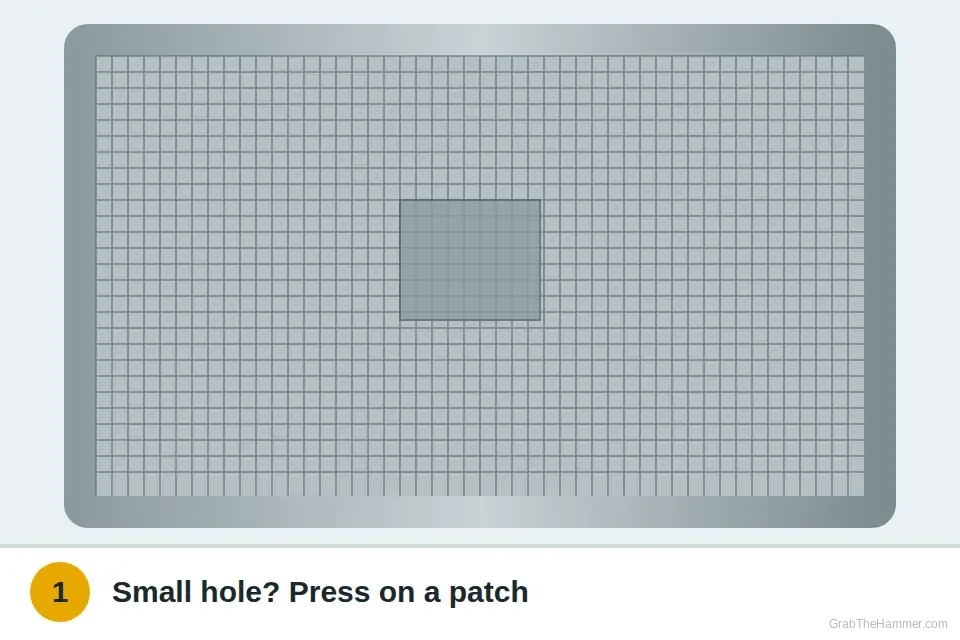
- Patch a small holeFor a hole smaller than a coin, trim loose strands so the area lies flat, then press a self-adhesive screen patch over it.
- Pull out the old splineFor a bigger tear, lay the frame flat. Pry up one end of the spline with a screwdriver or awl and pull it out of the groove all the way around. Remove the old mesh.

- Lay the new meshCut new mesh an inch or two larger than the frame on every side and lay it over the frame. Clamp or weight the frame so it can't bow in while you work, and trim a small square out of each corner of the mesh so it doesn't bunch.

- Roll in the splineStarting at a corner, use the roller to press the spline over the mesh into the groove, one side at a time. Keep the mesh snug, but not so tight that the frame bows. At the corners, push the spline in with a flat screwdriver rather than cutting it.

- Trim the edgesRun a sharp utility knife along the outside of the spline, angled away from the screen, to trim the extra mesh. Put the screen back in the window.

Watch it done
- The patch or new mesh lies flat with no loose strands
- The mesh is snug with no sagging
- The frame is straight, not bowed inward
- The spline sits fully in the groove all the way around
Mesh sagging? Pull the spline on that side and roll it in again.
If the mesh sags or the frame bows
If the mesh sags, pull out the spline along that side, snug the mesh by hand, and roll the spline back in.
If the frame bowed inward, pull the spline on the long sides, straighten the frame, and roll it back in with less tension.
What a pro typically charges (a rough estimate; prices vary by area): Hardware stores and screen shops often rescreen a standard window screen for about $20–$50.
Find window screen repair near you