Garage door won't close? Check the safety sensors
A garage door that starts down and then reverses, or won't close while the opener light blinks, usually has a problem with the safety sensors near the floor. They may be dirty, bumped out of line, or blocked. Cleaning and realigning them is a free fix, and it's worth getting right, because those sensors keep the door from closing on people and pets.
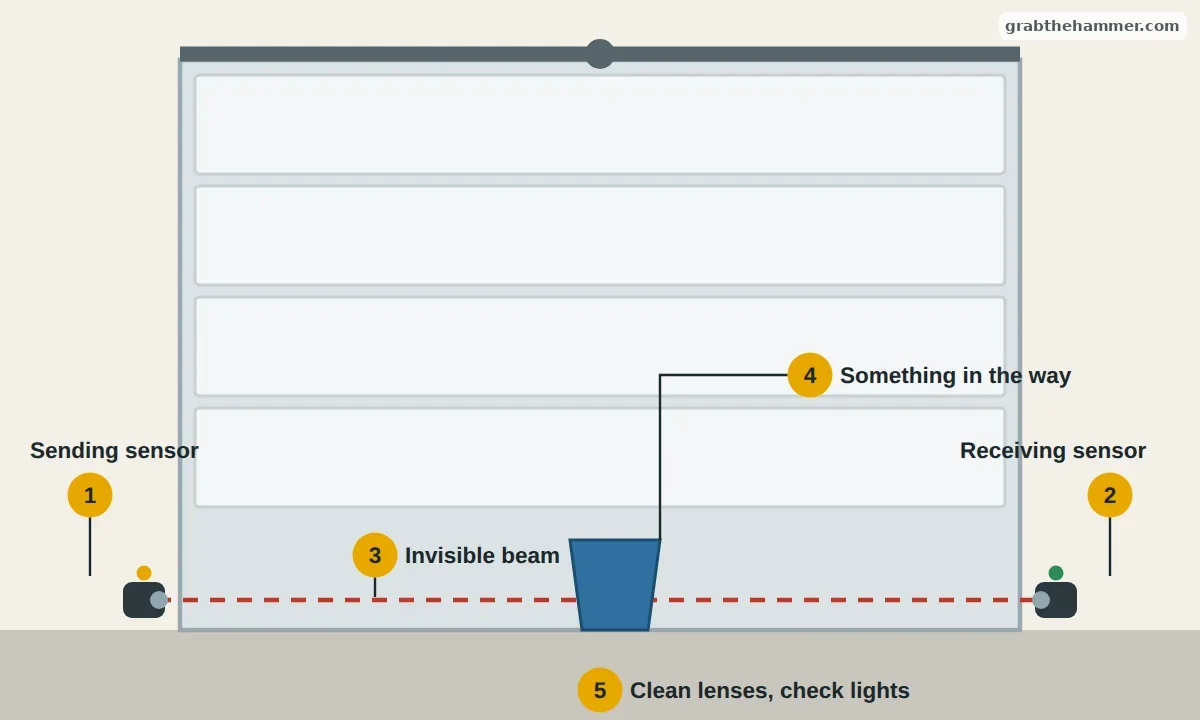
How the safety sensors work
Most openers have two small sensors, one on each side of the door opening, a few inches off the floor. One sends an invisible beam to the other, and if the beam is broken, the opener won't close the door, or it reverses.
Each sensor has an indicator light. Usually one stays lit to show it's sending, and the other stays lit when it sees the beam; a blinking or dark light points to misalignment or a wiring problem. Your opener's manual shows what its lights mean.
Why the door won't close
Even a small object stops the door.
A bump knocks one off its aim.
Dust or bright sun interferes with the beam.
A loose, stapled or chewed wire to a sensor.
| What you see | Likely cause | What to check |
|---|---|---|
| Starts down, then reverses | The beam is broken | Clear the path; clean and align the sensors. |
| Opener light blinks, won't close | Sensors not seeing each other | Check the sensor lights and alignment. |
| A sensor light is off | No power to the sensor | Check its wires. |
| Door is heavy or crooked | A spring or cable problem | Call a garage door pro. |
Let's fix it
- Clear the pathLook for anything in the doorway or near the sensors: a bin, a broom, leaves, a spiderweb. Even a small object breaking the beam stops the door.
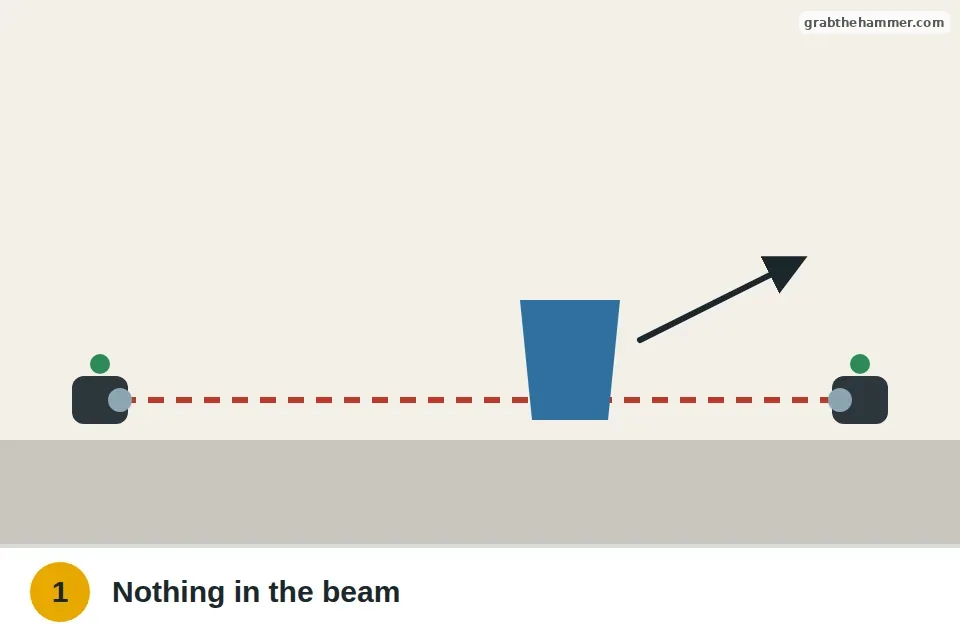
- Clean the lensesWipe both sensor lenses with a soft cloth. Dust, cobwebs and water spots can block the beam, and bright sun shining straight into a sensor can interfere with it.

- Check the lightsLook at the indicator lights on both sensors and compare them with the manual. A blinking or dark light on the receiving sensor usually means the beam isn't reaching it.
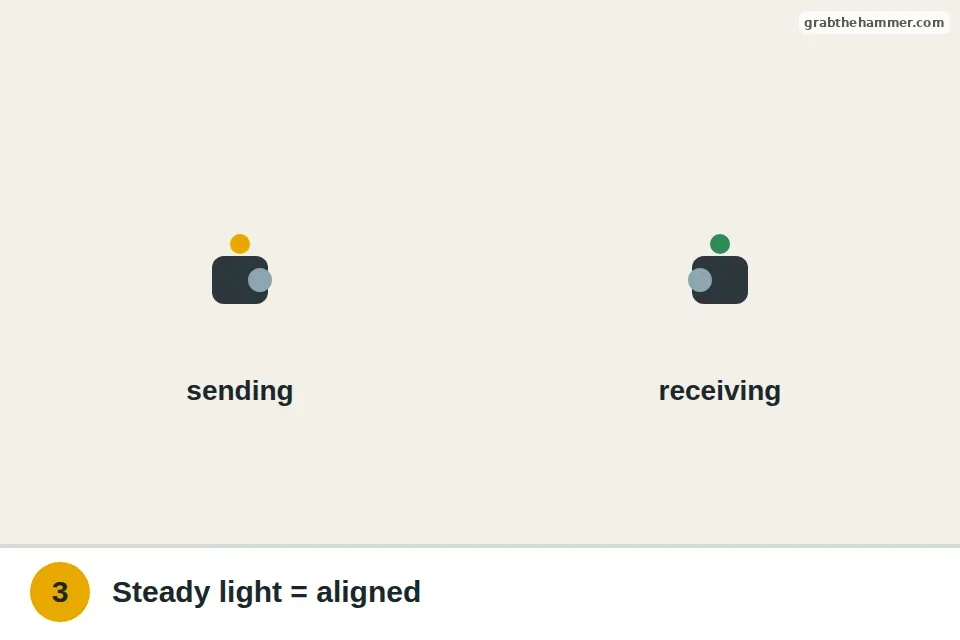
- Realign the sensorsLoosen the sensor's mounting nut or screw, aim it straight at the other sensor, and tighten it once its light stays steady. A level or a string line between them helps get both at the same height and pointing straight.

- Test itClose the door with the remote. Then test the safety reverse the way your opener's manual describes; the door should reverse when the beam is broken or it meets an obstruction.

If it still reverses
If one sensor's light won't come on at all, check its wires for damage or loose connections at the sensor and at the opener. A staple through a wire or a chewed cable is a common cause.
If the door reverses even with both sensor lights steady, the door may be binding or the travel limits may be off. Don't turn up the force setting to make it close; a garage door technician can check the balance, springs and opener settings.
What a pro typically charges (a rough estimate; prices vary by area): A garage door technician typically charges $100–$250 for a service call; spring replacement usually costs $150–$400.
Something else going on?
Garage door questions
Why does my garage door go down and then back up?
Usually the safety sensors: something is in the way, or they're dirty or out of line.
Can I close the door without the sensors working?
Many openers will close the door if you hold the wall button down the whole way, as a stopgap. Keep holding it and watch until the door is fully closed, with nobody near it. Fix the sensors soon; they're what keeps the door from closing on someone.
Why do the sensors act up in the afternoon?
Bright sun shining straight into a sensor can interfere with the beam. Cleaning and careful alignment help, and some openers offer sun shields.
How do I test the auto-reverse?
Follow your opener's manual. Many suggest laying a 2x4 flat on the floor under the door and closing it; the door should reverse when it touches the board. Also pass something through the beam while it's closing to check that it reverses.
Still stuck? Ask us
Tell us what you're seeing and what you've tried. We read every question, and the ones that will help other people get answered on this page.