Heat pump frozen in winter
In winter a heat pump pulls heat out of cold outdoor air, and frost forming on the outdoor coil is a normal part of that. The unit melts it off on its own every so often with a defrost cycle, sometimes with a cloud of steam that looks alarming but isn't. What isn't normal is a unit encased in ice for hours, with a thick block on top or a coil that's solid white. That usually means something is blocking airflow or dripping on it, or the defrost system has a problem. Clear what you safely can, protect the unit, and call a technician if it won't thaw on its own.


Why a heat pump ices up in winter
In heating mode, the outdoor coil gets colder than the outside air so it can absorb heat from it. When the air is near or below freezing and damp, moisture freezes on that cold coil as frost. To clear it, the heat pump runs a defrost cycle every so often, commonly after 30 to 90 minutes of running in frosty conditions, depending on the model and how it's set up. It briefly switches to cooling mode, which sends hot refrigerant to the outdoor coil, stops the outdoor fan and melts the frost in a few minutes. Steam and dripping water during defrost are normal, and so is the backup heat coming on inside.
Trouble starts when ice builds faster than defrost can remove it, or the meltwater has nowhere to go. Snow drifts against the coil, water dripping from a gutter or roof edge onto the top of the unit, ice storms and freezing rain can all encase it. Meltwater that refreezes under a unit sitting low to the ground can block the bottom of the coil. Inside the system, a clogged filter or low refrigerant makes the coil run colder, and a failed defrost control, sensor or reversing valve stops the defrost cycle altogether. A heat pump that stays iced up heats poorly and can damage its fan or coil, so it's worth acting on.
Why the outdoor unit stays frozen
Drifts and leaves block the coil and trap meltwater.
A gutter or roof edge above drips and refreezes on top.
Meltwater can't drain and freezes around the base.
Low airflow makes the outdoor coil colder.
A failed control, sensor or valve stops defrost.
The coil runs colder and ices quickly. A technician job.
| You notice | Likely cause | Start at |
|---|---|---|
| Frost clears every hour or so, with steam | Normal defrost | Step 1 |
| Snow piled against the sides | Blocked airflow | Step 2 |
| Thick ice on top, under a roof edge | Roof or gutter drip | Step 3 |
| Indoor filter is dusty | Low airflow | Step 4 |
| Coil stays solid white for hours | Defrost or refrigerant problem | Step 5 |
| Unit frozen and the house is cold | Use emergency heat | Step 6 |
Let's fix it
- Check whether it's normal frostLook at the outdoor unit when it's cold and damp out. A light, even coat of white frost on the coil fins is normal. Watch for up to an hour or two: during a defrost cycle the outdoor fan stops, you may hear a whoosh as the reversing valve switches, steam rises from the coil, and water drains from the bottom. Afterward the coil should look clear or wet, and the frost slowly returns. Inside, the air from the vents may feel cooler for a few minutes and your backup heat may come on. All of that is normal. If the coil never clears, or ice keeps getting thicker, keep going.

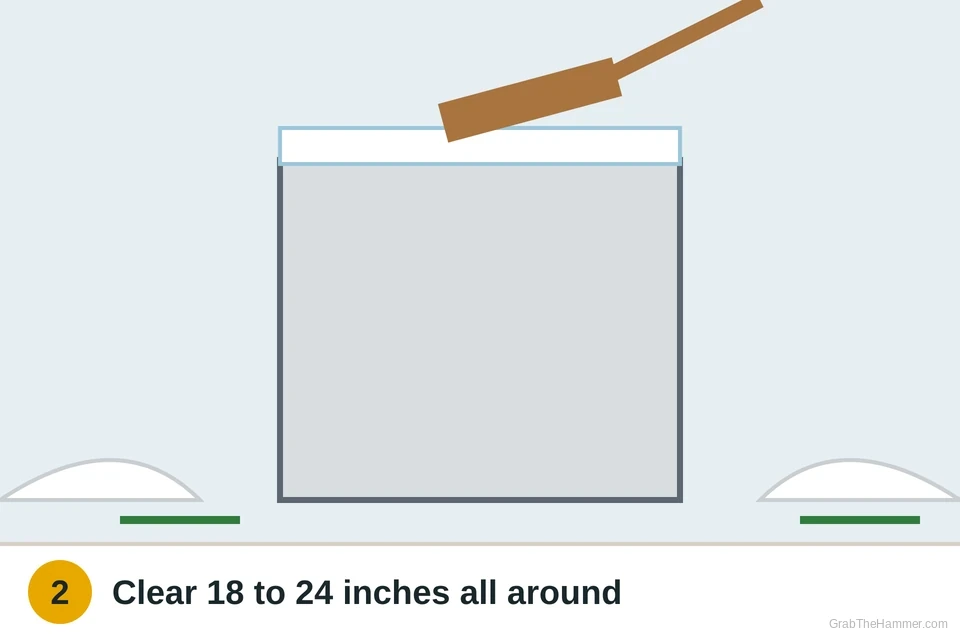
- Clear snow and debris around itShovel or sweep snow away from all sides of the outdoor unit, leaving at least 18 to 24 inches of clear space, or the clearance your manual lists. Brush loose snow off the top with a soft broom. Don't use a shovel blade near the coil. Remove leaves, branches and anything leaning against it. Make sure the area under and around the base is clear so meltwater can drain away. Keep the unit clear during storms; a drift can build up overnight.
- Stop water dripping onto the unitLook straight up from the unit. If it sits under a roof edge without a gutter, or a gutter that overflows or leaks at a seam, that's a likely source. Water drips onto the top in the day and refreezes at night, building a thick cap of ice that defrost can't melt. Clean and repair the gutter above; see how to clean gutters and the guide for a gutter leaking at the seams. Don't climb a ladder onto an icy roof or gutter; wait for a dry, thawed day or call a pro. A short piece of gutter, a diverter or a small roof over the unit that doesn't block airflow can help; check the manufacturer's clearance for anything installed above it. In the meantime, gently brush loose snow and slush off the top.

- Check the indoor filterA clogged filter starves the system of airflow, which can make the outdoor coil run colder in winter and ice up faster. Find the filter at the indoor air handler or behind a return grille, slide it out and look at it. If it's gray or you can't see light through it, replace it with the same size; the size is printed on the edge. Make sure supply and return vents in the house are open and not blocked by furniture. See how to change an HVAC air filter.

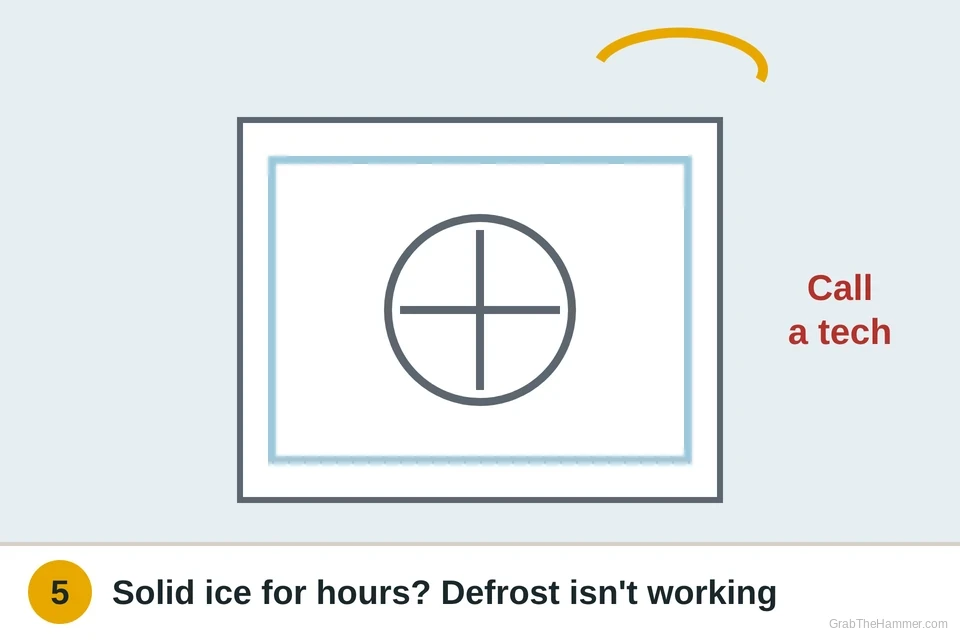
- Let it defrost, and know when it isn'tIf the coil is iced but the area is clear, give the system time; defrost cycles run on their own. Some manufacturers allow you to speed melting by gently running lukewarm (not hot) water from a hose over the top and coil with the power off at the disconnect or breaker. Check your manual first, and make sure the water can drain away and not refreeze in a pile at the base. Restore power once the water has drained. Watch for three warning signs: the coil stays solid white for several hours with no defrost cycles, the fan keeps running with no steam ever appearing, or ice builds right after it clears. Any of these means the defrost control, its sensor, the reversing valve or the refrigerant charge likely needs a technician.
- Use emergency heat while you waitIf the outdoor unit is frozen and the house is getting cold, set the thermostat to Emergency Heat (often labeled EM Heat or EMER) if it has that setting. This shuts off the heat pump and heats with the backup electric strips or furnace, which protects the outdoor unit while it thaws or while you wait for service. It costs more to run, so use it only until the problem is fixed. If your system has no emergency heat setting, turning the system off for a while can let a frozen unit thaw, but watch for freezing pipes in a cold house.

Watch it done
- Frost forms and clears on its own with defrost cycles
- No thick ice on top or around the base
- The house warms on regular heat, without emergency heat
- The outdoor fan runs smoothly with no scraping
If it comes back
If the unit ices up every storm, it may sit too low or in a spot where snow drifts. A technician can raise it on a stand, and a gutter or diverter above it stops roof drips.
If the heat pump runs but the house stays cool, see the guide for a heat pump blowing cold air. In summer, ice on the lines means a different problem; see the guide for a frozen AC.
If the thermostat doesn't respond or shows the wrong mode, see the guide for a thermostat that isn't working.
What a pro typically charges (a rough estimate; prices vary by area): An HVAC service call typically runs about $100–$250. A defrost sensor or control board repair usually totals about $200–$600, and refrigerant leak repair can cost much more.
Find an HVAC technician near you