Fix scratches in a hardwood floor
Most scratches on a hardwood floor are only in the finish, not the wood, and those can often be hidden with a stain marker, a wax filler stick or a little matching finish. Deeper gouges that reach bare wood take a filler colored to match. Work out which kind you have first, because the fix is different.
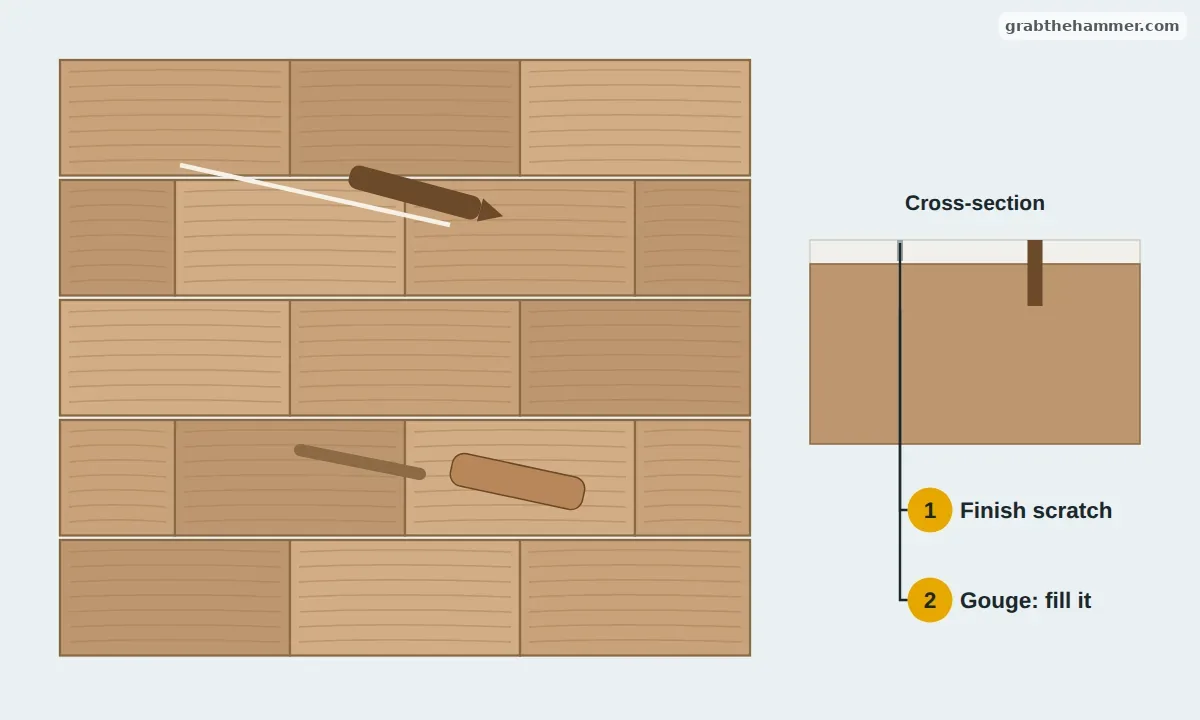
Finish scratch or wood scratch?
Hardwood floors have a clear finish, usually polyurethane, on top of the stained wood. A light scratch that looks white or gray is usually in the finish only. A scratch that shows lighter bare wood, or catches your fingernail, has gone through the finish into the wood.
Factory-finished floors and floors with oil or wax finishes call for different products, so check what you have, or the flooring maker's care instructions, before you put anything on it.
What scratches floors
The most common source, especially without felt pads.
Sand tracked in works like sandpaper underfoot.
They leave lots of fine scratches in the finish.
It can gouge through the finish into the wood.
| Scratch | Looks like | Fix |
|---|---|---|
| Light, in the finish | A white or gray line; your nail doesn't catch | Stain marker or touch-up pen. |
| Into the wood | Lighter wood showing; your nail catches | Wax filler stick or colored floor filler. |
| Many fine scratches | Dull, hazy traffic areas | Screen and recoat by a pro. |
| A deep gouge or dent | A dip in the board | Floor filler, or replace the board. |
Let's fix it
- Clean the areaClean the scratch and the area around it with a cleaner made for your finish, and let it dry. Dirt in a scratch makes it look worse and keeps fillers from sticking.

- Check the depthRun a fingernail across it. If it doesn't catch and the scratch looks white, it's in the finish. If it catches or shows bare wood, it's gone into the wood.

- Color finish scratchesDab a stain marker or touch-up pen along the scratch, wipe off the extra right away with a cloth, and build the color in light passes. Start a shade lighter than the floor.

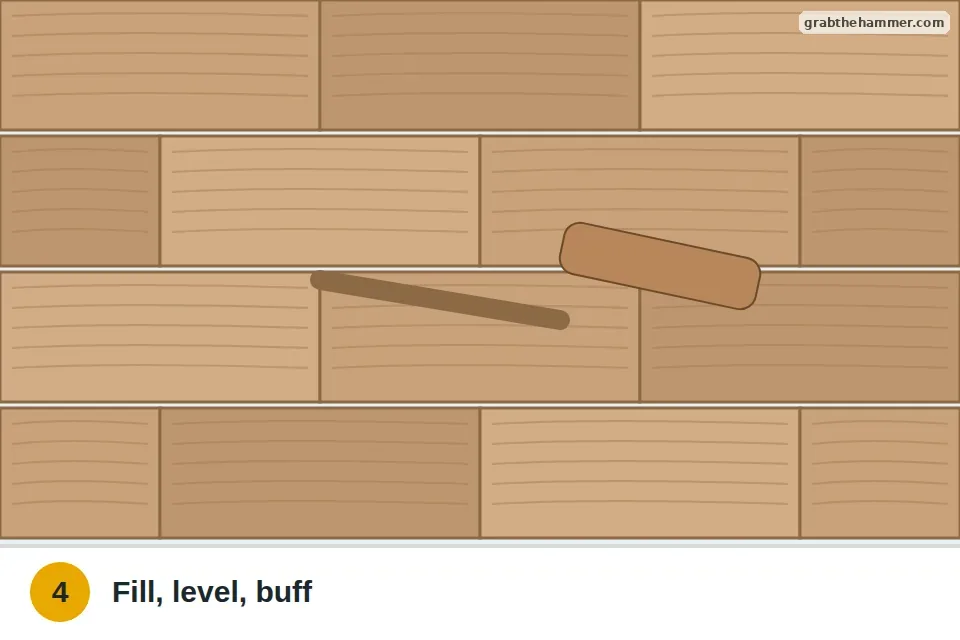
- Fill deeper gougesRub a wax filler stick across the gouge and buff it with a soft cloth, or press in colored floor filler with a plastic knife and scrape it level. A hardening filler needs a light sanding and a dab of finish once it dries.
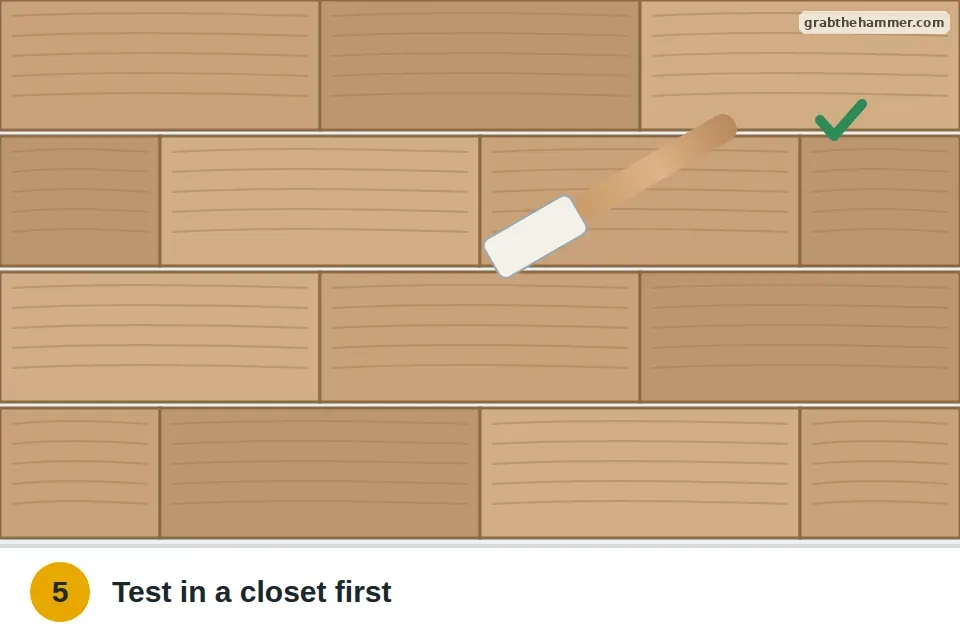
- Blend the sheenIf the spot looks duller or shinier than the rest, a little matching finish brushed on with a small brush can even it out. Try it first in a closet or under furniture. On factory-finished floors, use the maker's touch-up product; ordinary polyurethane may not stick.
If the scratch still shows
If a finish scratch still shows, the area may need a light recoat rather than a spot fix. A flooring pro can screen and recoat without sanding down to bare wood.
If the filler color is off, blend two sticks or markers, or add a darker marker line to mimic the grain.
What a pro typically charges (a rough estimate; prices vary by area): A floor refinisher typically charges $1–$2 per square foot to screen and recoat, and $3–$8 to sand and refinish.
Other floor problems
Floor scratch questions
Can a walnut fix floor scratches?
Rubbing a walnut on a light scratch can darken it a little on some floors. It's a quick test, but a stain marker lasts longer.
Do scratch repair kits work?
Kits with markers and wax sticks work well on small scratches when the color is close. Try them in a hidden spot first.
Why do scratches look worse on some days?
Dirt in a scratch makes it stand out. Cleaning with the right product for your finish can make light scratches less noticeable.
How do I prevent floor scratches?
Felt pads on furniture, mats at the entrances, trimmed pet nails, and regular sweeping to remove grit.
Still stuck? Ask us
Tell us what you're seeing and what you've tried. We read every question, and the ones that will help other people get answered on this page.