How to patch cracks and small holes in stucco
Fine hairline cracks in cement stucco are common and usually harmless. You can seal them with a tube of stucco crack filler. A small hole from a removed fixture or a bump can be filled with stucco patch in thin layers. Cracks that are wide, growing or shaped like stairs, or stucco that feels soft or bulges, can mean water or movement behind the wall, and those need a pro.


How a cement stucco wall is built
Traditional stucco is a cement plaster made of Portland cement, sand, lime and water. On a wood-framed house it usually goes on in three coats over a layer of black building paper and a metal mesh called lath. The paper sheds any water that gets through. The lath is nailed or stapled to the wall and gives the wet cement something to grab. The first coat, the scratch coat, locks into the lath. The thin finish coat on top carries the color and texture you see.
Cement shrinks a little as it dries, and the house frame swells and shrinks with heat and humidity. That's why fine hairline cracks show up in a lot of stucco, often around the corners of windows and doors. Stucco makers describe fine surface cracking as normal. What isn't normal is a crack that keeps getting wider, cracks shaped like stair steps, stucco that bulges or feels soft, or water stains inside. Those point to water getting behind the stucco or the structure moving, and a surface patch won't fix either one.
Why stucco cracks or breaks
Fine cracks open as cement dries and the frame moves.
Cracks start at window and door corners where the wall is weakest.
A ball, mower or old screw anchor knocks out a chunk.
Wet lath rusts and the stucco loosens, bulges or crumbles.
Wide, stair-step or growing cracks track movement in the house.
Foam-backed finish dents and cracks differently and needs its own products.
| You notice | Likely cause | Start at |
|---|---|---|
| Fine cracks, wall solid, no stains | Normal shrinkage, safe to seal | Step 1 |
| Sounds hollow, soft, or foam behind | Possible EIFS or loose stucco | Step 2 |
| Hairline cracks thinner than a credit card | Fill with stucco crack filler | Step 3 |
| Small hole or chunk knocked out | Chip out and prepare the hole | Step 4 |
| Hole cleaned and lath checked | Fill in thin layers | Step 5 |
| Patch hard but looks smooth and gray | Texture, cure and paint | Step 6 |
Let's fix it
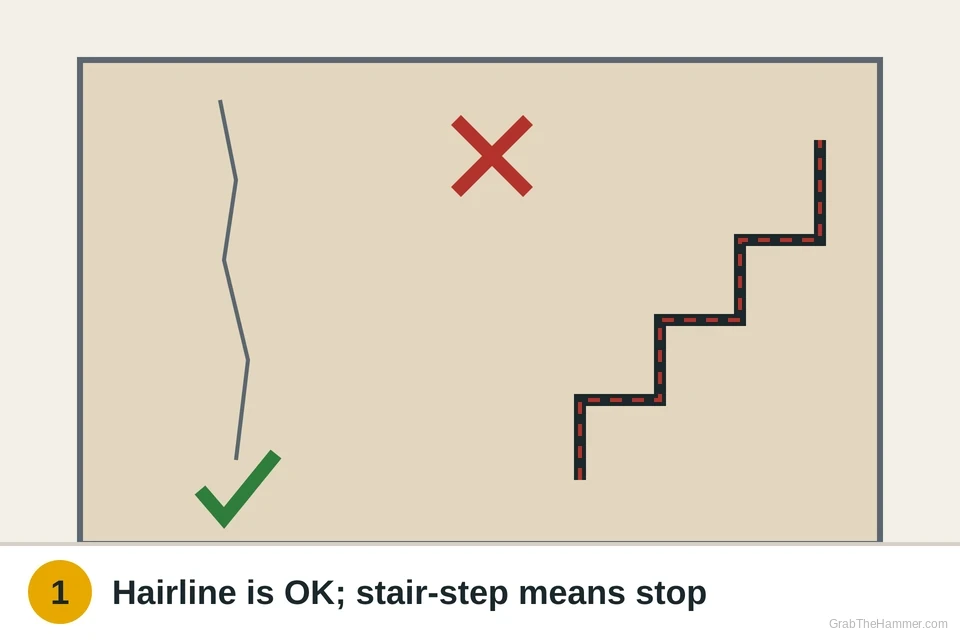
- Decide if the crack is safe to patchLook closely along the whole crack in good daylight. A hairline crack is about as thin as a sheet of paper or a credit card edge, and the stucco on both sides sits flat and even. Those are usually surface cracks and safe to seal. Now look for warning signs. Watch for a crack wider than about 1/8 inch, one side sitting higher than the other, cracks that step up the wall like stairs, or bulging stucco. Check inside for water stains too. If you see any of these, stop here and call a stucco contractor. A patch would hide the problem while water keeps doing damage.
- Rule out synthetic stucco and hidden waterTap the wall near the damage with the handle of a screwdriver. Traditional cement stucco feels hard and sounds solid, a bit like tapping a sidewalk. Synthetic stucco, called EIFS, is a thin coating over foam board. It often sounds hollow, and a firm thumb press may dent it. If a hole shows white or gray foam behind the finish, it's EIFS. Don't use cement patch on it, since it won't bond or flex the same way. Call an EIFS contractor instead. On cement stucco, also tap for patches that sound hollow or crumble. Stucco that comes away in your hand or shows rusty lath often has water behind it, so stop and call a pro.

- Seal hairline cracks with stucco crack fillerUse a textured acrylic crack filler made for stucco, sold in caulk tubes. Pick a day above the label's minimum temperature with no rain expected for about 12 hours. Brush the crack with a stiff nylon or steel brush to remove dust, dirt and flaking paint. Cut the tube tip so the bead just covers the crack, and squeeze a thin bead along it. Smooth it into the crack with a gloved finger or a damp brush. Then dab the bead with a damp sponge or stiff brush so it picks up the wall's texture. Let it dry as the label says, usually about 24 hours, before painting.

- Clean out and prepare a small holePut on gloves, safety glasses and a dust mask. Tap around the hole with a hammer and a cold chisel or an old flat screwdriver, and remove any stucco that's loose or crumbly. Keep going until the edges are solid. Then angle the chisel to cut the edges slightly wider at the back than at the front. Brush out all dust. If metal lath shows and it's solid, leave it. If the lath is missing or torn, staple or screw a piece of galvanized metal lath over the gap so it sits a little below the surface. If the lath is badly rusted or the paper behind is torn and soggy, stop and call a pro.

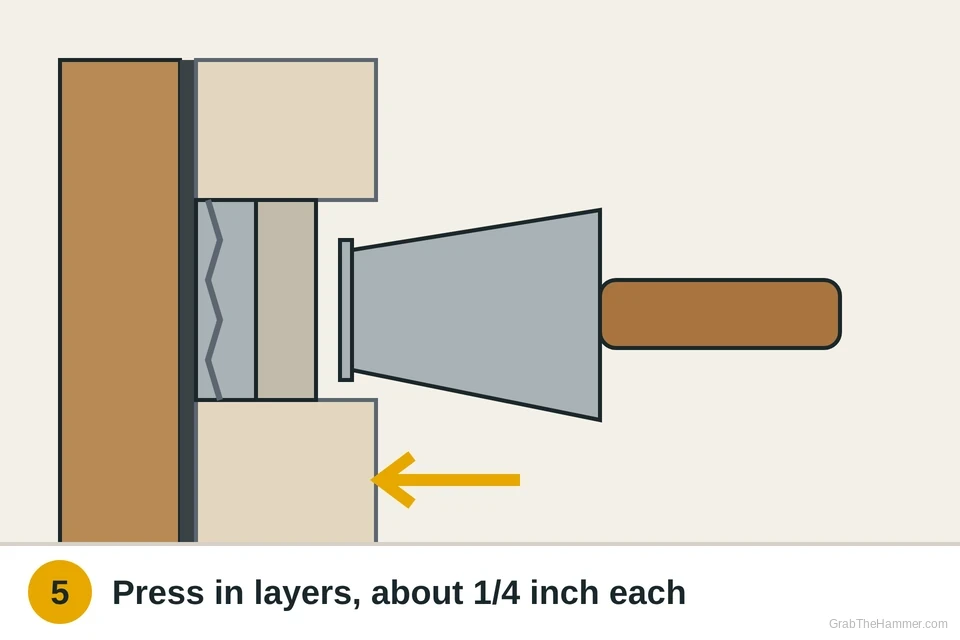
- Fill the hole in thin layersMist the edges and back of the hole with a spray bottle so the old stucco is damp but has no standing water. Stir premixed stucco patch well, or mix a bagged stucco patch with water as the bag says. Press the first layer in hard with a putty knife or margin trowel, working it into the lath and the undercut edges. Keep each layer no thicker than the label allows. For one common premixed patch that's 1/4 inch, with 24 hours between layers. Scratch the surface of each layer except the last with the knife tip so the next one grabs. Leave the last layer just level with the wall.
- Match the texture, cure it and paintShape the texture on the last layer while it's still soft, usually within the first half hour or so. A damp sponge or rubber float worked in small circles gives a sand finish. A stiff brush dabbed straight in gives a rougher look. For a skip-trowel finish, flick small dabs of patch on and flatten them lightly with the trowel. If the label calls for it, mist the patch lightly a few times a day while it cures. Protect it from rain for at least 12 hours. Paint with exterior latex paint only after the label's wait time, often 24 hours or more.

Watch it done
- The patch is hard and doesn't flake when you rub it
- Tapping it sounds as solid as the wall around it
- Its texture blends in from a few steps back
- After paint, water beads and runs off instead of soaking in
If it comes back
A fine hairline crack that reopens in the same spot every year is usually seasonal movement. Seal it again with crack filler, which stays more flexible than hard patch. For tips on prep and paint, see the guide to fixing peeling paint.
If cracks keep growing, form stair steps, or show up along with sticking doors, treat it as movement, not a surface problem. Check drainage first. See the guide for water pooling around the foundation and the guide to cleaning gutters.
If the cracks are in a concrete patio, walk or foundation wall rather than the stucco, the products and steps are different. See the guide to patching a concrete crack.
What a pro typically charges (a rough estimate; prices vary by area): A tube of stucco crack filler or a quart of premixed patch typically costs about $10–$20. A stucco contractor often charges a few hundred dollars for a small repair, and more if they find water damage.
Find a stucco contractor near you