Patch a crack in a concrete step or walkway
A crack in a concrete walk, patio or step can be patched so water stops getting in and making it worse. Clean it out, chisel the edges into a slight undercut so the patch locks in, and fill it with a concrete patching compound or crack filler. Wide cracks, or ones where one side has lifted, point to movement underneath, and a patch won't hold.
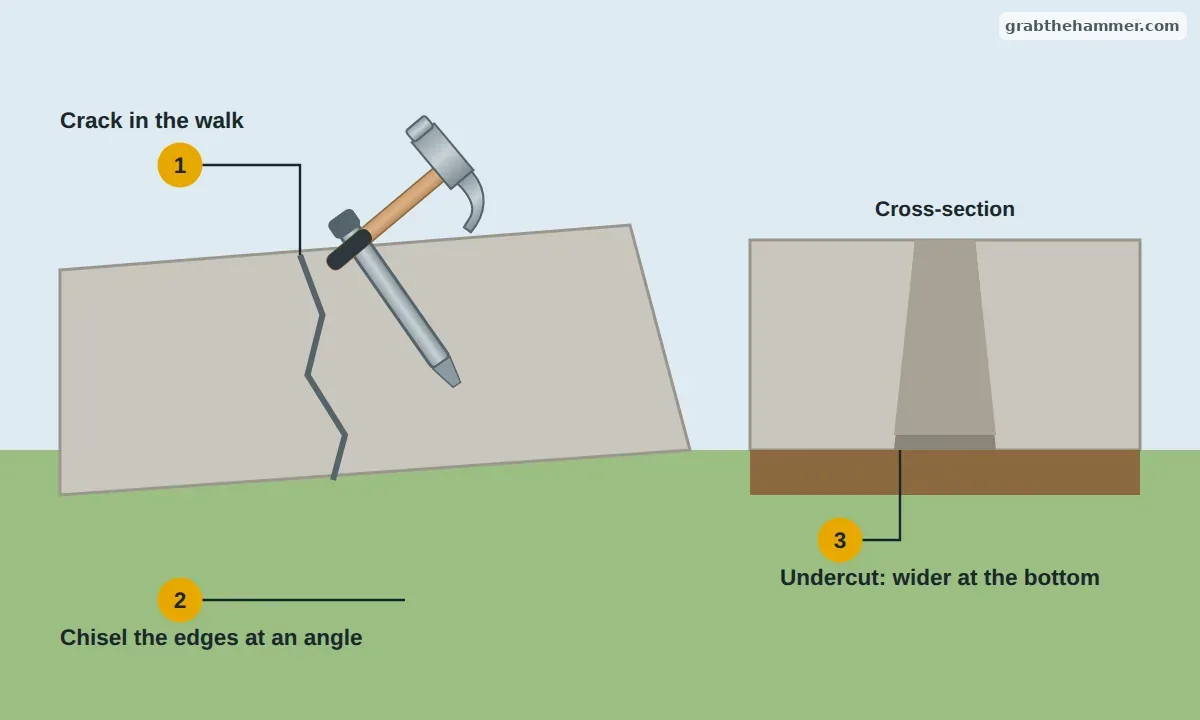
Why cracks grow
Water is what turns a small crack into a big one: it gets in, freezes, and pushes the sides apart. Sealing the crack stops that cycle, even if the patch doesn't quite match the color of the old concrete.
Narrow cracks take a flexible crack sealant from a caulk tube. Wider cracks and chipped edges take a cement-based patching compound, and for those the shape of the opening matters: one that's wider at the bottom than at the top, called an undercut, holds the patch in place.
What cracks concrete
Water in the crack freezes and pushes it wider.
The ground under the slab shifts.
Roots can lift and crack walkways.
Concrete cracks where it wants to if joints weren't cut.
| What you see | What it means | What to do |
|---|---|---|
| A hairline crack | Normal shrinkage | Seal it with crack sealant. |
| A crack up to about 1/2 inch | Movement or freeze damage | Undercut and patch. |
| One side higher than the other | The slab has shifted | Call a contractor; it's a trip hazard. |
| A crack in a foundation wall | A possible structural issue | Have it inspected. |
Let's fix it
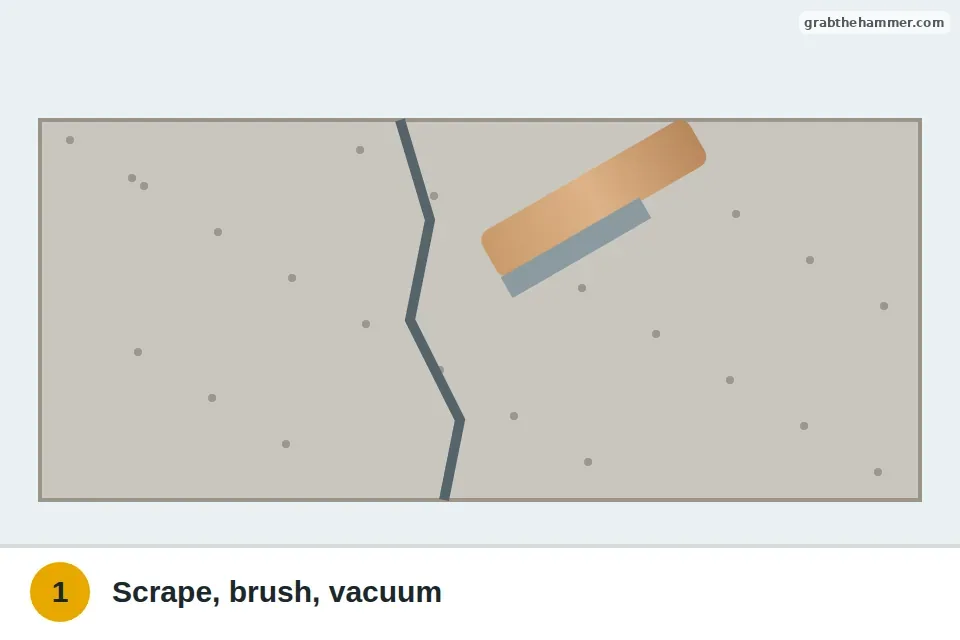
- Clean out the crackScrape out loose concrete, dirt and weeds with a screwdriver or chisel, then scrub with a wire brush and vacuum out the dust.
- Undercut wider cracksFor cracks wider than about 1/4 inch, hold the chisel at an angle and tap along each edge with the hammer so the opening ends up wider at the bottom than at the top.

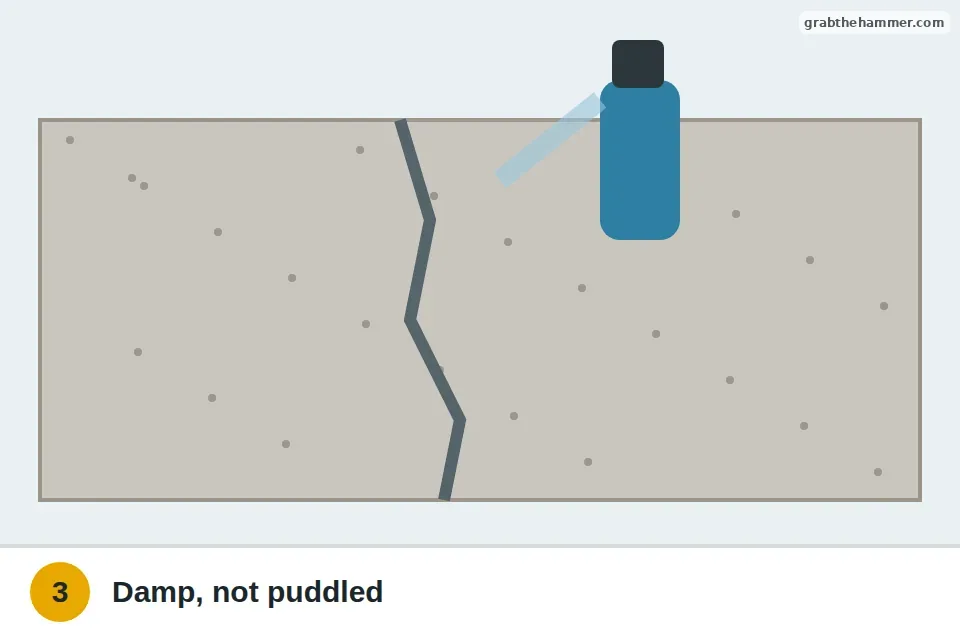
- Dampen the concreteIf the product calls for it, mist the crack so it's damp with no standing water. Dry concrete pulls water out of a patch too quickly.
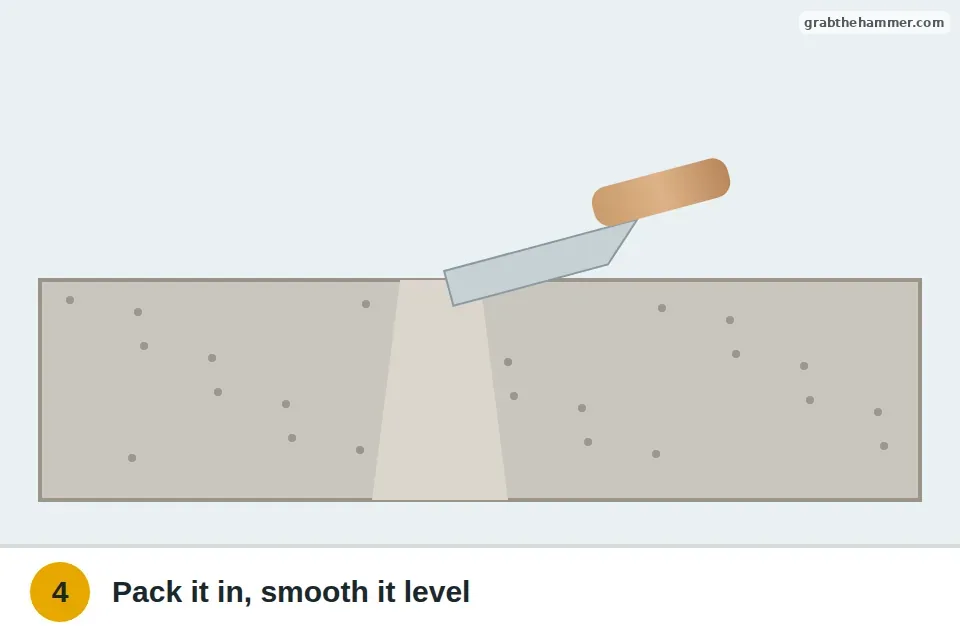
- Fill the crackFor narrow cracks, run crack sealant in with a caulk gun. For cracks deeper than about 1/2 inch, push foam backer rod in first so the sealant isn't wasted; on flat surfaces, a self-leveling sealant works well. For wider cracks, press patching compound in firmly with a trowel, packing it into the undercut, and smooth it level with the surface.
- Let it cureKeep off it for the time on the package, and protect it from rain and freezing. Many cement patches need to be kept damp while they cure.
If the crack comes back
If a patched crack opens again, the slab is still moving. A flexible crack sealant copes with small movement better than a rigid patch.
If the patch pops out, the crack probably wasn't clean or undercut enough. Chip it out, clean and undercut, and patch again.
What a pro typically charges (a rough estimate; prices vary by area): A concrete contractor typically charges $200–$600 to repair cracks in a walkway or patio; lifting or replacing slabs costs more.
Something else going on?
Concrete crack questions
Can I patch concrete in cold weather?
Most products need temperatures above a minimum listed on the label for a day or more. Wait for milder weather if you can.
Will the patch match the old concrete?
Usually not exactly. New patching compound is often lighter at first and weathers over time.
What's best for narrow cracks?
A flexible concrete crack sealant in a caulk tube works well for narrow cracks and handles a little movement.
Why chisel the crack wider?
An undercut, wider at the bottom than the top, locks the patch in so it can't pop out.
Still stuck? Ask us
Tell us what you're seeing and what you've tried. We read every question, and the ones that will help other people get answered on this page.