Replace a broken fence picket
A single cracked or rotted picket is easy to replace: pry the old one off the rails, cut a new one to match, and fasten it with exterior-rated nails or screws. The only fussy part is matching the height, spacing and top shape of the pickets on either side.
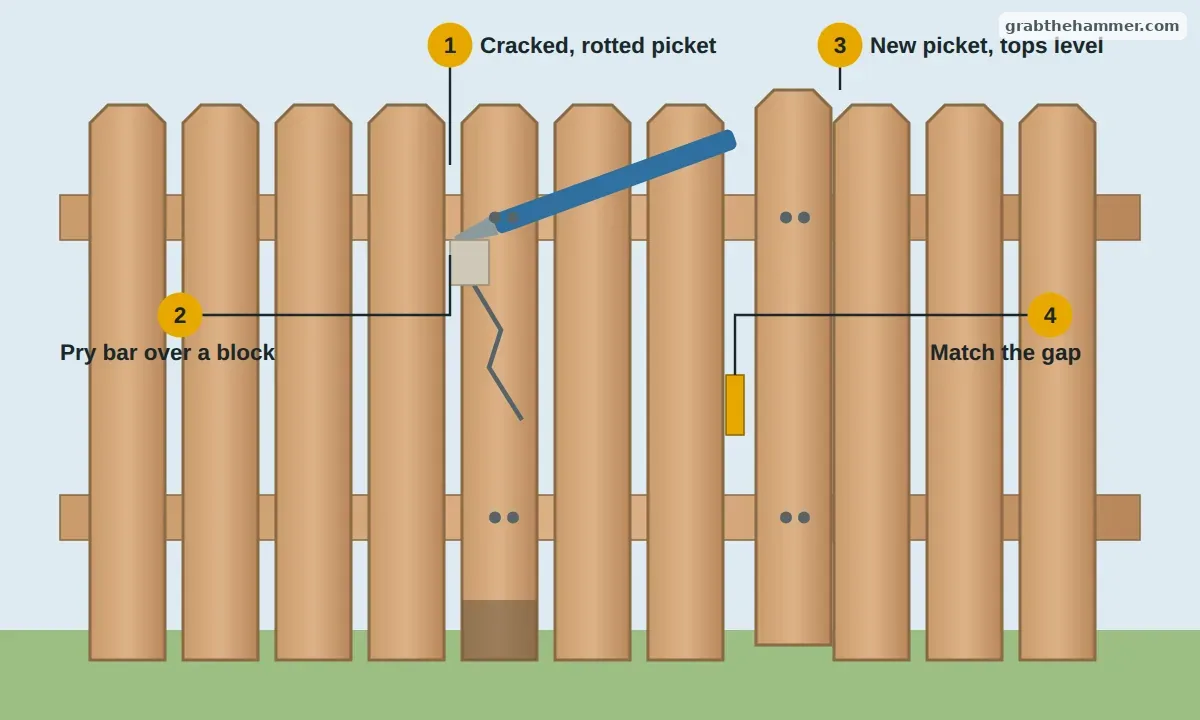
How a fence is put together
Most wood fences are pickets nailed to two or three horizontal rails, and the rails are attached to posts. A picket that's split, warped or soft at the bottom can come off without disturbing its neighbors if you work the nails loose carefully.
Before you buy lumber, measure the old picket's width, thickness and length, and note the top: dog-ear, flat, pointed or rounded. Take a piece with you if you can.
Why pickets fail
Pickets touching soil or wet grass stay damp.
Sun, weather, and nails driven too close to the ends.
Balls, mowers and falling branches.
Nails work out as the wood moves.
| What you see | Likely cause | Fix |
|---|---|---|
| One cracked or rotted picket | Age or impact | Replace the picket. |
| Pickets loose but sound | Loose nails | Refasten with exterior screws. |
| Several pickets leaning together | A loose or rotted rail | Fix the rail first. |
| The fence leans along a section | A failed post | Call a fence pro. |
Let's fix it
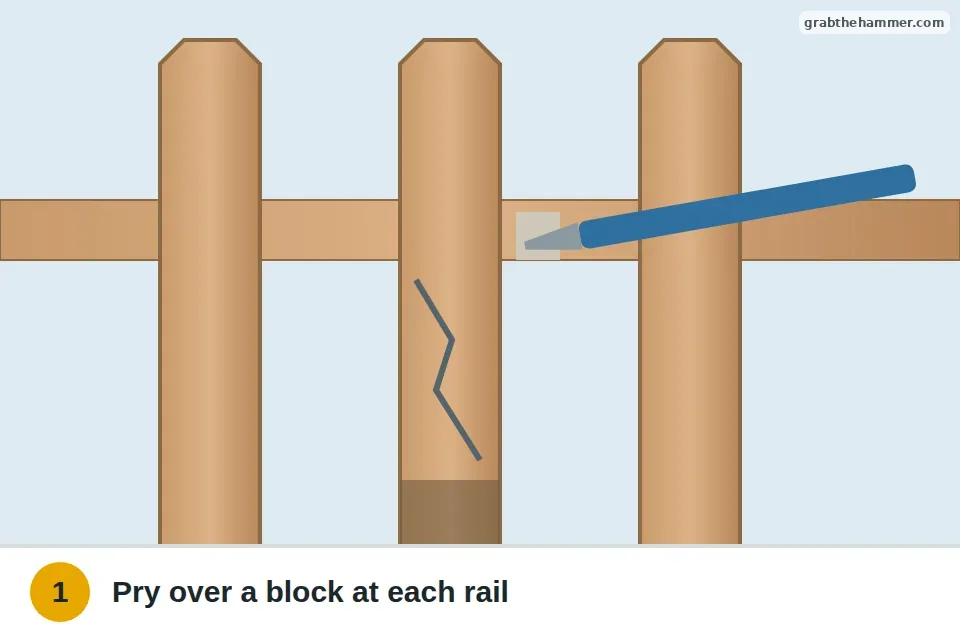
- Pry off the broken picketSlide a flat pry bar between the picket and the rail next to a nail, with a scrap block behind the bar to protect the rail. Work it loose at each rail, then pull or clip the leftover nails. If you can reach the back of the fence, tapping the picket off the rails from behind with a hammer and a block is often easier.
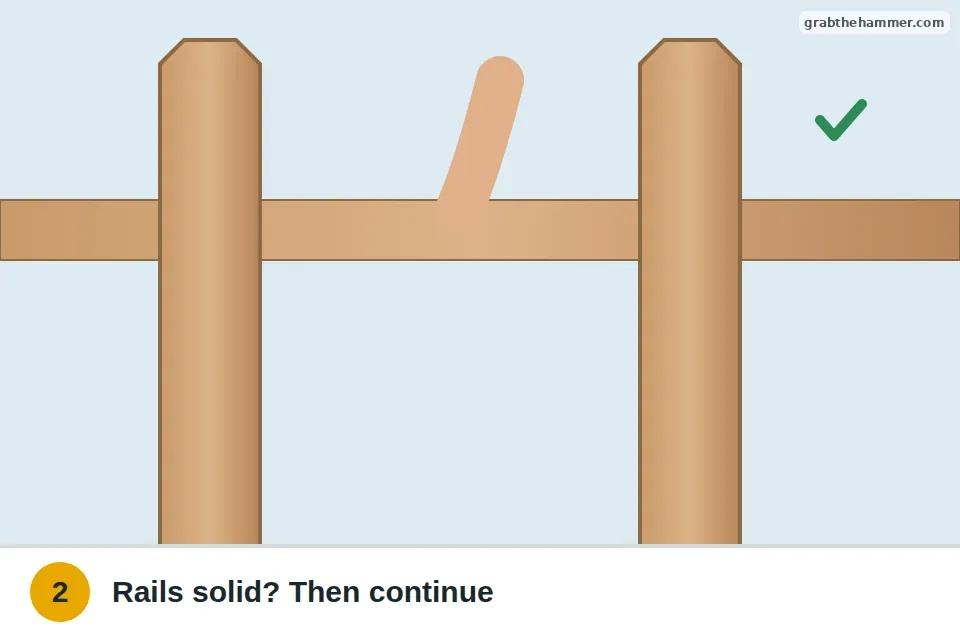
- Check the railsPress on the rails where the picket was. If they're soft, cracked or pulling away from the post, fix that first; a new picket won't hold on rotten rails.
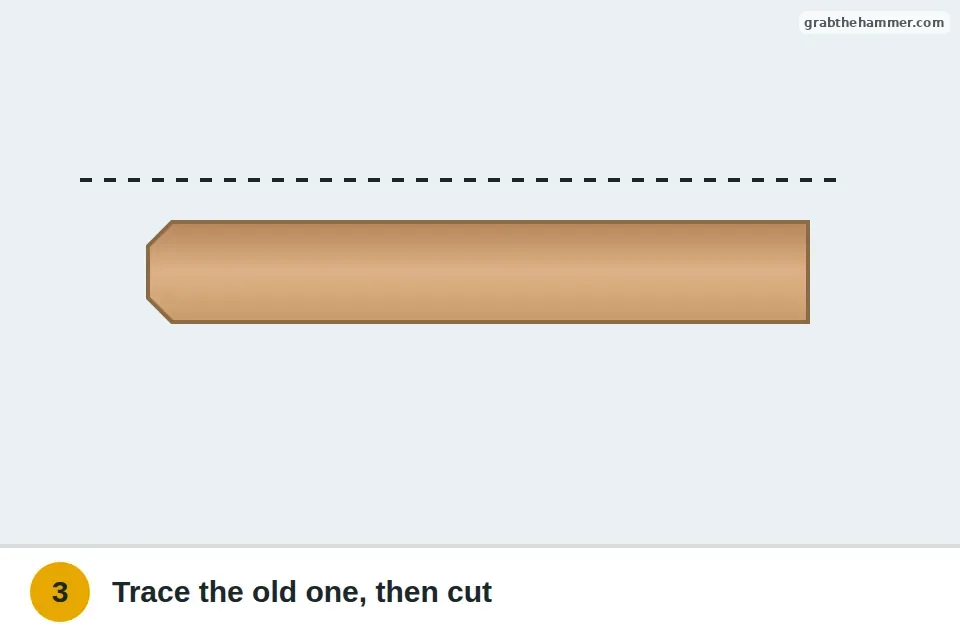
- Cut the new picket to matchLay the old picket, or a neighbor's measurements, on the new board, mark the length and top shape, and cut it.
- Set the height and gapLine the new picket up with its neighbors at the top and match the gap on each side. A scrap of wood cut to the gap width makes a handy spacer.

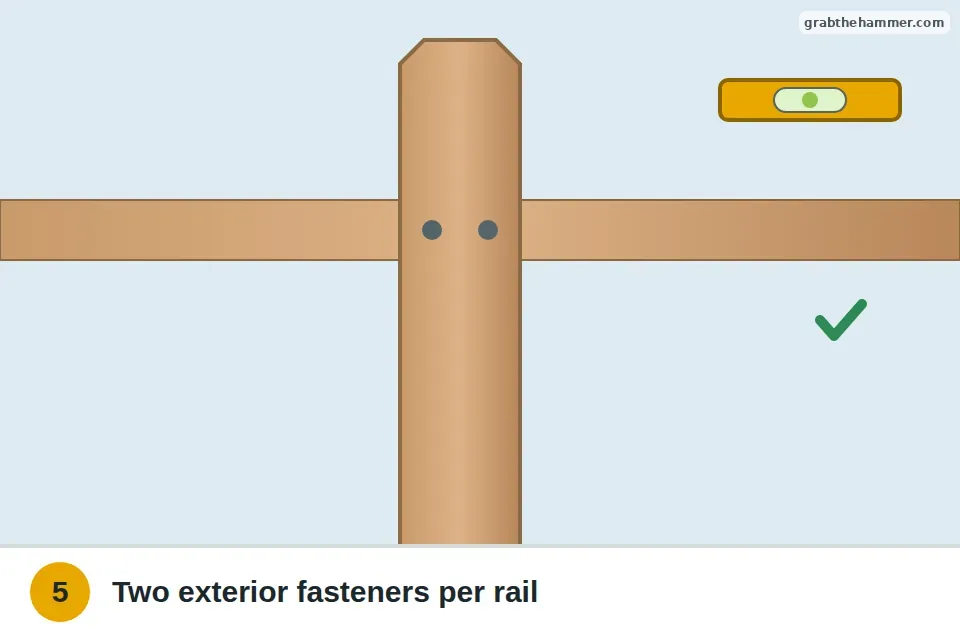
- Fasten itDrive two exterior-rated nails or screws into each rail, staggered slightly and kept back from the ends of the picket. Check it's plumb with a level before the last one.
If the new picket doesn't match
If the new picket looks too new, it will weather over a season or two, or you can stain it to blend in once it's dry enough.
If it sits higher or lower than its neighbors, pull one fastener at each rail, adjust, and refasten. On a long run, a string line across the tops helps.
What a pro typically charges (a rough estimate; prices vary by area): A fence repair pro typically charges $100–$300 for small repairs, more if posts need resetting.
Something else going on?
Fence picket questions
Nails or screws for fence pickets?
Either, as long as they're rated for exterior use and for pressure-treated wood if that's what you have. Screws hold better and are easier to remove later.
How do I match an old fence?
Measure the width, thickness, length and top shape, and buy the same kind of wood. It will look new at first, then weather in.
Can I stain the new picket right away?
Pressure-treated wood usually needs to dry first; the stain's label says how long. Cedar and other untreated wood can often be finished sooner.
How far apart should pickets be?
Match the gap on the rest of your fence. If it's a pool fence, local rules may set a maximum gap.
Still stuck? Ask us
Tell us what you're seeing and what you've tried. We read every question, and the ones that will help other people get answered on this page.