Space heater keeps shutting off
A space heater that shuts itself off is usually doing its job. Most heaters turn off when the room reaches the thermostat setting, when a timer runs out, when they tip or sit unevenly, or when they get too hot because airflow is blocked. Those are free to fix. If a heater keeps overheating with clear vents, the plug or outlet feels hot, or it trips the breaker, stop using it. Space heaters are a leading cause of home heating fires, so safety comes before comfort here.


Why a space heater turns itself off
Electric space heaters have several built-in controls, and each one can turn the heater off. The thermostat switches the heating element off when the room reaches your setting and back on when it cools, so cycling on and off is normal. Many heaters also have timers, eco or auto modes that lower power or shut off after a set time. A tip-over switch in the base cuts the power if the heater is knocked over, and on some models it also trips when the heater sits on thick carpet or an uneven floor, because the switch never fully presses down.
The other common shutoff is overheat protection. If the heater can't move enough air, because its intake is clogged with dust or pet hair, it's pushed against a wall or curtain, or something is covering it, the inside gets too hot and a thermal cutoff turns it off. Most reset after the heater cools down, often around 15 to 30 minutes unplugged, but some models need a reset button. A heater that keeps overheating with clear vents, or a plug, cord or outlet that gets hot, is a fire risk. Space heaters draw a lot of power, often 1,500 watts, which is close to what a typical 15-amp household circuit can handle, so weak outlets, extension cords and shared circuits cause trouble.
Why the heater keeps shutting off
Normal cycling when the room is warm.
A setting turns it off or down after a while.
Bumped, or sitting on thick carpet or an uneven floor.
Dust or blocked airflow makes it run too hot.
Loose contacts heat up and the power drops.
The breaker trips when other loads share the circuit.
| You notice | Likely cause | Start at |
|---|---|---|
| Shuts off when the room feels warm | Thermostat or timer | Step 1 |
| Shuts off when bumped or on carpet | Tip-over switch | Step 2 |
| Shuts off after a while, feels very hot | Overheat protection | Step 3 |
| Breaker trips or plug feels hot | Circuit or outlet problem | Step 4 |
| Won't restart after shutting off | Needs cooling and a reset | Step 5 |
| Keeps overheating with clear vents | Heater is failing | Step 6 |
Let's fix it
- Check the thermostat, timer and modesLook at the controls. If the heater runs until the room warms up, then goes quiet and comes back on later, that's the thermostat working normally. To keep it on longer, raise the setting a notch. Check for a timer, an auto-off, or an eco or energy-saving mode that turns it off or down after a set time, and turn those off if you don't want them. On digital models, a power outage may reset the settings. Read the display for an error code and look it up in the manual; many codes mean overheat or tip-over.

- Set it on a hard, level floorPlace the heater on a flat, hard floor, like wood, tile or a sturdy board, not on thick carpet, a rug, a bed or a chair. Most heaters have a tip-over switch, a small button or lever under the base that has to stay pressed for the heater to run. On soft or uneven surfaces it can lift slightly and turn the heater off. Look under the base: the switch should press in when you set the heater down. Keep the heater where it won't be bumped by feet, pets or doors, and at least 3 feet from anything that can burn.

- Clear dust and give it room to breatheUnplug the heater and let it cool completely. Find the air intake, usually a grille on the back or sides, and the warm air outlet on the front. Vacuum dust, lint and pet hair off both with a brush attachment, and wipe the outside with a dry cloth. If your model has a removable filter, take it out and clean it as the manual says. Don't open the housing. Set the heater back with at least a foot of space behind it, or what the manual says, and nothing draped over or in front of it.

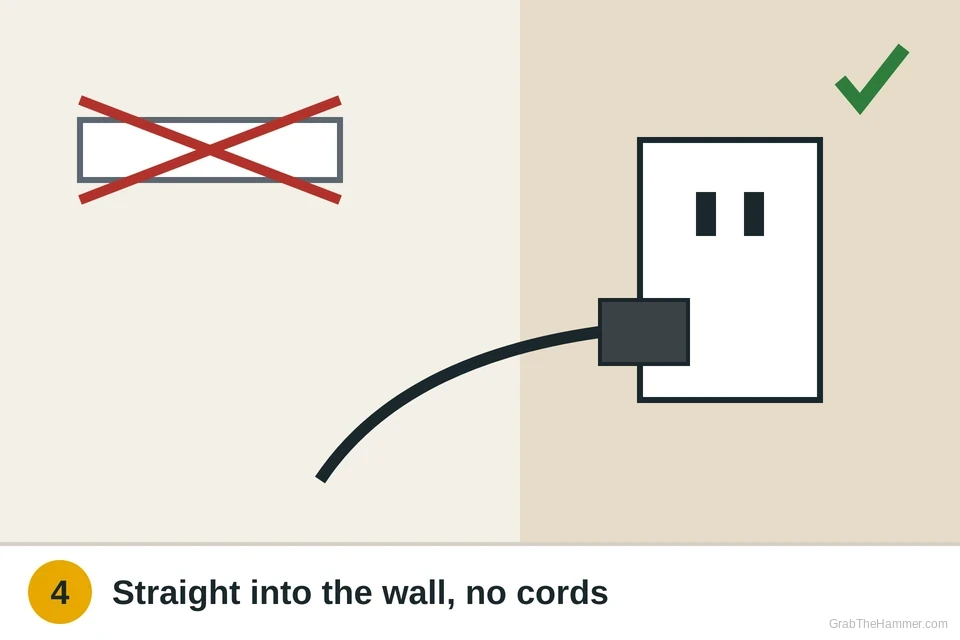
- Plug straight into a wall outletUnplug the heater from any extension cord, power strip or timer and plug it directly into a wall outlet. Most heaters draw about 1,500 watts, which can overheat extension cords and loose outlets, and some heaters shut off when voltage dips. Use an outlet where the plug fits snugly; a plug that falls out or wiggles means worn contacts. After 15 minutes, feel the plug and outlet. If they're hot, stop and have the outlet checked. If the breaker trips, the heater is sharing a circuit with other loads; move it to an outlet on a different circuit, or see the guide for a breaker that keeps tripping.
- Let it cool and resetIf the heater shut off because it overheated, it won't restart until it cools. Turn it off, unplug it and wait about 30 minutes, or the time in your manual. Some heaters have a reset button on the back or bottom; press it after cooling if yours does. Fix whatever caused the overheating first: clear the vents, move it away from walls and furniture, and keep it off carpet. Then plug it back into the wall, turn it on and watch it for the first half hour.

- Replace a heater that keeps overheatingIf the heater keeps shutting off with clean vents, a level floor, a wall outlet and nothing nearby, the thermostat, sensor or tip-over switch inside is failing. Don't open it or bypass a switch to keep it running; those switches are what keep it from starting a fire. Check the warranty, then replace it. Look for a heater listed by a testing lab like UL, ETL or CSA, with tip-over and overheat protection and a thermostat. Recycle the old one rather than giving it away. If you smelled burning or saw scorching, have the outlet checked too.

Watch it done
- The heater cycles on and off only as the room warms and cools
- The plug and outlet stay only slightly warm
- It doesn't shut off when you walk nearby
- The breaker doesn't trip
Still shutting off, or the plug gets hot? Stop using it and replace it.
If it comes back
If the heater starts shutting off again after a few weeks, dust has built up again. Vacuum the grilles every couple of weeks during heavy use, especially with pets.
If you need a space heater to keep one room comfortable, the room may have a drafty window or a heating problem. See the guide for a room that's too hot or cold and how to stop drafts around windows.
If a built-in electric heater on the wall or baseboard is the problem, see the guide for a baseboard heater that isn't working.
What a pro typically charges (a rough estimate; prices vary by area): An electrician typically charges about $100–$250 to check and replace an outlet. A new space heater usually costs about $30–$100.
Find an electrician near you