Replace an electrical outlet
When plugs fall out of an outlet or its face is cracked, the outlet is worn out. Replacing a standard outlet is a common DIY electrical job, as long as you confirm the power is off before you touch anything and the new one matches the old. An outlet that's warm, scorched or smells burnt is different; that's a job for an electrician.
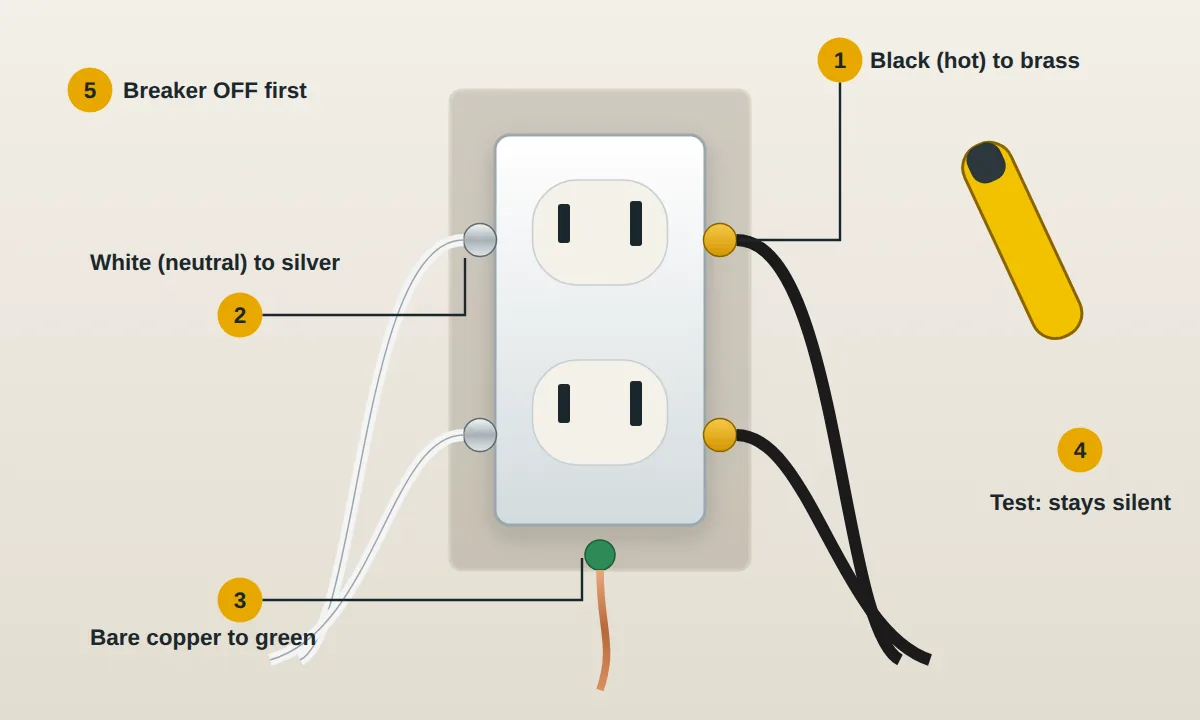
Before you buy the new one
A standard outlet has brass screws on one side for the hot wires (usually black), silver screws on the other for the neutral wires (usually white), and a green screw for the ground. If wires run to both pairs of screws, power passes through this outlet on its way to others, so every wire needs to go back exactly where it was.
Match the amp rating printed on the old outlet, 15 or 20. Outlets in kitchens, bathrooms, garages, laundry areas and outdoors usually need GFCI protection, so if you're replacing one there, find out whether it's a GFCI itself or protected by one upstream.
Codes generally expect a replacement outlet to be tamper-resistant, and to get GFCI or AFCI protection wherever new work would need it. Check your local rules before you buy.
Why outlets wear out
After years of plugs going in and out, the metal inside loosens and plugs slip out.
A cracked face or a broken ground slot.
An outlet that works only sometimes may have a loose wire. If you see heat marks, call an electrician.
Two-prong outlets, or outlets without GFCI protection where it's now expected.
| Where it is | What to buy | Why |
|---|---|---|
| Bedroom, living room, hallway | Standard 15-amp, tamper-resistant (TR) | Matches most household circuits. TR is expected almost everywhere in a home. |
| Kitchen counter, bathroom, garage, laundry | GFCI, or a standard outlet protected by a GFCI upstream | Shock protection near water. |
| Outdoors | Weather-resistant GFCI with an in-use cover | Stands up to moisture. |
| Old outlet marked 20A, or a T-shaped slot | 20-amp outlet | Matches a 20-amp circuit. |
Let's fix it
- Turn off the breakerSwitch off the circuit, then plug a lamp or an outlet tester into both halves of the outlet to confirm it's dead. Put tape over the breaker so nobody switches it back on.

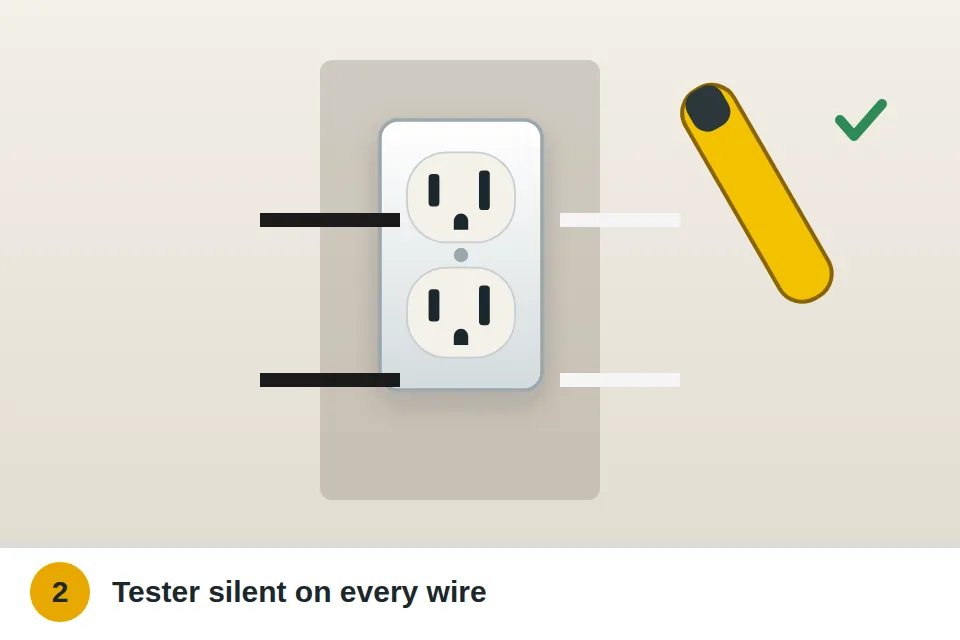
- Test every wireTake off the cover plate and unscrew the outlet from the box. Check your voltage tester on a live outlet, hold it against every wire in the box, then check it on the live outlet again so you know it didn't quit partway through. It should stay silent on every wire.
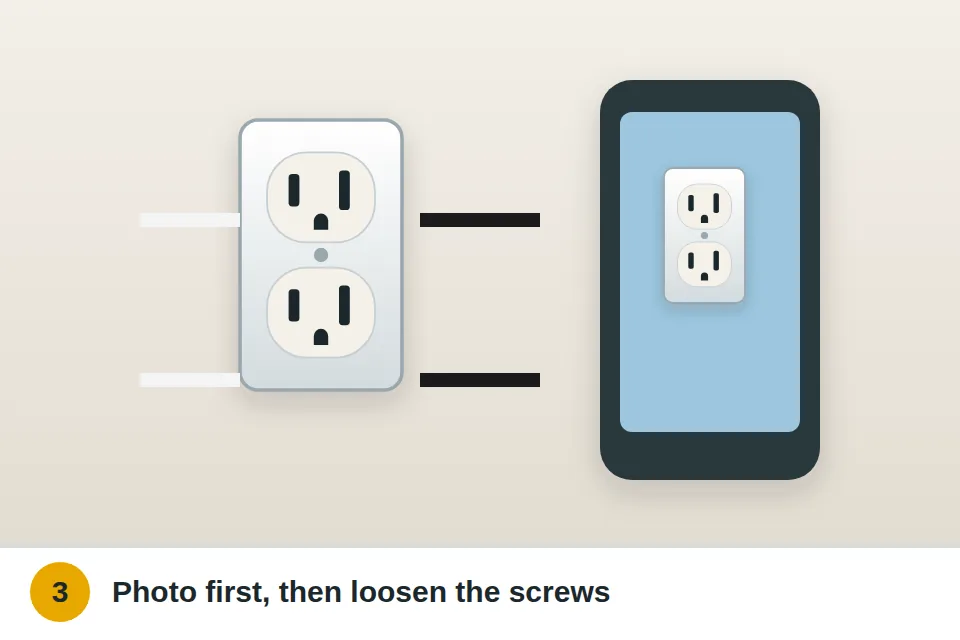
- Photograph, then disconnectTake a photo of which wire goes to which screw. Loosen the screws and unhook the wires. If wires are pushed into holes in the back, release them, or cut them off and strip fresh wire to the length shown by the strip gauge on the back of the new outlet.
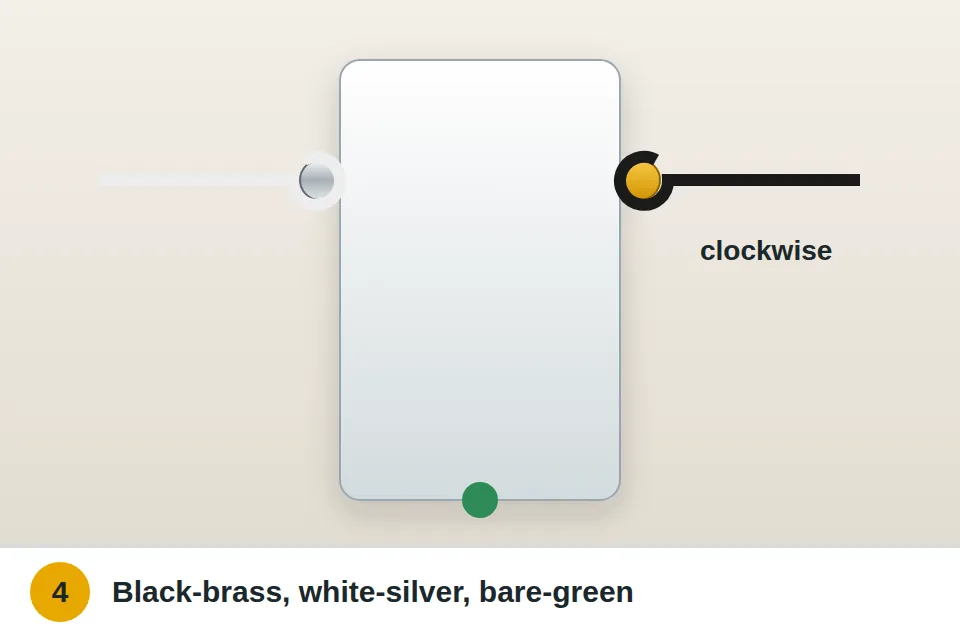
- Wire the new outletHook each wire clockwise under the matching screw, following your photo: black to brass, white to silver, bare copper to green. Tighten firmly, and use the side screws, not the push-in holes. If the old outlet had a red wire, a white wire marked with black tape, or the metal tab between the brass screws broken off, copy it exactly, including breaking the same tab. If you're unsure, stop and call an electrician.
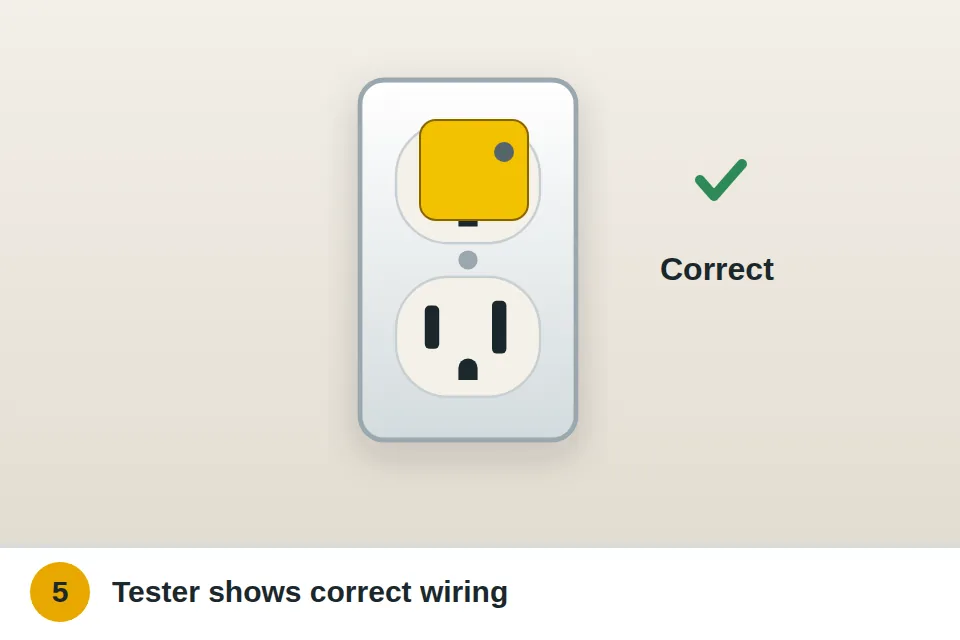
- Mount it and testFold the wires back into the box, screw the outlet in straight, attach the cover and turn the breaker on. A plug-in outlet tester should show correct wiring.
If the new outlet doesn't work
If the new outlet has no power, check that the breaker is on and that a GFCI elsewhere hasn't tripped. Then turn the power off and make sure every wire is tight under its screw.
If a plug-in tester shows an open ground or hot and neutral reversed, turn the power off and compare with your photo. Black goes on brass, white on silver.
If other outlets went dead after the swap, a wire that fed them probably isn't connected. Check that every wire from the old outlet went back on.
What a pro typically charges (a rough estimate; prices vary by area): An electrician typically charges $100–$250 to replace an outlet, more for a GFCI or if the wiring needs repair.
If it's a different electrical problem
Outlet replacement questions
Can I replace a two-prong outlet with a three-prong one?
Only if there's a ground wire in the box. Without one, the usual options are a GFCI outlet labeled No Equipment Ground, or having an electrician add a ground. Check your local code.
Which wire goes on which screw?
Black (hot) to brass, white (neutral) to silver, and bare copper or green to the green screw.
Do I need a permit to replace an outlet?
A like-for-like swap often doesn't, but the rules vary, and some areas require a licensed electrician for any electrical work. Check locally.
What's a tamper-resistant outlet?
It has shutters inside the slots that only open when both prongs push in together, which keeps kids from pushing things in. It's marked TR on the face.
If I rent, can I replace an outlet?
Ask your landlord first. In many places electrical work in a rental has to be done by the landlord or a licensed electrician.
Still stuck? Ask us
Tell us what you're seeing and what you've tried. We read every question, and the ones that will help other people get answered on this page.