Washing machine won't drain
Water left in the drum after a cycle usually means something is blocking the way out: the drain pump filter, the drain hose, or the pipe the hose empties into. On most front-loaders the filter is behind a small panel at the bottom front, and it's the first thing to check. Have towels and a shallow pan ready, because the water has to come out somewhere.

Where the water goes
A washer pumps water out through a hose to a standpipe or a laundry sink. On most front-load machines, a filter in front of the pump catches coins, hair ties and lint, and when it clogs the water stays put. Many top-loaders don't have a filter you can reach, so the hose and standpipe come first.
The sound helps. If the pump hums but no water moves, something is likely stuck in the filter or the pump. If it's silent at the drain step, the lid or door switch or the controls may be at fault, and that's usually a repair call.
What stops a washer draining
Lint, coins and small items block the pump's intake.
Pushing the washer back can crush the hose.
If the pipe the hose drains into is slow, water backs up.
A pump that hums without moving water, or a machine that never reaches the drain step, may need a repair.
| What you notice | Likely cause | What to check |
|---|---|---|
| Pump hums, no water moves | Blocked filter or pump | Clean the filter; look for objects. |
| Drains slowly, then finishes | Partly clogged filter or hose | Clean the filter; check the hose for kinks. |
| Water backs up out of the standpipe | Clogged house drain | Clear the standpipe drain. |
| Silent at the drain step | Lid switch, pump or controls | Check the manual's error codes; call for repair. |
Let's fix it
- Unplug the washerUnplug it, or switch off its breaker if you can't reach the plug. If the water is hot, let it cool before you open anything.

- Drain it through the filterOpen the small panel at the bottom front and lay down towels and a shallow pan. If there's a small drain tube, pull it out and let the water run into the pan, emptying it as you go. Then unscrew the filter slowly; more water will come.

- Clean the filterPull out lint, coins and anything else caught in it, and rinse it. Shine a flashlight into the opening and remove anything you can see. If you can reach the pump's small impeller, it should turn a little with a fingertip.

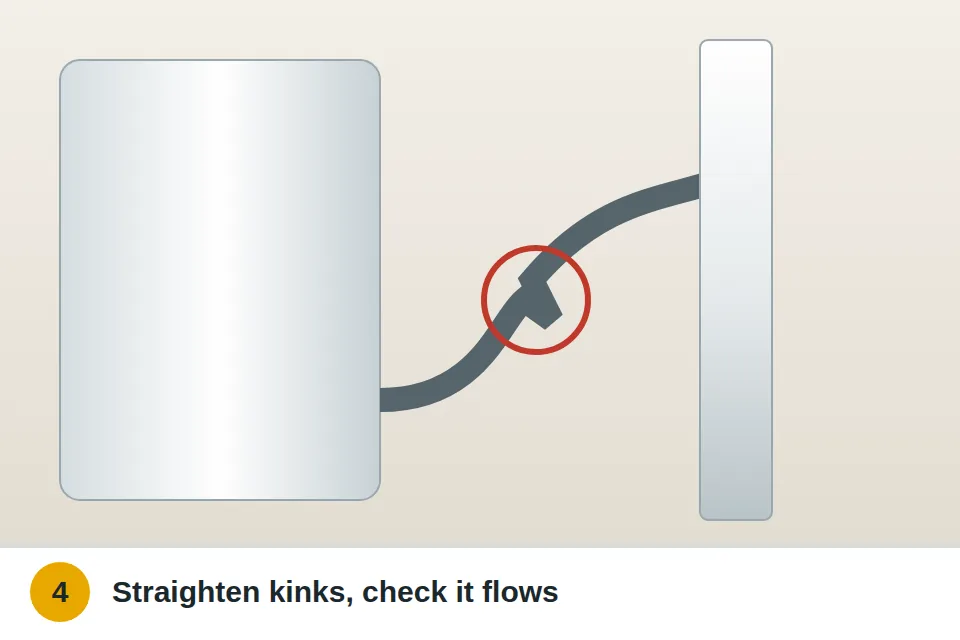
- Check the drain hosePull the washer out and look for kinks or a crushed section. Over a bucket, disconnect the hose at the standpipe or the washer and make sure water runs through it freely.
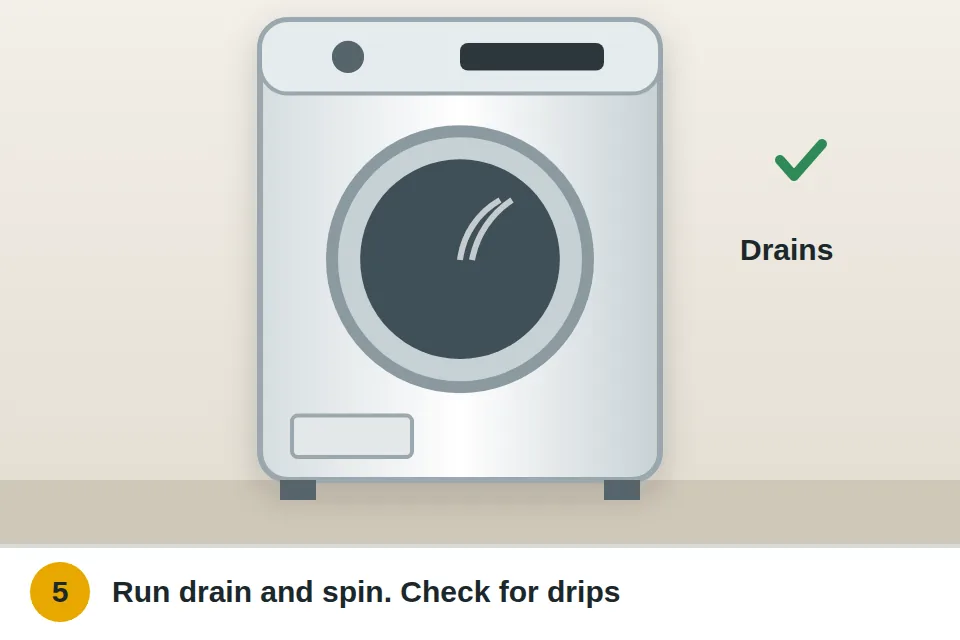
- Reassemble and testScrew the filter back in snugly, close the panel, and push the washer back without kinking the hose. Run a drain and spin cycle and watch for leaks at the filter.
If water is still sitting in the drum
If the filter and hose are clear but the standpipe or laundry sink drains slowly, the clog is in the house drain. Pour a bucket of water into the standpipe; if it backs up, that drain needs clearing.
If the washer shows an error code, look it up in the manual. Many codes point to a blocked drain or the pump and tell you what to check first.
On a top-loader, listen for the lid switch clicking when you close the lid. Many won't drain or spin if it doesn't register.
What a pro typically charges (a rough estimate; prices vary by area): An appliance repair visit typically costs $100–$200. Replacing a drain pump usually runs $150–$350.
Other laundry problems
Washer drain questions
How do I drain a washer that's full of water?
Unplug it, then drain through the filter at the bottom front into a shallow pan, emptying it as you go. On machines without a filter, lower the drain hose into a bucket below the level of the drum.
Where is the drain filter on my washer?
On most front-loaders, behind a small door at the bottom front. Many top-loaders don't have one you can reach. The manual shows where yours is.
Can I use drain cleaner in a washer?
No. It can damage the pump and hoses. Clear the filter and hose by hand, and clean the standpipe separately if that's where the clog is.
Why does my washer smell after it didn't drain?
Standing water goes stale quickly. Once it drains, run a hot empty cleaning cycle. Our washer smell guide covers the rest.
Can I leave wet clothes in it overnight?
It's better not to. Take them out, wring them and rewash once it drains, or they'll start to smell.
Still stuck? Ask us
Tell us what you're seeing and what you've tried. We read every question, and the ones that will help other people get answered on this page.