Fix a hole in a hollow door
A hole in a hollow door looks bad, but it's one of the easier fixes in the house. Hollow-core doors are just thin skins over a cardboard honeycomb, so the trick is giving the filler something to sit on. Pack the hole, fill it, sand it smooth and paint the whole face of the door. If the hole is huge or the door is cracked through, a new door slab may be less work. The trick with hollow doors is giving the filler something to sit on.

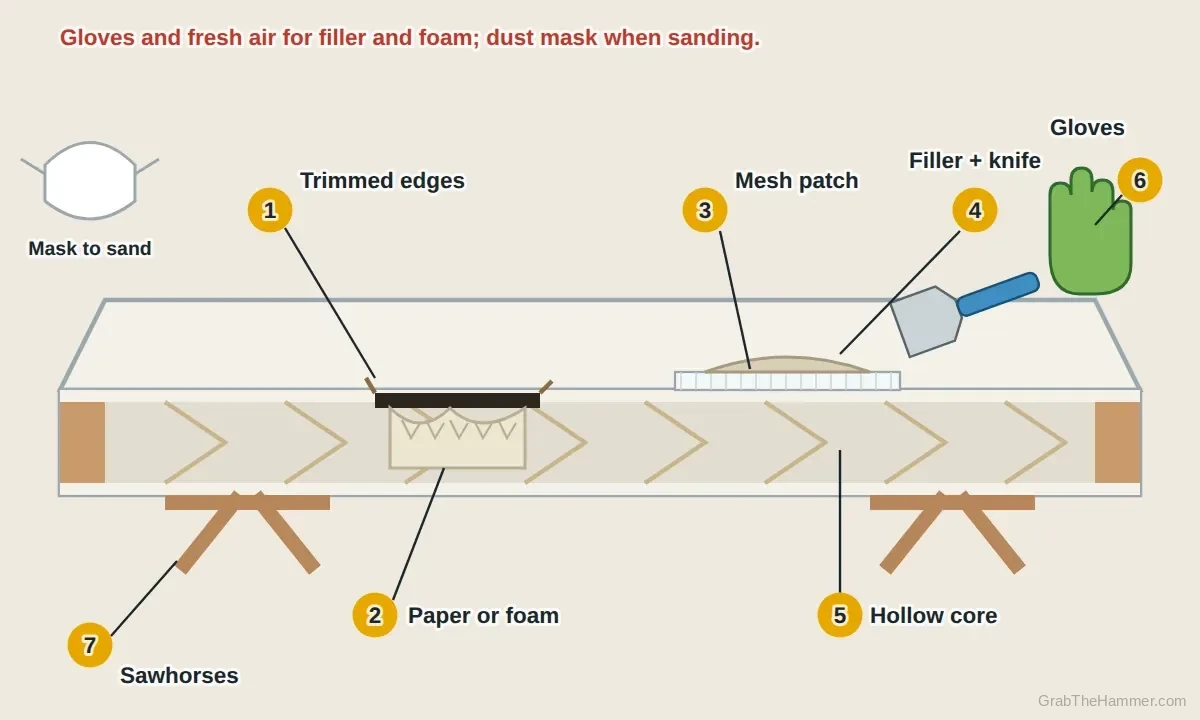
How a hollow door is built
A hollow-core door has a wood frame around the edges, a thin skin of wood veneer or hardboard on each face, and a light cardboard honeycomb in between. That's why a knee, doorknob or fist goes right through it. Because there's nothing solid behind the skin, filler pushed into the hole just falls inside.
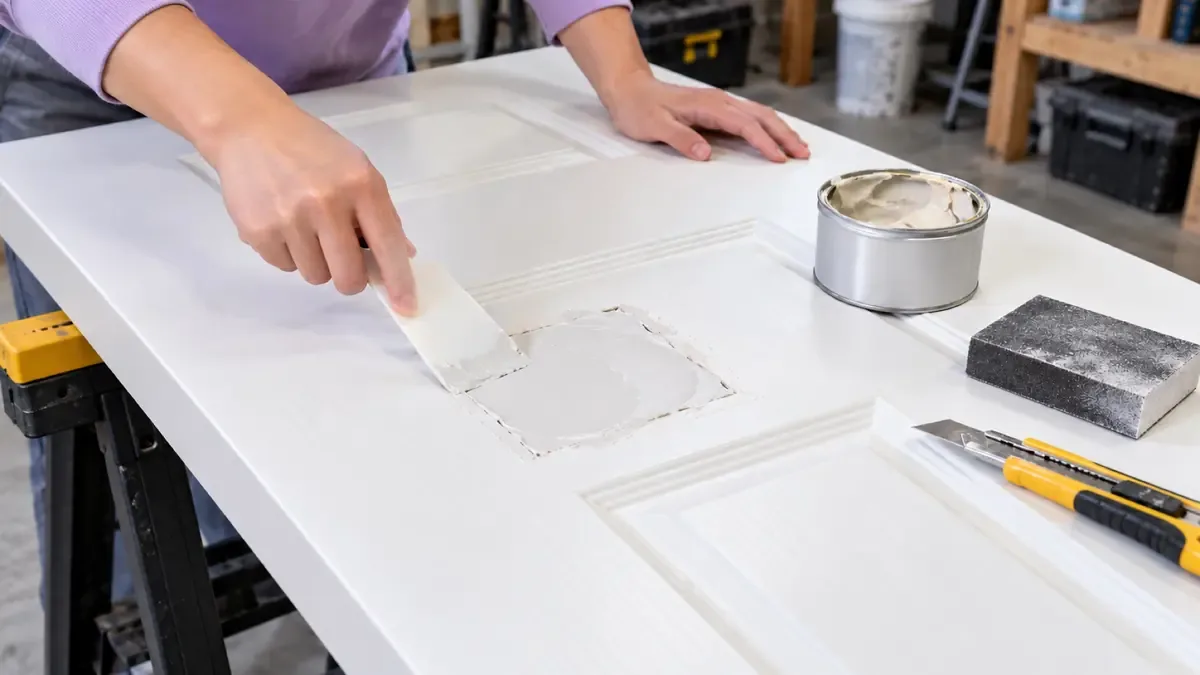
The fix is to fill the cavity behind the hole first, with crumpled paper or low-expansion spray foam, then build the surface back up with filler. Lightweight spackle works for small dents and holes. Two-part auto-body filler or wood filler is harder and holds up better on a door that gets bumped.
How hollow doors get holes
A doorknob, knee or fist pushes through the veneer.
No doorstop lets the knob punch through.
Force on the face cracks the skin.
A small dent cracked and spread.
| You notice | Likely cause | Start at |
|---|---|---|
| Splintered veneer around the hole | Broken skin edges | Step 1 |
| Filler falls into the hole | Nothing behind the skin | Step 2 |
| Foam sticks out past the surface | Foam not trimmed | Step 2 |
| Hole bigger than a few inches | Needs reinforcement | Step 3 |
| Patch is lumpy or sunken | Needs another filler layer | Step 4 |
| Patch shows through paint | Not primed or not fully painted | Step 6 |
Let's fix it
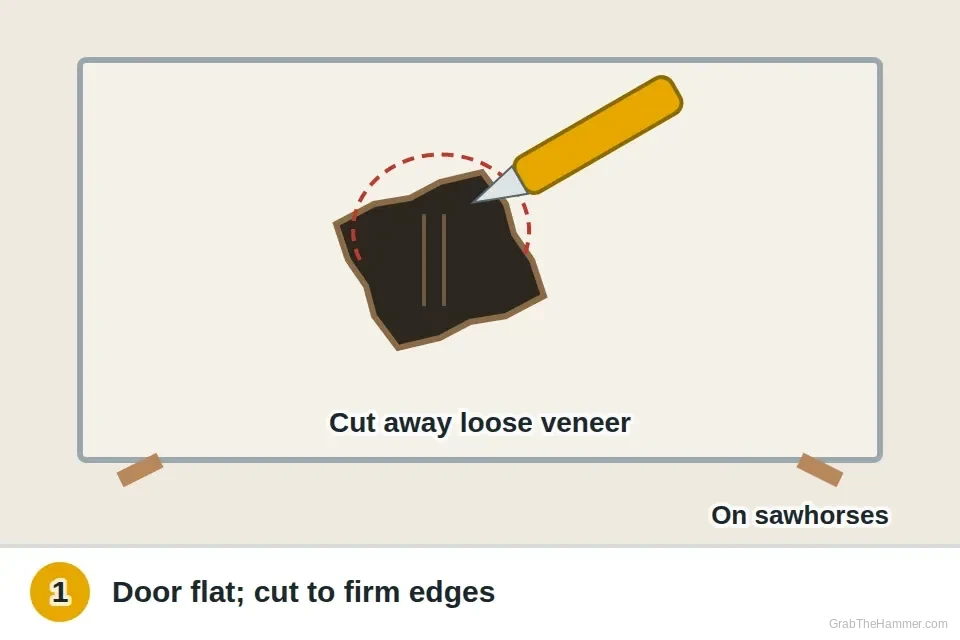
- Trim the broken edgesTake the door off its hinges and lay it flat on sawhorses if you can; it's much easier to fill a horizontal surface. Use a sharp utility knife to cut away splintered and loose veneer around the hole so you have clean, firm edges. Push any bent-in pieces of skin inward or cut them off rather than leaving them sticking up.
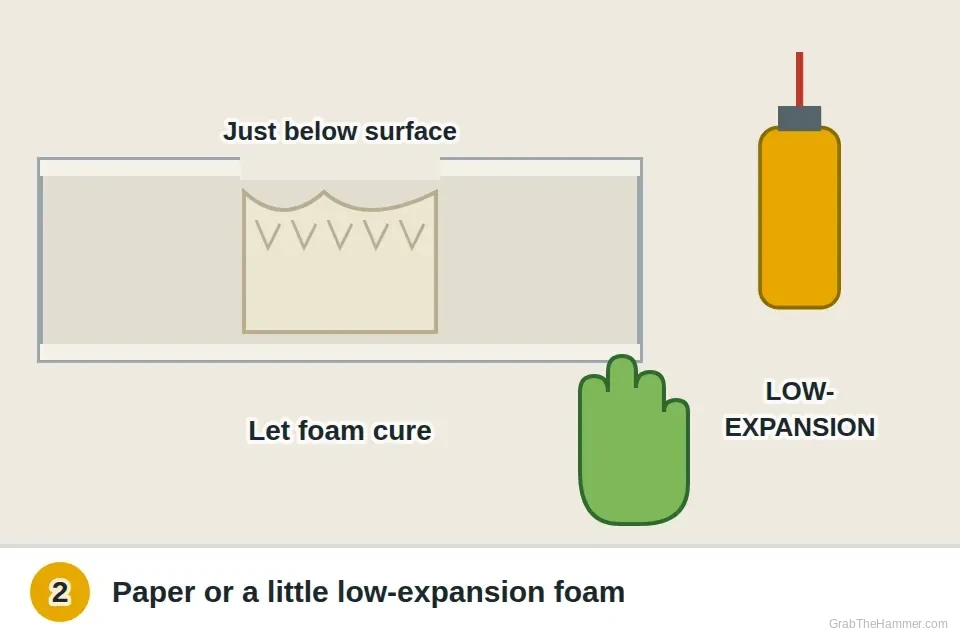
- Pack the cavityStuff crumpled newspaper into the hole until it sits just below the surface, giving the filler something to rest on. Or spray low-expansion foam, the kind sold for windows and doors, into the cavity; regular expanding foam can bulge the skin. Wear gloves, use only a little, since it grows, and let it cure fully according to the can. Once it's hard, slice it off with a utility knife about 1/8 inch below the surface so there's room for a solid layer of filler.
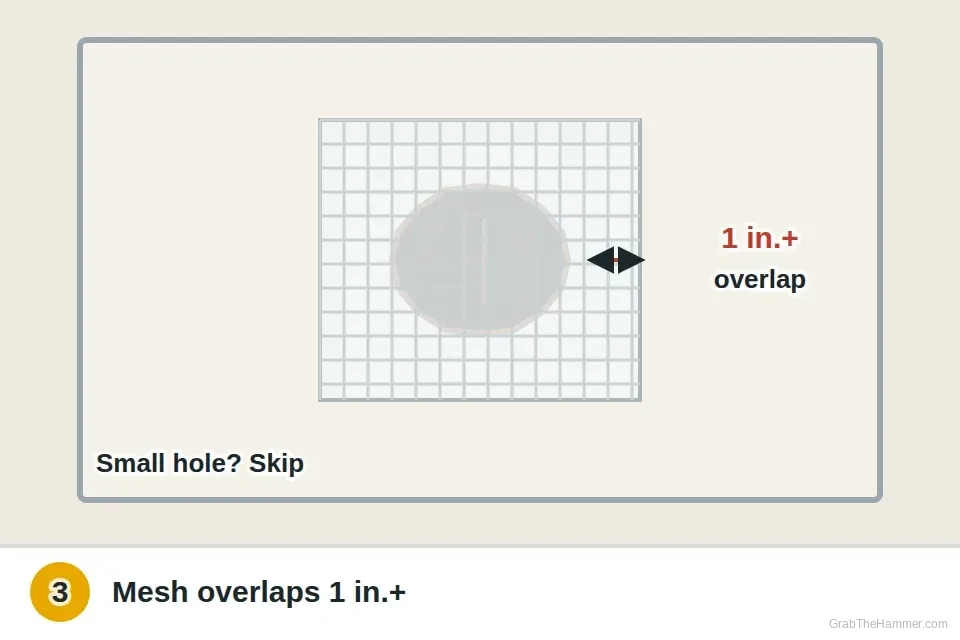
- Add a mesh patch for big holesFor holes bigger than a couple of inches, press a self-adhesive fiberglass mesh patch over the hole so it overlaps the sound skin by at least an inch. It reinforces the filler so it doesn't crack later. On smaller holes you can skip this step.
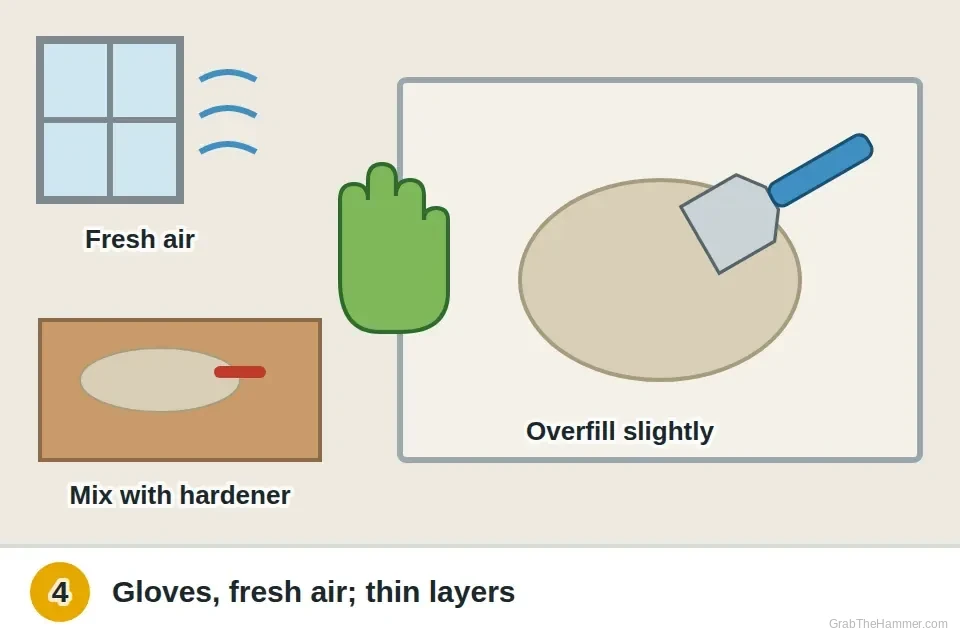
- Apply the fillerFor small holes, press lightweight spackle in with a putty knife. For a tougher repair, mix two-part auto-body filler with its hardener on a scrap board, in a well-ventilated area with gloves on, and spread it within a few minutes before it sets. Apply thin layers and overfill slightly, feathering the edges onto the door with a wide knife. Let each layer dry or harden before adding the next.
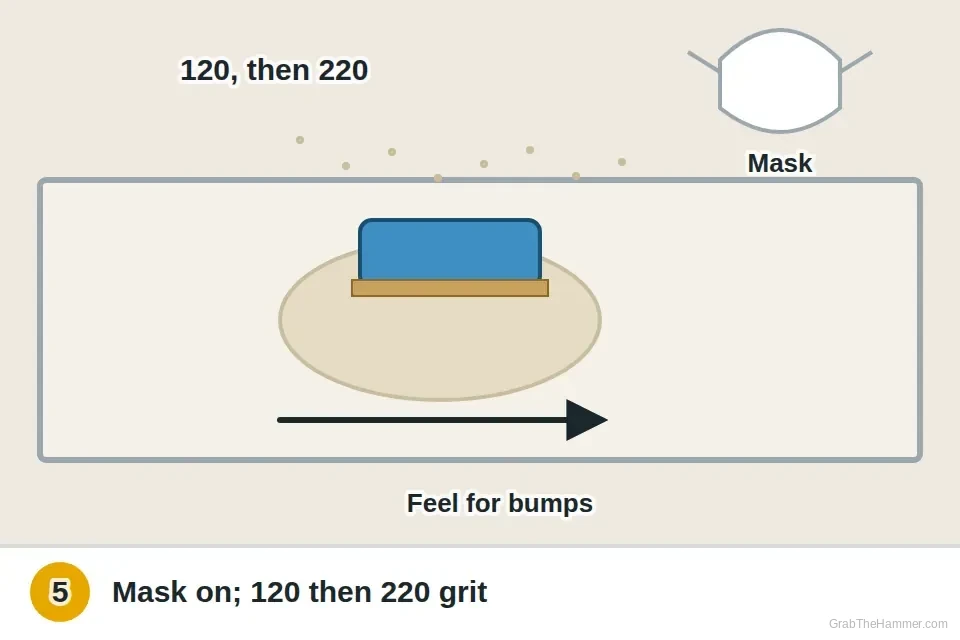
- Sand smoothWear a dust mask and sand the patch with 120-grit paper on a block until it's flush with the surface, then finish with 220-grit. Run your hand over it with your eyes closed to feel for bumps or dips. Fill any low spots with a thin skim coat and sand again.
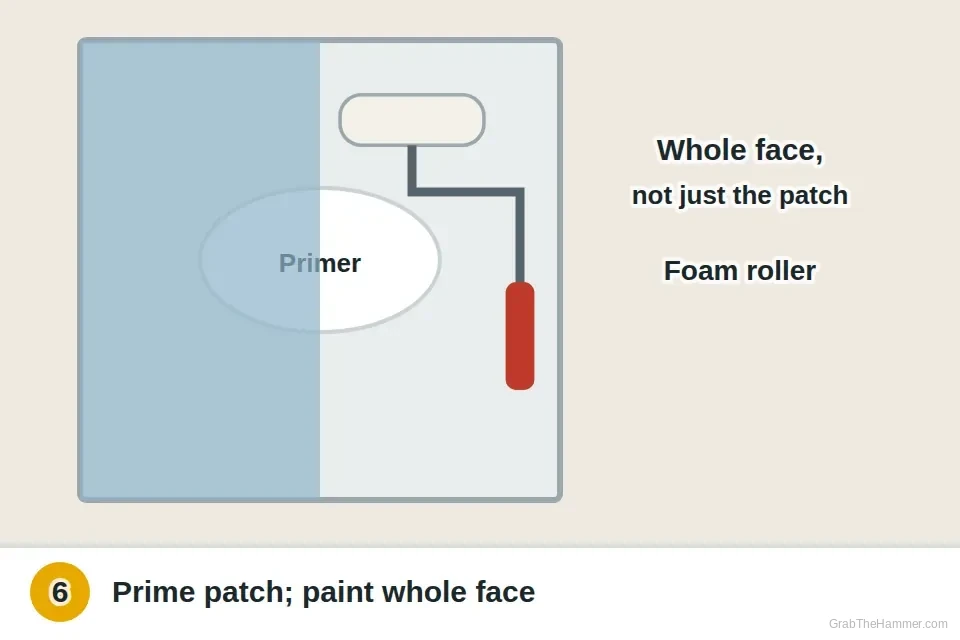
- Prime and paintWipe off the dust and prime the patch, since filler soaks up paint differently than the rest of the door. Paint the entire face of the door, not just the patch, so the color and sheen match. A small foam roller gives a smooth finish on flat doors.
Watch it done
- The patch is flush when you run your hand over it
- The paint color and sheen match
- The patch doesn't flex when pressed
If patching isn't the answer
If the hole is bigger than your hand or the door is split, replacing the door slab is often less work; see when to call a pro below.
If the hole is in the wall behind the door rather than in the door itself, there's a separate guide for patching drywall.
If the door won't latch after you rehang it, we have a guide for a door that won't latch.
What a pro typically charges (a rough estimate; prices vary by area): A handyman typically charges $100–$250 to patch and paint a hole in a hollow-core door. Replacing a hollow-core door slab usually runs $150–$400 including the door, and a pre-hung interior door $300–$700 installed.
Find a handyman near you