Fix a sticking deadbolt or door lock
You have to push, pull and jiggle the door just to lock it. A stiff lock feels like it's broken, but most of the time the lock is fine. The bolt just doesn't line up with the hole in the frame, or the mechanism needs the right kind of lubricant.

What's actually going on
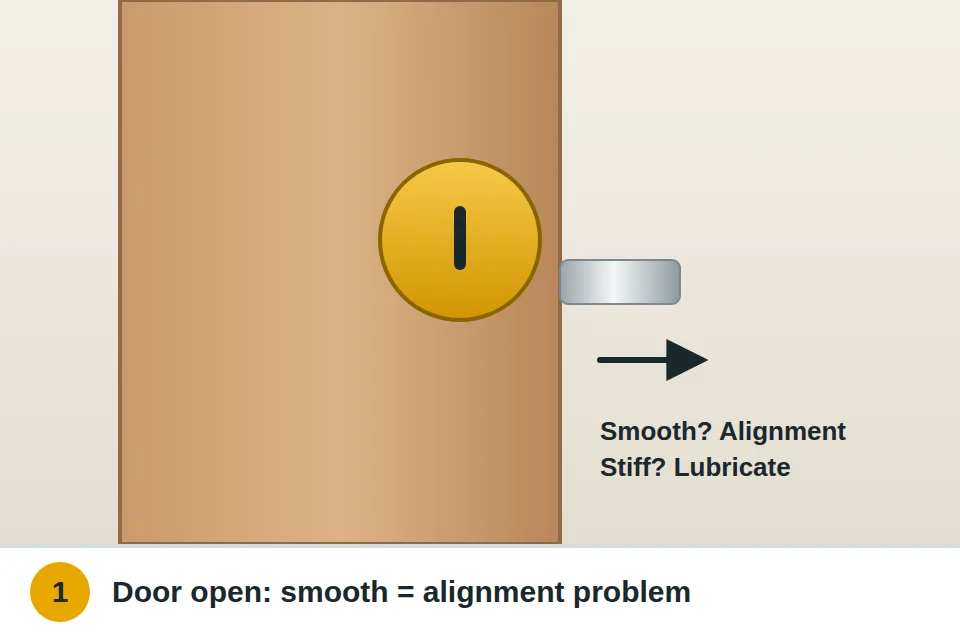
A test tells you which problem you have. Open the door and turn the deadbolt. If it moves smoothly with the door open but sticks when closed, it's an alignment problem between the bolt and the strike plate on the frame. If it's stiff even with the door open, the lock itself needs lubrication.
Why it happens
The door sags a little, and the bolt starts hitting the strike plate instead of sliding into the hole.
Dust and grime build up in the pins, especially on exterior doors.
Oil sprays attract dirt and gum up the mechanism over time.
Copies of copies get less precise, and worn keys don't lift the pins cleanly.
Let's fix it
- Test with the door openTurn the bolt with the door open. Smooth means alignment; stiff means lubrication.
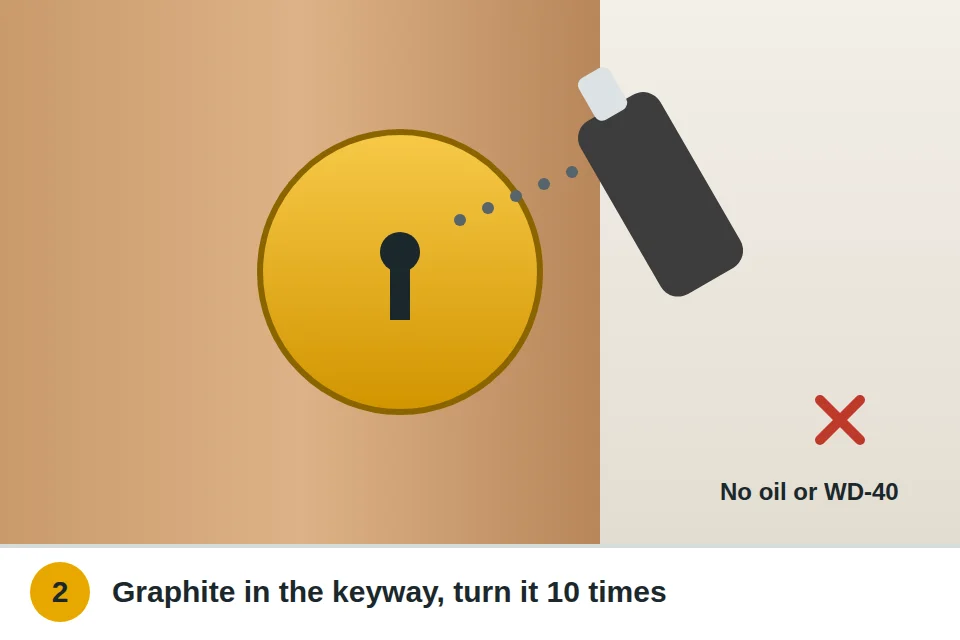
- Lubricate a stiff lockPuff dry graphite into the keyway, then work the key and turn the bolt 10 times. Skip oil or WD-40, which attract dust and gum up locks.
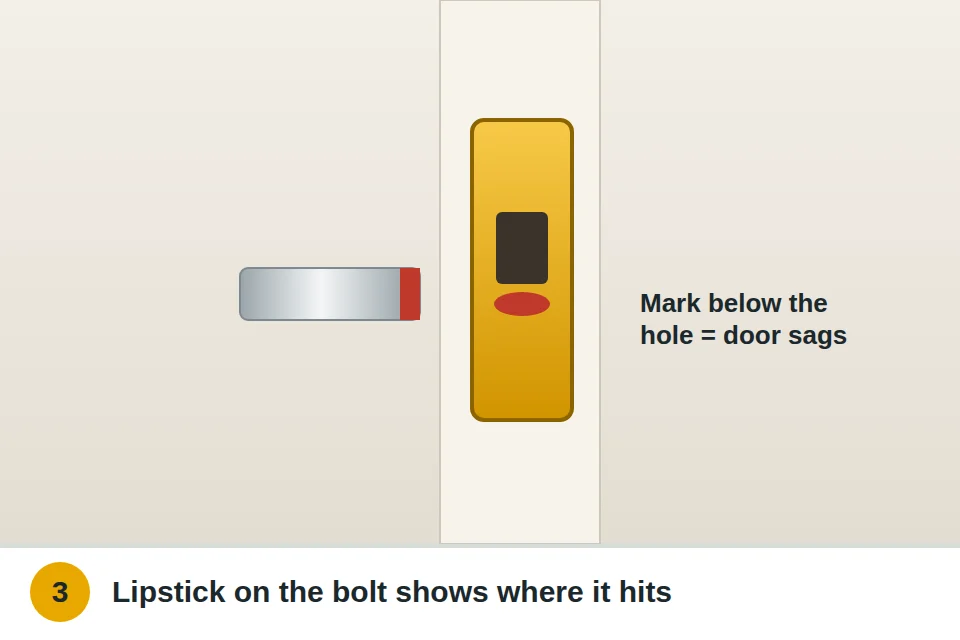
- Find where the bolt hitsRub lipstick or marker on the end of the bolt, close the door, and turn it. The mark on the strike plate shows exactly where it's catching.
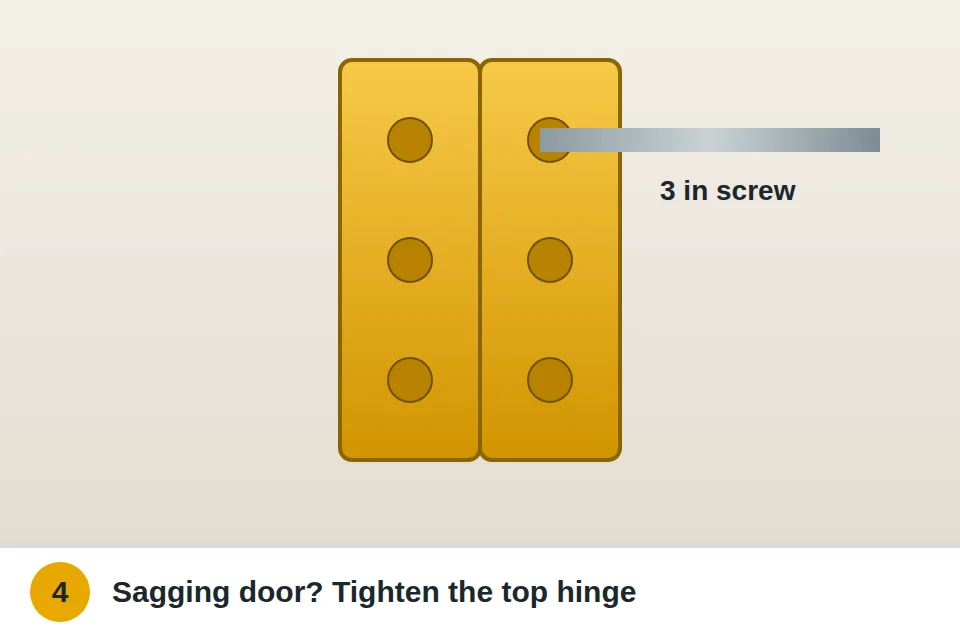
- Tighten the hinges firstA bolt hitting low often means the door sags. Tighten the hinge screws, and swap one top-hinge screw for a 3 inch screw into the stud.
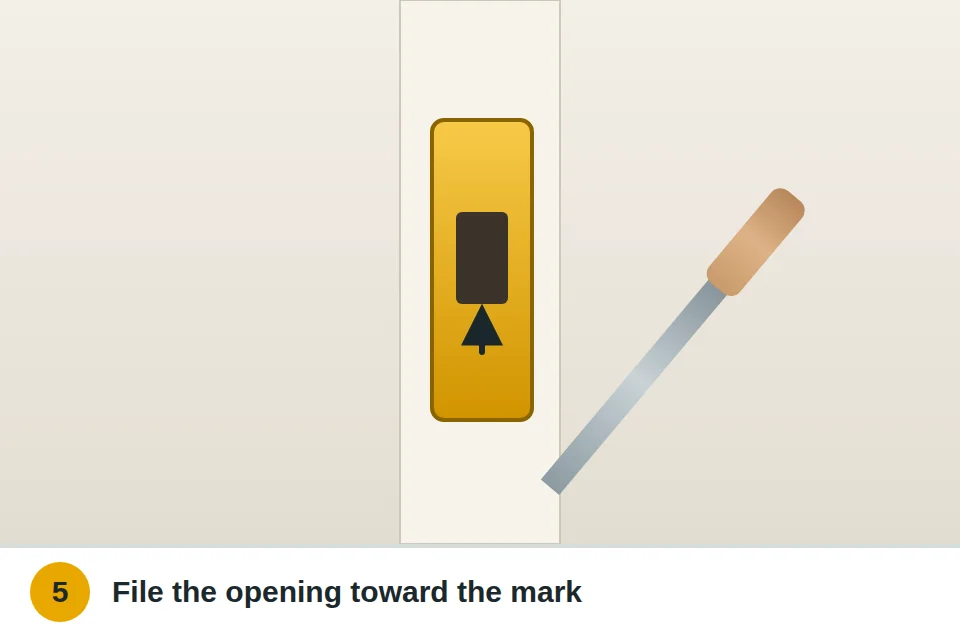
- Adjust the strike plateIf it's still off by a little, file the opening in the strike plate slightly toward the mark. If it's off by more, move the plate.
Still not fixed?
If it still sticks after graphite and alignment, the lock mechanism may be worn. Replacing a deadbolt is a straightforward DIY job with a screwdriver.
Seasonal sticking on an exterior door usually means the door shifts with humidity. Adjusting the strike plate slightly usually covers both seasons.
What a pro charges: A locksmith typically charges $75–$200 for a lock repair or rekey.
Common questions
Can I use WD-40 on a lock?
It's better to use dry graphite or a lock-specific lubricant. Oil-based sprays attract dirt and can gum up the pins.
Why does my deadbolt only stick when the door is closed?
The bolt and the strike plate hole don't line up, usually because the door sags. Tighten the hinges or adjust the strike plate.