Fill gaps between hardwood floorboards
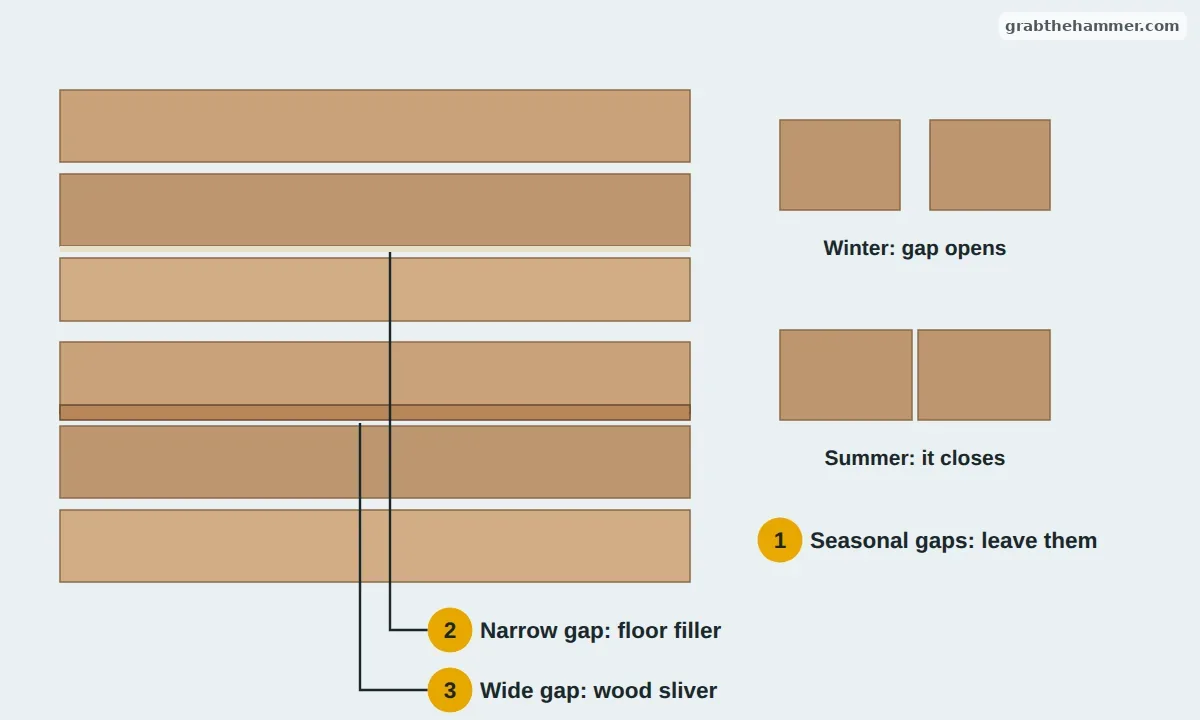
Solid hardwood floors open small gaps between boards in winter and close them again in summer, and those seasonal gaps are normal and best left alone. Gaps that stay open year-round can be filled: with floor filler for narrow cracks, or with thin wood strips or rope for wider ones. Packing a seasonal gap too tightly can make boards push up when they swell.
Why hardwood gaps open
Wood shrinks as it dries and swells as it takes on moisture. In heated homes, winter air is dry, so boards shrink and gaps open, then usually close by summer. Keeping indoor humidity steadier reduces that movement.
If gaps stay open all year, they can be filled. Wide gaps take thin slivers of wood glued to one board only, or cotton rope stained to match, both of which can move a little with the floor.
What causes gaps
Boards shrink and gaps open seasonally.
Wider planks move more with humidity.
Boards that dried after installation leave permanent gaps.
Hot, dry spots near vents and heaters.
| Gap | Likely cause | What to do |
|---|---|---|
| Opens in winter, closes in summer | Seasonal movement | Leave it; steady the humidity. |
| Narrow, open all year | Permanent shrinkage | Floor filler or putty. |
| Wide, open all year | Shrinkage or installation | Wood slivers or rope. |
| Gaps with cupped boards | Moisture | Find the moisture source first. |
Let's fix it
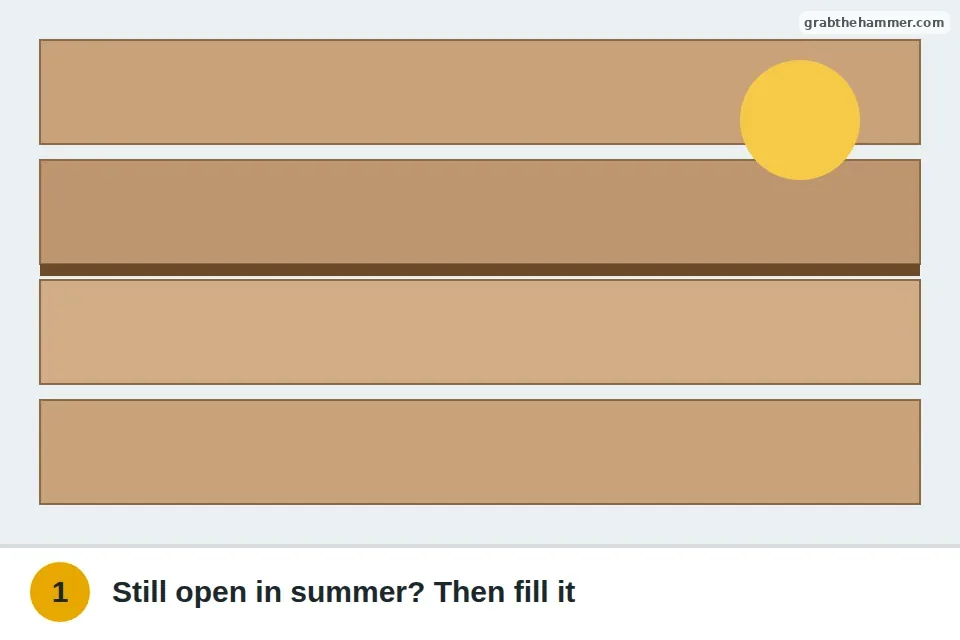
- Check in the right seasonLook at the gaps in late summer, when humidity is highest. If a gap closes then, it's seasonal and best left alone.
- Clean out the gapScrape out grit and old filler with a putty knife, and vacuum the crack so the filler or strip can bond.

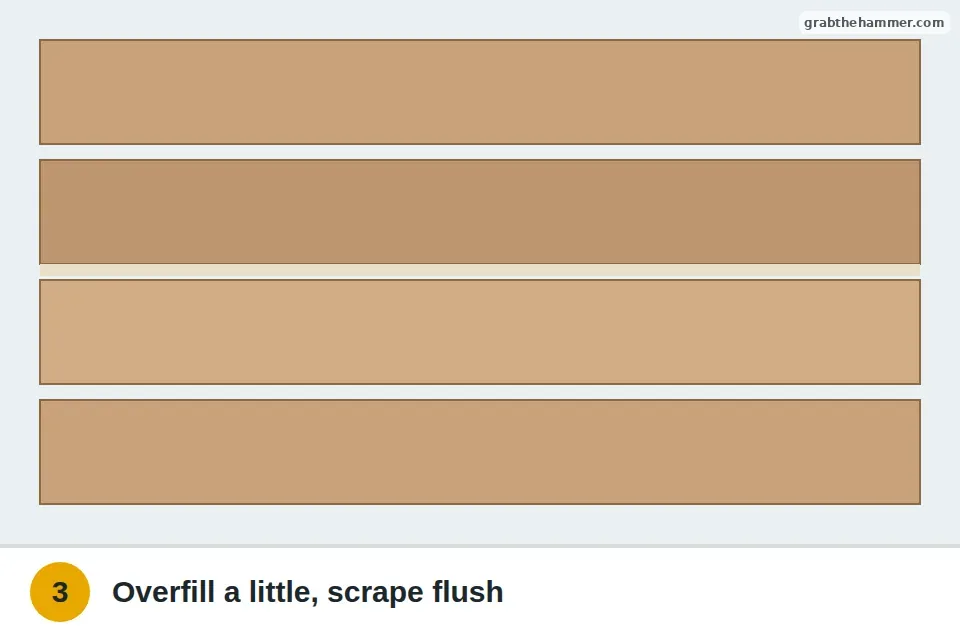
- Fill narrow gapsPress floor filler or putty into narrow gaps with a putty knife, slightly overfilled, and scrape it flush. Let it dry as the label says.
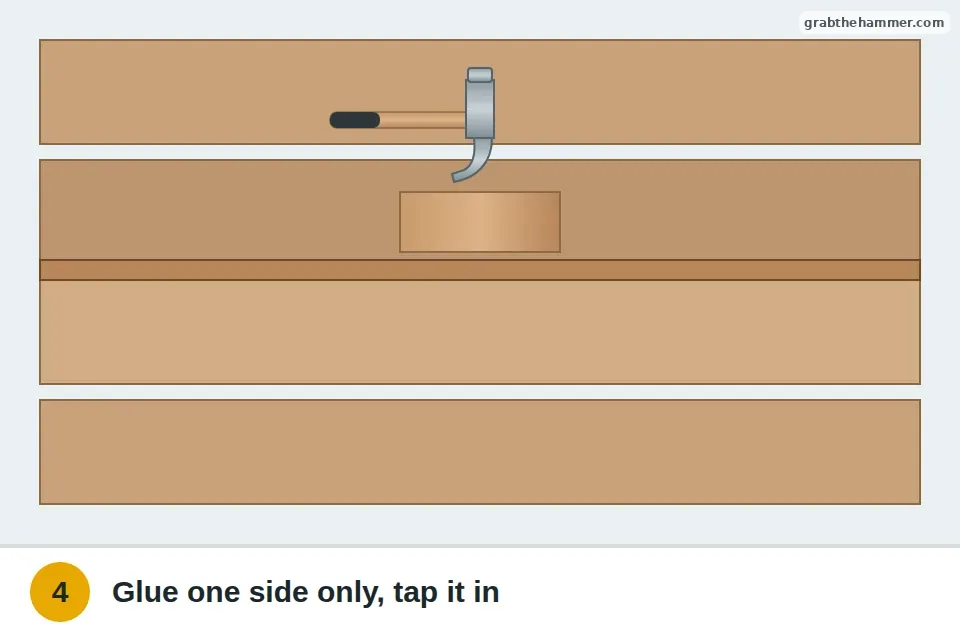
- Fill wide gapsFor wider gaps, spread glue on one side of a thin wood sliver only, push it into the gap, and tap it down with a hammer and scrap block until it's snug. Or press in cotton rope stained to match.
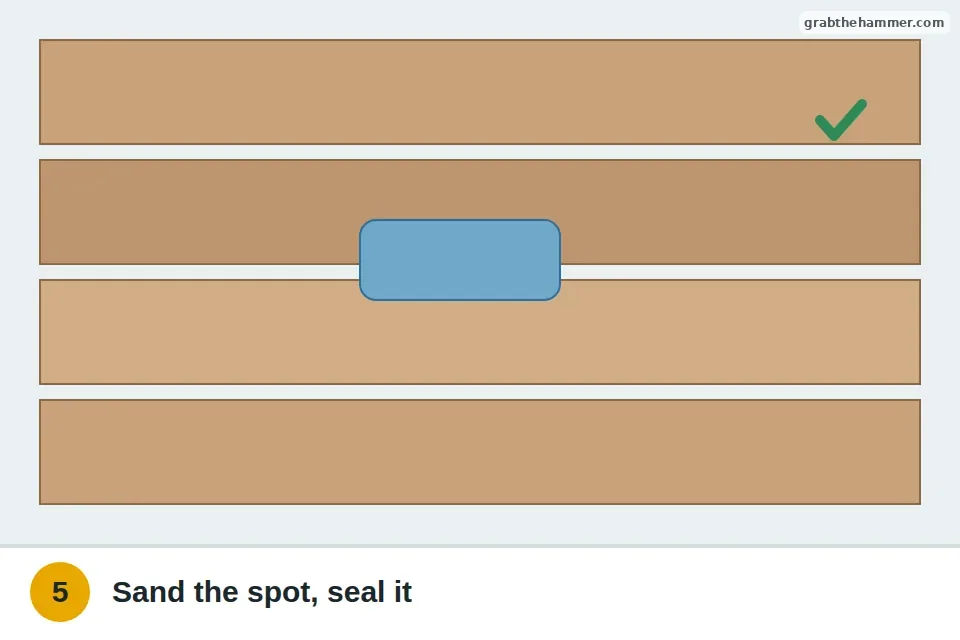
- Sand and finishSand the repair flush by hand with fine sandpaper, wipe off the dust, and brush on a little matching finish to seal it.
If the filler cracks out
If filler cracks and falls out, the gap is still moving with the seasons. A sliver glued to one board only, or rope, lets the boards move.
If gaps come with cupped or crowned boards, moisture is the likely cause. Deal with that first.
What a pro typically charges (a rough estimate; prices vary by area): A flooring pro typically charges $150–$500 to fill gaps across a room, often done as part of a refinish.
Other floor problems
Hardwood gap questions
Is it normal for hardwood floors to have gaps?
Small gaps that open in winter and close in summer are normal in solid hardwood.
What's the best filler for hardwood floor gaps?
For narrow permanent gaps, a matching floor filler or putty. For wide gaps, wood slivers or stained rope cope with movement better.
Should I fill gaps in winter?
It's better to wait until humid months, when the gaps are narrowest, so the fill doesn't get squeezed when the boards swell.
Can I fill gaps in laminate the same way?
No. Laminate and many engineered floors float; close those gaps instead of filling them.
Still stuck? Ask us
Tell us what you're seeing and what you've tried. We read every question, and the ones that will help other people get answered on this page.