Fix a loose or raised hardwood floorboard
A hardwood floorboard that lifts, rocks or clicks when you step on it has usually worked loose from the subfloor. You can pin it back down from the top with a few finishing nails driven at an angle, set just below the surface and filled. Check for moisture first, though, since a board raised by water needs a different fix.
Why a floorboard comes loose
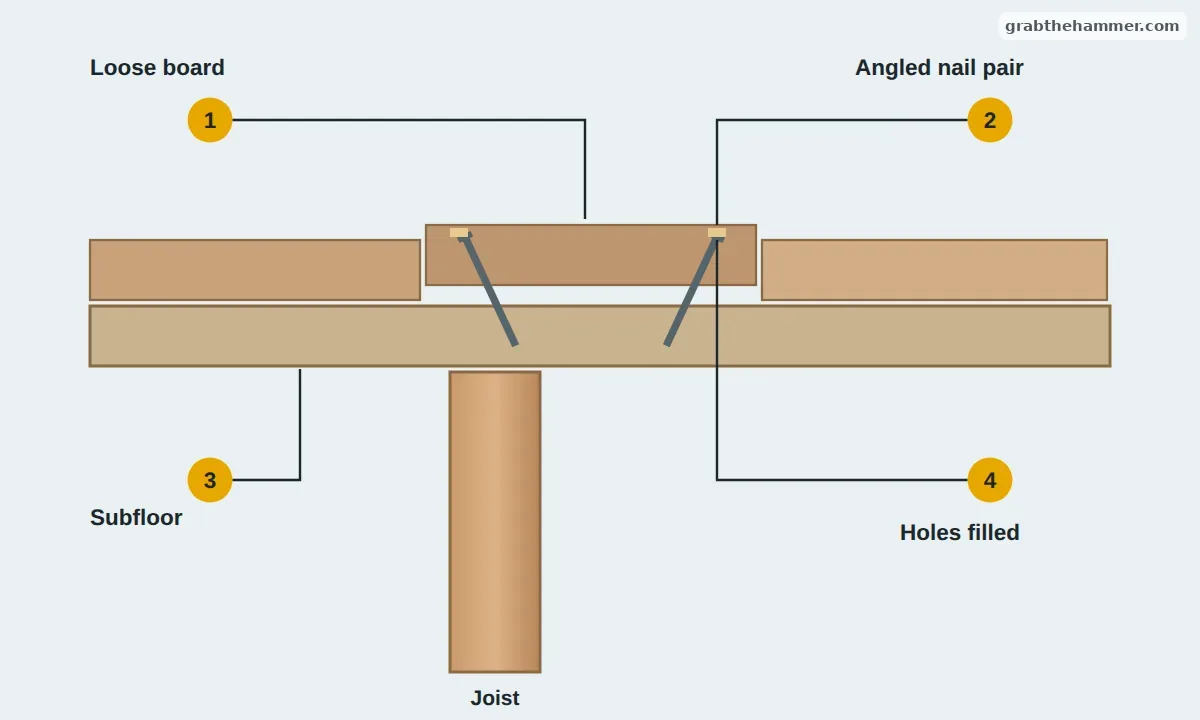
Solid hardwood is nailed through the tongue into the subfloor where you can't see the nails. As the wood shrinks and swells over the seasons, some of those nails loosen and a board starts to move.
Nailing through the face of the board, in pairs angled toward each other, pulls it back down. The small holes disappear once they're filled with color-matched filler.
What loosens a board
Seasonal movement works them loose.
Boards swell and lift.
The subfloor dips or isn't flat.
Constant movement loosens fasteners.
| What you see | Likely cause | Fix |
|---|---|---|
| One board rocks or clicks | Loose nails | Face-nail and fill. |
| Edges higher than the middle | Cupping from moisture | Find and fix the moisture. |
| Board lifts near a sink | A leak | Fix the leak, let it dry. |
| Laminate or vinyl plank | A floating floor | Don't nail it; fix the edges. |
Let's fix it
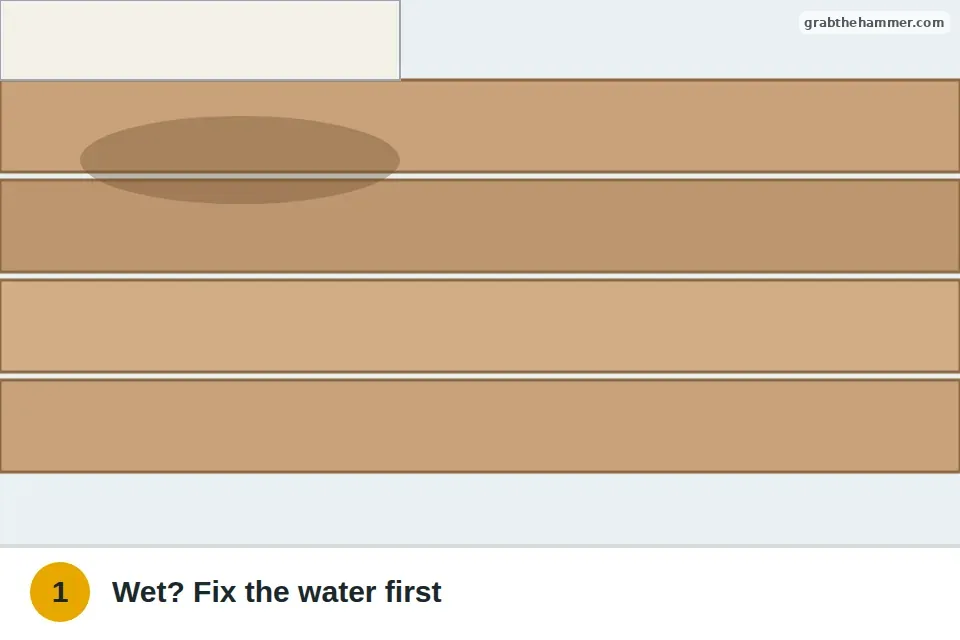
- Check for moistureLook for cupping, dark stains or swelling near the board. If the floor near a sink, door or appliance is damp, fix the water source first; a board raised by water may flatten as it dries, but give it a few weeks before you nail it.
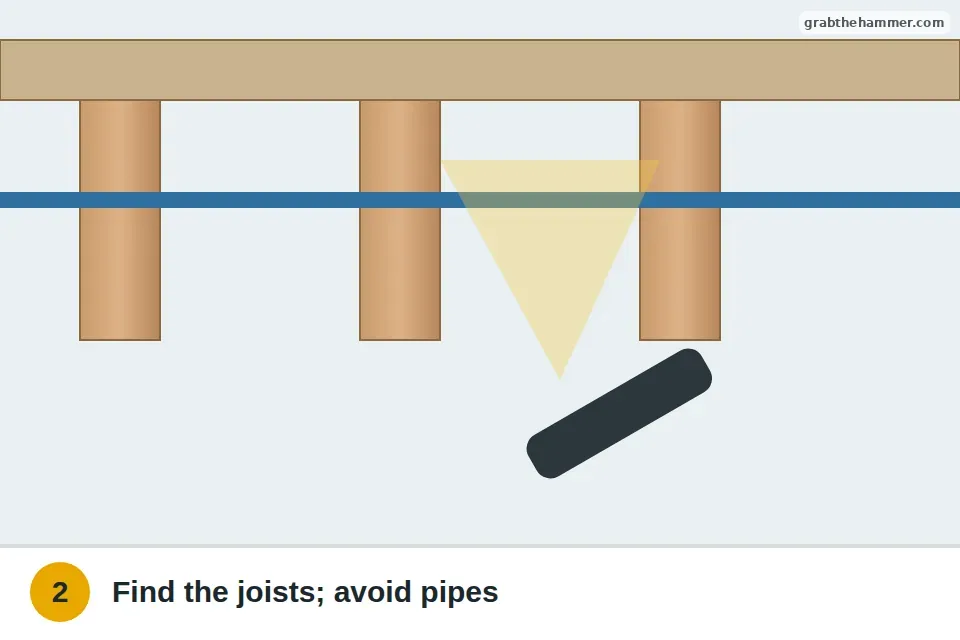
- Find what's belowIf you can, locate the floor joists from the basement or crawlspace, or by the nail lines in the floor. Nails into a joist hold best, but nails into the subfloor alone will also help. Avoid spots where pipes, wires or heating lines may run.
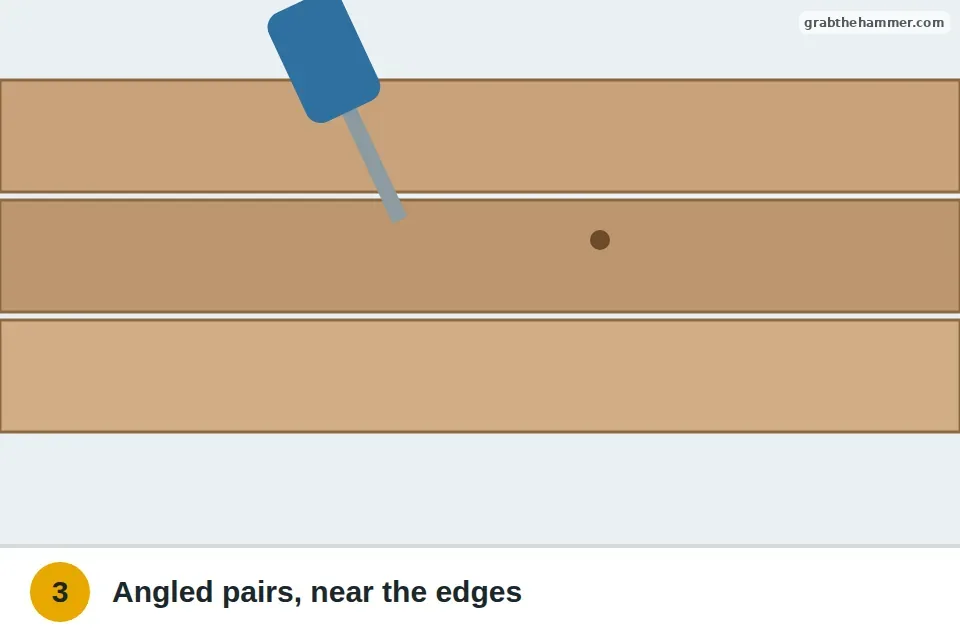
- Drill pilot holesNear the edges of the loose board, drill pilot holes at an angle through the board and into the subfloor, in pairs slanted toward each other. Pilot holes keep hardwood from splitting.
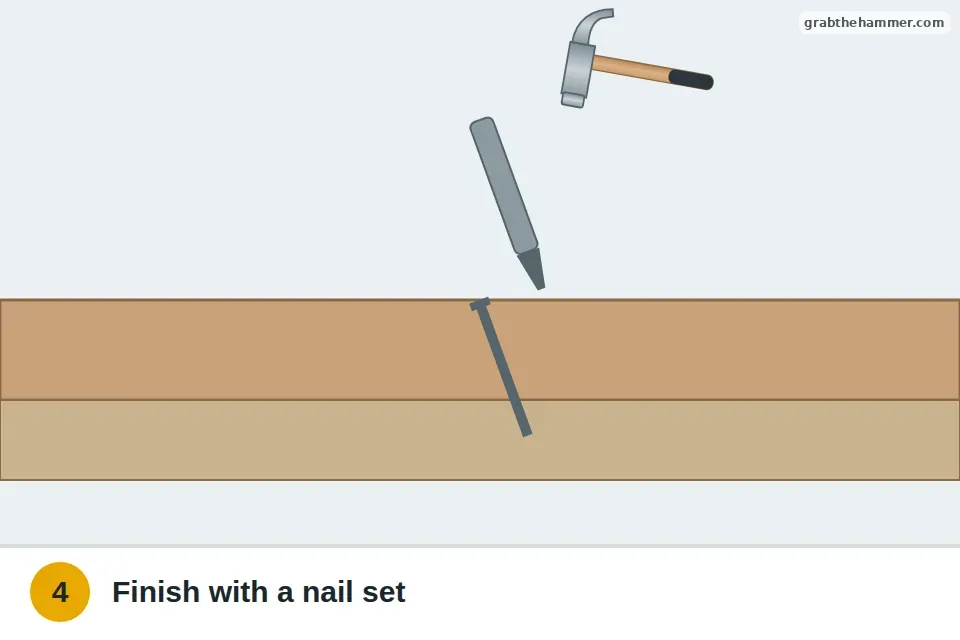
- Nail and set itDrive finishing nails into the holes, stopping just before the hammer hits the wood. Finish with a nail set so the heads sit just below the surface.
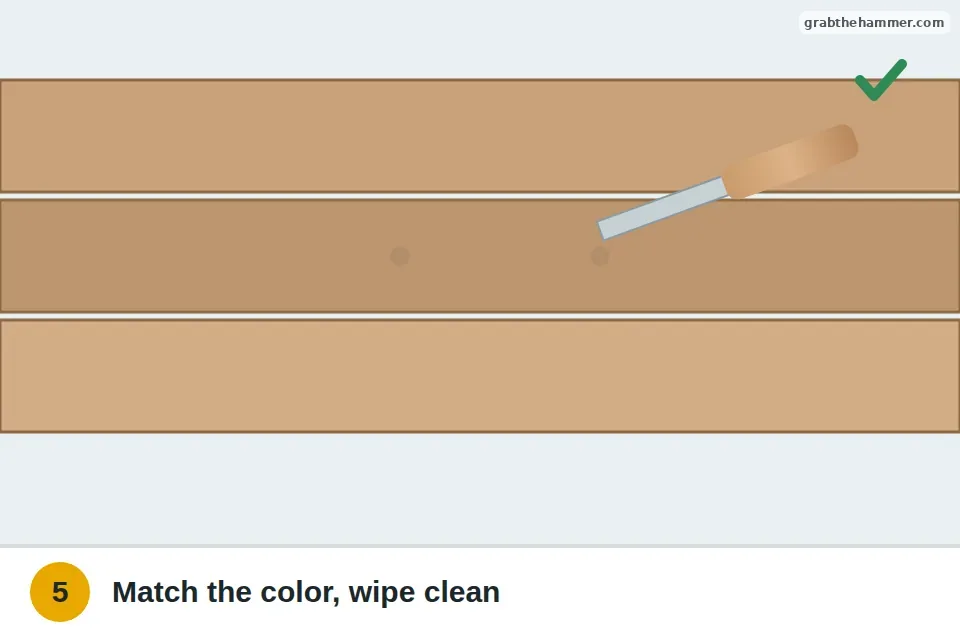
- Fill the holesPress color-matched wood filler into the holes with a putty knife, wipe off the extra, and let it dry. The board should sit flat and quiet.
If it lifts again
If a board keeps lifting, there may be a gap between the subfloor and the joist. Fixing it from below, like a squeaky floor, may help.
If several boards are raised in one area, look for a leak or high humidity. Nails won't hold down wood that's swelling.
What a pro typically charges (a rough estimate; prices vary by area): A flooring pro typically charges $100–$300 to secure or replace a few boards, more if there's water damage.
Other floor problems
Loose floorboard questions
Can I nail down a raised hardwood board?
Yes, if it's loose and dry. If it's raised because of moisture, fix the water first and let it dry.
What nails should I use for hardwood?
Finishing nails long enough to go through the board into the subfloor, with pilot holes drilled first.
Can I nail down laminate?
No. Laminate and vinyl plank floors float and need to move. Check what's pinning the edges instead.
Will the nail holes show?
A little, but color-matched wood filler makes them hard to spot.
Still stuck? Ask us
Tell us what you're seeing and what you've tried. We read every question, and the ones that will help other people get answered on this page.