Fix carpet coming up at the edge
Carpet that's lifting along a wall or at a doorway has usually slipped off the tack strip, the thin wood strip with angled pins that holds it around the edges. Hooking it back onto the pins, nailing down any loose strip and tucking the edge fixes most of it. At a doorway, a metal transition strip hammered closed holds the edge flat.
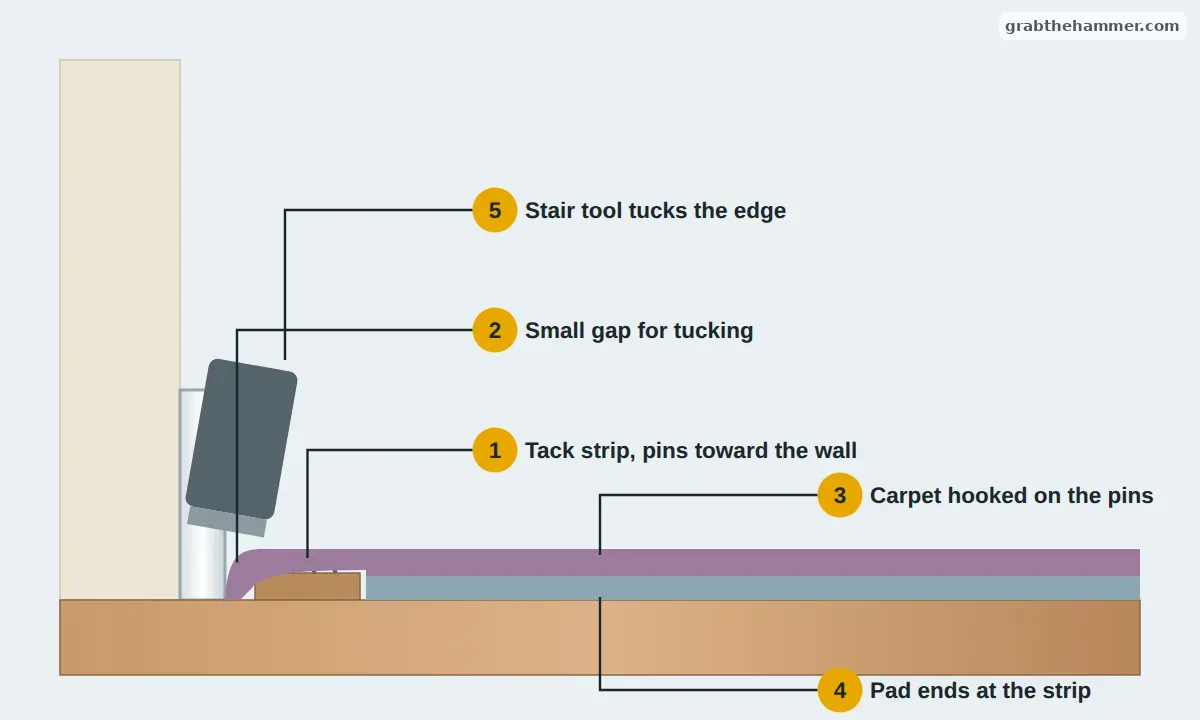
What holds carpet down
Wall-to-wall carpet is stretched and hooked onto tack strips nailed around the room, and the edge is tucked into the gap between the strip and the baseboard. When the carpet loosens, or a strip comes loose from the floor, the edge pops up and wrinkles.
At a doorway there's no wall to tuck into, so the edge is held by a transition strip, often a metal strip with teeth that's nailed to the floor and hammered closed over the carpet.
Why carpet edges lift
Loose carpet lets the edge work off the pins.
There's nothing for the carpet to hook onto.
Transition strips loosen or bend.
Damp padding or subfloor loosens the strip's grip.
| Where | Likely cause | Fix |
|---|---|---|
| A short stretch along a wall | Carpet slipped off the strip | Hook it back and tuck it. |
| Along a wall, and the strip moves | Loose or broken tack strip | Nail it down or replace it. |
| At a doorway | Loose transition strip | Hammer it closed or replace it. |
| Ripples in the middle of the room | The carpet has stretched | Needs restretching by a pro. |
Let's fix it
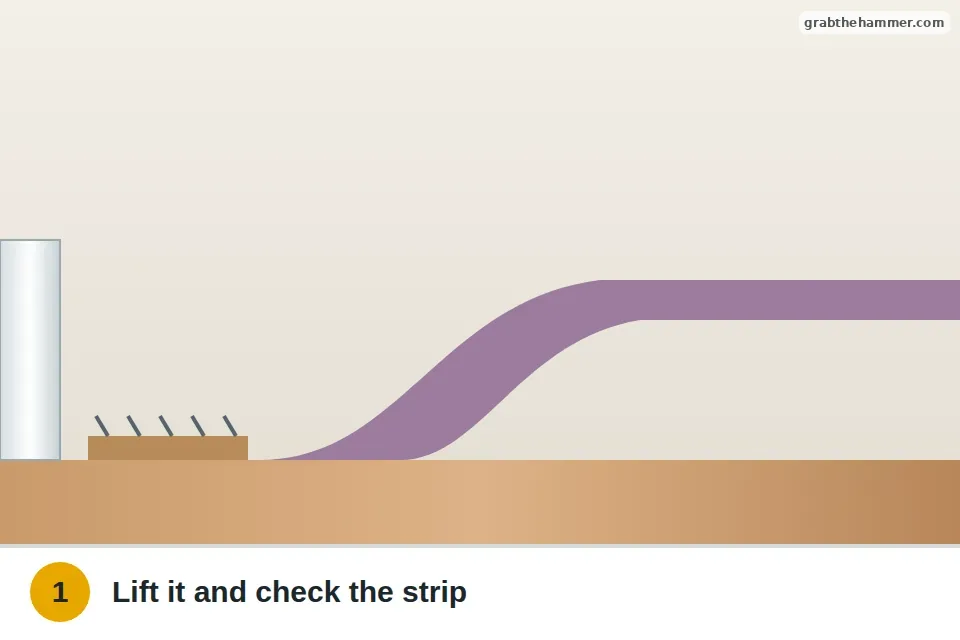
- Look at the tack stripWearing gloves, lift the loose edge and look at the strip underneath. If it's loose, broken or missing, fix that first. If it's fine, the carpet just slipped off the pins.
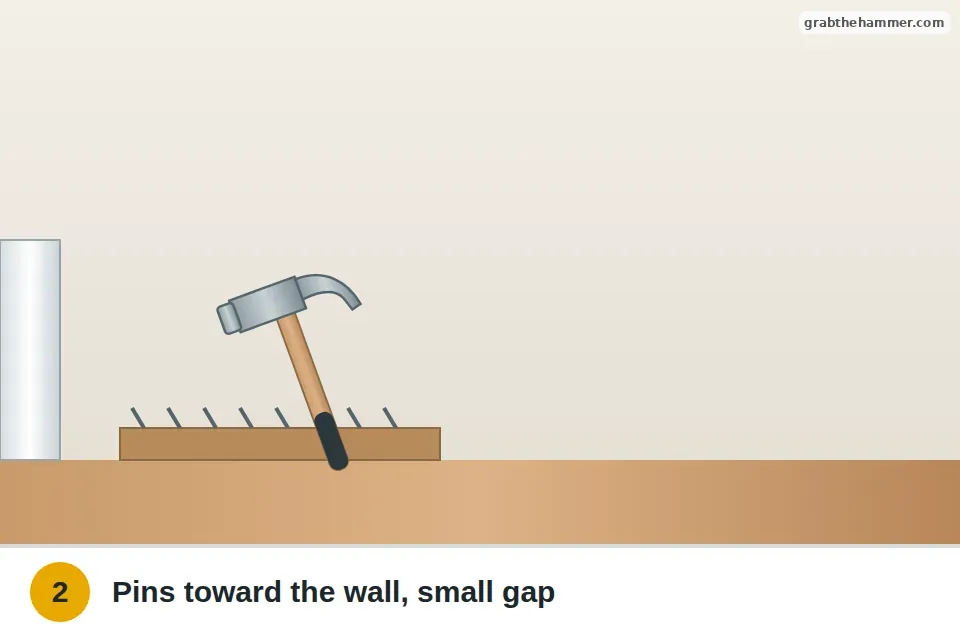
- Nail down or replace the stripTap a loose strip's nails back in with the hammer, or replace a broken section with new strip, pins angled toward the wall. Leave a small gap between the strip and the baseboard, a little less than the carpet's thickness.
- Hook the carpet back onPush the carpet toward the wall and press it down onto the pins, using a knee kicker. For a small loose spot, you can press it forward onto the pins with a stiff putty knife.

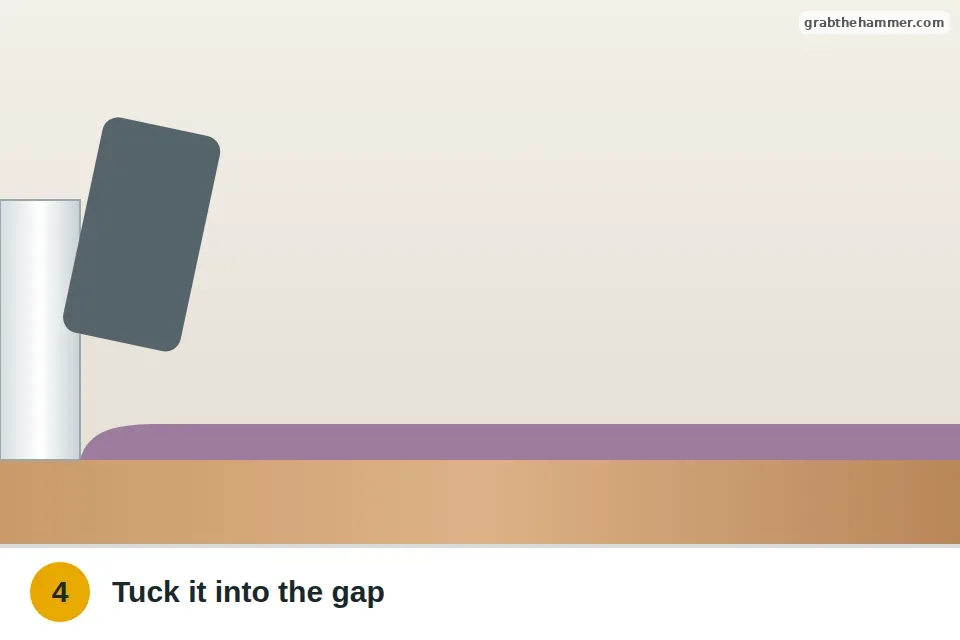
- Tuck the edgePush the carpet edge down into the gap between the strip and the baseboard with a stair tool or a wide screwdriver, working along the wall.
- Close a doorway stripAt a doorway, pry the lip of the metal strip open a little with a flat screwdriver, lay the carpet edge in, then hammer the lip closed over a block of wood so the blows don't dent the metal. Close it gradually along its length.

If it lifts again or ripples
If the edge keeps lifting, the carpet has probably stretched and needs to be restretched with a power stretcher, which is a job for a carpet installer.
If a doorway strip keeps working loose, replace it with a new one fastened the way the strip's maker recommends for your floor.
What a pro typically charges (a rough estimate; prices vary by area): A carpet installer typically charges $100–$250 for small repairs, and more to restretch a room.
Other floor problems
Carpet edge questions
Can I use carpet tape instead of tack strip?
Double-sided carpet tape can hold a small spot for a while, but it doesn't grip like tack strip and can leave residue.
What's a knee kicker?
A tool with gripping teeth on one end and a padded end you bump with your knee to push carpet toward the wall. Many tool rental shops have them.
Why is my carpet rippling?
Ripples across a room usually mean the carpet has stretched, or wasn't stretched tight when it went in. It needs a power stretcher.
If I rent, should I fix the carpet?
Tell your landlord, especially if it's a trip hazard at a doorway. Tucking a small edge back is usually fine; restretching is theirs to arrange.
Still stuck? Ask us
Tell us what you're seeing and what you've tried. We read every question, and the ones that will help other people get answered on this page.