Fix a squeaky floor
That one spot in the hallway that squeaks every single time. Squeaky floors happen when the subfloor rubs against a nail or a joist. The fix depends on whether you can get underneath, but either way it's usually a short job.
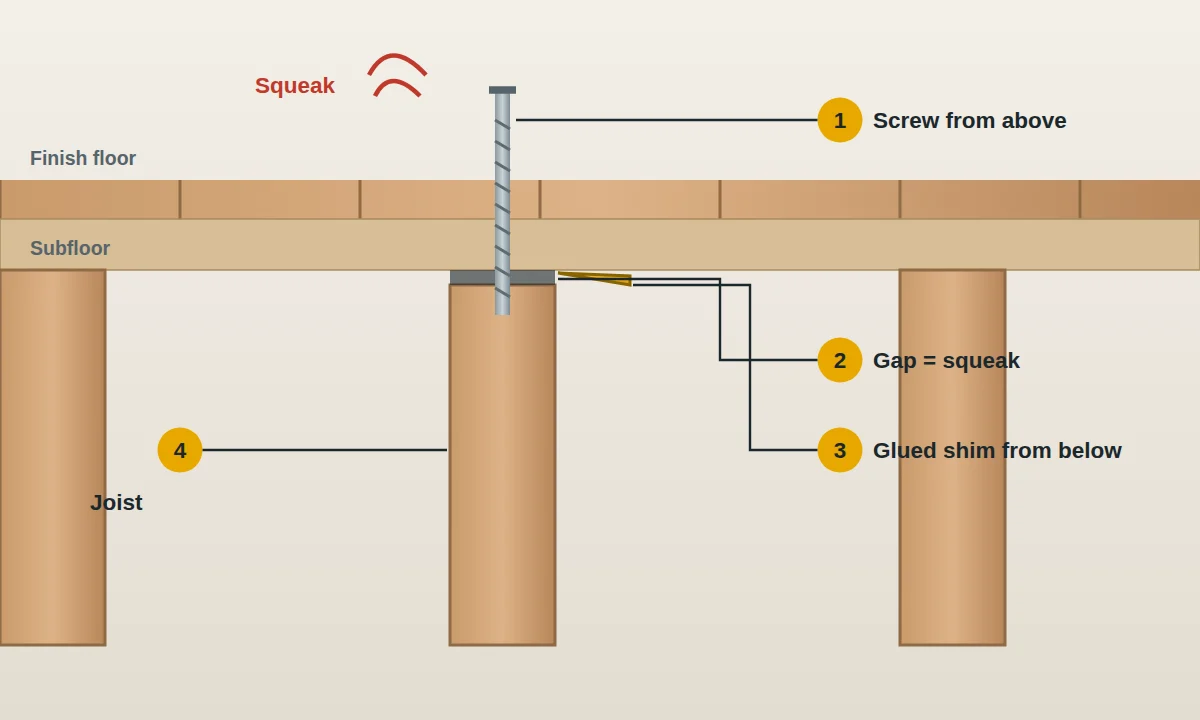
What's actually going on
Under your flooring is a layer of plywood called the subfloor, which rests on wood beams called joists. When the subfloor loosens from the joist, it moves slightly each time you step on it, and wood rubbing on wood or on a nail makes the squeak. Pulling the subfloor tight to the joist stops the movement.
Why it happens
The most common cause.
Old nails loosen and squeak as the floor moves.
Squeaks often get worse in dry winter air.
Hardwood strips rub at the seams.
Let's fix it
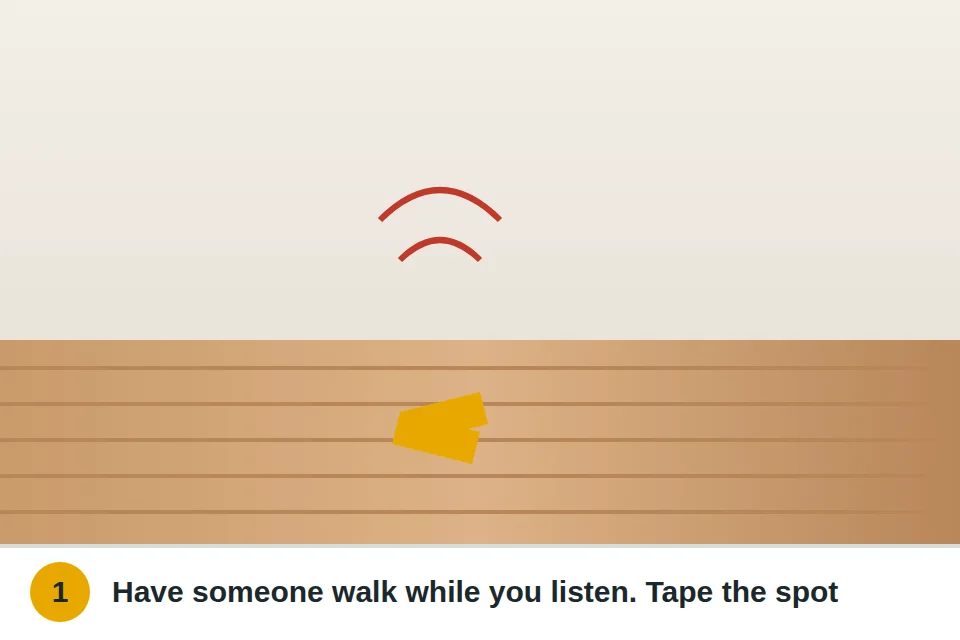
- Find the exact spotHave someone walk slowly while you listen, from below if there's a basement. Mark the spot with tape.
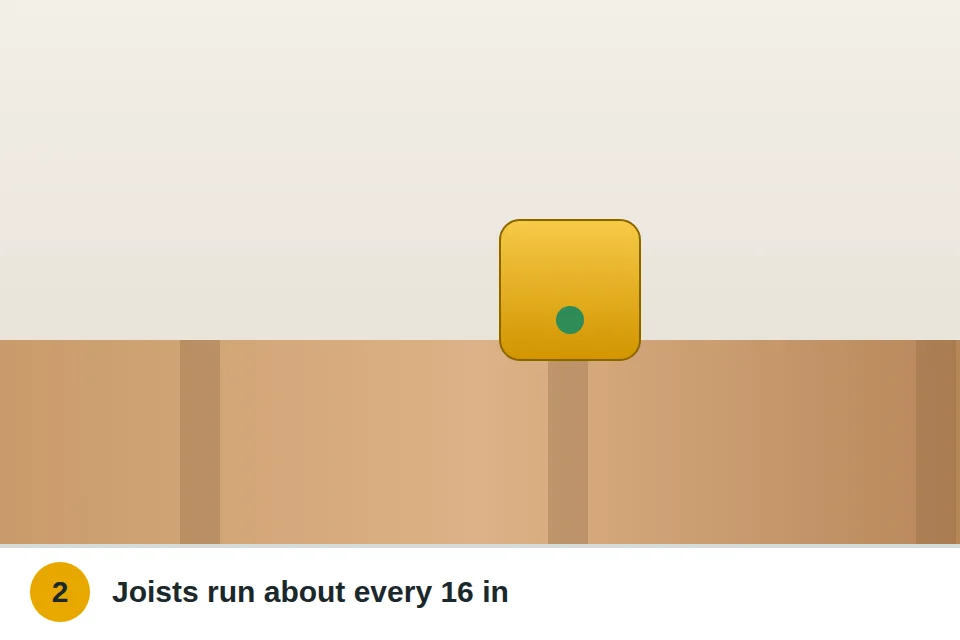
- Find the nearest joistJoists usually run every 16 inches. Use a stud finder on the floor, or knock and listen for a solid sound.
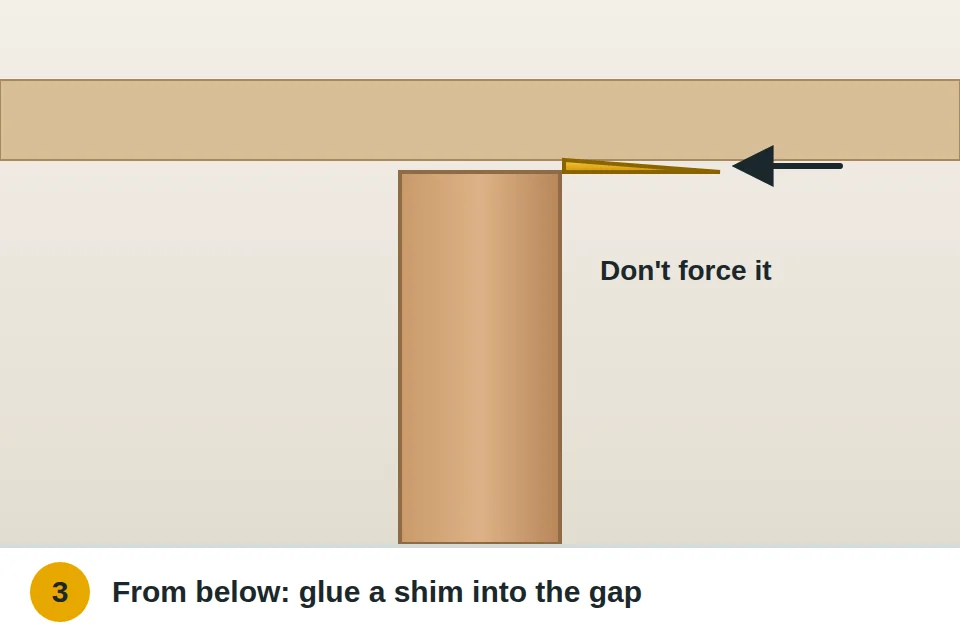
- From below: shim the gapIf you can see a gap between the joist and subfloor, tap a glued wood shim into it. Don't force it, or you'll create a bump.
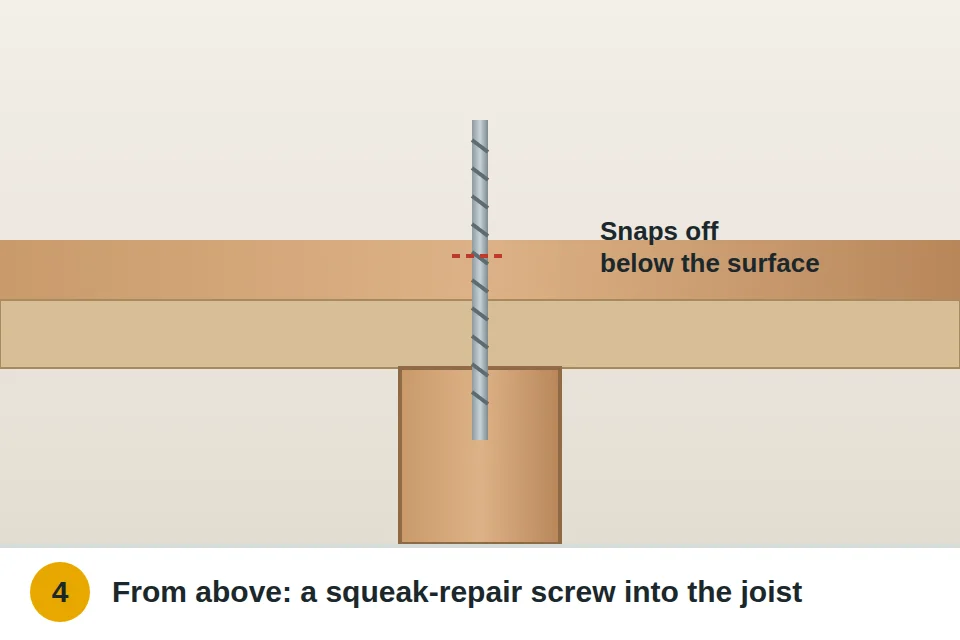
- From above: screw it downUse a squeak repair kit that drives a scored screw through the carpet or finish floor into the joist, then snaps off below the surface.
- Test and fillWalk over it. On hardwood, fill the tiny hole with matching wood filler.
Still not fixed?
If a squeak moves around, there may be a gap along a longer stretch of the joist. Glue and screw a short 2x4 block along the joist, snug against the subfloor.
Seasonal squeaks sometimes fade when humidity returns. A humidifier in winter can help hardwood floors.
What a pro charges: A handyman or flooring pro typically charges $150–$400 to fix squeaks, depending on access.
Common questions
Why does my floor squeak in winter?
Wood dries and shrinks in dry winter air, which opens small gaps that rub. Squeaks often ease when humidity returns.
Can I fix a squeaky floor under carpet?
Yes. Squeak repair kits drive a special screw through the carpet into the joist and snap off below the surface.