Fix a dented drywall corner
Outside corners on drywall are protected by a strip of metal or vinyl called corner bead, and a bump from furniture or a vacuum can dent it or knock it loose. A shallow ding just needs a little joint compound. If the bead is bent or pulling away, cut out the bad section, nail in a new piece and finish it with compound.
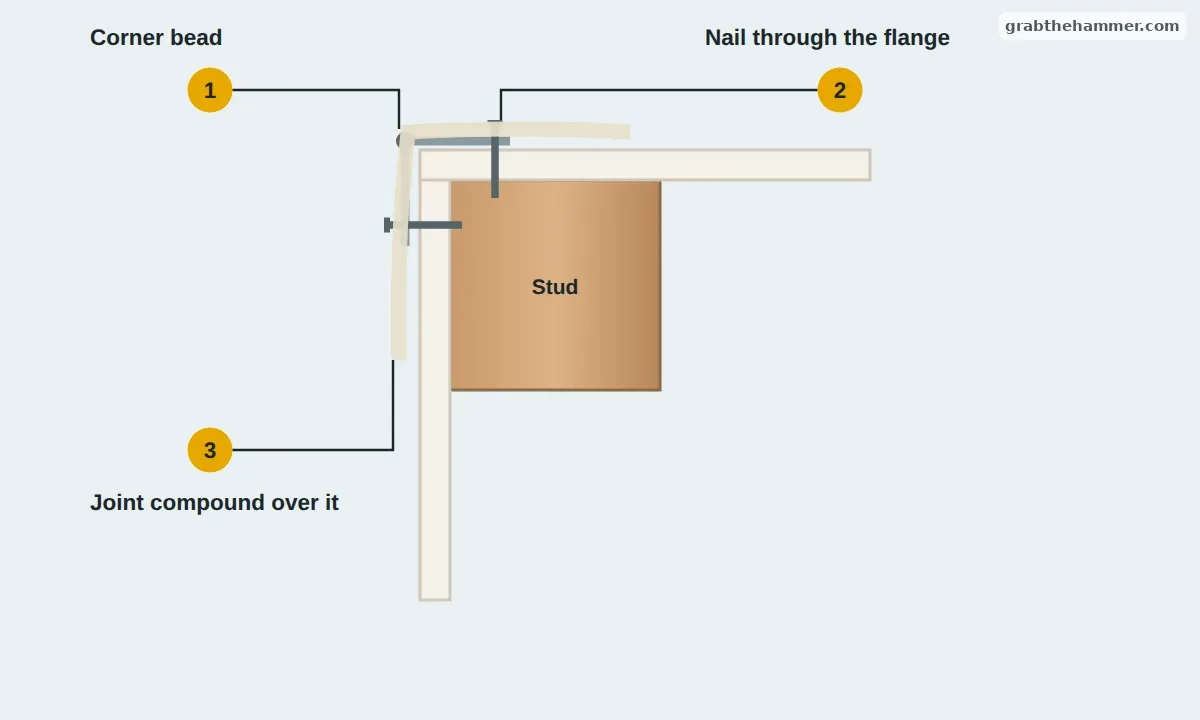
What a corner bead is
Corner bead is an L-shaped strip that runs down each outside corner, fastened through its flanges and covered in joint compound. It gives the corner a straight, hard edge.
Most damage is either a dent in the compound, a dent in the bead itself, or a bead that's come loose and cracks the compound around it. Each takes a slightly different fix.
Why corners get damaged
Bumps dent the bead or the compound.
The bead pulls away and cracks the compound.
Movement cracks the compound along the bead.
It chips easily.
| What you see | Likely cause | Fix |
|---|---|---|
| Shallow dent, bead straight | Damaged compound | Fill with compound. |
| Crack along the corner | Loose bead | Refasten, then patch. |
| Bent or crushed metal | Damaged bead | Cut out and replace. |
| The corner is soft and crumbly | Crushed drywall | Cut out and patch the drywall. |
Let's fix it
- Look at the damageIf only the compound is dented and the bead is straight and solid, scrape off any loose compound and skip to the last step. If the bead is bent, cracked or loose, it needs to be fixed or replaced.
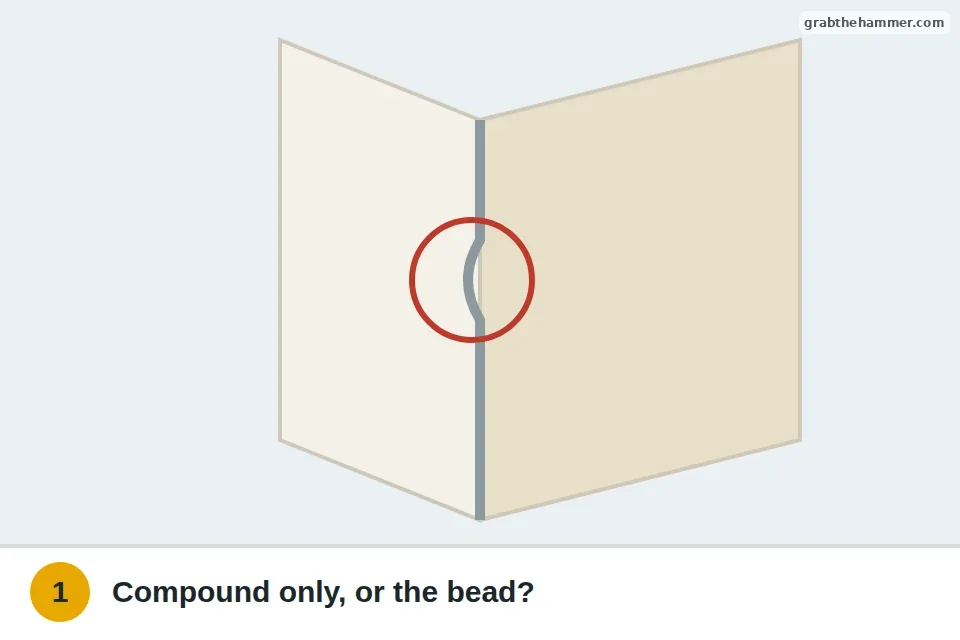
- Refasten a loose beadIf the bead has only pulled loose, drive drywall nails or screws through its flanges into the stud behind, a couple of inches above and below the loose spot, on both sides of the corner. Set each head just below the surface without tearing the paper.

- Cut out a bent sectionFor a bent bead, score the compound along both flanges with a utility knife. Cut across the bead with tin snips above and below the damage, and pull the damaged piece off. Wear gloves; the cut edges are sharp.

- Nail in a new pieceCut a new piece of bead to fit the gap, set it tight to the corner so it lines up with the old bead, and fasten it through the flanges into the framing every 6 to 8 inches on both sides. Lay a straightedge along the corner to check that it's straight.

- Mud, sand and paintSpread joint compound over the flanges with a 6-inch knife, using the bead's edge as a guide. Let it dry, then add one or two more thin coats, feathering them wider. Sand lightly, prime and paint.

If it cracks again
If the compound keeps cracking along the corner, the bead is likely loose. Refasten it before you patch again.
In a spot that gets hit often, like a hallway, a clear corner guard screwed or stuck over the corner protects it.
What a pro typically charges (a rough estimate; prices vary by area): A drywall pro or handyman typically charges $100–$250 to repair a corner, more for a full-height bead.
Related wall jobs
Drywall corner questions
What is corner bead?
A metal or vinyl strip along outside drywall corners that gives them a straight, sturdy edge.
Can I just fill a dented corner with compound?
If the bead is straight and solid, yes. If the metal is bent or loose, fix it first or the patch will crack.
Do I use nails or screws for corner bead?
Either works for metal bead. Vinyl and paper-faced beads are often attached with spray adhesive, staples or compound; follow the product's directions.
How many coats of compound does a corner need?
Usually two or three thin coats, each a little wider, sanded smooth before priming.
Still stuck? Ask us
Tell us what you're seeing and what you've tried. We read every question, and the ones that will help other people get answered on this page.