Fix a crack in drywall
A thin crack running from the corner of a door or window, or along a seam in the ceiling, is usually the house moving a little with the seasons. Filling it with compound alone tends to crack again. Taping it, with mesh or paper tape under thin coats of joint compound, bridges the gap so it stays closed.
Why cracks come back
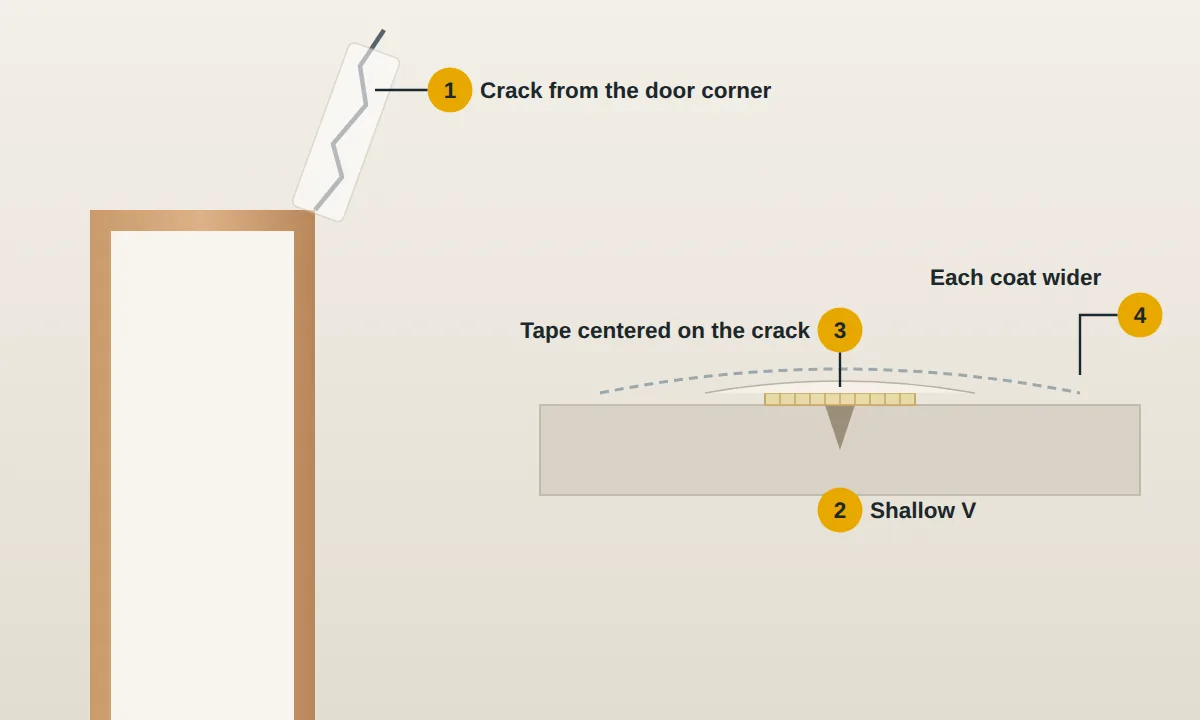
Drywall goes up in sheets, and the joints between them are covered with tape and compound. Cracks show up where there's stress: at the corners of doors and windows, where the framing flexes, and along seams in ceilings. A crack that opens and closes a little each season needs tape, not just filler, because the tape holds the two sides together.
Most hairline cracks are cosmetic. Cracks that are wide, growing, uneven across the wall, or that come with sticking doors or sloping floors are different, and worth having looked at before you patch.
What cracks drywall
Wood framing shrinks and swells with humidity, stressing the joints.
Newer houses settle for a few years, often cracking at door and window corners.
Seams finished without enough compound under the tape can crack along the joint.
Cracks with stains, sagging or other symptoms need the cause fixed first.
| What you see | Likely cause | What to do |
|---|---|---|
| Hairline crack from a door or window corner | Seasonal movement or settling | Tape and patch. |
| Straight crack along a ceiling or wall seam | Joint tape letting go | Cut out loose tape and retape. |
| Wider than 1/8 inch, or growing | Ongoing movement | Mark it and have it checked. |
| A crack with water stains | A leak | Fix the leak first. |
Let's fix it
- Open the crack slightlyRun a utility knife along the crack to make a shallow V and remove any loose bits. That gives the compound something to grip.

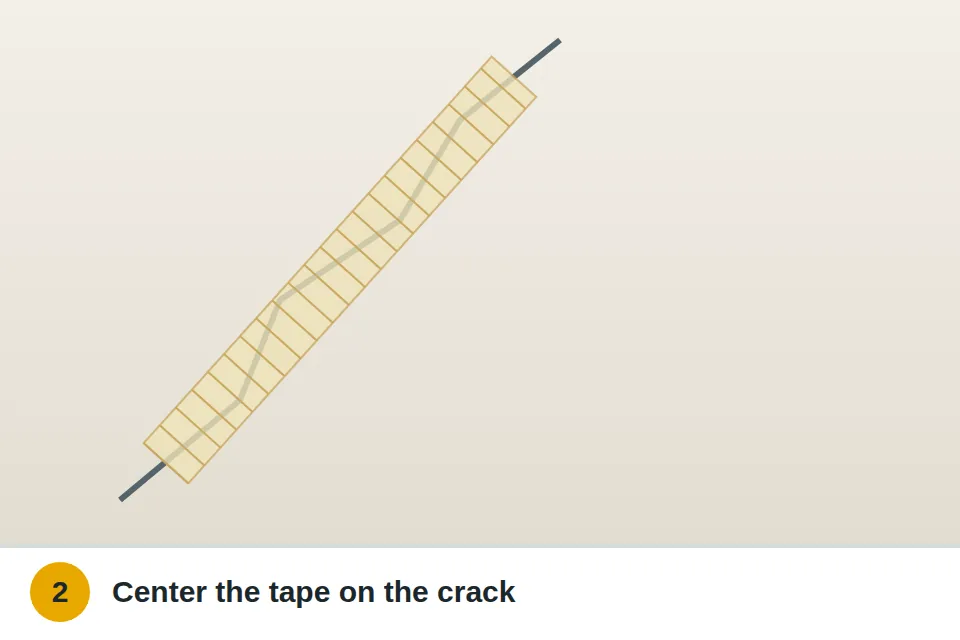
- Tape over itCenter self-adhesive mesh tape over the crack. For paper tape, spread a thin layer of compound first, press the tape into it, and smooth it flat with the knife so there are no bubbles.
- Put on a thin coatSpread a thin coat of compound over the tape, reaching about 2 inches past it on each side. Let it dry completely, usually overnight.

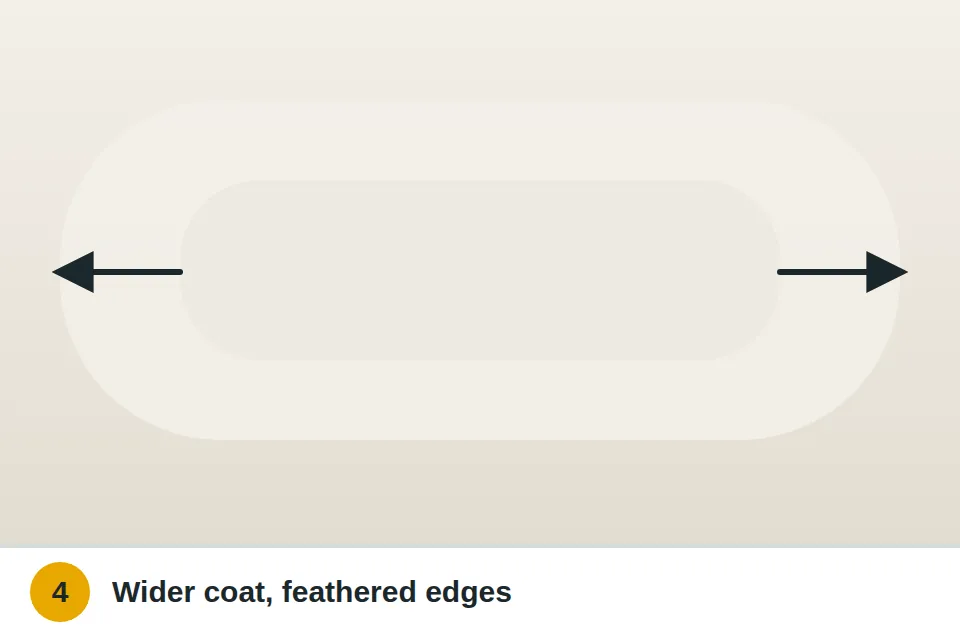
- Add a wider coatScrape off any ridges, then apply a second coat a few inches wider than the first, feathering the edges out to nothing. Add a third thin coat if you can still see the tape.
- Sand, prime and paintSand lightly until it feels smooth under your fingertips, prime the patch, then paint. Hold a flashlight flat against the wall; if no edge casts a shadow, you're done.

If the crack reopens
If a taped crack reopens along the same line, the joint is moving more than tape can hold. Have it looked at, especially if doors nearby have started sticking.
If the tape edges show through the paint, add another thin, wide coat and feather it further, then prime and repaint.
What a pro typically charges (a rough estimate; prices vary by area): A drywall contractor or handyman typically charges $150–$400 to repair and repaint a few cracks. A structural assessment costs more.
Related wall jobs
Drywall crack questions
Why does my drywall crack keep coming back?
Filling it with compound alone doesn't hold the two sides together. Tape bridges the crack so movement doesn't reopen it.
Mesh tape or paper tape?
Self-adhesive mesh is easier for small cracks on flat walls. Paper tape is stronger and better for inside corners, but it has to be bedded in compound.
Can I use caulk on drywall cracks?
Paintable caulk works where trim meets a wall. On a flat wall it stays soft and tends to show through paint.
Are cracks in the ceiling dangerous?
Most are cosmetic. A crack with sagging, water stains, or cracks spreading across rooms is worth having inspected.
If I rent, should I fix a crack myself?
Tell your landlord instead. Cracks can point to building issues they'll want to know about, and repairs are usually theirs.
Still stuck? Ask us
Tell us what you're seeing and what you've tried. We read every question, and the ones that will help other people get answered on this page.