Kitchen & laundry

Fridge running constantly? Clean the coils

A fridge that seems to run all the time may just have dusty coils. Those coils release the heat the fridge pulls out of the food, and dust holds it in. A coil brush, a vacuum and about 20 minutes usually take care of it. On most newer fridges the coils sit behind the kick plate at the bottom front, so you often don't have to pull the fridge out at all.

A long coil brush pulling dust out from the condenser coils under a refrigerator, with the grille off and the plug pulled
Unplug the fridge first, then brush and vacuum the coils under the front grille.
Quick answerUnplug the fridge, pull off the bottom grille, and brush and vacuum the coils. Once or twice a year is usually enough.
Worth checking firstFind the coils before you buy a brush. Most newer fridges have them behind the kick plate at the bottom front; older ones have them on the back. Unplug the fridge first, and never bend the thin fins.

Good to knowRenter-friendlyWinter checklist

Easy20–30 min$0–12
Refrigerator with front grille removed showing condenser coils, fan and a long coil cleaning brush
How to clean refrigerator coils: pop off the front grille (2), then brush and vacuum the condenser coils (1) and fan (4) with a long coil brush (3).

How a fridge gets rid of heat

A fridge keeps food cold by moving heat out of the box and into the room. That heat leaves through the condenser coils, usually tucked underneath behind the front grille, or on the back of older models. When dust builds up on them, the heat can't get out easily, so the compressor runs longer to keep up.

Why it runs so much

Dirty condenser coils

Dust acts like a blanket on the coils, so heat can't escape.

A leaky door gasket

Warm air sneaks in, and the fridge runs to make up for it.

The temperature is set too cold

Colder than needed means more running time.

A failing fan or thermostat

If it runs nonstop and still isn't cold, a part may be failing.

Where are your fridge coils?
What you seeWhere to clean
Grille at the bottom frontCoils are underneath. Pop off the grille and brush them.
Black grid on the backCoils are on the back. Pull the fridge out and brush them.
No visible coils, back is smoothCoils are built into the sides. There's nothing to clean, just keep the sides clear.
Unplug it firstAlways unplug before reaching near the fan.

Clean the coils

0 of 5 done
  1. Unplug the fridgePull it out a bit if you need access to the plug. Your food will be fine for this short job.
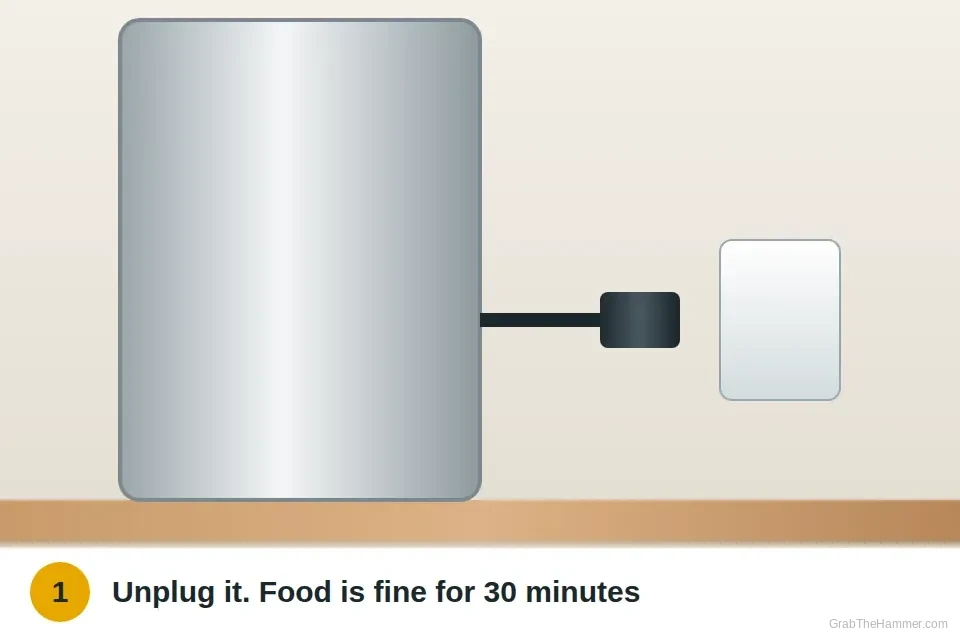
    Refrigerator pulled slightly from the wall with its plug removed from the outlet
  2. Find the coilsPop off the front grille at the bottom (it pulls straight off) or check the back of the fridge.
    Something went wrong?
    • You can't find the coils Check the manual. On many newer fridges they're sealed inside and don't need cleaning; only the front grille area does.
    Front grille popped off the bottom of a refrigerator revealing condenser coils underneath
  3. Brush and vacuumSlide the coil brush between the coils to loosen dust, and vacuum as you go. Work gently; the fins bend easily.
    Long skinny coil brush sliding between refrigerator coils while a vacuum crevice tool catches the dust
  4. Dust the fanIf you can see the condenser fan, brush its blades gently.
    Condenser fan blades wiped gently with a brush, next to the coils
  5. Put it back and plug it inSnap the grille back on, push the fridge back leaving an inch or two of space behind it, and plug it in.
    Grille snapped back on and the fridge pushed back with an inch or two of space behind it

Watch it done

How To Clean Refrigerator Coils in 5 StepsBy AppliancePartsPros on YouTube. Their method may vary a little from ours.
Watch on YouTube
How you'll know it's fixed
  • No dust visible on the coils or fan blades
  • The fins are straight, not bent
  • The grille is back on with an inch or two of space behind the fridge
  • The fridge runs and stays cold after plugging it back in

Running but not cold? Check the condenser fan and inside vents.

If it still runs all the time

Close the door on a dollar bill. If it slides out easily, the gasket isn't sealing. Clean it with warm soapy water, or replace it.

If it's running but not cold, check that the condenser fan spins and the vents inside aren't blocked by food. If both are fine, call a technician.

How often to do itDo this every 6 to 12 months, or every 3 months with shedding pets. Set a reminder when you change your HVAC filter.
Call for repair ifThe fridge runs constantly but doesn't stay cold, makes a loud buzzing or clicking, or builds up frost in the freezer. Those point to a failing part.Fix it yourself or call? Compare the cost →

What a pro typically charges (a rough estimate; prices vary by area): Refrigerator repair visits typically cost $150–$400 depending on the part.

Find appliance repair near you

Something else going on?

Fridge coil questions

How do I know if my fridge coils are dirty?

Visible dust under the front grille, a fridge that runs almost constantly, or warm air and noise from the bottom.

Does cleaning fridge coils save energy?

Yes. Clean coils let the compressor run less, which lowers energy use and reduces wear.

What temperature should my fridge be set to?

The FDA recommends 40°F or below for the refrigerator and 0°F for the freezer. Many people set the fridge around 37°F. Colder than needed just makes it run more.

Could the door seal make my fridge run constantly?

Yes. Close the door on a dollar bill. If it slides out easily, the gasket isn't sealing and needs cleaning or replacing.

How far should my fridge be from the wall?

Leave about an inch or two at the back and sides so heat can escape, or whatever your manual says.

Do I need to empty the fridge first?

No. It's only unplugged for about 20 minutes, and food stays cold if you keep the doors closed.

Where are the refrigerator coils?

Unplug the fridge and pull off the bottom grille to get to them, then brush and vacuum the coils.

Reader reports

Did this fix work for you?

Tell the next person how it went. Your numbers are added to the totals anonymously; tips are read by our team before they appear.

How did it go?
Reader Q&A

Questions from readers

No questions on this guide yet. If you're stuck, ask below. Useful questions and answers get added here for the next person.

Ask a question

We read every question before anything is published, and we never show names or emails. Please leave out personal details. PrivacyAccessibility

About the authors

GrabTheHammer Team

  • No sponsored picks
  • Safety first
  • Tells you when to call a pro

We're a small team of writers and editors who check every guide against manufacturer instructions and common code requirements. Our goal is to help you understand the problem, tackle what you safely can and know when to call a pro.

Checked against: Manufacturer instructions for the parts and products involved, U.S. Food and Drug Administration, U.S. Department of Energy.

How we write and review →
A helpful next stepRefrigerator making noiseLearn which sounds are normal, then level the fridge, check the drain pan, clean the coils and check the fans with the fridge unplugged.