How to find a wall stud (with or without a stud finder)
Hanging a shelf, a TV mount, or a heavy mirror? You want a stud, the vertical wood framing behind the drywall. Here's how to find one reliably, even if you don't own a stud finder.

What's actually going on
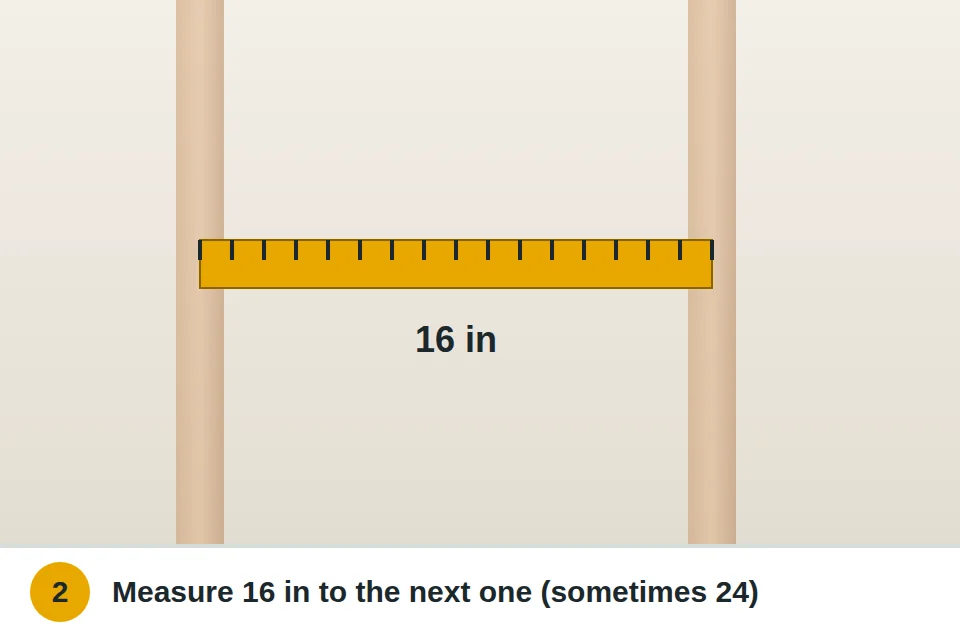
In most homes built in the last 60 years, studs are spaced 16 inches apart, measured center to center. Once you find one, you can usually measure to the next. Drywall is screwed to every stud, so the fasteners, outlets and trim all give clues to where they are.
Why it happens
Near windows, doors and corners, studs are often closer together or doubled up.
Older plaster confuses many electronic stud finders.
Some newer or commercial buildings use steel studs, which need different screws.
Tile or paneling can hide stud finder signals.
Let's fix it
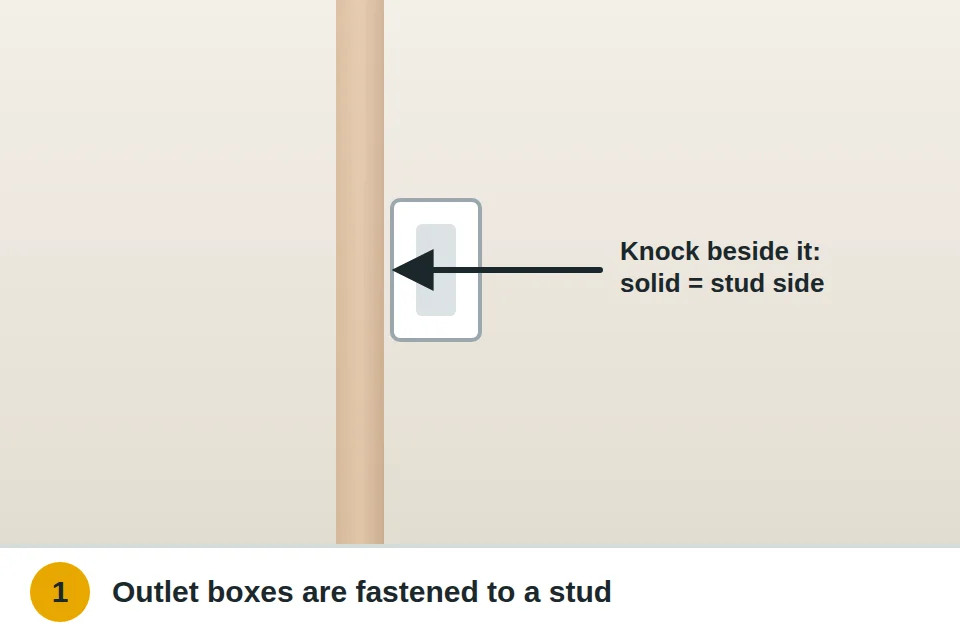
- Start at an outlet or switchElectrical boxes are almost always attached to a stud on one side. Knock on the wall beside it to find which side.
- Measure 16 inchesFrom that stud, measure 16 inches along the wall. Many homes also use 24 inches, so check both.
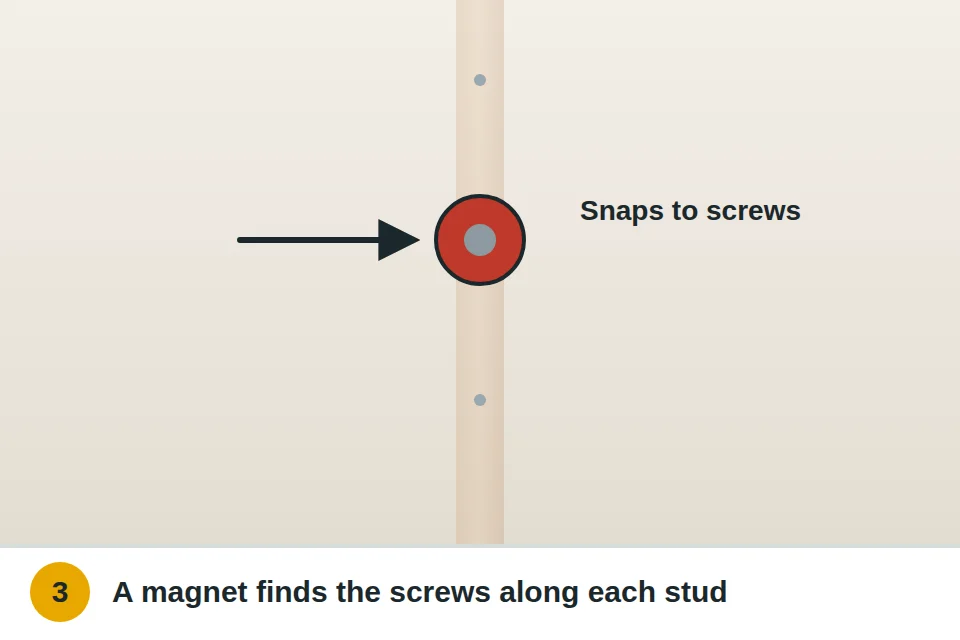
- Use a magnetSlide a strong magnet slowly over the wall. It snaps to the drywall screws, which line up vertically along each stud.
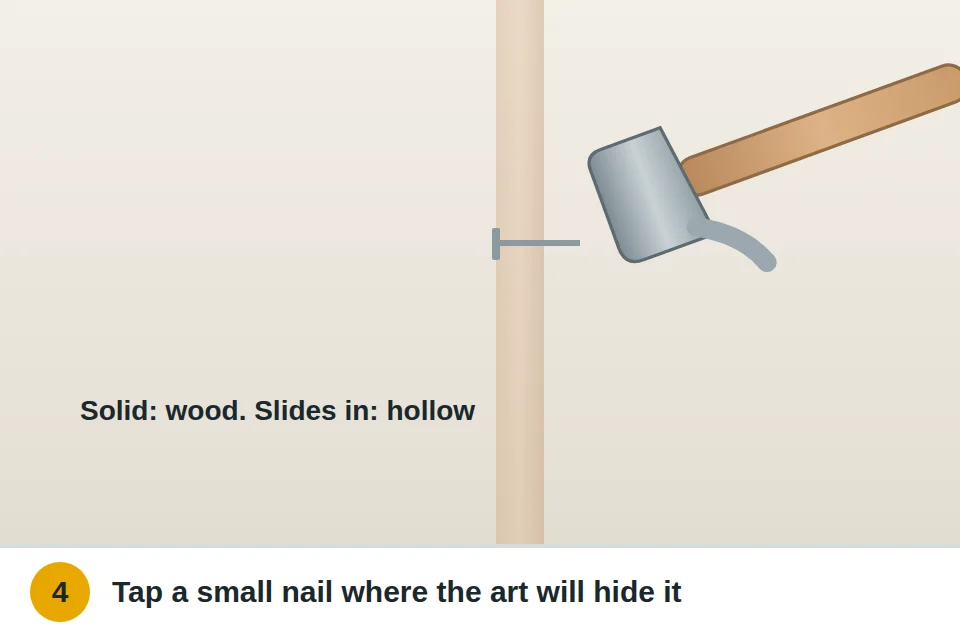
- Confirm with a tiny nailTap a small finish nail through the wall where the picture will cover it. Solid resistance means wood; if it slides through easily, it's hollow.
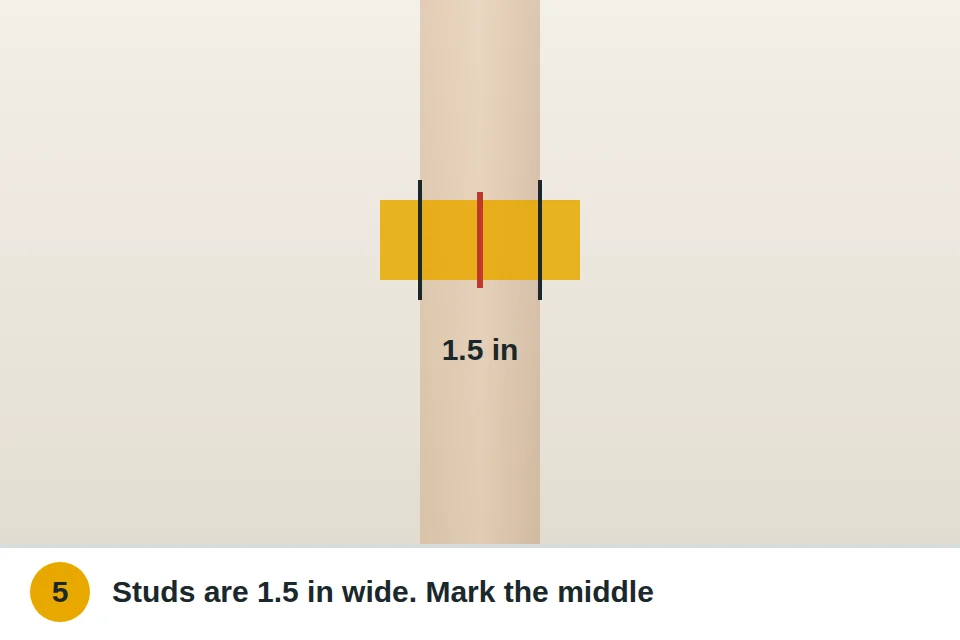
- Mark the centerStuds are 1.5 inches wide. Find both edges and mark the center with painter's tape before drilling.
Still not fixed?
If the stud finder beeps everywhere, recalibrate it by holding it flat on the wall and restarting it in a new spot.
If you still can't find a stud, use a toggle bolt or heavy-duty anchor rated well above your item's weight.
What a pro charges: A handyman visit to mount a TV or shelf typically runs $100–$250.
Common questions
How far apart are wall studs?
Usually 16 inches center to center, sometimes 24 inches, especially in newer homes and garages.
Can I find a stud with my phone?
Some phone apps use the magnetometer to find screws, which works like a magnet. A real magnet is more reliable.