Floors

Fix a peeling vinyl floor tile

A peeling vinyl floor tile usually lifts because the adhesive under it has dried out, got wet, or was never pressed down well. Peel-and-stick tiles and older glue-down tiles can both be fixed: soften the tile with gentle heat, clean out the dirt and old glue, apply fresh vinyl flooring adhesive, and weight it flat while it cures. A cracked or shrunken tile is easier to replace with a spare. Warm it, clean it, glue it, weight it.
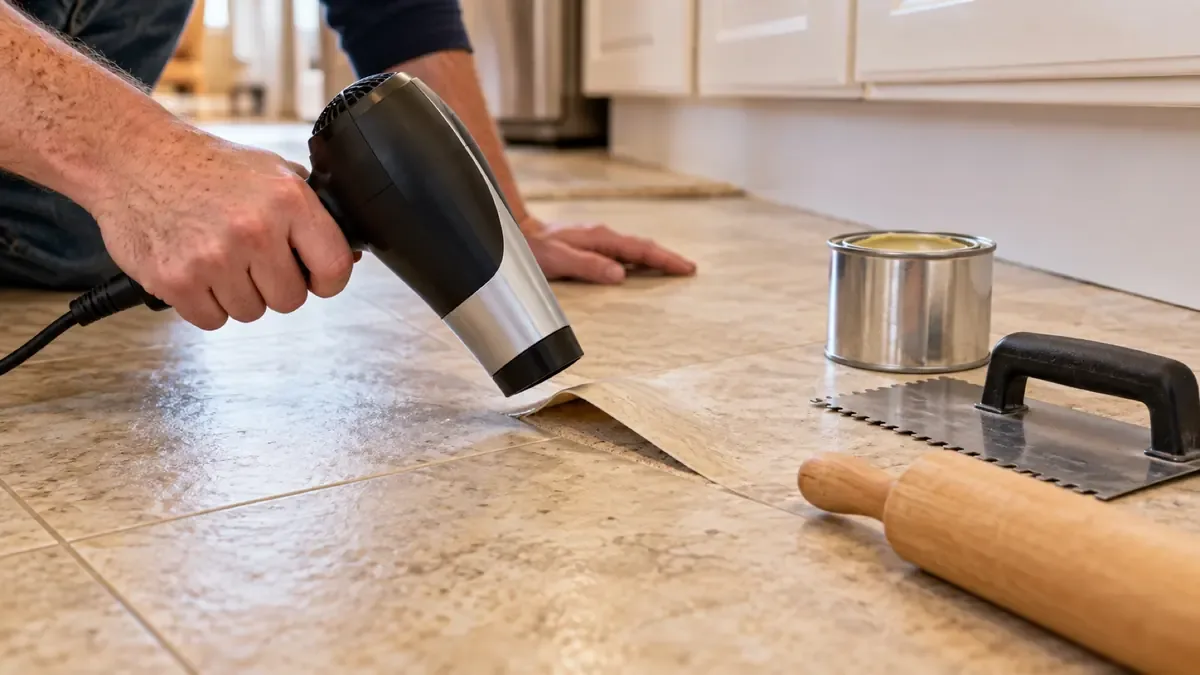
Warming a curled vinyl tile corner with a hair dryer, adhesive and trowel nearby
Gentle heat softens the old tile so it lies flat again on fresh adhesive.
Quick answerCheck the floor's age for asbestos and fix any water first. Warm the tile, clean under it, spread vinyl flooring adhesive, press and roll it flat, and weight it while it cures. Replace tiles that are cracked or shrunken.
Worth checking firstFind out when the floor went in. Older tiles can contain asbestos and shouldn't be scraped until they're tested.
Easy30–60 min, plus cure time$10–40
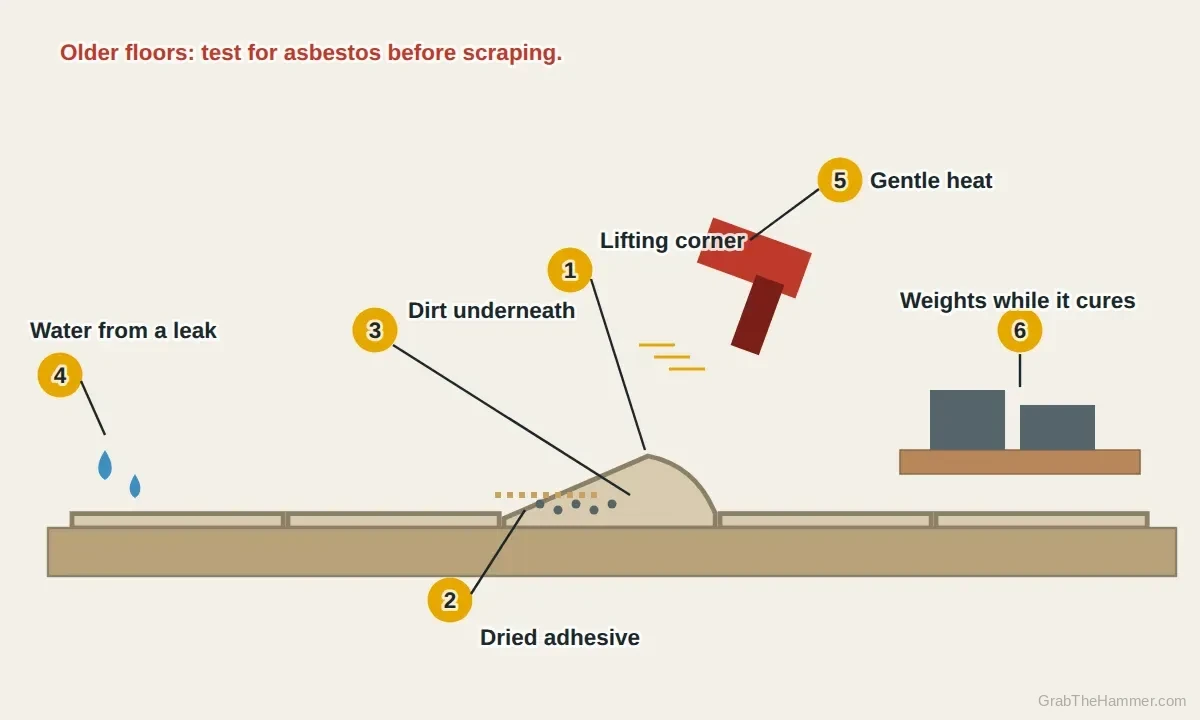
Cross-section of a vinyl tile floor: tiles glued to the subfloor with adhesive, one tile lifting at a corner where the adhesive has dried out, dirt and grit trapped underneath, water coming in from a nearby leak, a hair dryer warming the tile, a fresh layer of vinyl flooring adhesive spread with a notched spreader, a roller pressing it flat, and a board with weights holding it while it cures.
A lifting corner (1) usually means dried adhesive (2), dirt underneath (3) or water from a leak (4). Warm it with gentle heat (5), reglue it, and keep weights on it while it cures (6).

Why vinyl tiles lift

Vinyl tiles are thin squares held to the subfloor by adhesive, either a factory backing on peel-and-stick tiles or a glue spread on the floor. Over time the adhesive dries out and loses its grip, especially at corners and edges where feet and furniture catch.

Water is the other big cause. A leak, mopping with too much water, or moisture coming up through a concrete slab breaks down the glue, and the tile lifts or bubbles. If you don't deal with the water, a reglued tile lets go again. Older tiles can also contain asbestos, so it matters what age the floor is before you scrape or pull anything.

What loosens them

Dried-out adhesive

Old glue loses its grip.

Water

Leaks or heavy mopping break down the glue.

Dirt under the edge

Grit keeps it from sitting flat.

Damp concrete

Moisture rises through the slab.

What's happening?
You noticeLikely causeStart at
One corner or edge liftingDried adhesiveStep 1
Lifting near a sink or toiletWaterStep 1
Tile cracked or shrunkenDamaged tileStep 7
Many tiles lifting at onceMoisture or failed glueStep 1
Asbestos, heat and adhesiveVinyl tile and black adhesive in older homes may contain asbestos; don't sand, scrape, grind or break them until they're tested. Use heat on the lowest setting and keep it moving. Ventilate the room and wear gloves when using flooring adhesive.

Let's fix it

0 of 7 done
  1. Check the age and the causeIf the floor may be from before the 1980s, the tile or the black adhesive under it could contain asbestos. Don't sand, scrape or break it; have a sample tested or call a pro. On newer floors, look for why it lifted: a leak nearby, water from mopping, or a damp concrete floor. Fix the water first.
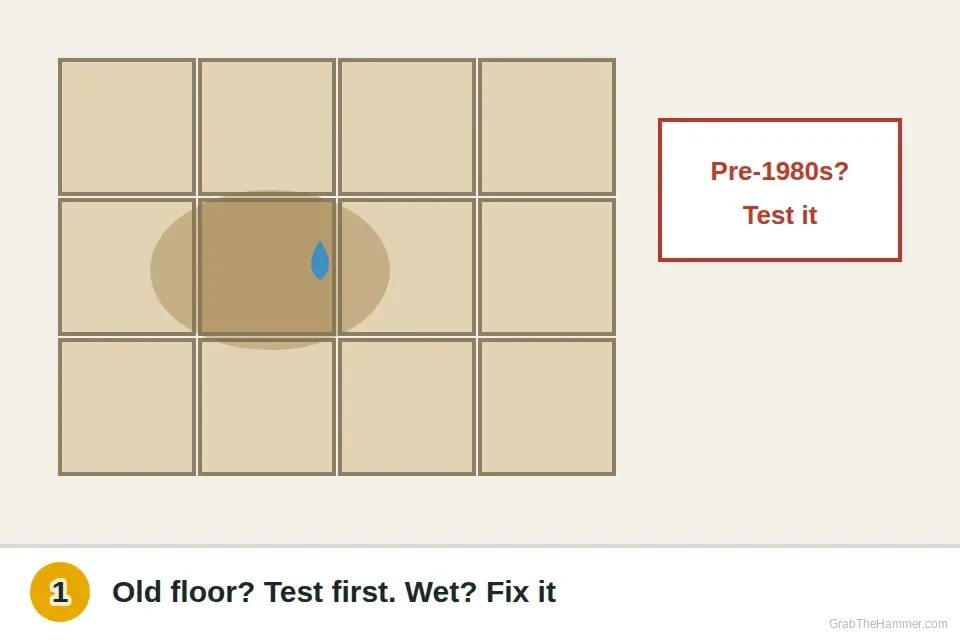
    Lifted vinyl tile near a toilet with a water stain around it, and a note that tiles from before the 1980s should be tested for asbestos before scraping
  2. Soften the tileWarm the lifted tile with a hair dryer or a heat gun on its lowest setting, keeping it moving a few inches above the surface. Warm vinyl turns flexible, so you can lift the loose edge farther without cracking it. Don't overheat it until it bubbles or melts.
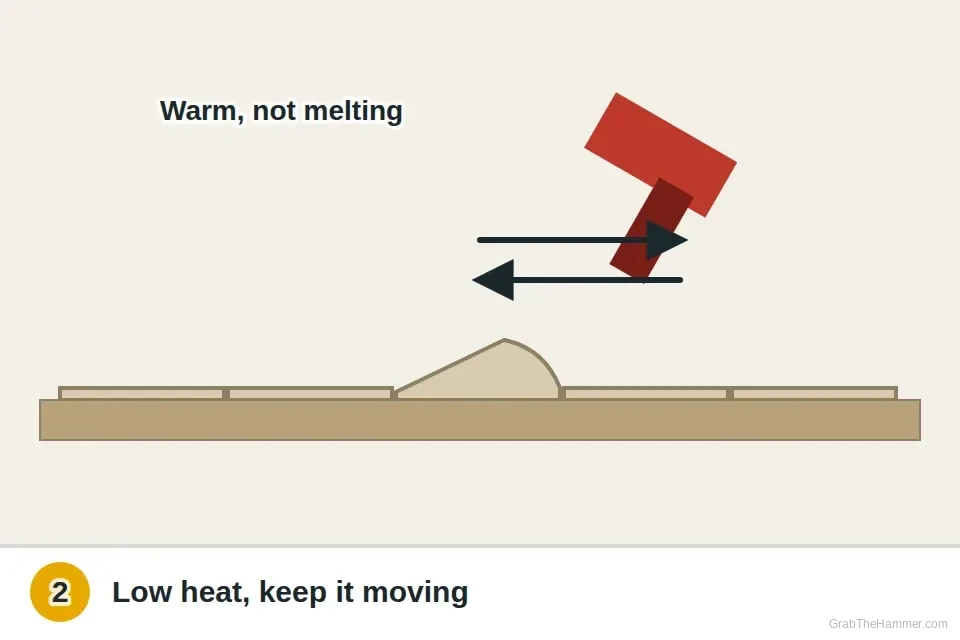
    Hair dryer held a few inches above a lifted vinyl tile corner, moving back and forth to warm it until it turns flexible
  3. Clean under itLift the loose part with a putty knife and vacuum out the dirt and grit. Scrape off loose, dried adhesive so the tile can sit flat. Let the area dry completely if it was damp.
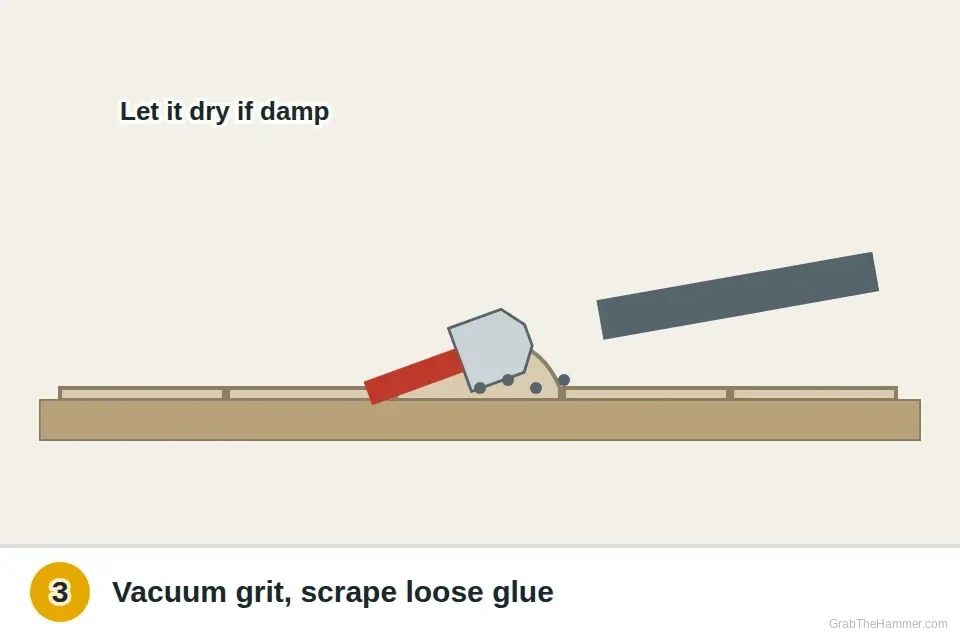
    Putty knife holding the warm tile edge up while a vacuum nozzle removes grit and old flaking adhesive from underneath
  4. Spread fresh adhesiveSpread a thin, even layer of vinyl flooring adhesive on the subfloor under the lifted area with a notched spreader, following the product's directions. Some adhesives need to sit open for a few minutes until they're tacky. For just a lifted corner or edge, a seam adhesive in a small applicator works too.
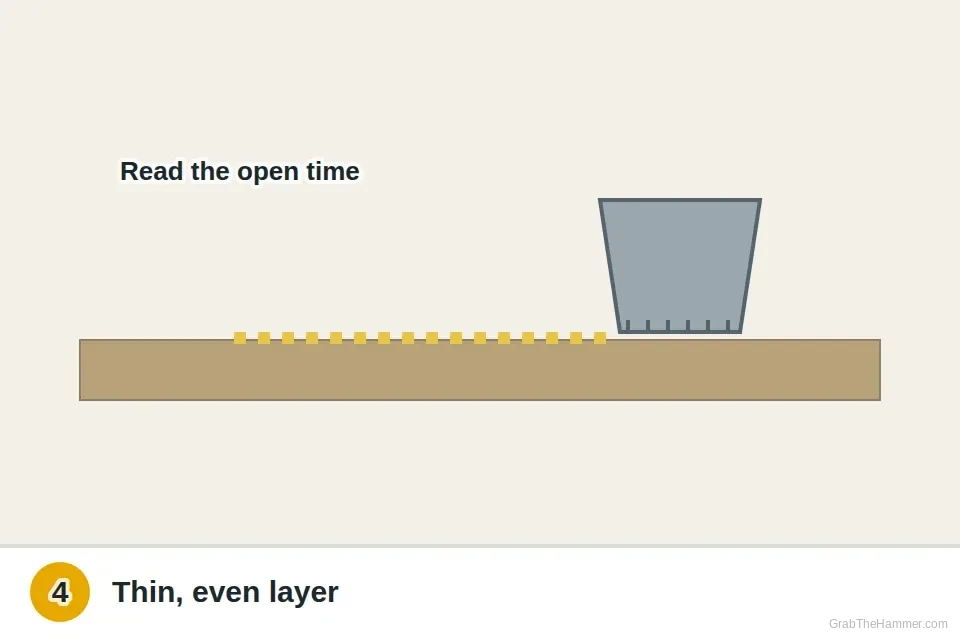
    Notched spreader spreading a thin, even layer of vinyl flooring adhesive on the subfloor under the lifted tile
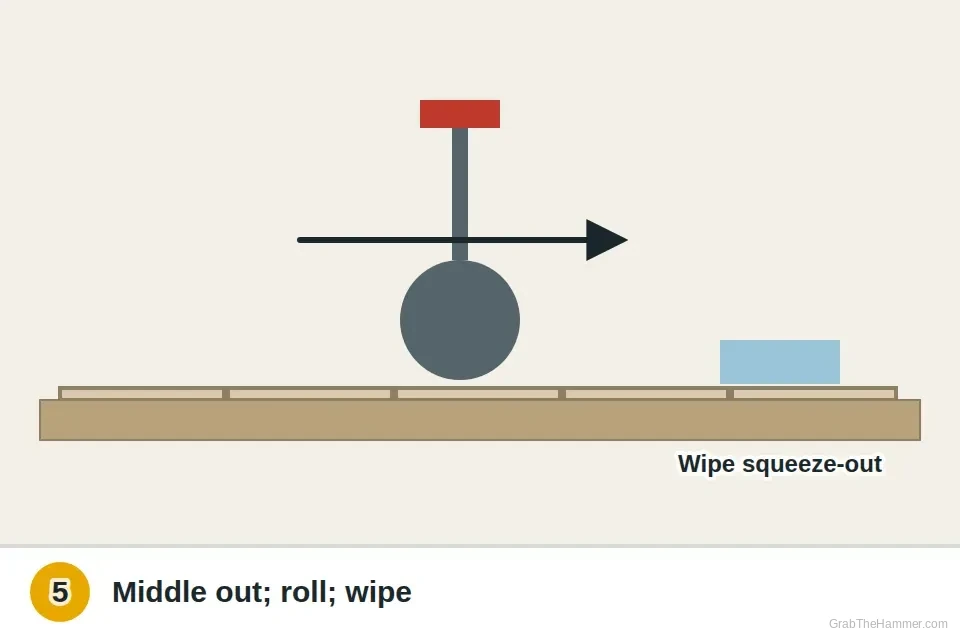
  5. Press it downLay the warm tile back down and press it from the middle out to push out air. Roll it firmly with a floor roller or rolling pin. Wipe any adhesive that squeezes out at the edges right away with a damp rag before it dries.
    Something went wrong?
    • Adhesive squeezed up between tiles Wipe it right away with a damp rag; dried adhesive is hard to remove.
    Tile pressed down from the middle outward, a floor roller rolling over it, and squeeze-out wiped from the edge with a damp rag
  6. Weight it while it curesSet a flat board over the tile and stack heavy books or weights on it. Leave it for the cure time on the adhesive, often overnight. Keep foot traffic off it until then.
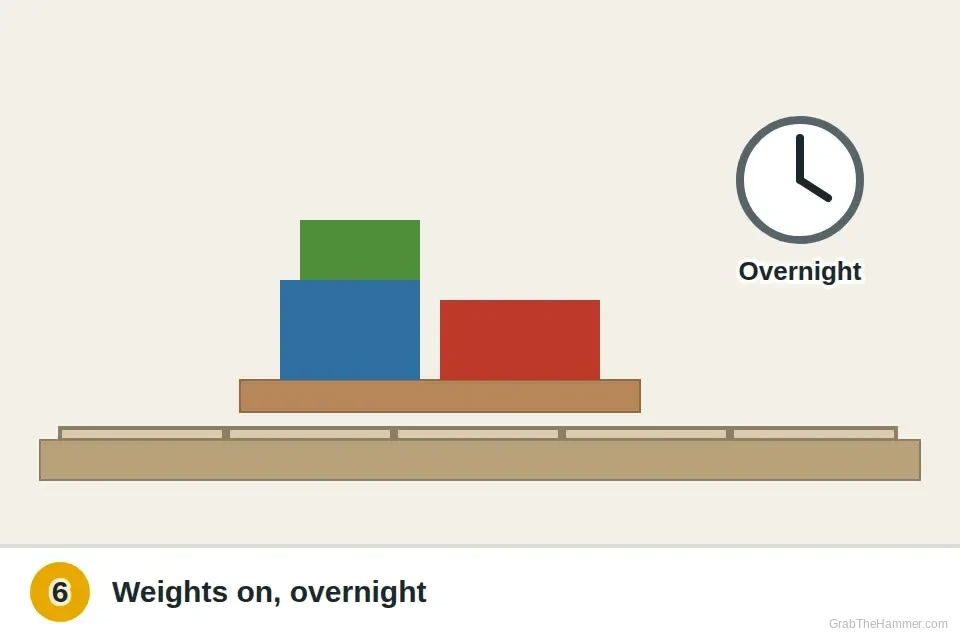
    Flat board laid over the reglued tile with heavy books stacked on it, left overnight with no foot traffic
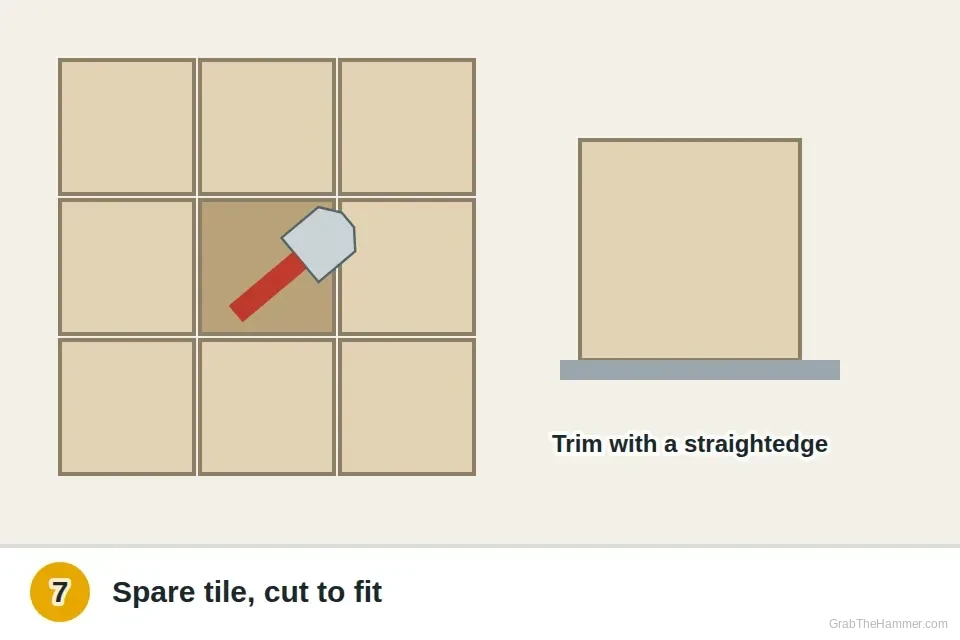
  7. Replace a damaged tileIf the tile is cracked, shrunken or curled too badly to lie flat, warm it and lift it out with a putty knife, starting at a cracked spot or an edge. Scrape and clean the spot, test-fit a spare tile, trim it if needed with a utility knife and straightedge, then glue, roll and weight it the same way. Keep leftover tiles from the original floor for this.
    Something went wrong?
    • The spare tile doesn't match Use a tile from a closet or under an appliance, and put the new one there.
    Cracked vinyl tile lifted out with a putty knife starting at a cracked spot, the spot scraped clean, and a spare tile trimmed with a utility knife and straightedge before gluing

Watch it done

Replacing-Repairing Vinyl Floor TileBy mazerwholesale on YouTube. Their method may vary a little from ours.
Watch on YouTube
How you'll know it's fixed
  • The tile lies flat
  • No lifted corners
  • No adhesive on the surface

Lifting again? Look for moisture under the floor.

If it's planks or ceramic

If it's a vinyl plank floor with gaps between planks, there's a separate guide for closing gaps in a laminate or vinyl plank floor.

If a ceramic tile is cracked instead, we have a guide for replacing a cracked floor tile.

Keep spare tilesKeep a few spare tiles from your floor in a closet. A new box from the store rarely matches an older floor exactly.
Renting?If you rent, report peeling tiles, especially in older buildings.
Call a flooring pro ifMany tiles are lifting at once, the floor is soft or the subfloor is damaged, there's moisture coming up through a concrete slab, or the floor may contain asbestos.Fix it yourself or call? Compare the cost →

What a pro typically charges (a rough estimate; prices vary by area): A flooring installer typically charges $75–$200 to reglue or replace a few vinyl tiles. Asbestos testing or removal costs extra.

Find a flooring contractor near you

Something else going on?

Peeling vinyl tile questions

How do I fix a peeling vinyl tile?

Warm it, clean under it, spread vinyl flooring adhesive, press and roll it flat, and weight it while it cures.

Can I use regular glue on vinyl tile?

Use an adhesive made for vinyl flooring. Other glues may not bond or stay flexible.

Why do my vinyl tiles keep lifting?

Often moisture, from a leak or a damp concrete floor, or adhesive that's dried out.

Could old vinyl tile contain asbestos?

Older tiles and black adhesive can. Have them tested before scraping or sanding.

How do I reglue vinyl tile?

Warm the tile, clean under it, spread vinyl flooring adhesive, press and roll it flat, and weight it while it cures.

Reader reports

Did this fix work for you?

Tell the next person how it went. Your numbers are added to the totals anonymously; tips are read by our team before they appear.

How did it go?
Reader Q&A

Questions from readers

No questions on this guide yet. If you're stuck, ask below. Useful questions and answers get added here for the next person.

Ask a question

We read every question before anything is published, and we never show names or emails. Please leave out personal details. PrivacyAccessibility

About the authors

GrabTheHammer Team

  • No sponsored picks
  • Safety first
  • Tells you when to call a pro

We're a small team of writers and editors who check every guide against manufacturer instructions and common code requirements. Our goal is to help you understand the problem, tackle what you safely can and know when to call a pro.

Checked against: Manufacturer instructions for the parts and products involved.

How we write and review →
A helpful next stepClose gaps in a laminate or vinyl plank floorTap the planks back together, working from the last tight joint.