Gas stove burner won't light
If a gas stove burner won't light, the stove itself is probably fine. Most of the time the burner cap is sitting crooked, the igniter is wet or dirty, or spilled food is blocking the little holes the gas comes out of. These checks take about 15 minutes and need little more than a toothbrush, a pin and some dish soap. If you smell gas at any point, stop, leave the house and call your gas company from outside. A clicking burner that won't light is usually a cap that's slightly off or an igniter that got wet. Start there.

How a gas burner lights
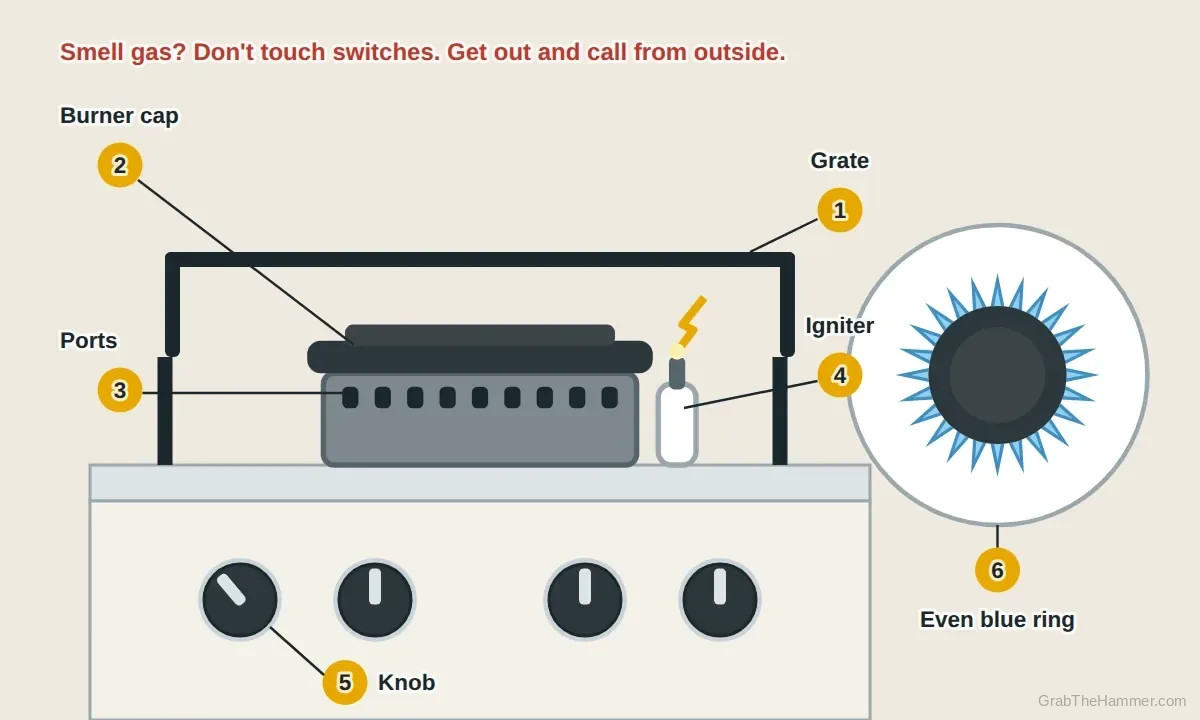
When you turn the knob, gas flows to the burner and an electric next to it sparks. That's the clicking you hear. The spark lights the gas as it comes out of small holes (ports) around the burner, and the metal cap on top spreads the flame into an even ring.
If the gas can't reach the spark, or the spark is weak, you get clicking with no flame. If there's no click at all, the problem is usually power to the igniters, not the burner itself.
Why a burner won't light
The gas doesn't reach the spark.
Common right after cleaning or a spill.
Grease blocks or weakens the spark.
Too little gas comes out to catch.
| You notice | Likely cause | Start at |
|---|---|---|
| Clicks but no flame | Cap, wet or dirty igniter, clogged ports | Steps 2 to 5 |
| No click at all | No power to the igniters | Step 7 |
| Only one burner won't light | That burner's cap, igniter or ports | Steps 2 and 6 |
| Started after cleaning | Water in the igniter | Step 3 |
| Smell gas | Possible leak | Stop. Leave and call |
Let's fix it
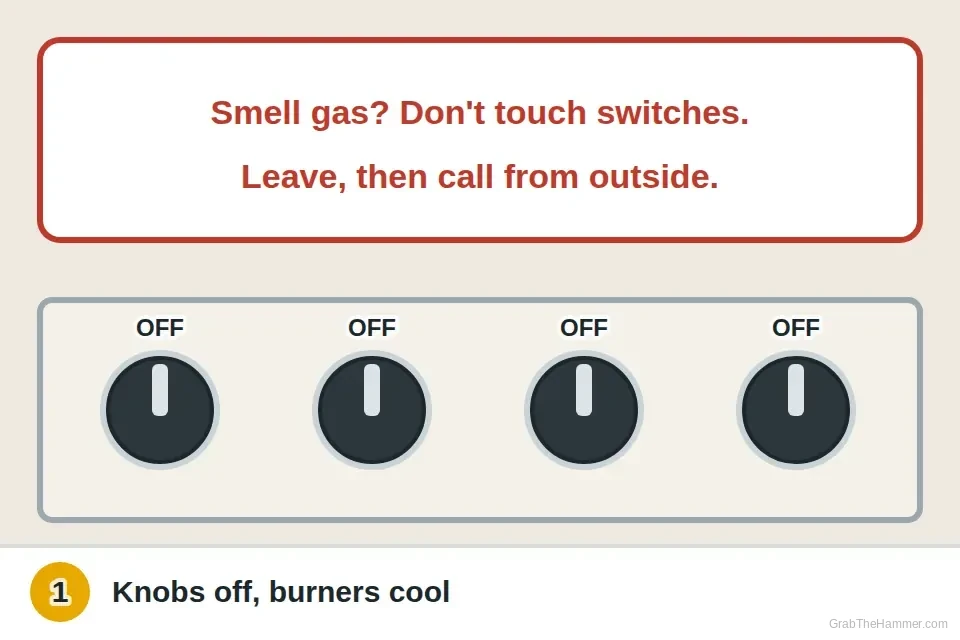
- Turn everything off and let it coolTurn all the knobs to off and wait until the burners are cool to the touch. If you smell gas, don't touch any switches. Leave the house and call your gas company from outside.
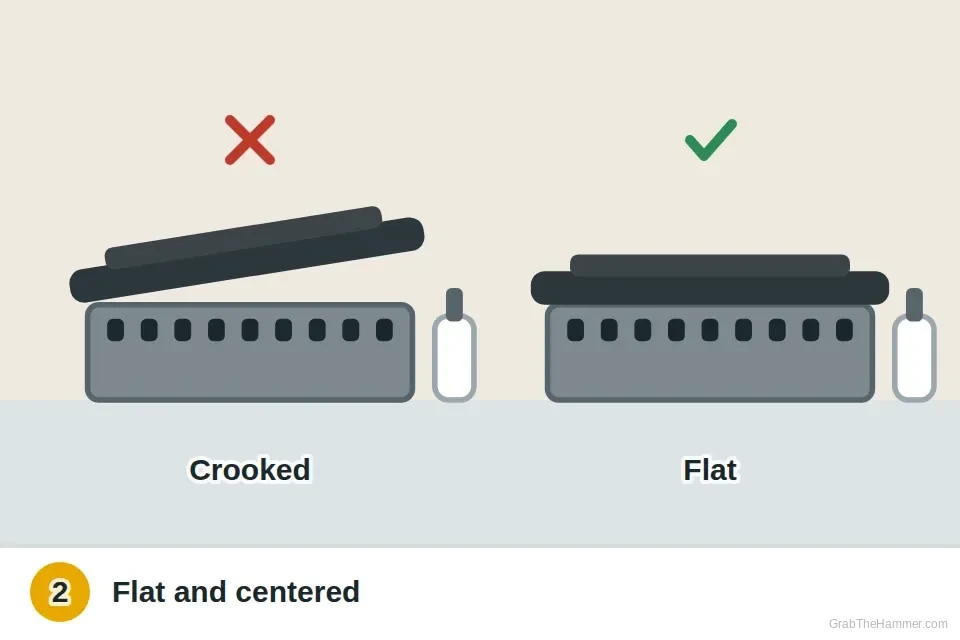
- Seat the burner capLift off the grate. Take the round cap off the burner and put it back so it sits flat and centered. A cap that's even slightly crooked can block the gas from reaching the spark. Many caps only fit one way, so wiggle it until it drops into place.
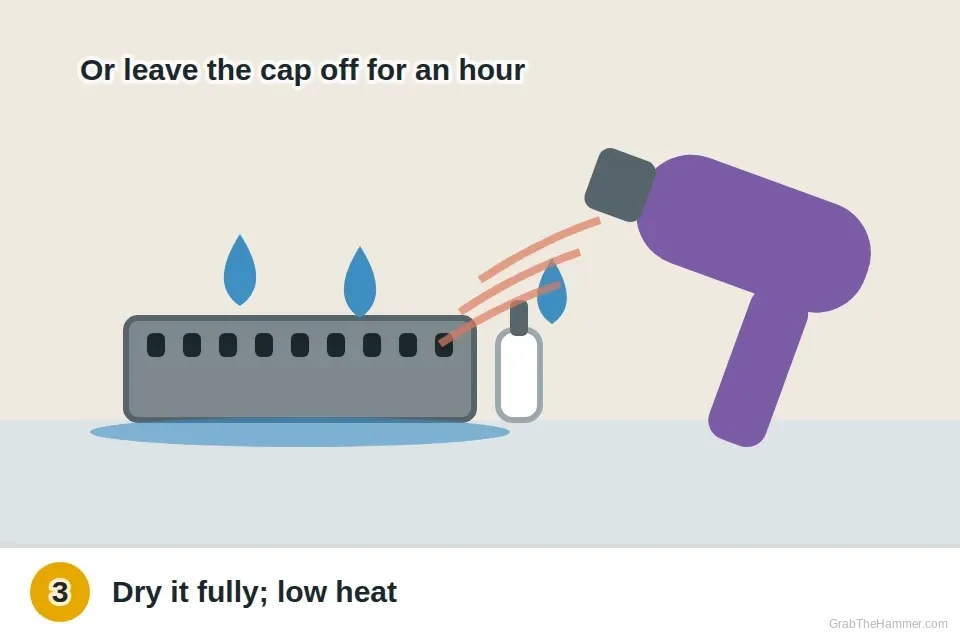
- Dry the burner and igniterIf the burner stopped lighting after cleaning or a spill, water is the usual cause. Pat everything dry with a towel, then leave the caps off for an hour or blow warm air over the area with a hair dryer on low. Wet igniters often start working again once they dry.
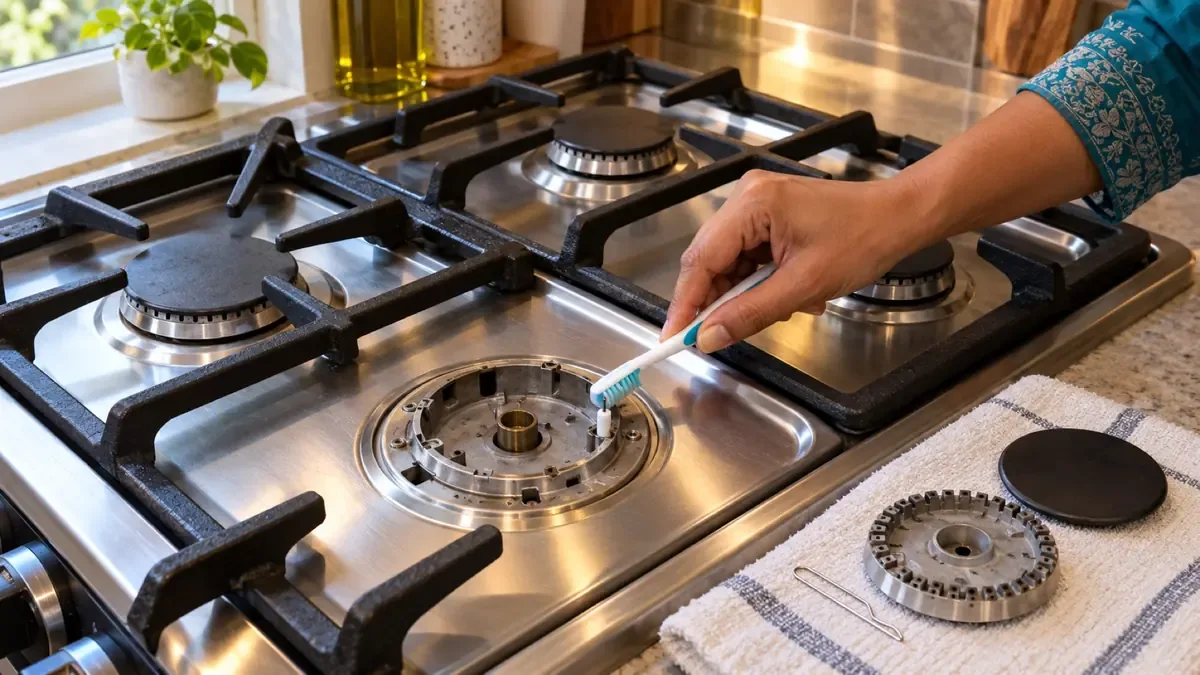
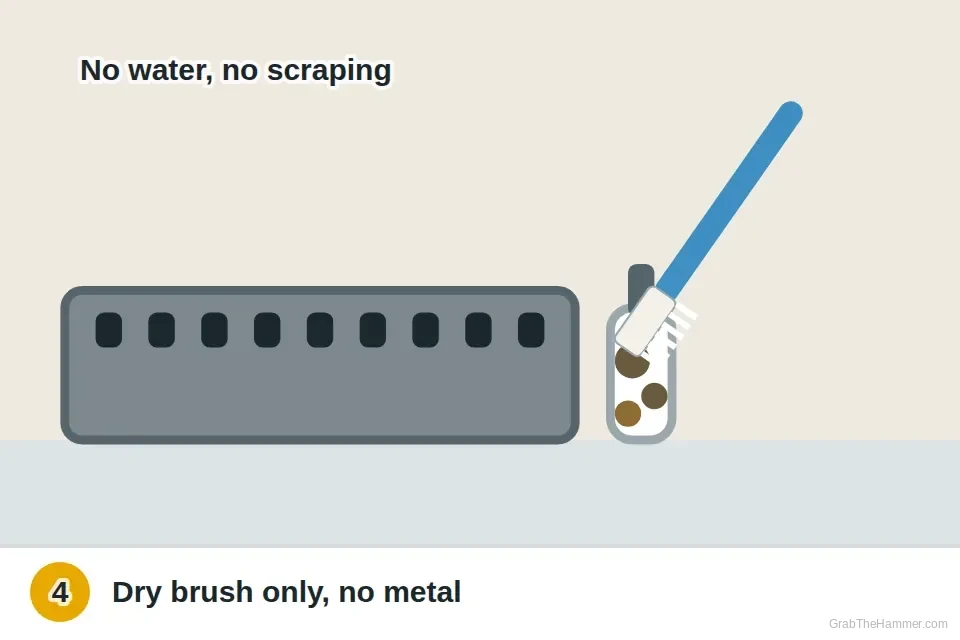
- Clean the igniterFind the small white ceramic nub next to the burner. That's the igniter. Gently scrub it with a dry toothbrush to remove grease and burnt-on food. Don't use water here, and don't scrape it with metal; the ceramic cracks easily.
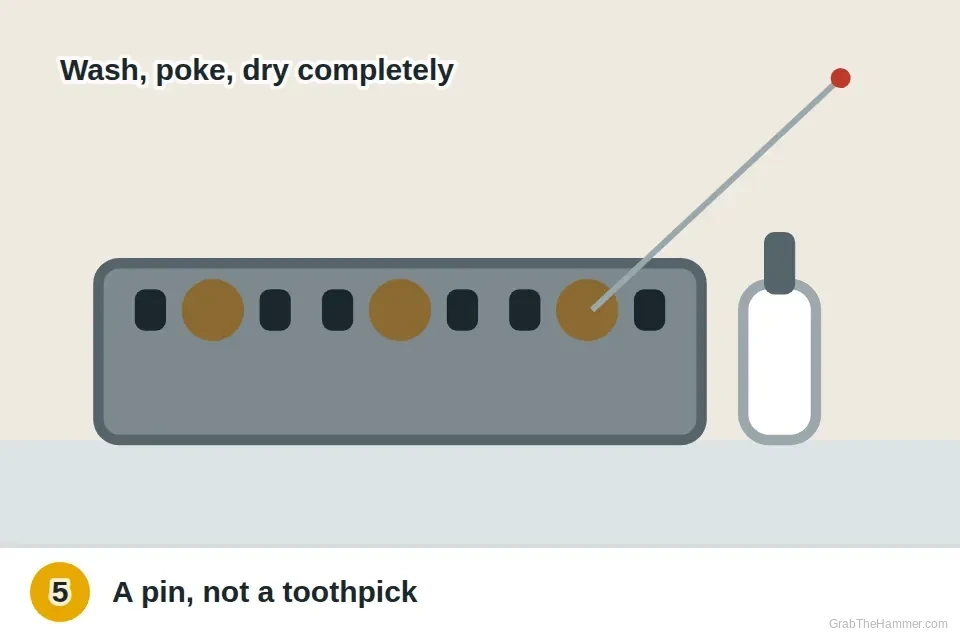
- Clear the burner portsLook at the ring of small holes around the burner head. Wash the burner cap and head in warm soapy water if they're greasy, then poke out any blocked holes with a straight pin. Don't use a toothpick, which can snap off inside. Dry everything completely before putting it back.
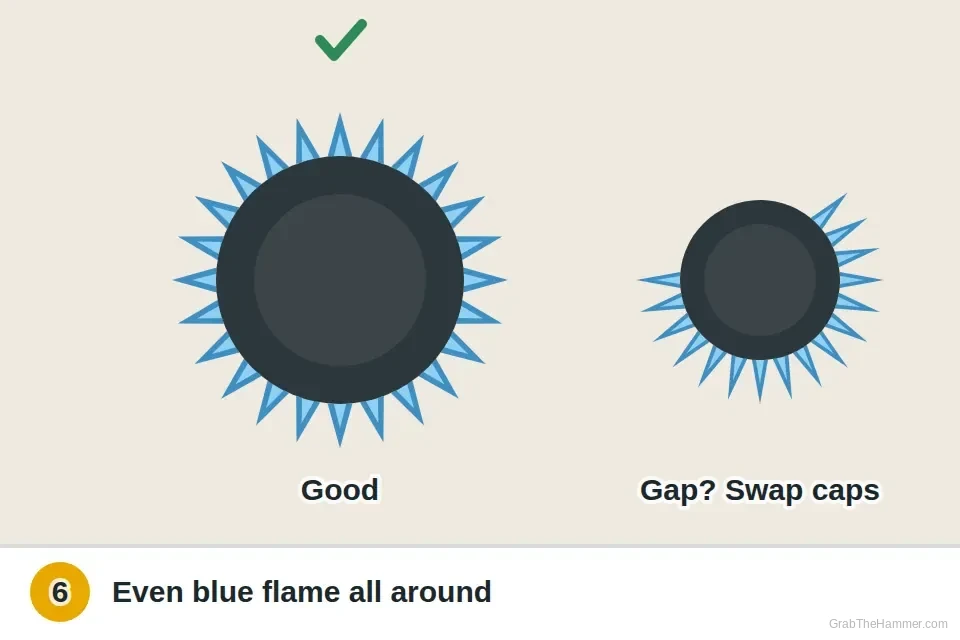
- Test the burnerPut the cap and grate back, turn the knob to light and watch. You should hear clicking and see an even blue flame all the way around within a few seconds. If one burner lights and another doesn't, swap their caps if they're the same size to see whether the problem follows the cap.
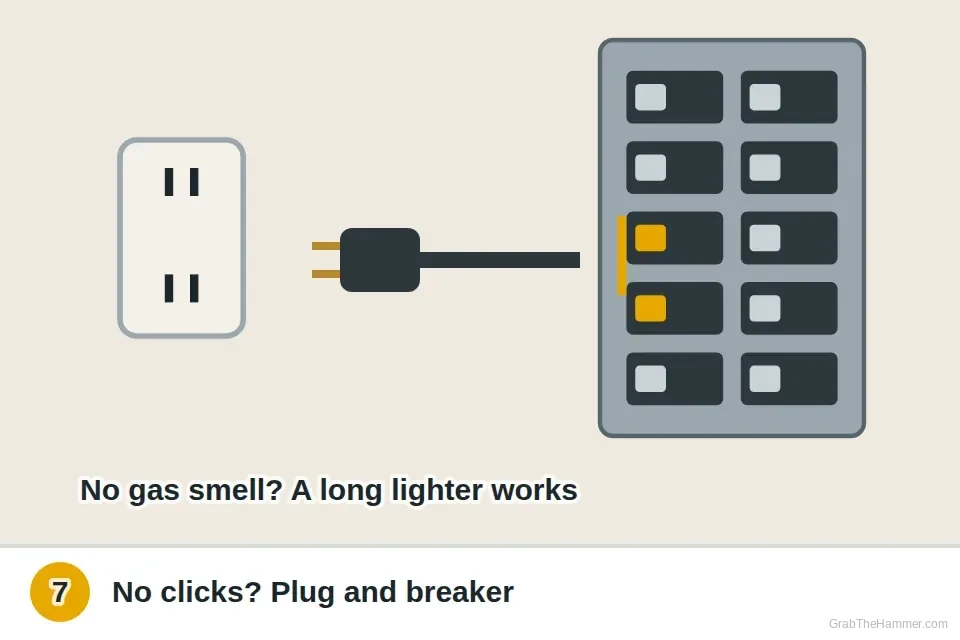
- Check the power if nothing clicksIf none of the burners click at all, check that the stove is plugged in and that its breaker hasn't tripped. With no power to the igniters, you can light a burner by hand, but only if you don't smell gas. Light a long lighter first and hold the flame at the burner ports, then turn the knob to light. If it doesn't catch within a few seconds, turn the knob off and wait a few minutes before trying again.
Watch it done
- The burner lights within a few seconds of clicking
- The flame is an even blue ring all the way around
- The clicking stops once it's lit
Still clicking with no flame after cleaning? The igniter may be cracked; call a repair tech.
If it still won't light
If the igniter clicks but you can't see a spark in a dim kitchen, the igniter or its wire may be cracked. Replacement igniters cost about $15–40, but installing one means taking the cooktop apart, so many people call a pro for it.
If it clicks nonstop even with the burner lit or the knob off, the igniter switch behind that knob may have gotten wet. Let it dry for a day with the knob off. If it keeps clicking, the switch needs replacing.
What a pro typically charges (a rough estimate; prices vary by area): An appliance repair visit usually runs $100–$250. Replacing an igniter or igniter switch typically costs $150–$300 including parts and labor.
Find appliance repair near you