Shower diverter not working
When a shower diverter isn't working, water keeps pouring out of the tub spout after you pull the knob up, and the shower gets only a weak stream. On most tubs the diverter is a gate built into the tub spout, and when it wears out the fix is simply a new spout. If your shower has a separate diverter handle on the wall, the repair is a new cartridge. Either way, you can usually do it in under an hour. Most tub diverters live inside the spout, so the repair is usually a new spout, not plumbing in the wall.

How a shower diverter works
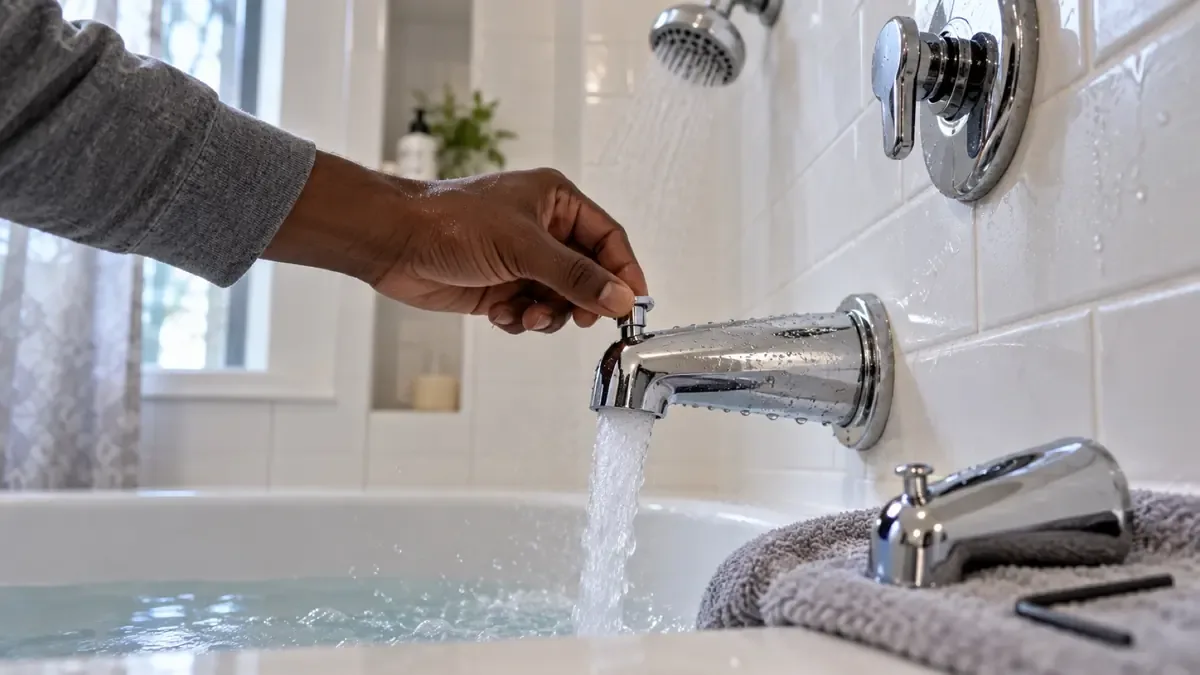
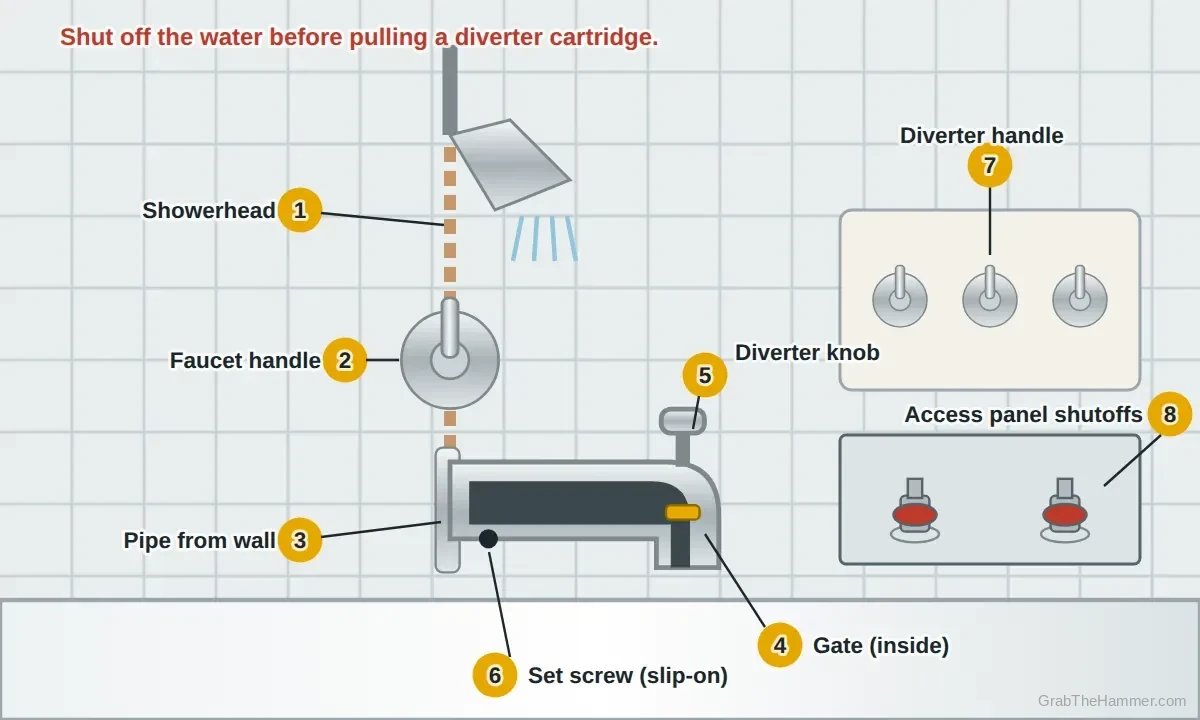
The most common type is the tub spout diverter. When you pull up the knob on the spout, a small gate inside blocks the opening and water pressure holds it shut, so the water goes up the pipe to the showerhead. Over time the gate's seal wears or gets crusted with minerals and no longer closes tight, so some or most of the water keeps coming out of the spout.
Some showers have a two- or three-handle setup, or a separate small handle between the hot and cold controls, that sends water to either the tub or the shower. That handle has its own valve stem or cartridge inside the wall, and a worn one lets water go both ways. A little dripping from the spout while the shower runs is normal on many tub spout diverters; a strong stream is not.
Why the diverter stops working
The seal inside the spout no longer closes tight.
Scale keeps the gate from seating.
A separate diverter handle lets water go both ways.
The valve body or piping is damaged or corroded.
| You notice | Likely cause | Start at |
|---|---|---|
| Not sure which diverter you have | Need to identify the type | Step 1 |
| White crust on the spout knob | Mineral buildup | Step 2 |
| Most water still comes from the spout | Worn tub spout gate | Step 3 |
| Knob drops down while the shower runs | Worn tub spout gate | Step 3 |
| New spout won't fit the pipe | Wrong connection style or length | Step 4 |
| Separate diverter handle leaks both ways | Worn cartridge or stem | Step 6 |
Let's fix it
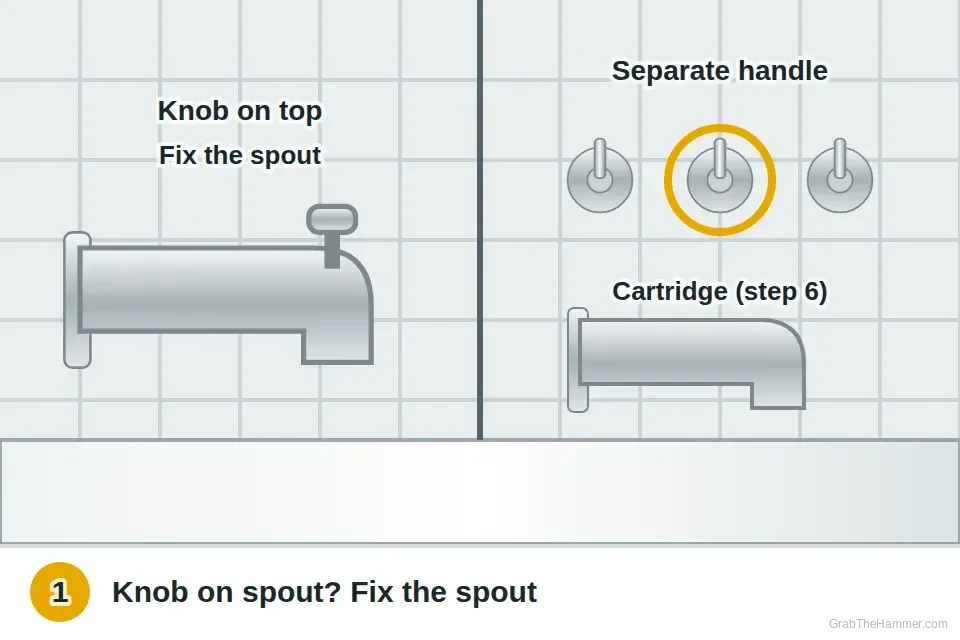
- Identify your diverter typeLook at the tub spout for a knob or lever on top. If it has one, you have a tub spout diverter and the fix is the spout itself. If the spout is plain and there's a separate handle on the wall that switches between tub and shower, you have a valve diverter, so skip ahead to the step on replacing the cartridge.
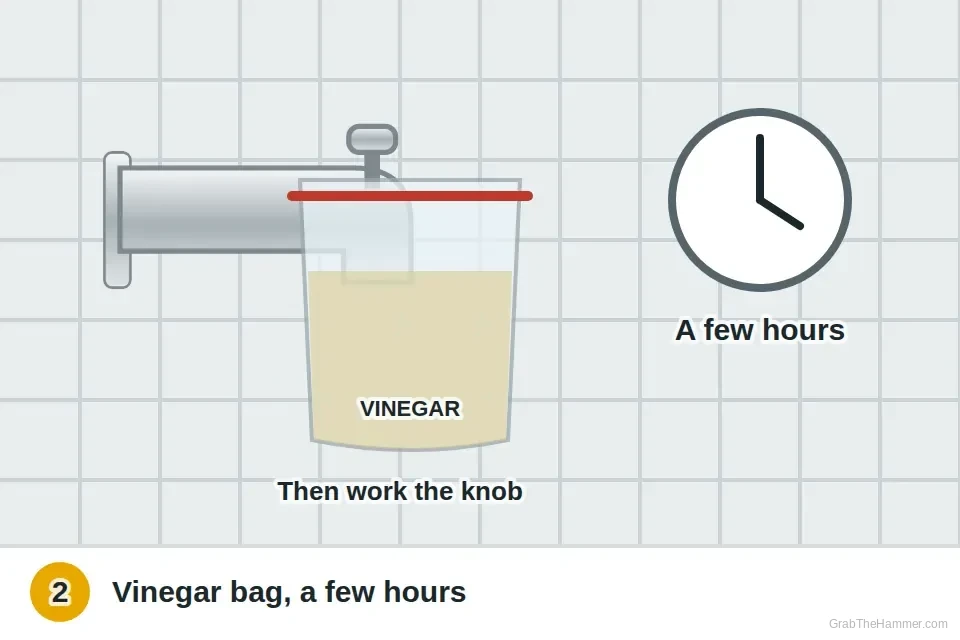
- Clean mineral buildupHard water scale can keep the gate from sealing. Fill a plastic bag with white vinegar, slip it over the spout and tie it on so the opening is submerged, then leave it for a few hours. Work the knob up and down several times afterward and test. If the spout now holds back most of the water, you're done; if not, it's time to replace the spout.
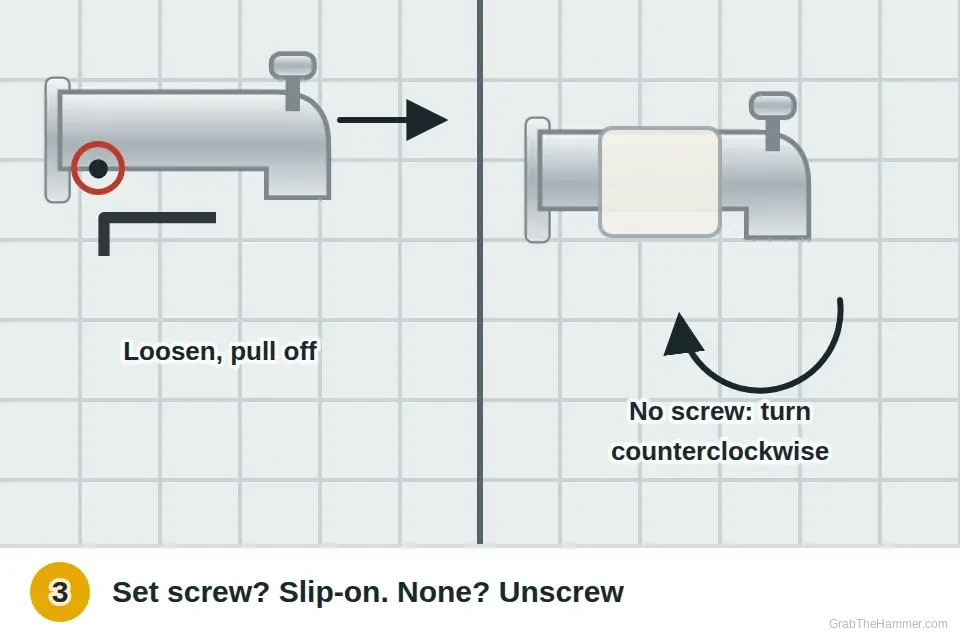
- Remove the old tub spoutLook on the underside of the spout near the wall for a small hole with a set screw. If there is one, it's a slip-on spout: loosen the screw with a hex key and pull the spout straight off. If there's no screw, it's threaded: turn it counterclockwise by hand, or wrap it in a rag and use a pipe wrench, being careful not to twist the pipe inside the wall.
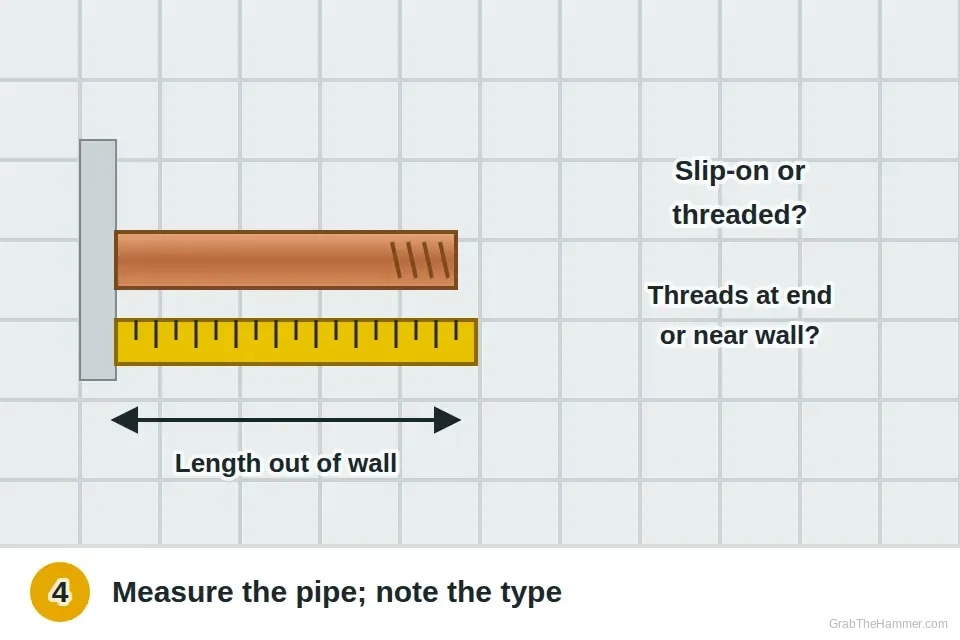
- Measure for the replacementNote the type and look at the pipe sticking out of the wall. For a slip-on spout, measure how far the copper pipe sticks out. For a threaded spout, check whether the threads are at the end of the pipe or the spout threads on near the wall, and measure the pipe length. Spouts come in specific lengths and connection styles, so bring the old spout and your measurements to the store.
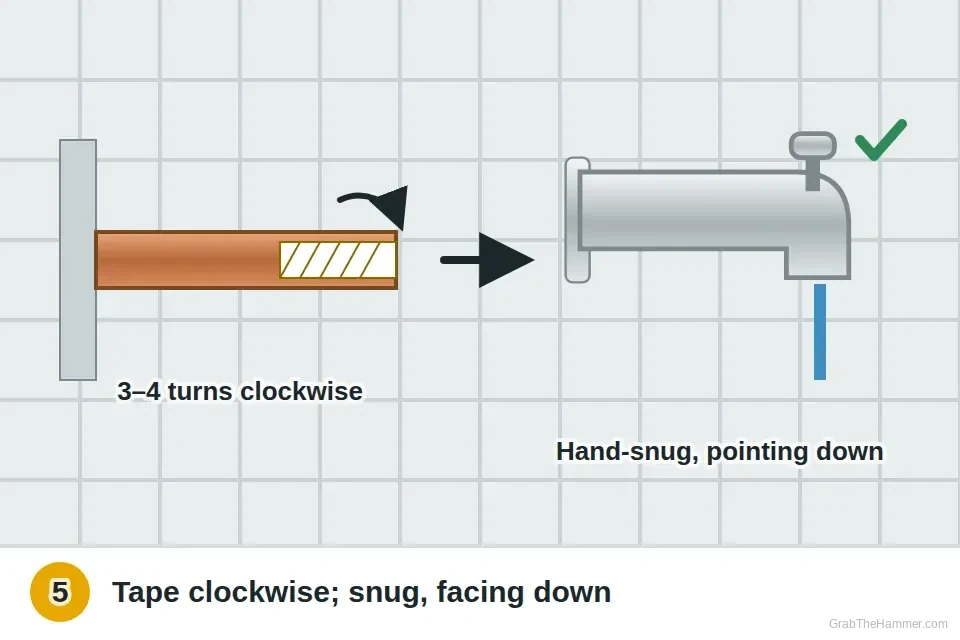
- Install the new spoutFor a threaded spout, wrap the pipe threads clockwise with three or four turns of plumber's tape, then thread the spout on by hand until it's snug and pointing down. For a slip-on spout, check that its O-ring is in place and lightly greased, then slide it on until it meets the wall and tighten the set screw firmly. Run the water, pull the diverter and check that the shower gets full flow. Run a thin bead of silicone caulk along the top and sides where the spout meets the wall, leaving the bottom open so any water can drain.
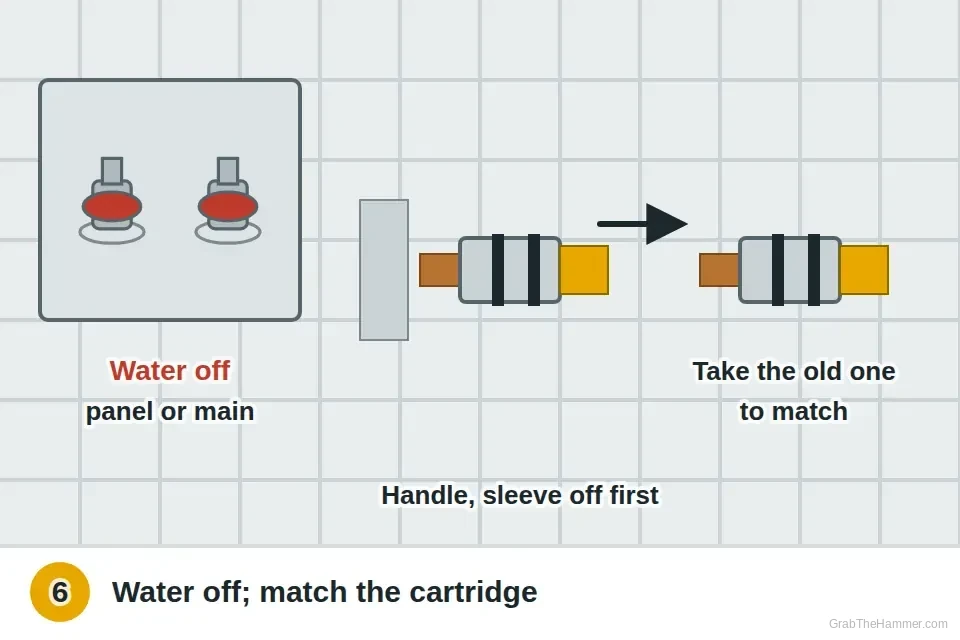
- Replace a handle diverter cartridgeTurn off the water at the fixture shutoffs if the shower has them, often behind an access panel, or at the main. Pry off the handle cap, remove the screw and handle, then the trim sleeve. Unscrew the stem with a deep socket, or pull the retaining clip and slide the cartridge out, depending on the valve. Take it to the store to match it exactly, install the new one with any new washers or O-rings it came with, reassemble, and turn the water back on slowly.
Watch it done
- Little or no water from the tub spout with the diverter pulled
- Full flow at the showerhead
- No leaks at the wall
If the shower is still weak
If it's the shower that's slow, there's a separate guide for unclogging a shower drain.
If the new spout holds back the water but the shower is still weak, the showerhead may be clogged. There's a separate guide for low shower pressure.
If water now drips from the showerhead after you shut off the shower, that's a separate issue in the shower valve. We have a guide for a leaking showerhead.
What a pro typically charges (a rough estimate; prices vary by area): A plumber typically charges $150–$300 to replace a tub spout and $200–$400 to replace a diverter cartridge or stem. If the valve inside the wall needs replacing, expect $400–$1,000 or more, plus any wall or tile repair.
Find a plumber near you