Pull a stubborn or headless nail
A nail with a good head comes out with the hammer's claw and a block of wood for leverage. The tricky ones are nails with a snapped-off head, finish nails sunk below the surface, and nails you want out without marking the wood. Each has its own trick, and none needs more than a hammer and a couple of basic tools.
Why leverage beats force
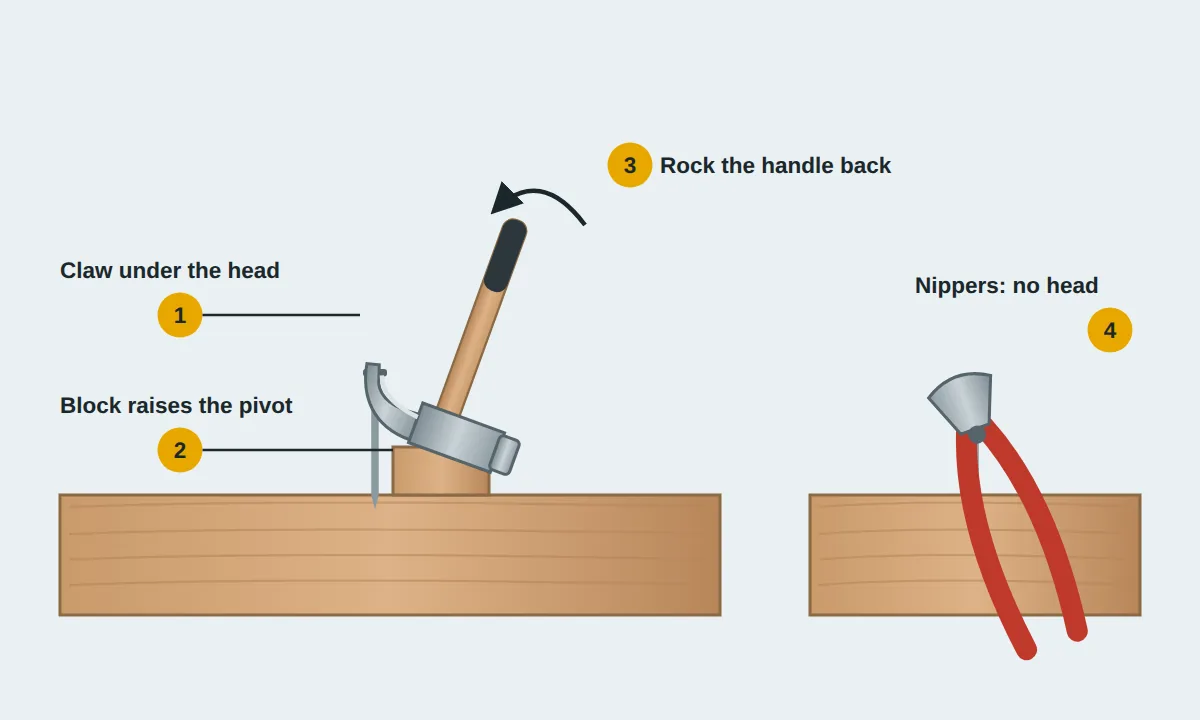
The claw works as a lever, and a lever works best when the pivot is close to the nail and high enough to keep the pull straight. That's why a scrap block under the hammer head helps so much: it raises the pivot, stops the nail bending over, and protects the surface.
For nails the claw can't grab, end-cutting pliers, also called nippers, roll the nail out a little at a time. For trim you want to reuse, pull the nails through from the back so the face doesn't splinter.
Why nails get stuck
Rusted nails grip the wood and snap more easily.
Ridges and coatings are designed to stay put.
There's nothing for the claw to catch.
A nail pulled sideways bends instead of sliding out.
| The nail | Use | Tip |
|---|---|---|
| Head sticks up | Hammer claw | Add a block under the hammer head. |
| Head is flush | Flat pry bar, then the claw | Lift the head first. |
| No head, shank showing | End-cutting pliers | Roll, re-grip lower, repeat. |
| Snapped below the surface | Nail set | Sink it and fill the hole. |
| In trim you want to reuse | Pliers from the back | Pull it through. |
Let's fix it
- Get the claw under the headSlide the V of the claw under the nail head. If the head is flush with the wood, lift its edge first with the thin end of a flat pry bar, or tap the claw in gently at a low angle.

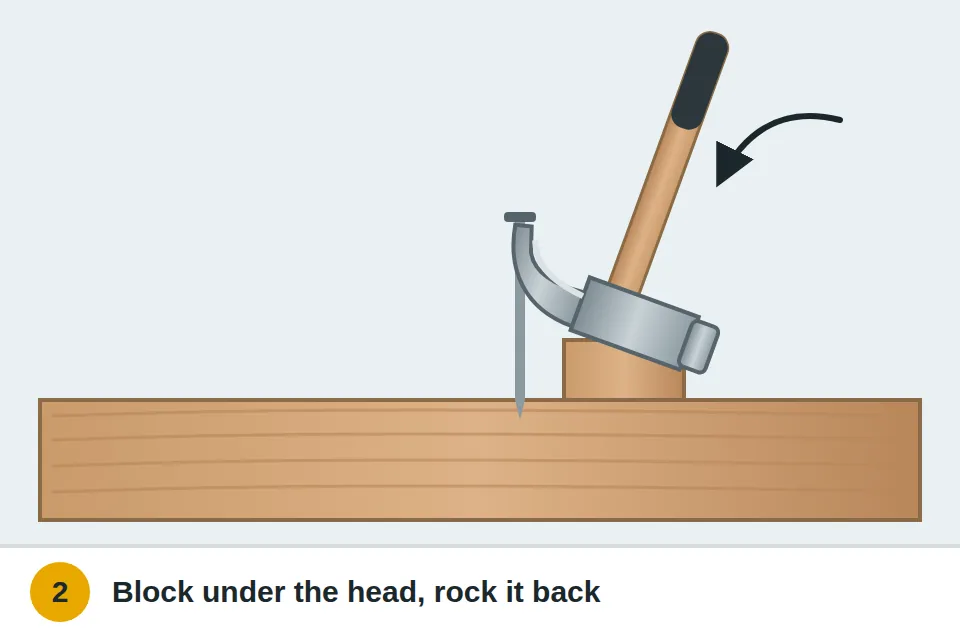
- Add a block for leverageOnce the nail is up a little, set a scrap block under the hammer head and rock the handle back. Switch to a thicker block as the nail rises so it keeps coming out straight.
- Roll out headless nailsGrip the shank just above the surface with end-cutting pliers and roll them over their rounded jaw, squeezing only enough to hold; nippers are made to cut, and a hard squeeze snips the nail off. Take a fresh bite lower down each time until it's out.

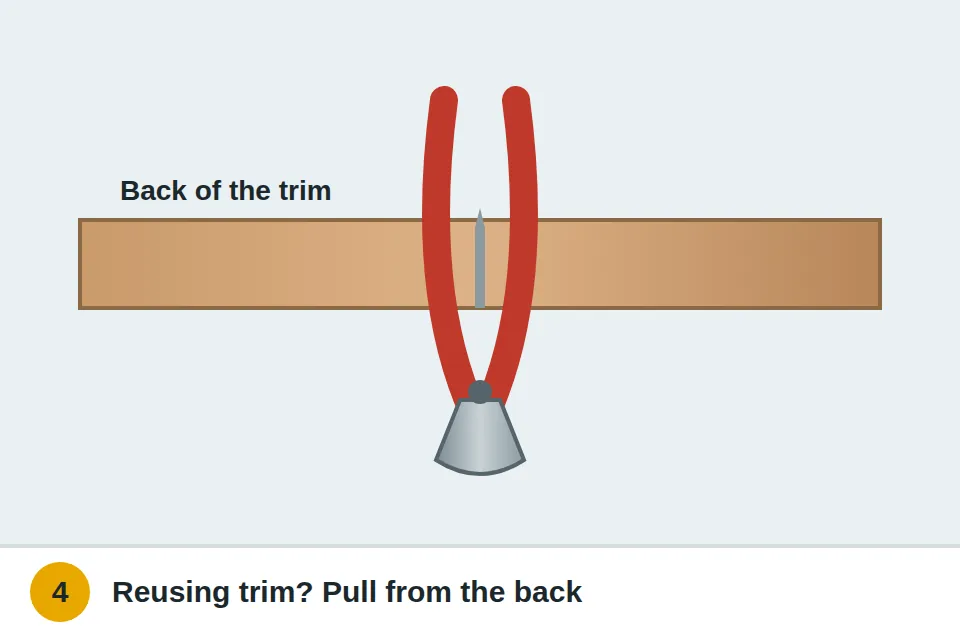
- Pull trim nails through the backIf you're reusing trim, grip the pointed end from the back with the nippers and pull the nail through. The face of the trim stays clean.
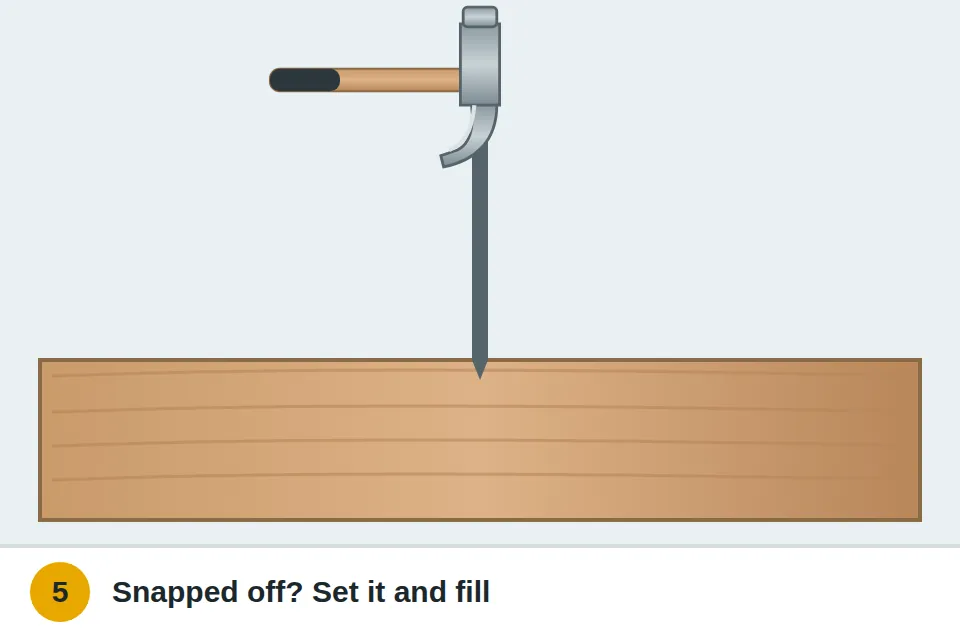
- Sink the ones that won't come outIf a nail snaps off below the surface, drive what's left a little deeper with a nail set and fill the hole instead of digging for it.
If the nail won't budge
If the head snaps off, switch to the nippers and grip the shank. If it breaks below the surface, set it deeper and fill over it.
If the nail bends as it comes up, straighten it with a light tap, then pull again with a taller block so the pull stays straight.
What a pro typically charges (a rough estimate; prices vary by area): A handyman typically charges $60–$120 an hour for small jobs like careful trim removal.
Something else going on?
Nail pulling questions
How do I remove a nail without a hammer?
End-cutting pliers or locking pliers can roll it out. For a nail with a head, a flat pry bar works too.
How do I get a nail out without marking the wood?
Put a scrap block, with a putty knife or cardboard under it, beneath the hammer head. It spreads the pressure and keeps the pull straight.
Why does the nail head keep snapping off?
The nail is rusted or held tight. Stop pulling on the head, grip the shank with nippers, and roll it out in small bites.
What's the best tool for pulling nails?
A curved-claw hammer handles most. End-cutting pliers are the most useful addition, especially for headless and finish nails.
Still stuck? Ask us
Tell us what you're seeing and what you've tried. We read every question, and the ones that will help other people get answered on this page.