Tighten a loose stair railing
You grab the railing on the way down and it shifts under your hand. A loose stair railing is more than annoying; it's the thing you're counting on if you slip. Most wobble comes from loose brackets or a loose newel post, and both can usually be fixed in an afternoon.
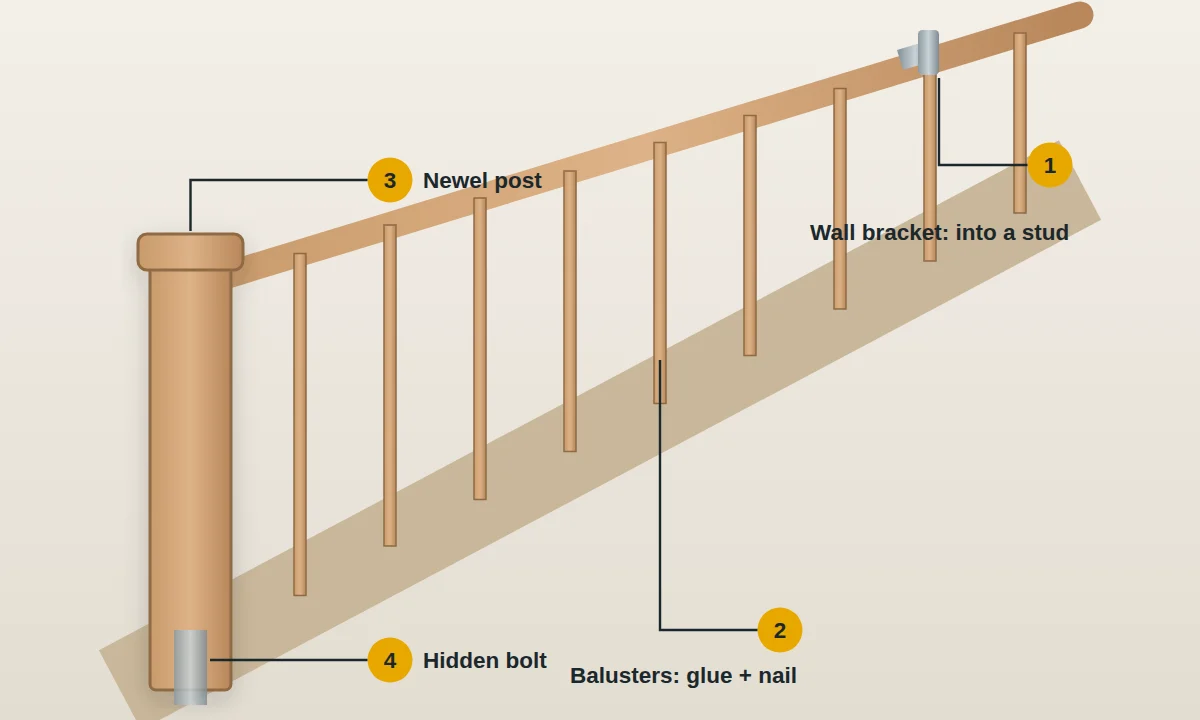
What's actually going on
A wall-mounted handrail is held by brackets screwed into studs. A freestanding railing hangs from a big post at the bottom, called the newel, with thin posts, called balusters, between the rail and the steps. Find where the movement starts before you fix anything: shake the rail gently and watch the brackets, the newel and the balusters.
Why it happens
Screws that missed the stud or have stripped.
The base loosens from the floor framing.
Balusters loosen as old glue fails.
Joints loosen as the wood shrinks and swells.
Let's fix it
- Find what's movingShake the rail gently and watch each bracket, the newel post and the balusters. The part that moves first is the problem.

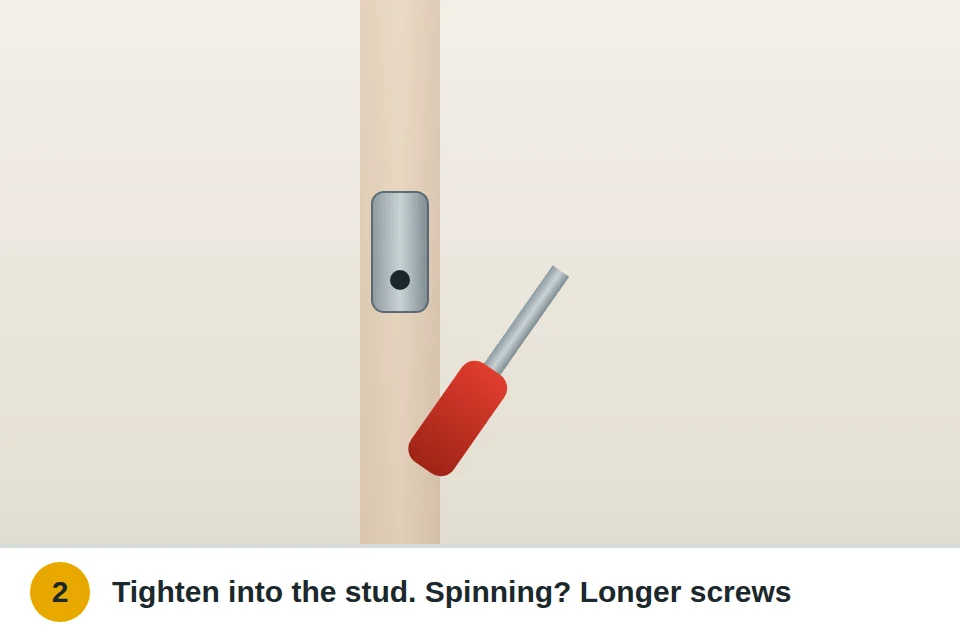
- Tighten wall bracketsTighten the bracket screws. If they spin, move the bracket slightly to find the stud, or use longer screws.
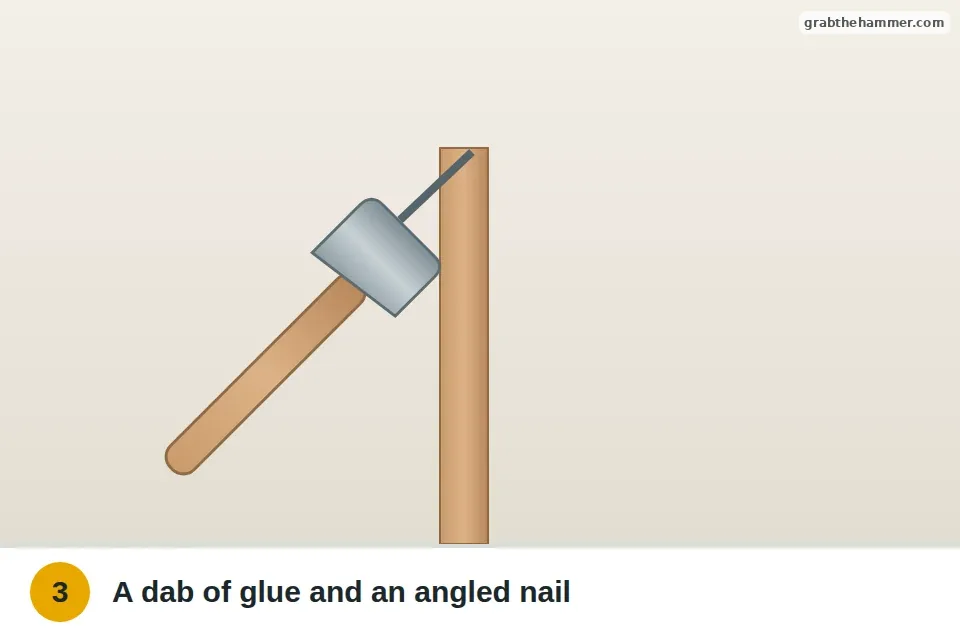
- Secure loose balustersDrill a small pilot hole at an angle through the baluster into the rail and drive a finish nail or screw. Add a dab of glue first.
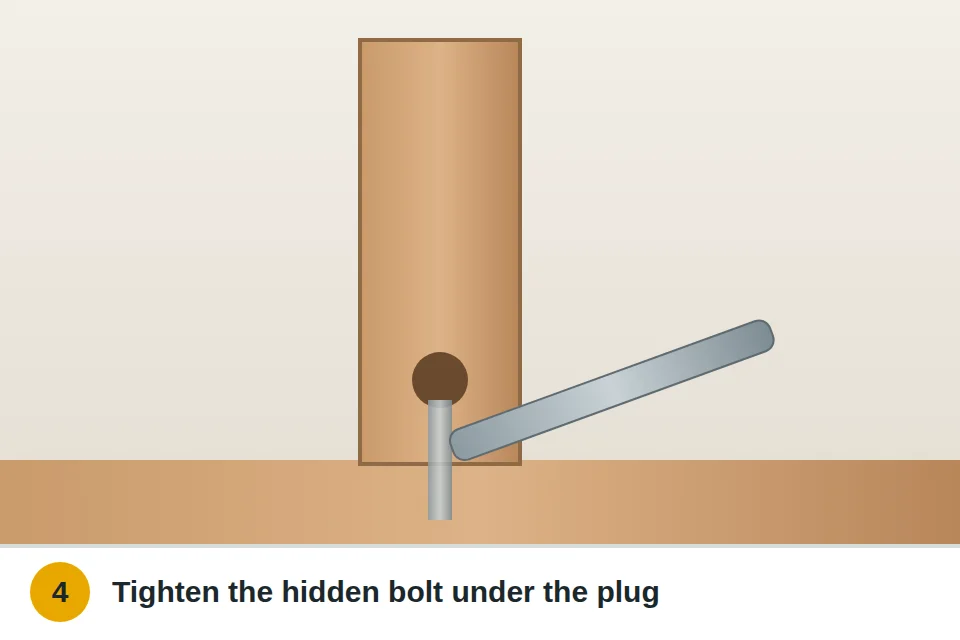
- Tighten the newel postMany newel posts have a bolt hidden under a cap or plug. Tighten it. If not, drive long screws at an angle into the floor framing.
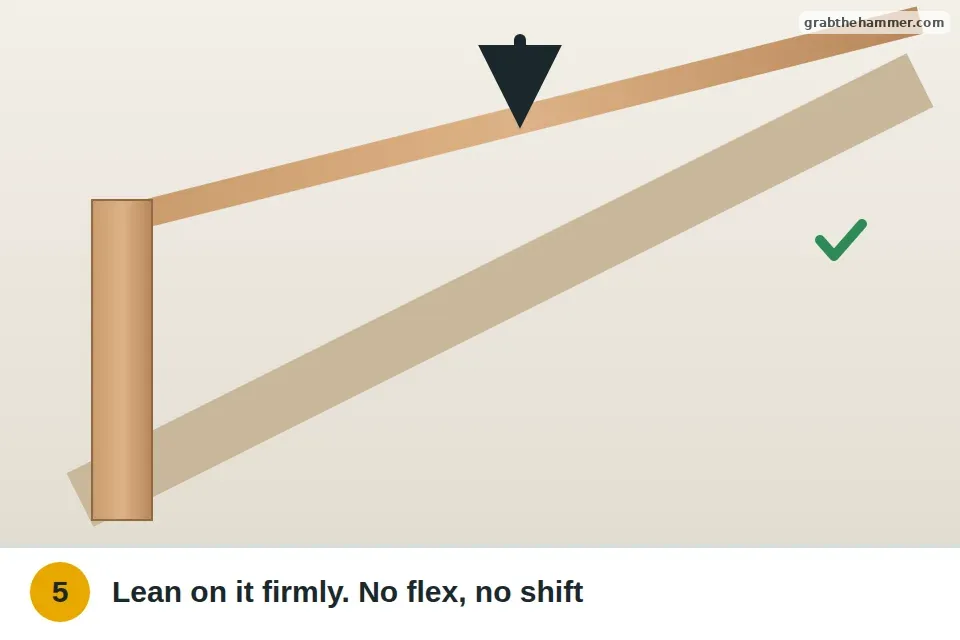
- Test with real weightLean on the rail firmly along its whole length. It shouldn't flex or shift.
Still not fixed?
If a wall bracket won't hold because there's no stud, use a heavy-duty toggle anchor rated for the load, or add a wood backer board across two studs.
A newel that still wobbles usually needs a newel post fastening kit anchored into the framing below.
What a pro charges: A carpenter typically charges $150–$500 to secure a railing, more for newel post repairs.
Common questions
How high should a stair handrail be?
Most US codes call for 34 to 38 inches, measured from the front edge of the steps.
Why does my stair railing wobble?
Usually loose wall brackets, a loose newel post, or dried-out glue in the balusters.