Fix a curtain rod that pulled out of the wall
Curtain rod brackets usually pull out because they were held only by small plastic anchors in drywall, and every tug on the curtains works them loose. The fix is to patch the torn holes and remount the brackets into something that holds: the wood framing above the window when you can find it, or toggle anchors when you can't. A center bracket stops a long rod from sagging and levering the end brackets out again. It's a straightforward job with a drill and a level.


Why curtain rods pull out of drywall
Drywall is gypsum pressed between two layers of paper, about 1/2 inch thick. It holds a screw only as well as the anchor behind it. The small ribbed plastic anchors that come with most curtain rods expand a little inside the hole, which is fine for a light sheer but not for lined or blackout curtains that get pulled open and closed every day. Each pull pries on the bracket's top screw, and over time the anchor crushes the gypsum around it and slides out, often tearing the drywall's paper face.
The framing around a window is what you want to screw into. A window opening has studs on each side and a header, a solid wood beam or built-up framing, across the top. In many houses that header reaches up to the ceiling plate or at least several inches above the trim, which is right where curtain brackets go. Screws into that wood hold many times more than drywall anchors. Where the bracket lands beyond the framing, a toggle anchor that opens up behind the drywall spreads the load over a much larger area than a plastic plug.
Why curtain rods pull loose
The small ones in the box only grip a little gypsum.
No wood or no real anchor behind the bracket.
The rod sags and levers the end brackets out.
Yanking or kids and pets hanging on them loads the screws.
Lined, blackout or velvet panels weigh much more than sheers.
A reused hole has no gypsum left to grip.
| You notice | Likely cause | Start at |
|---|---|---|
| Bracket hanging, anchor half out | Anchor failed in drywall | Step 1 |
| Big torn hole where the bracket was | Needs a patch | Step 2 |
| You don't know what's behind the wall | Find the framing | Step 3 |
| No wood where the bracket goes | Use toggle anchors | Step 4 |
| Rod bows down in the middle | Missing center support | Step 5 |
| Bracket loose again after rehanging | Screw missed the wood | Step 3 |
Let's fix it
- Take the rod down and look at the damageLift the curtains off the rod, then lift the rod out of its brackets. Unscrew the brackets that are still on the wall. Look at each hole: a clean hole the size of the anchor just needs filling, while a ragged hole with torn paper needs a real patch. Pull out loose anchors with pliers. If an anchor is stuck halfway, push it into the wall cavity with a screwdriver or cut it flush with a utility knife, cutting away from your other hand. Measure where the old brackets sat so you can decide whether to keep the same spot or move them up or out a little.

- Patch the torn holesFor small holes, press lightweight spackle in with a putty knife, scrape it flush and let it dry. For a ragged hole up to about 1 1/2 inches, cut away the loose paper with a utility knife and stick a self-adhesive mesh patch over it. Then spread two thin coats of joint compound or spackle over the patch, feathering the edges a few inches out. Let each coat dry, sand lightly and prime before painting. Bigger damage is covered in the guide for patching a hole in drywall. If the new bracket will cover the old spot, you still need to fill it, since screws won't hold in a weakened hole.

- Find the framing above the windowRun a stud finder across the wall above the window trim, a few inches above where the brackets will go. The header often reads as solid wood across the whole width of the window, and you'll usually find studs at each side of the opening. To confirm, drill a small 1/16 inch test hole or tap in a thin finish nail where the bracket will cover it. If it hits wood after about 1/2 inch of drywall, you've found framing. If it hits metal, the framing is steel, so use self-drilling sheet metal screws or toggle anchors instead of wood screws. If it pushes through into empty space, there's no wood there. See how to find a wall stud for more ways to check. Where you hit wood, plan to use #8 wood screws, 1 1/2 to 2 inches long.

- Use toggle anchors where there's no woodWhere a bracket lands on hollow drywall, use toggle-type anchors rated well above the curtain's weight, such as strap toggles (often sold as SnapToggle) or spring-wing toggle bolts. Hold the bracket level against the wall, mark its screw holes, and drill each hole to the size printed on the anchor package, often 1/2 inch for strap toggles. Insert the toggle so it opens flat behind the drywall, pull it snug, then fasten the bracket with the screw supplied. Use an anchor in every bracket hole, not just one. Self-drilling threaded anchors are fine for light curtains but don't hold as well as toggles.

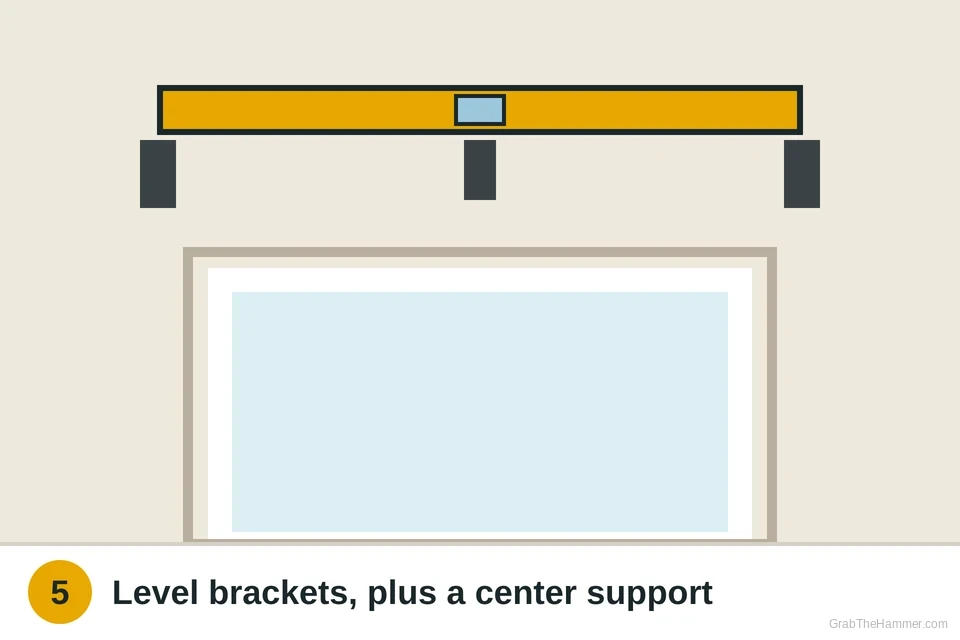
- Mount the brackets level and add a center supportPut the end brackets back at the same height, typically 4 to 6 inches above the window trim and a few inches past each side. Mark one, then use a level across to mark the other. Drive the screws snug, not so hard that they crush the drywall. If the rod is longer than about 4 to 5 feet, or the curtains are heavy, add a center support bracket so the rod can't bow. Follow the rod's instructions for spacing; long rods may need more than one. Most rod sets include a center bracket, and replacements are a few dollars at a hardware store.
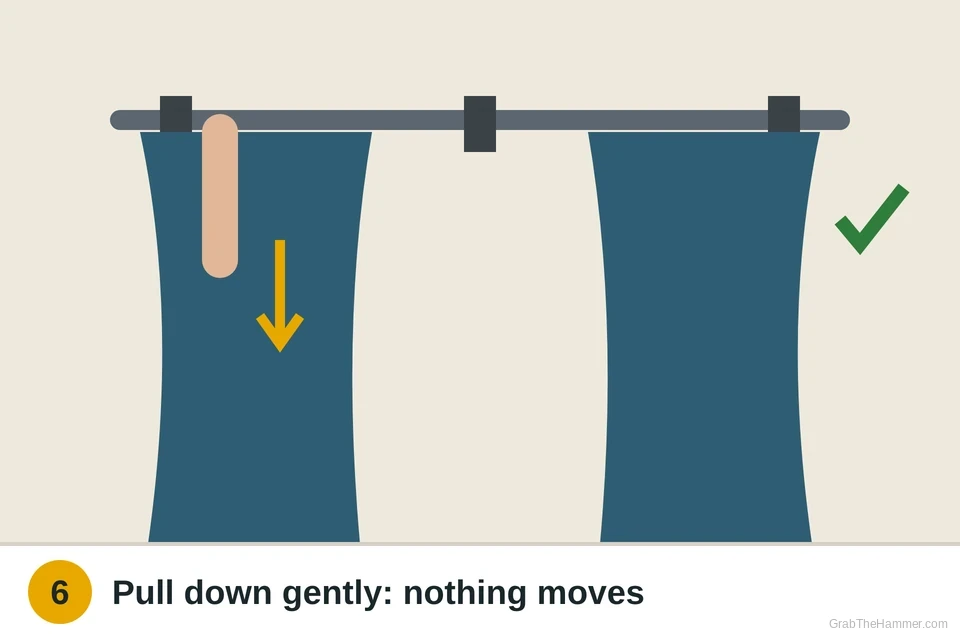
- Rehang the curtains and testSlide the curtains on, set the rod in the brackets and tighten any set screws that lock it in place. Give the rod a firm, gentle downward pull at each bracket. Nothing should move or creak. Open and close the curtains a few times by their leading edge, not by tugging the middle of the panel. If a bracket shifts, check whether its screws actually hit wood or the toggles opened fully, and fix that bracket before the hole gets worse. Touch up the patched spots with paint once they're dry.
Watch it done
- Brackets don't move when you pull down on the rod
- The rod is level and doesn't sag in the middle
- Old holes are filled and painted
- Curtains open and close without the rod shifting
Bracket loosening again? The screws missed the wood; move it or use toggles.
If it comes back
If a bracket works loose again, the screws most likely went into drywall only, or the toggles didn't open fully. Take it down, check with a test hole, and move it to the framing or a fresh spot for a new toggle at least an inch from the old hole.
If your walls are plaster rather than drywall, regular drywall anchors often fail. See the guide for hanging things on plaster walls. For mirrors, shelves and other heavy pieces on the same wall, see how to hang a heavy mirror or picture.
A towel bar or other bracket that keeps pulling out has the same cause and fix. See the guide for a loose towel bar.
What a pro typically charges (a rough estimate; prices vary by area): A handyman typically charges about $75–$150 to patch the wall and rehang a curtain rod, and more for several windows or plaster walls.
Find a handyman near you