Remove candle wax from carpet
Candle wax that drips on carpet soaks down into the fibers while it's hot, then sets into a stiff, crusty patch. Don't scrub it while it's soft; that pushes it deeper. The usual fix is to let it harden, break off what you can, then melt the last thin layer into paper towels with a warm iron. Colored candles can leave a dye mark behind, which needs a separate, gentle treatment. Most spills on nylon or polyester carpet come out with things you already have at home.


Why candle wax sticks in carpet
Most candles are paraffin, soy or beeswax, sometimes with added dye and fragrance oil. When wax is liquid, it runs down between the carpet tufts and wraps around each fiber. As it cools, it turns solid and glues the fibers into a stiff clump. Wax doesn't dissolve in water, so a wet towel or carpet shampoo alone just smears it. Rubbing soft wax spreads it wider and drives it toward the backing.
The trick is to use temperature both ways. Cold makes wax brittle, so a hard lump cracks off the fibers in pieces you can vacuum. Gentle heat turns the thin layer left behind back into liquid, and an absorbent paper towel pulls it up like a wick. Synthetic carpet such as nylon, polyester and olefin usually handles a warm iron through paper. Wool and other natural fibers are more sensitive to heat, so go lower and slower. Any dye in the wax can stay in the fibers after the wax is gone, and that's a stain to treat on its own. Patience matters more than force here. Several short, gentle passes usually work better than one long, hot one.
What you might be dealing with
Still soft and easy to smear.
Breaks off once it's cold.
Feels stiff; needs gentle heat.
Oil from the wax or fragrance leaves a dark spot.
Color stays after the wax is gone.
Hard floors and fabric need different handling.
| You notice | Likely cause | Start at |
|---|---|---|
| Wax is still warm or tacky | Not hard yet | Step 1 |
| Raised lump of wax | Hard wax on top of the pile | Step 2 |
| Fibers stiff and matted, no lump | Thin wax layer left | Step 3 |
| Dark or greasy spot after ironing | Oily residue | Step 4 |
| Pink, red or other color remains | Dye from the candle | Step 5 |
| Drips on wood, tile or upholstery | Different surface | Step 6 |
Let's fix it
- Let it harden, then check the carpetLeave fresh wax alone until it's completely hard. Don't wipe or blot it while it's soft, because that spreads it. To speed things up, put ice cubes in a zip-top bag and hold it on the wax until the wax feels hard and brittle. A sealed bag keeps water off the carpet. While you wait, figure out what the carpet is. Check the label on the back of a rug, or look for leftover carpet paperwork. Nylon, polyester and olefin are the usual synthetic carpets. Wool is often a natural cream color with a slightly fuzzy, matte look. If it's wool, silk or a valuable rug, plan on lower heat and more testing. If you're unsure, treat it as wool.

- Break off the lump and vacuumOnce the wax is hard, crack it into crumbs. Press down on the lump with the back of a spoon or tap it with the handle of a butter knife. Then gently scrape the pieces off with the edge of the spoon, a dull butter knife or an old credit card. Scrape in one direction, with the lay of the pile, not back and forth. Pick up big pieces by hand and vacuum the crumbs right away, before they get walked in. Empty or wipe the vacuum after, since wax bits can soften and stick inside. Stop if fibers start pulling out or fraying; leave the rest for the iron step. You'll usually have a flat, stiff patch left, which is normal.

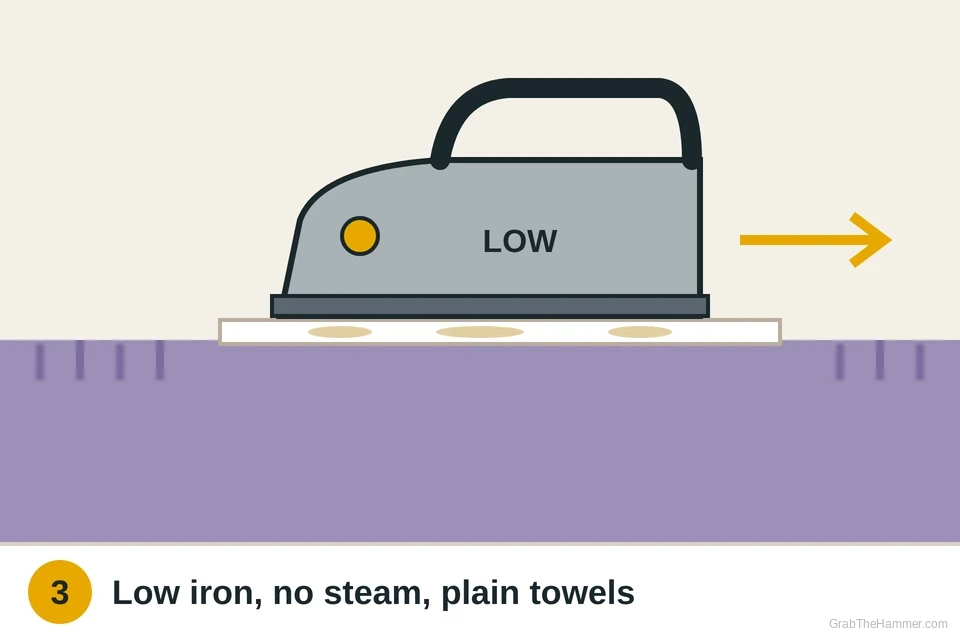
- Lift the rest with a warm ironSet a clothes iron to low or medium, with the steam off and the water tank empty. On wool, use the lowest setting. Lay two layers of plain white paper towel over the wax. Skip printed towels and newspaper, since ink can transfer. A plain brown paper bag works too. Press the iron on the towel for a few seconds, lift, and check. The wax should show as a wet, darker spot on the paper. Move to a clean part of the towel and repeat until no more wax comes up. Keep the iron moving and never leave it sitting on the carpet. Stop at once if the fibers feel sticky, look shiny or cling to the towel; that's melting.
- Blot out any greasy residueAfter ironing, you might see a darker spot that looks greasy. That's usually oil from the wax or fragrance. Test a carpet spot cleaner on a hidden area, such as inside a closet, and wait for it to dry to check the color. Then apply a small amount to a clean white cloth, not straight onto the carpet. Blot from the outside of the spot toward the middle. Don't rub. Use a fresh part of the cloth as it picks up residue. Rinse by blotting with a cloth dampened in plain water, then press with a dry towel. A dry-cleaning solvent can also work on synthetic carpet, but use only a little; too much can soak the backing and padding underneath.

- Treat a colored dye stainRed, purple or other colored candles can leave dye behind. Mix 1 part rubbing alcohol with 2 parts water. Test it first on a hidden spot of the same carpet and wait a few minutes. If no color comes off onto a white cloth, go ahead. Dab a little onto a clean white cloth, blot the stain, and use a fresh part of the cloth each time. Work in small amounts so the carpet never gets soaked. Rinse with a damp cloth and blot dry. Don't use alcohol on acrylic or modacrylic fibers or on wool without testing. Alcohol is flammable, so open a window and keep it away from flames. If the dye won't budge, stop and call a carpet cleaner.

- Wax on hard floors and furnitureOn sealed hardwood, laminate, vinyl or tile, let the wax harden, then lift it with a plastic scraper or old credit card held almost flat. Don't use a metal blade on wood or vinyl, since it scratches. A hair dryer on low can soften a thin film so you can wipe it with a soft cloth. Clean the spot with your usual floor cleaner. On upholstery, check the cleaning code tag under the cushion first. Use the same ice, scrape and paper towel method on fabric coded W or WS. For couches coded S or X, or anything velvet or silk, stop and call an upholstery cleaner. See cleaning hard floors without damage for more.

Watch it done
- The spot feels as soft as the carpet around it
- A clean paper towel under a warm iron comes up dry
- No greasy dark ring once the area dries
- No pink or colored tint in daylight
Still stiff or tinted? Repeat the iron or dye step once more, then call a carpet cleaner.
If it doesn't come out
If the spot is still stiff after several rounds with the iron, wax may have reached the backing. A carpet cleaner with hot-water extraction can often pull it out. For a small area, you can also try the iron again later with fresh towels once everything is fully dry and cool. Hot-water extraction heats and flushes the fibers, then sucks the water and loosened wax back out, which is hard to copy at home. Tell the cleaner it's candle wax, and whether it was colored, so they can pick the right pre-treatment.
If the candle scorched or melted the fibers, cleaning won't help, since the fibers themselves are damaged. A small burned spot can usually be cut out and plugged; see how to patch a hole or burn in carpet. Melted nylon often feels hard and crunchy, and the tips may be fused into little beads. If the burn is only on the tips, trimming them level with small, sharp scissors may be enough.
If the carpet looks flattened or crushed after all the pressing, brush the pile up with your fingers and let it recover. For deeper marks, see how to remove dents from carpet. A few passes over the area with a vacuum also helps lift the pile back up once it's completely dry.
What a pro typically charges (a rough estimate; prices vary by area): A spot treatment is often added to a regular cleaning visit, which typically runs about $100–$250 for a room or two. Wool or specialty rug cleaning usually costs more and is often priced by size.
Find a carpet cleaner near you