Remove pet urine smell from carpet
Pet urine smell lingers because urine soaks below the surface, often wider than the stain you see. Fresh spots usually come out with blotting, cool water and a mild detergent. Older spots need an enzyme cleaner that soaks as deep as the urine did. If it reached the pad or the floor below, surface cleaning won't fix the smell.


Why pet urine smell lingers in carpet
Carpet is built in layers. Fibers are tufted into a backing, and under that sits a foam or fiber pad on the subfloor. Liquid runs down through the fibers, then spreads sideways in the pad like water on a sponge. So the wet area underneath is often much wider than the spot on top. Urine leaves salts and other compounds behind after the water dries. When the room gets humid or the spot gets wet, the smell can come right back.
Soap and water lift what's near the surface but can't break down dried residue deep in the pile and pad. Enzyme cleaners are made for that job. They break the odor compounds into simpler pieces that rinse or air out. They need direct contact and time, so the cleaner has to reach everywhere the urine did. If urine soaked the pad or the wood below, cleaning from the top usually can't reach. That part has to be replaced or sealed.
What you might be dealing with
Still wet; blotting gets most of it.
Dried urine you can't see but can smell.
Faint odor from a small spot.
Older spot that needs an enzyme cleaner.
Smell from below that cleaning can't reach.
Pet keeps going back to the same spot.
| You notice | Likely cause | Start at |
|---|---|---|
| Smell but no visible spot | Hidden or dried urine | Step 1 |
| Wet spot, just happened | Fresh accident | Step 2 |
| Spot blotted, still damp | Needs a cool rinse | Step 3 |
| Faint smell from a small spot | Light surface residue | Step 4 |
| Smell returns when humid or wet | Set-in residue | Step 5 |
| Strong smell over a wide area | Pad or subfloor soaked | Step 6 |
| Pet keeps using the same spot | Smell left or health issue | Step 5 |
Let's fix it
- Find every spot and how deep it goesStart by finding all the spots, not just the one you know about. Close the blinds, turn off the lights and shine a UV blacklight flashlight across the carpet. Dried urine often glows a dull yellow or green. Some other stains glow too, so sniff to confirm. Outline each spot with sticky notes or painter's tape. Then check depth. Press a white paper towel hard on the spot. If it still comes up damp hours later, or the smell is strong from a wide patch, the pad has likely soaked through. A small spot with a mild smell is usually still in the fibers. Wide or soaked spots, go to Step 6 after cleaning the top.

- Blot a fresh spot, don't rubIf the spot is still wet, act now. Fold thick layers of plain white paper towels, at least a half inch thick, and lay them on the spot. Press down hard with your hand, or stand on them in shoes. Swap in dry towels and repeat until they come up nearly dry. Work from the outside edge toward the middle so the spot doesn't spread. Don't rub or scrub. Rubbing pushes urine deeper and fuzzes the fibers. Pick up any solid waste first with a paper towel or plastic bag. Skip colored or printed towels, since dye can transfer to wet carpet. Wear gloves if you like. Wash your hands when you're done.

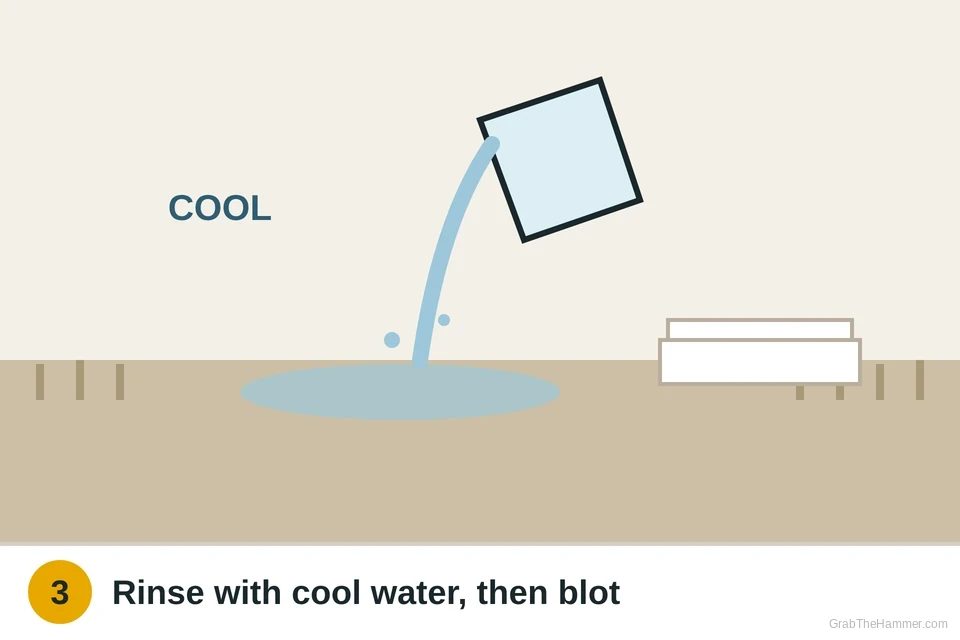
- Rinse with cool water and blot againRinse the spot to dilute what's left. Use cool or room-temperature water, not hot. Pour a small amount, about a quarter cup, slowly onto the spot. Use only enough to wet as deep as the urine went. Then blot with fresh white towels until they come up nearly dry. Repeat once or twice. Don't soak the area or flood the carpet, because extra water spreads urine into the pad. When you're done, lay a half inch of paper towels on the spot. Set something flat and heavy on top that won't bleed color, like a stack of books in a plastic bag. Swap the towels every few hours until the carpet is dry.
- Light spot: detergent, then vinegarFor a small or light spot, try what you have first. The Carpet and Rug Institute suggests 1/4 teaspoon of clear liquid dish soap in 1 cup of lukewarm water. Use dish soap without bleach, not laundry or dishwasher detergent. Test it on a hidden spot first. Dampen a white cloth, blot it onto the spot, then rinse with plain water and blot dry. Next, blot on 1 cup of white vinegar mixed with 2 cups of water, and blot dry. Once it's fully dry, you can sprinkle baking soda, wait a few hours, and vacuum. Never add bleach to vinegar. If the smell comes back in a day or two, use Step 5.

- Old or repeat spot: use an enzyme cleanerFor older spots, buy an enzyme cleaner labeled for pet urine. Read the label for wait time and colorfast testing. Test it on a hidden spot first. If you used vinegar or other cleaners, rinse with plain water and let the spot dry first, since other chemicals can weaken enzymes. Pour on enough to soak as deep and wide as the urine went, past the edge of the spot. A light spray only treats the top. Leave it for the full label time, often several hours. A damp towel or loose plastic sheet over it can slow drying if the label allows. Then blot and let it air dry, which can take a day or two.

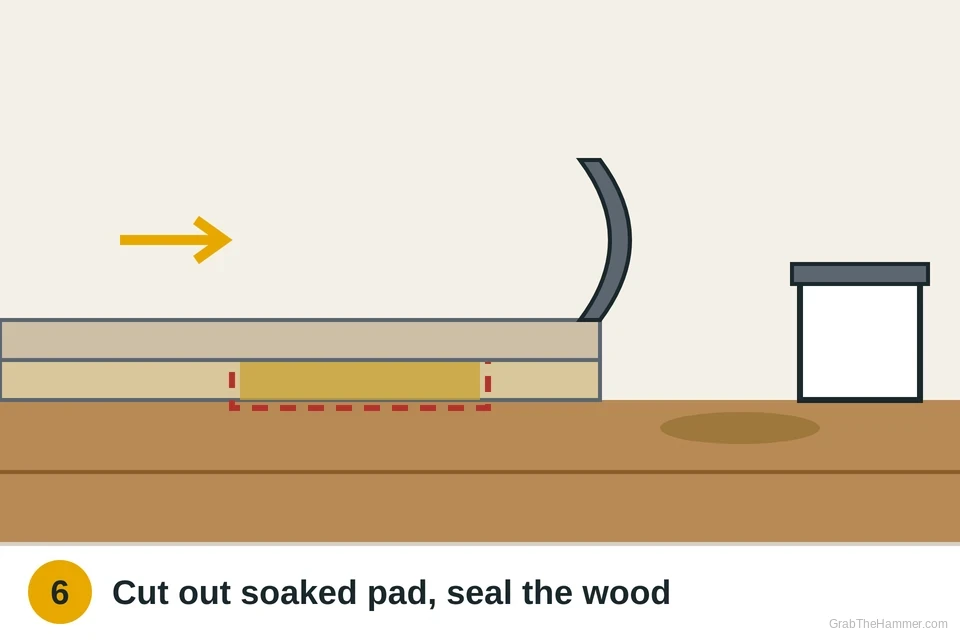
- Pad or subfloor soaked: replace or sealIf the smell keeps coming back after enzyme treatment, the pad or subfloor likely holds urine. Stop surface cleaning here; more cleaner won't reach it. Wall-to-wall carpet can often be pulled back from the nearest wall with pliers. Wear gloves, since the tack strip along the wall has sharp nails. Cut out the stained pad section with a utility knife and replace it with matching pad. Clean the subfloor with enzyme cleaner and let it dry fully. If the wood stays dark or smelly, seal it with a stain-blocking primer made for odors. Use one rated for odor blocking and follow its ventilation directions. If the carpet is glued down or the area is large, call a carpet cleaner or installer.
Watch it done
- No smell when you sniff the spot up close
- No smell after a humid day or a light mist of water
- The spot no longer glows under the UV light
- Your pet stops going back to that spot
Smell comes back when it's humid? Treat a wider area with enzyme cleaner, then check the pad.
If the smell comes back
A smell that returns on humid days usually means residue is still in the pad or deep in the pile. Check again with the UV flashlight and mark a wider area. Treat again with more enzyme cleaner. If it comes back a second time, the pad likely needs replacing. Some carpet cleaners have a tool that flushes the pad from above, so ask about pet odor treatment.
If your pet keeps going in the same place, leftover smell may draw it back. Accidents in a house-trained pet can also signal a bladder or kidney problem, so a vet visit is worth it. If a pet clawed a carpet edge near the spot, see how to fix a carpet edge.
The Carpet and Rug Institute notes urine can break down some carpet dyes, sometimes weeks later. Cleaning may not bring the color back. A small spot can be cut out and replaced; see how to patch a hole in carpet. Wavy after re-laying it? See how to fix carpet ripples.
What a pro typically charges (a rough estimate; prices vary by area): A pet odor treatment is often added to a regular cleaning, which typically runs about $100–$250 for a room or two. Replacing a section of pad and restretching often costs more, depending on size and area.
Find a carpet cleaner near you